










SOCAR’s African focus: tapping the continent’s oil and gas potential Analysis by Khazar Akhundov
Over the past decade and a half, the State Oil Company of Azerbaijan (SOCAR) and its subsidiary, SOCAR Trading, have made multi-billion-dollar investments in energy projects abroad. In recent years, SOCAR’s attention has increasingly shifted towards the large and highly promising African market. For instance, in January of this year, SOCAR acquired a 10% stake in the development project of the Baleine oil and gas field in Côte d’Ivoire.
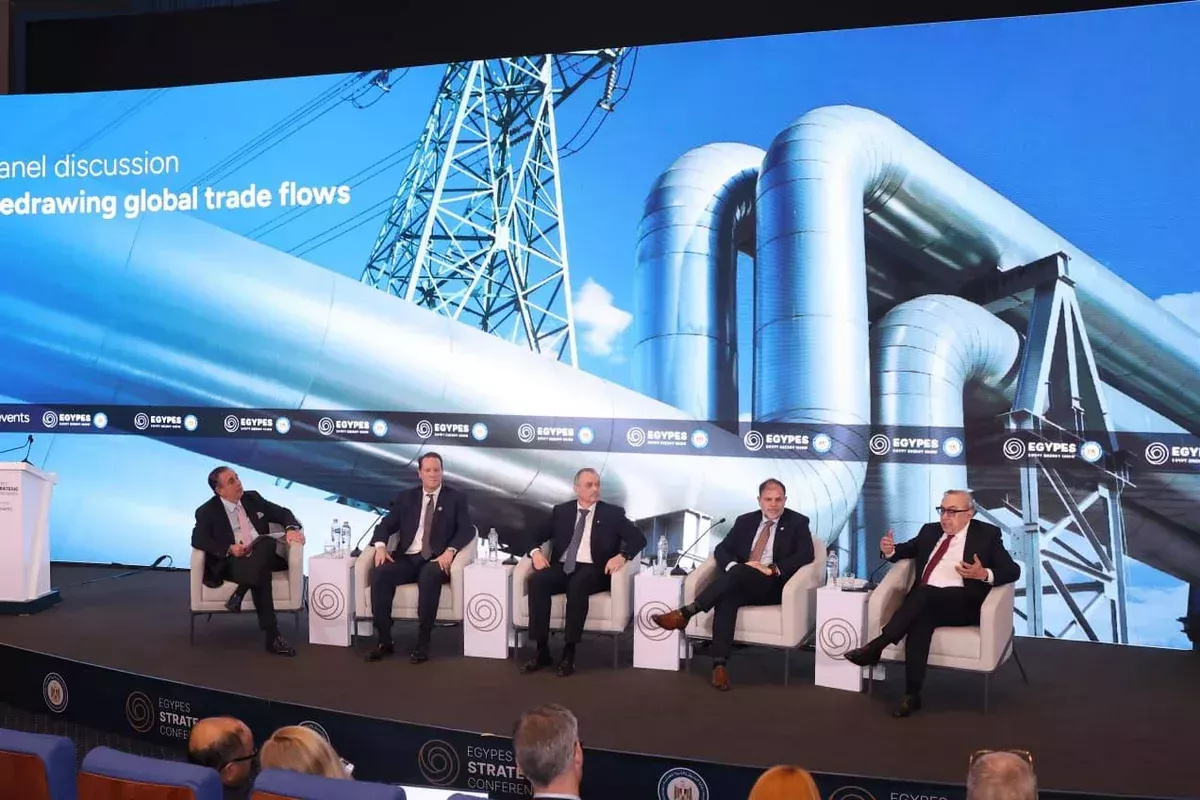
A key focus in Africa’s energy market has been cooperation with Egypt: on March 31, during the 9th Egypt International Energy Conference and Exhibition (EGYPS), SOCAR Trading and the Egyptian General Petroleum Corporation (EGPC) signed a framework agreement on cooperation.
Aiming to become one of the world’s leading international oil and gas companies, over the past decade and a half, SOCAR and its subsidiaries have made multi-billion-dollar investments abroad — in Türkiye, Georgia, Ukraine, Israel, and several countries across Europe and Asia. These investments have spanned oil and gas logistics and transportation, including SOCAR’s own Aframax-class tankers with a capacity of 115,000 tons each, as well as investments in oil terminals.
In recent years, Azerbaijani trading divisions have been particularly active in promising regions such as the Black Sea and the Mediterranean, as well as in Pakistan and Southeast Asia, where they handle oil transshipment and LNG swaps. At the same time, SOCAR’s investments cover the production sector, petrochemicals, fuel manufacturing, and retail — including gas distribution networks and service stations.
All of these investments contribute to risk diversification, mitigate losses from declining domestic oil production, and help SOCAR optimise its capitalisation by investing in profitable ventures across various regions of the world.
In this context, one of the most promising regions is Africa — a continent rich in mineral and energy resources, which over the past decade has seen active investment from China, the United States, the European Union, Türkiye, and Gulf countries. Holding 30% of the world’s mineral reserves and 12% of global oil deposits, African countries are still developing their economies, particularly in the extractive and processing industries, less efficiently than their potential would allow. According to the United Nations, Africa’s population is expected to exceed 2.5 billion by 2050. Given this rapid demographic growth, countries in the region are highly motivated to expand oil and gas production, refine these resources into fuel, and generate electricity for both rising domestic consumption and export.
This significant demand increases the continent’s investment appeal. Since 2010, African countries have attracted over $1.3 trillion in foreign direct investment (FDI), and this figure continues to grow. Moreover, the considerable size of the African market allows not only global energy corporations but also companies from developing countries, such as Azerbaijan, to implement projects successfully.
A clear example is the agreement between SOCAR and the Italian company Eni S.p.A., signed on the sidelines of the 2026 World Economic Forum (WEF) in Davos, Switzerland, in January of this year. Under the agreement, SOCAR acquired a 10% stake in the Baleine oil and gas field project in Côte d’Ivoire. Currently, during the first and second development phases, the Baleine field produces over 62,000 barrels of oil and more than 2.1 million cubic meters of gas per day. With the commissioning of the third phase, daily production is expected to reach 150,000 barrels of oil and approximately 5.7 million cubic meters of gas.
Acquiring a stake in the Baleine project marks SOCAR’s entry into Africa’s vast oil and gas market and fully aligns with the company’s strategy of global expansion in the upstream sector. The prospects for this project and broader energy-sector cooperation were discussed on March 6 during a visit by SOCAR President Rovshan Najaf to Abidjan, the largest city and financial-economic hub of Côte d’Ivoire.
SOCAR’s integration into African energy projects is steadily advancing: on the final day of March, at the 9th EGYPS 2026 exhibition, SOCAR Trading and the Egyptian General Petroleum Corporation (EGPC) signed a framework cooperation agreement.
“SOCAR has been cooperating with Egypt for 15 years, and this framework agreement will create conditions for further expansion of our collaboration. Our investment and trading opportunities across various sectors will increase,” said SOCAR Trading CEO Natig Mustafayev, who signed the agreement.
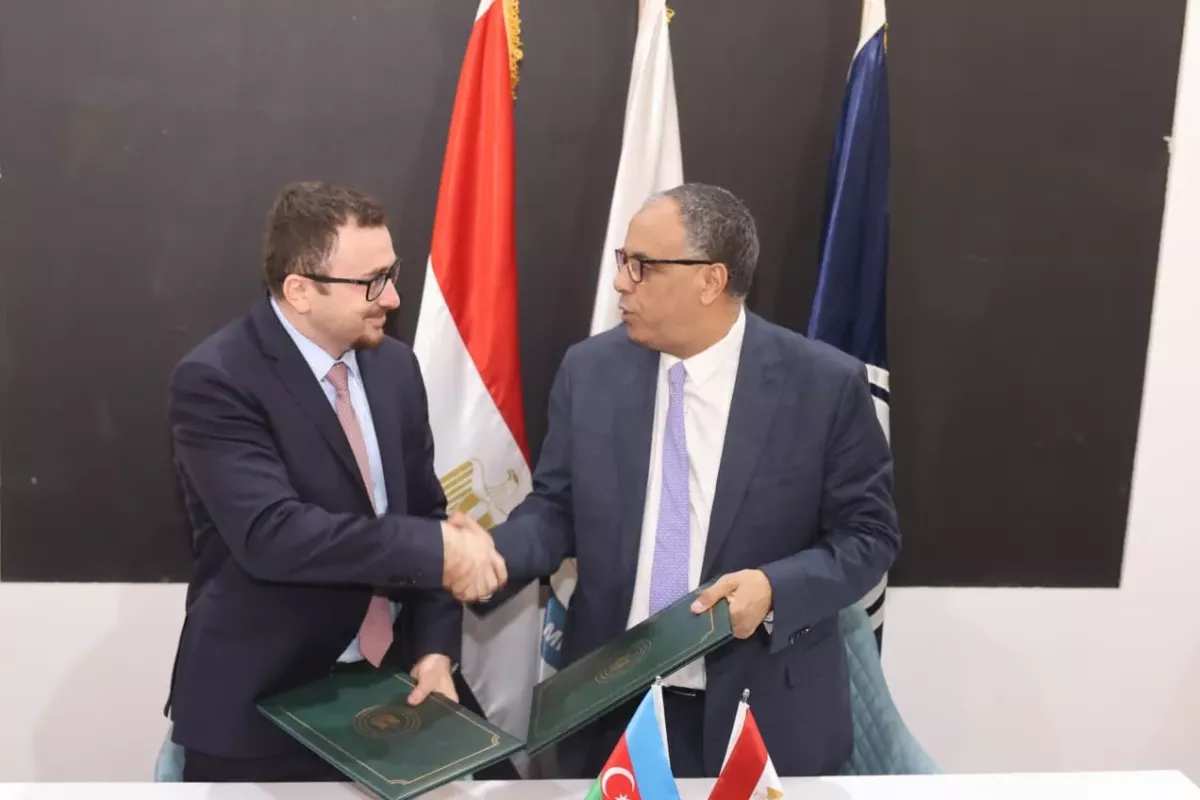
According to EGPC CEO Salah Abdel Kerim, Egypt is a large and promising market, and the signed agreement will further simplify access for Azerbaijani oil and gas products to the Egyptian market. “We are pleased with SOCAR’s activities here and would like the company not only to supply crude oil but also to take an active role in exploration and production in Egypt,” emphasized the EGPC CEO.
Notably, just a decade ago, SOCAR had increased crude oil deliveries to the Egyptian market to 1 million tonnes, consisting of oil and petroleum products sourced from third countries geographically close to Egypt. At that time, discussions also focused on SOCAR’s potential role as a shareholder and investor in Egypt’s refineries. This cooperation grew over the years, and in June last year, SOCAR Trading participated for the first time in an international tender to supply 10.4 million tonnes of liquefied natural gas (LNG) to Egypt over the course of a year. According to media reports, in 2025 SOCAR also explored opportunities to participate in the development of Egypt’s onshore and offshore oil and gas fields, as well as in the expansion of the country’s petrochemical sector.
Notably, Côte d’Ivoire and Egypt are far from the only African countries in whose oil and gas sector Azerbaijan plans to participate. Over the past few years, SOCAR has established fruitful cooperation with countries such as the Republic of Congo, Kenya, Equatorial Guinea, Algeria, and Nigeria, while negotiations continue to expand projects in Sierra Leone, Niger, Burkina Faso, and Mali. For example, with Algeria, SOCAR is exploring joint investments in refineries; in Kenya, Azerbaijani specialists are involved in modernising oil storage facilities and logistics chains. Meanwhile, cooperation with Nigeria’s state-owned company NNPC is being considered for the development of gas infrastructure — Nigeria holds Africa’s largest gas reserves, estimated at 5.5 trillion cubic meters.
SOCAR’s African strategy is both justified and timely: according to the International Energy Agency (IEA), last year Africa accounted for approximately 8% of global oil production, based on proven reserves of 126 billion barrels, while natural gas reserves exceeded 17 trillion cubic meters. Oil and gas production in Africa is growing rapidly, and countries across the continent are keen to attract new technologies, know-how, and investments. Against this backdrop, Azerbaijan — with its highly skilled specialists and unique experience in developing the energy sector — has much to offer African partners.







 editor@caliber.az
 +994 55 444-88-98
 Азербайджан, Баку, ул. Низами, 203, Af Business House, 5-й этаж