










Trump’s resolve, Iran’s intransigence, and frozen Strait of Hormuz Stakes are higher than ever
Ending the war with Iran now would, in effect, mean handing over the Strait of Hormuz to the Iranian regime, thereby critically strengthening Tehran, said former U.S. Secretary of Defense under Donald Trump, General James Mattis.
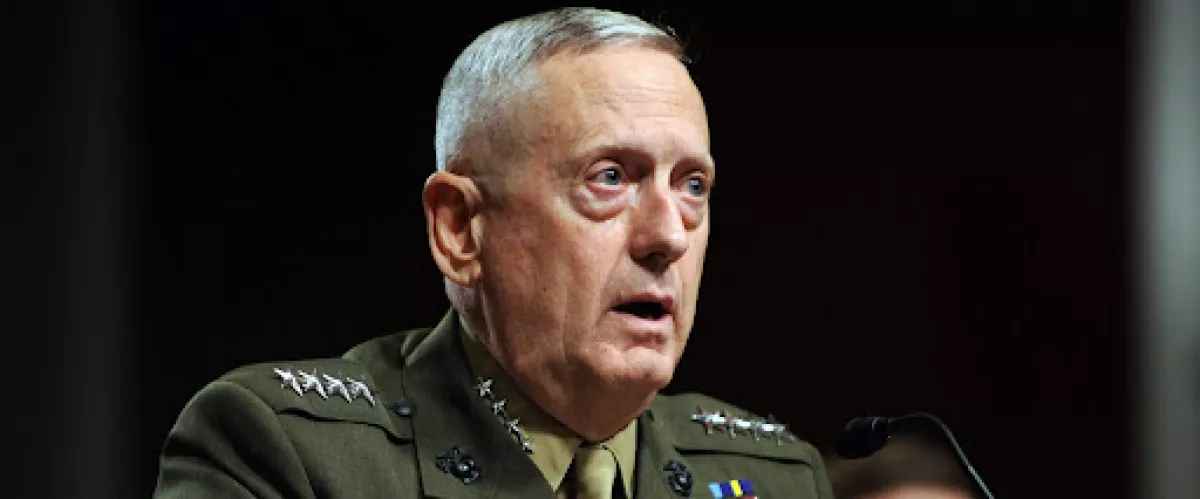
According to him, if the Trump administration were to end the war against Iran at this stage, it would effectively amount to handing Tehran control over the Strait of Hormuz—a critical global energy chokepoint. Mattis, who served as Secretary of Defense during Trump’s first term, led U.S. military operations in Iraq and Afghanistan and spent more than 40 years in the U.S. Marine Corps.
The former defence chief warned that any premature declaration of victory by the United States in the ongoing conflict with Iran would, in practice, transfer control of the strategically vital Strait of Hormuz to the Islamic Republic.
Speaking at a conference in Houston, Mattis underscored the critical importance of the Strait of Hormuz—a narrow waterway through which roughly 20 per cent of the world’s oil supply passes. He cautioned that granting Iran control over the Strait would give it unprecedented leverage over the global economy and significantly expand its ability to act against U.S. interests worldwide.
This assessment came amid President Donald Trump’s announcement of first a five-day, and then a ten-day, pause in strikes on Iran’s energy infrastructure, even as U.S. and Israeli attacks on Iran entered their fourth week. Iran’s retaliatory actions have effectively led to the closure of the narrow strait, through which roughly 20% of the world’s oil and gas supplies pass. Notably, about 83–84% of the oil and liquefied natural gas from the region is destined for East Asian markets—primarily China, as well as India, Pakistan, and Japan.
The disruption of supplies—amounting to approximately 15 million barrels of oil per day—has driven up global oil prices, dealing a blow not only to Asian markets but to the world economy as a whole.
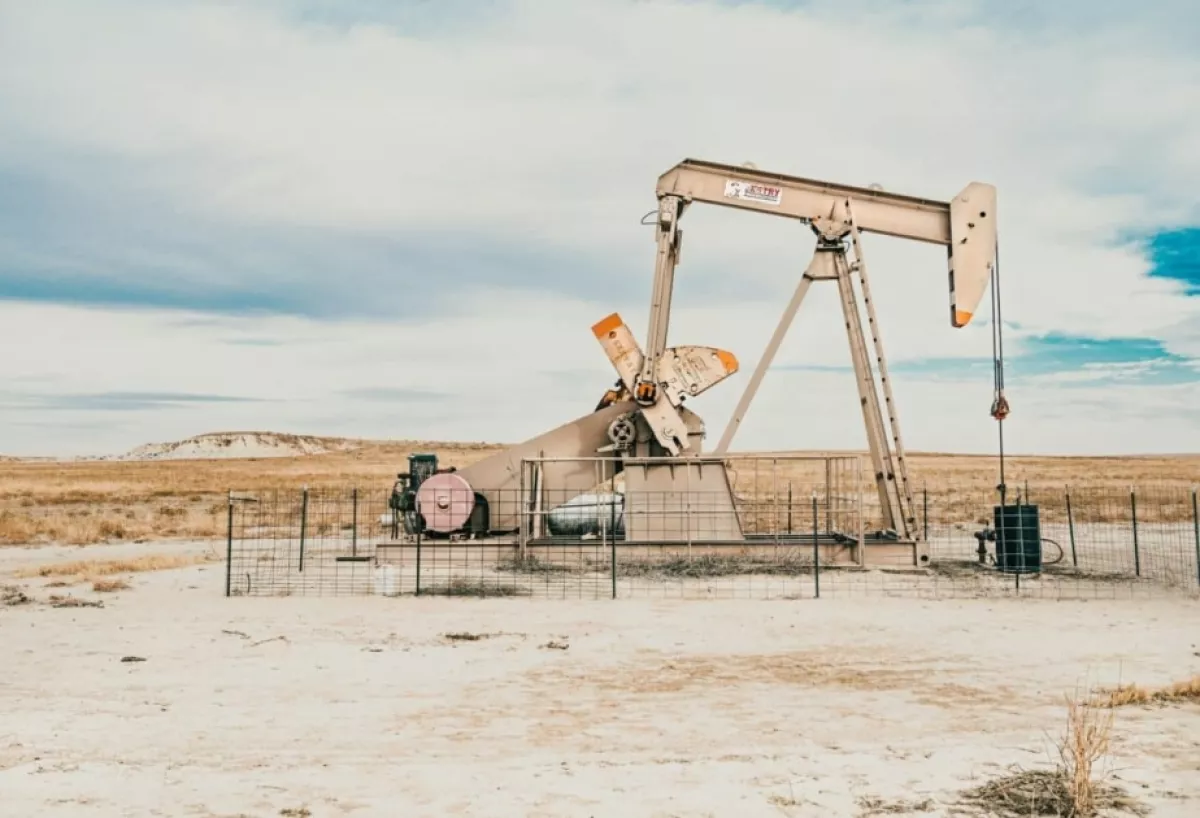
The Persian Gulf monarchies are also sustaining significant losses. For instance, Saudi Arabia has reportedly lost around 52 per cent of its oil export capacity.
“Iran right now, if we declared victory, they would now say they own the strait. You’d see a tax for every ship that goes through,” Mattis said. According to him, Iran is already charging some ships up to $2 million for transit.
"Despite the pause, it’s unlikely that the United States or Iran will be able to find compromise for a solution, Mattis said. While U.S. missiles have laid waste to military targets in Iran, they haven’t done anything to cement U.S. strategic interests in the war," he said.
“Neither side has the ability right now to move the other side off of where they’re at,” Mattis said. “Never in history has air power alone changed a regime,” Mattis added.
Executives from the U.S. oil industry who attended Mattis’s remarks said they expect the Trump administration to provide a clearer timeline for the continuation of the military campaign against Iran. Some of them, speaking privately, are leaning toward the idea of a permanent U.S. military presence in the Strait of Hormuz to prevent Iran from targeting oil tankers.
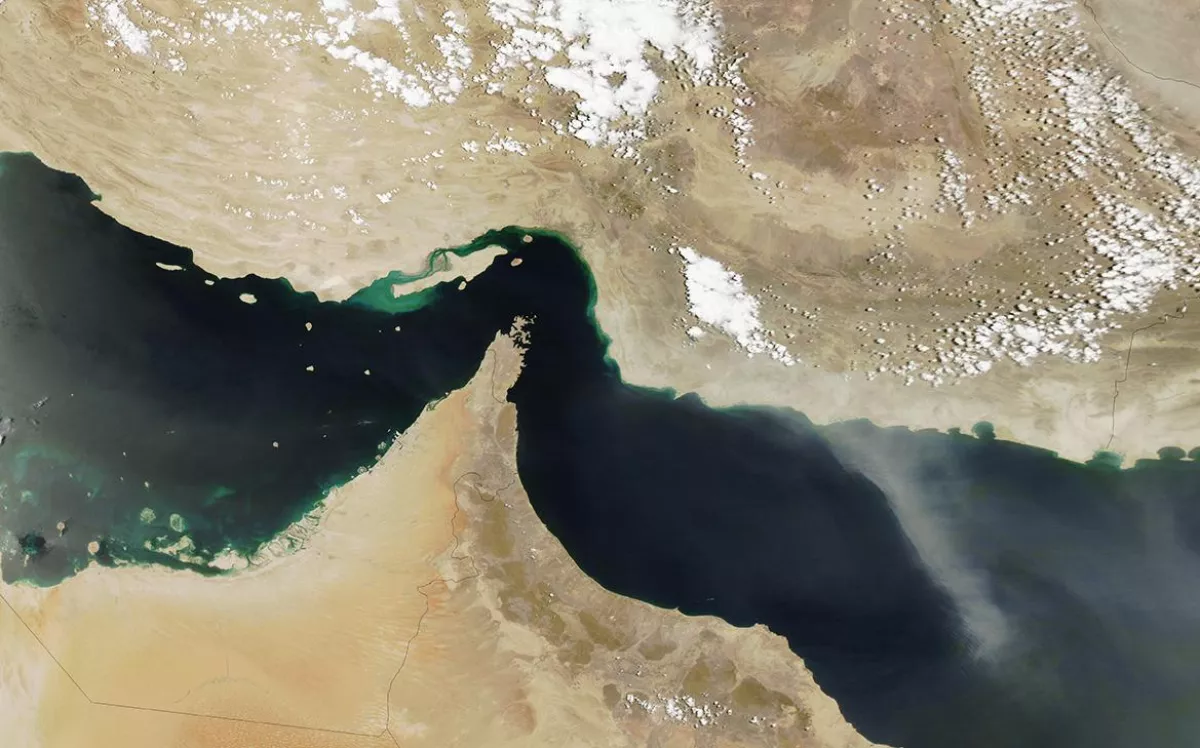
However, Mattis’s remarks leave little room for optimism on this front as well. Escorting vessels through the Strait of Hormuz—an option previously floated by the Trump administration—would pose serious challenges. According to Mattis, U.S. forces would have to provide protection along a route more than twice the length of Texas’s coastline: roughly 600 miles (965 km) across the Persian Gulf, another 100 miles through the strait itself, and then hundreds more kilometres through the Gulf of Oman—until ships move beyond the reach of Iranian missiles and drones.
Mattis’s comments highlight the difficulties facing Donald Trump as he attempts to ease tensions in the Strait of Hormuz, where conflict-driven disruptions are already contributing to rising oil prices.
Meanwhile, thousands of U.S. Marines and sailors are being deployed to the Middle East. According to The Wall Street Journal, the Trump administration is also considering the deployment of units from the 82nd Airborne Division—one of the U.S. Army’s rapid response forces. In total, this could involve around 17,000 troops prepared for a potential ground operation.
“We’re in a tough spot, ladies and gentlemen. I can’t identify a lot of options,” Mattis said.
The loss of Kharg Island would cut off one of Iran’s most critical sources of revenue. Seizing the island—home to the country’s main oil export terminals—is one option the United States could pursue to deprive Tehran of its ability to sell oil. However, according to Mattis, such a move would require a long-term U.S. military presence. Moreover, it may not yield the desired outcome: the Iranian regime could attempt to cling to power and refuse concessions even after losing its oil revenues, which form the backbone of its exports, despite the severe economic consequences.
To ensure the safe passage of ships through the strait, the United States would need an unblinking eye in the sky, along with aircraft ready to act at any moment to neutralise missile launchers that can appear along Iran’s coastline as quickly as a tarp is pulled off the back of a pickup truck.
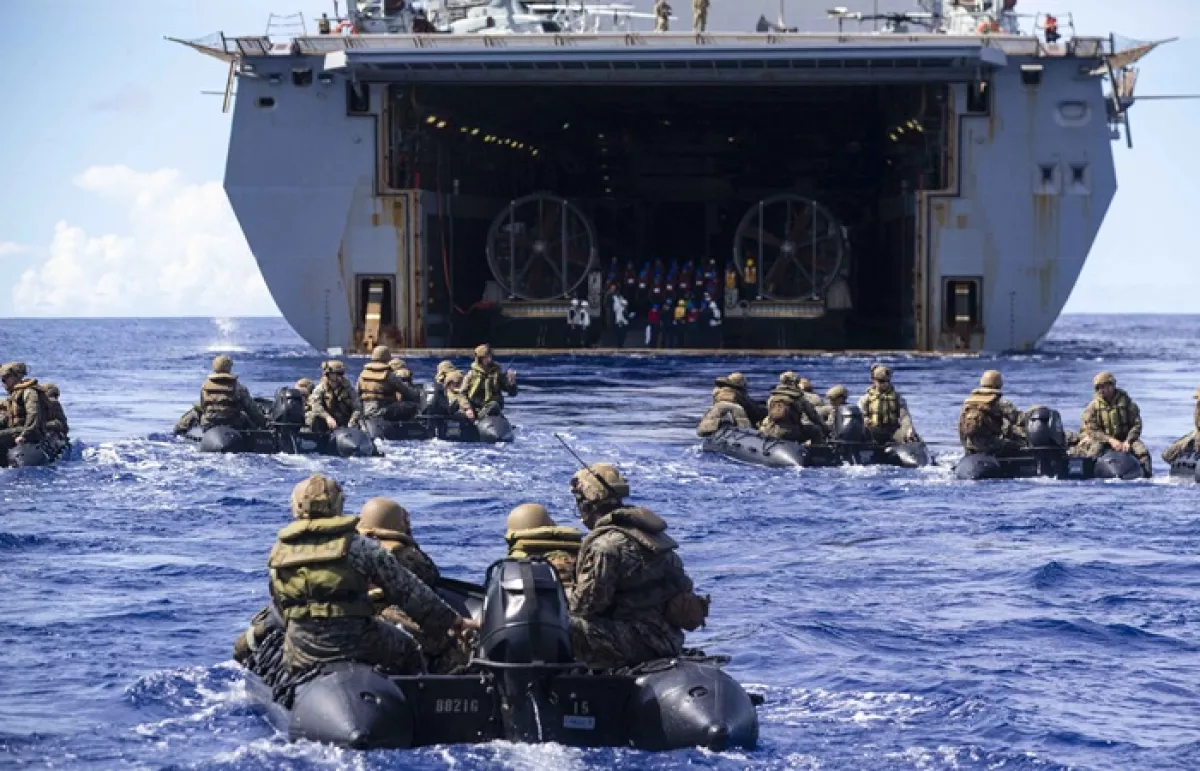
“[...] that gives you an idea of how difficult this will be for the U.S. Navy to try and protect ships in that shipping lane, 600 miles down the Gulf, 100 miles through the Straits and then out into the water,” he emphasised.
According to Mattis, the United States has found itself in a difficult position, with possible scenarios ranging from large-scale casualties in Iran to effectively ceding long-term control of the Strait to Tehran. He added that you don’t fight forts with ships and that this is a fundamental principle of naval warfare.
However, a broader question arises: is this really only about coastlines and islands? The Iranian outlet Tehran Times, which is close to hardline factions within the regime, claims—citing security sources—that the United States is considering a potential amphibious operation aimed at seizing strategic airports in several major Iranian cities.
In theory, such a scenario is possible given the dominance of the U.S.-Israeli air forces in the skies; however, in practice, assessing the likelihood of its success is extremely difficult.
Iran has effectively realised its power, gaining control over a potent instrument of influence on the global economy, and so far shows no willingness to relinquish it. This is especially true given that, as reported, the country’s leadership is regularly targeted by strikes from Israel and the United States. In Israel, this tactic is openly acknowledged, referred to as “mowing the lawn.”
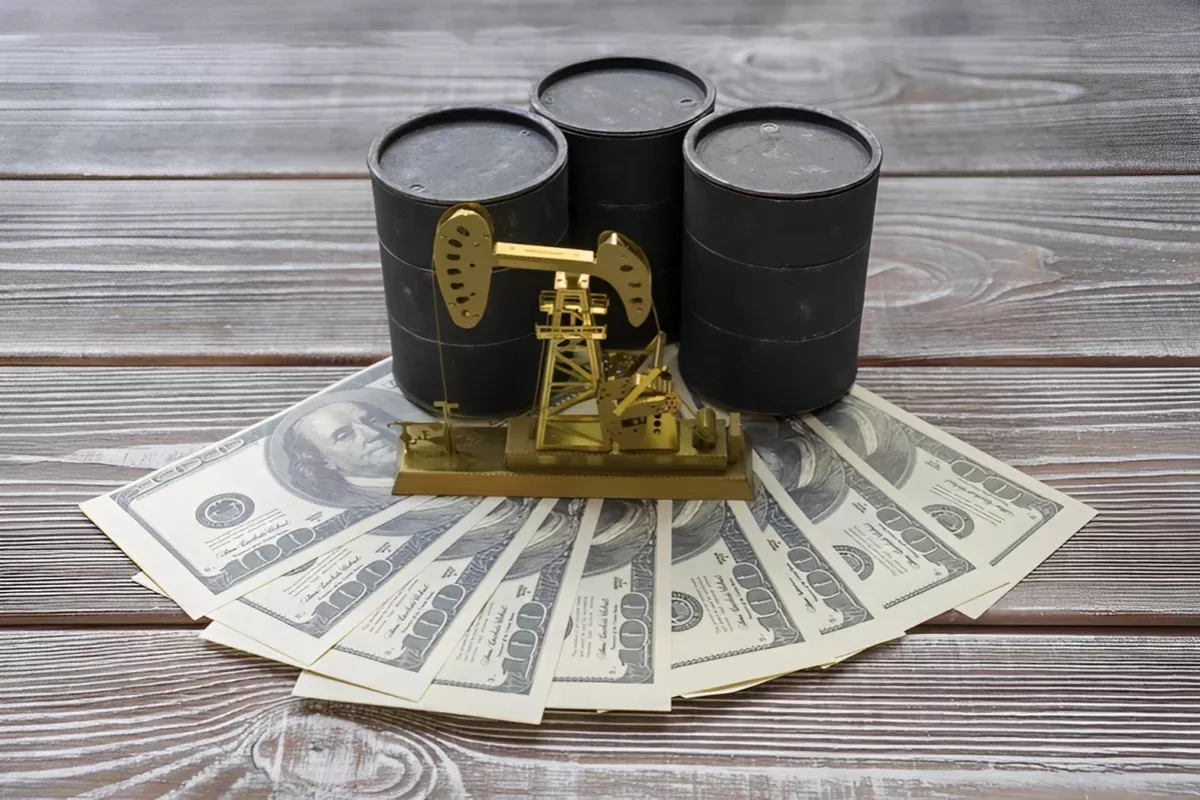
Under these circumstances, Tehran has apparently concluded that retreat no longer makes sense, and it is betting on controlling a key economic artery of the planet—using the threat of driving oil prices up to $200 per barrel to impose its conditions, a move that carries the risk of a global recession.
However, it is unlikely that the United States will allow this instrument to remain in Tehran’s hands. As Mattis pointed out, it would greatly strengthen Iran’s political and economic position and give it grounds to claim victory in its standoff with Washington.
There is also a broader precedent to consider. If Iran were allowed to control the Strait of Hormuz, a logical question arises: what would prevent other countries from acting similarly? For example, in the Malacca or Taiwan Straits, through which 30–40 per cent of global trade passes.
So what happens next? Are we talking about occupying the entire Iranian coastline? Launching a large-scale amphibious operation aimed at reaching Tehran and changing the regime? Or will Washington focus on destroying Iran’s energy infrastructure—power plants and oil refineries—in an effort to collapse the country’s economy, as Donald Trump had previously suggested?
For now, there remains a certain chance for a diplomatic resolution. However, if that fails, the door opens to any scenario—including the most severe and potentially catastrophic.







 editor@caliber.az
 +994 55 444-88-98
 Азербайджан, Баку, ул. Низами, 203, Af Business House, 5-й этаж