










From Brussels to Baku The EU reaches out to Azerbaijan
António Costa arrived in Baku on an official visit. This is his first trip to Azerbaijan since taking office and arguably one of the most significant diplomatic gestures from Brussels in recent months. On the eve of the visit, Costa described Azerbaijan as “a partner of strategic importance to the EU,” emphasising that energy cooperation "is crucial for our efforts to diversify our energy supplies and strengthen our energy security.” Azerbaijan has long established itself as a reliable energy partner for Europe, a reputation now backed by concrete figures and contracts.
As of early 2026, Azerbaijani natural gas is delivered to 14 countries, with Germany and Austria joining the list of recipients in January, bringing the total number of importing countries to 16. President Ilham Aliyev noted that such a wide geographic coverage of pipeline deliveries is the largest in the world for a single supplier. Regular shipments go to Türkiye, Georgia, Italy, Greece, Bulgaria, Romania, Hungary, Serbia, Slovenia, Croatia, North Macedonia, Slovakia, Ukraine, and Syria.
A ten-year contract with Germany’s state-owned company SEFE provides for a gradual increase in volumes up to 1.5 billion cubic metres per year, which is of exceptional importance for Berlin as it seeks to replace Russian gas.
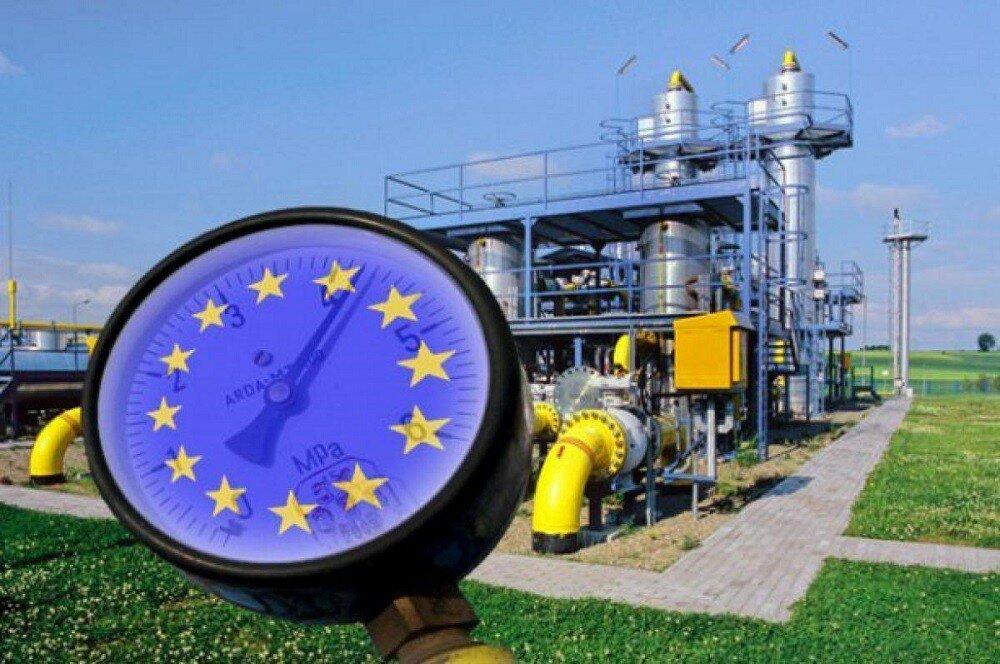
At the heart of this gas strategy is the Southern Gas Corridor—a massive infrastructure network connecting Caspian gas fields with European consumers through an interconnected system of pipelines. Since becoming operational in 2020, the Trans Adriatic Pipeline (TAP) has delivered more than 56 billion cubic metres of gas to European markets.
In early 2026, TAP AG increased the pipeline’s capacity by 1.2 billion cubic metres per year, marking the first phase of expansion. By 2027, the plan is to double total capacity to 20 billion cubic metres. Discussions are underway to supply gas to Montenegro via the Ionian-Adriatic Pipeline, which will connect to the TAP system, while parallel plans foresee shipments to Albania of approximately 200 million cubic metres per year.
The Southern Gas Corridor thus continues to extend deeper into Europe, gradually becoming a fully-fledged alternative to Russian supply routes.
Notably, just a week before António Costa’s visit to Baku, the 12th Southern Gas Corridor Advisory Council Ministerial Meeting and 4th Green Energy Advisory Council Ministerial Meeting took place. The co-chairs were Dan Jørgensen and Parviz Shahbazov.
The presence of the European Commissioner in Baku in early March, followed by the President of the European Council on March 11, demonstrates that Azerbaijan has become a priority for Brussels in energy planning. The European Commission has acknowledged that Azerbaijan plays a key role in the EU’s efforts to diversify energy supplies and reduce dependence on Russian fossil fuels.
This recognition is all the more significant in the context of the European Council reaching a principled agreement in late 2025 to fully phase out Russian gas: LNG imports are to end by the end of 2026, and pipeline gas by September 2027. The question of “who will replace Russia” is becoming increasingly urgent for Europe, and Azerbaijan provides one of the most convincing answers.
However, limiting the Baku–Brussels partnership solely to hydrocarbons would be an oversimplification. In recent years, Azerbaijan has been building extensive cooperation with European countries in green energy, where ambitions are at least comparable to those in the gas sector.
As early as December 2022, Azerbaijan, Georgia, Romania, and Hungary signed a Strategic Partnership Agreement on the Development and Transfer of Green Energy. This agreement launched the “Caspian–Black Sea–Europe Green Energy Corridor” project, which envisions laying an undersea high-voltage cable across the Black Sea approximately 1,200 kilometres long—potentially the longest and deepest in the world.
To implement the project, a joint company, Green Energy Corridor Operation (GECO), has been established, and the feasibility study has been completed. By the end of 2025, the project was granted “Project of Mutual Interest” status by the European Union, opening the door to significant EU funding.
The first phase of the project is designed for a capacity of up to 1.3 gigawatts, sufficient to power more than two million European households. In the longer term, capacity could be increased to 4–6 gigawatts. The European Network of Transmission System Operators for Electricity (ENTSO-E) has included the project in its Ten-Year Network Development Plan (TYNDP 2026), and a detailed cost–benefit analysis is planned for this year. According to previously announced intentions, the European Commission is ready to allocate around €2.3 billion to the project, while the World Bank has already provided a $35 million loan. The first phase is expected to be completed by 2029–2030. In February 2026, Transelectrica and Georgian State Electrosystem signed a memorandum of understanding, confirming the project’s transition to practical implementation.
The project’s strategic depth is further enhanced by its Central Asian dimension. An agreement reached under COP29 between Azerbaijan, Kazakhstan, and Uzbekistan provides for the transit of electricity generated from renewable sources in Central Asia through Azerbaijan to Europe. In this way, green energy is seamlessly integrated into the logic of the Middle Corridor, transforming it from a purely transport route into a multifunctional, next-generation infrastructure platform.
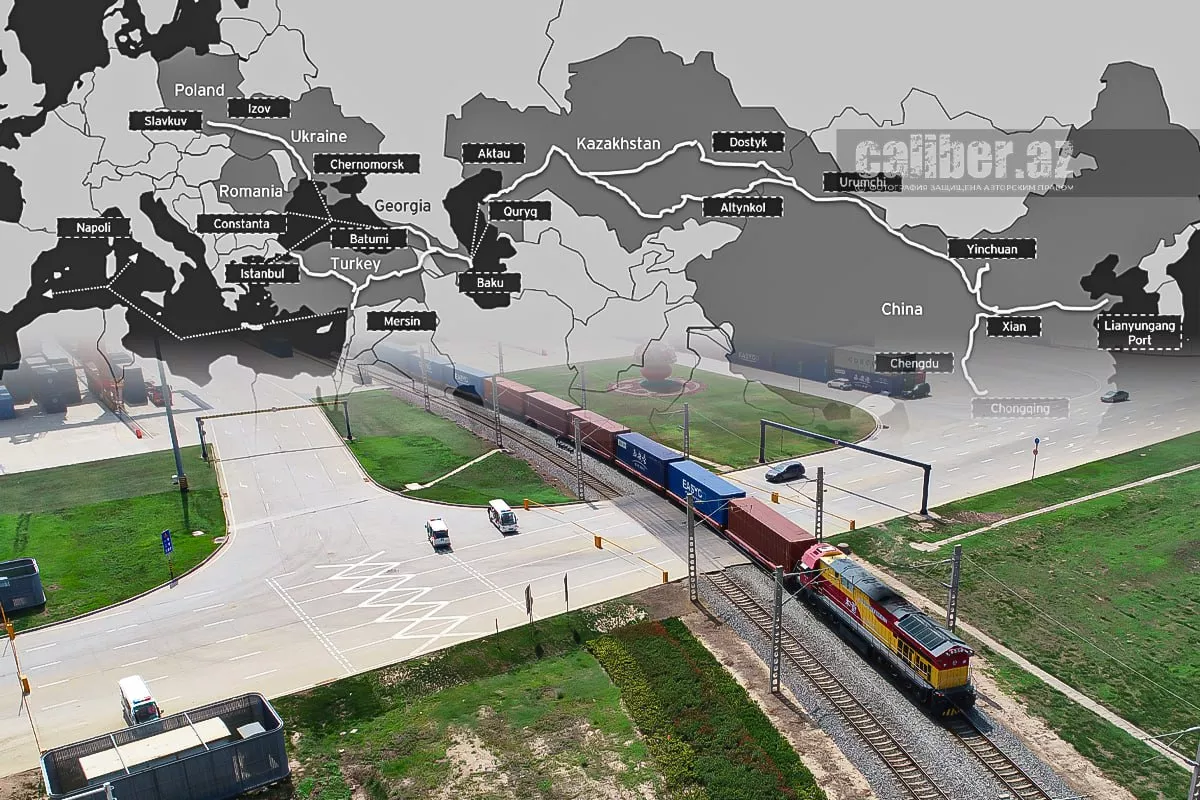
The Middle Corridor, or Trans-Caspian International Transport Route, deserves particular attention in this context. The route connects Asia and China with Europe via Kazakhstan, the Caspian Sea, Azerbaijan, Georgia, and Türkiye, offering the shortest overland path geographically.
Since the start of the Russian invasion of Ukraine, freight traffic along the Middle Corridor has increased dramatically. While less than one million tonnes of cargo were transported via the route in 2021, volumes rose to 1.5 million tonnes in 2022 and have continued to grow since. Container trains cover the journey from China to Europe in less than 20 days, twice as fast as the maritime route through the Suez Canal.
The importance of the Middle Corridor has sharply increased amid ongoing military conflicts. The war in Ukraine has made the Northern Corridor through Russia toxic for Western shippers, while instability in and around Iran and the broader Middle East casts doubt on the reliability of maritime routes through the Suez Canal.
Azerbaijan, located at the intersection of North–South and East–West transport axes, occupies a unique geographic position that allows it to offer an alternative to both vulnerable corridors. The European Union clearly recognises this. In January 2026, Baku and Brussels agreed to deepen cooperation under the EU’s Global Gateway initiative and the Cross-Regional Connectivity Agenda.
In a broader geopolitical context, it is worth noting that Azerbaijan has long established itself as a reliable and consistent partner in global politics. In recent years, Baku has signed strategic partnership agreements with both China and the United States. President Ilham Aliyev has outlined a vision to transform the Organisation of Turkic States into a full-fledged platform for economic and transport integration, effectively proposing a model of a Turkic trade corridor from Central Asia to European markets. The C5 format was expanded to C6 with the inclusion of Azerbaijan, further highlighting its growing role as a link between Asian and European economic spaces.
Azerbaijan’s relationship with the European Union also holds independent significance, beyond broader Turkic or Caspian frameworks. EU countries remain Azerbaijan’s largest trading partners. The presence of SOCAR in Europe—with 564 filling stations, the acquisition of Italy’s Italiana Petroli with 4,500 stations and two refineries—demonstrates that Azerbaijan–EU energy cooperation is no longer a one-way street. Azerbaijan is now integrated into the European energy value chain, from extraction and refining to retail sales.
Ultimately, what we are witnessing today appears to be the emergence of a fundamentally new format of relations between Baku and Brussels. For the EU, Azerbaijan is simultaneously an energy supplier, a transport hub, a partner in green energy transit, and a geopolitical stabiliser in one of the world’s most turbulent regions.
The European Council, the European Commission, and individual EU member states are increasingly investing in this partnership—both politically and institutionally. António Costa’s visit to Baku simply confirms what a careful observer could already see: Azerbaijan is no longer a peripheral partner on Europe’s eastern edge.







 editor@caliber.az
 +994 55 444-88-98
 Азербайджан, Баку, ул. Низами, 203, Af Business House, 5-й этаж