










Türkiye’s сapabilities take centre stage at NATO gathering
After years of sustained growth in its defence sector, Ankara is seeking to use a historic NATO summit to reinforce its position as a central European security partner, building on recent momentum despite lingering reservations among some allies, Daily Sabah writes.
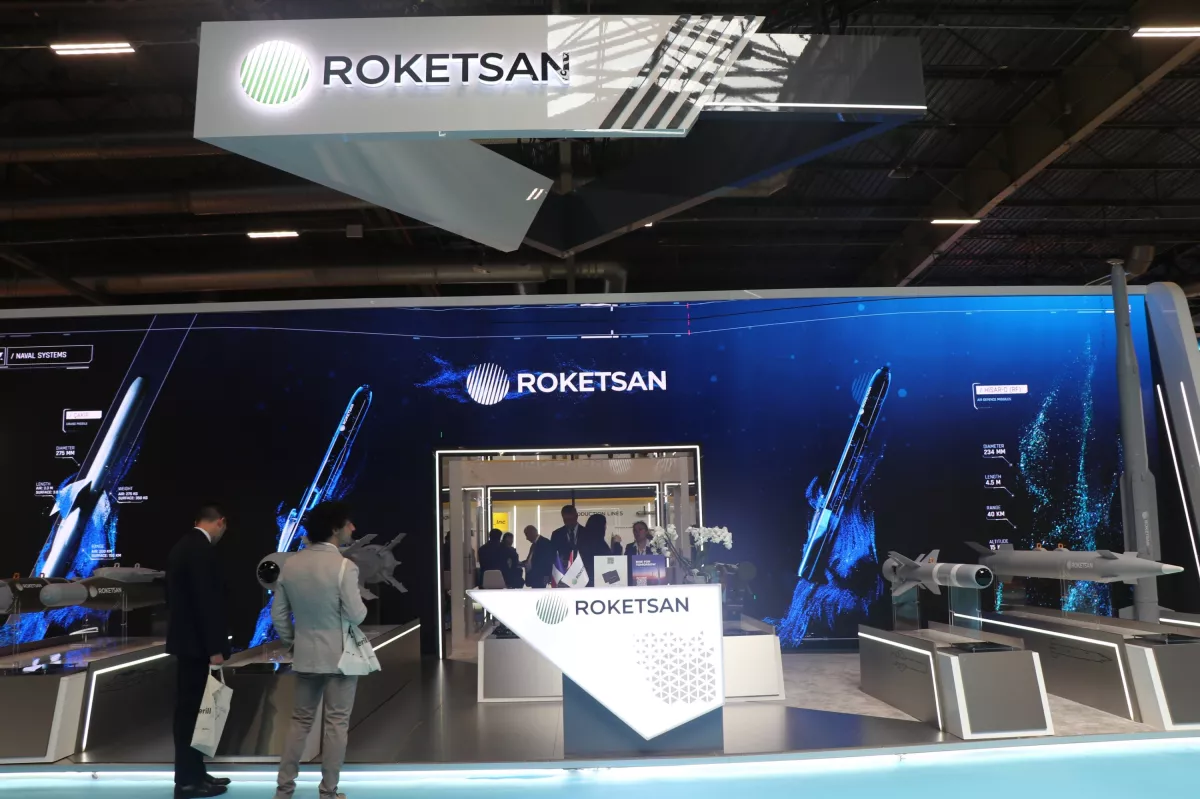
The two-day gathering opens on Tuesday, July 7, with the Defence Industry Forum, once a peripheral event but now formally integrated into the program. Around 3,500 companies are expected to present Türkiye’s expanding defence capabilities.
President Recep Tayyip Erdoğan has emphasised Ankara’s strategic importance, stating: “It is inconceivable to establish European security without Türkiye,” as he presses for inclusion in European defence initiatives, including the European Union’s €150 billion ($176 billion) Security Action for Europe (SAFE) program.
Türkiye maintains NATO’s second-largest military after the United States, with 355,000 troops and 378,000 reservists, while its defence industry has expanded rapidly over the past decade.
However, Ankara’s ambition to move beyond the role of supplier to become a strategic partner has faced obstacles. “Türkiye has been largely left out of Europe-wide programs and projects. That is what Türkiye wants to change... And to do that, it will use the summit to showcase its capabilities,” said Özgür Ünlühisarcıklı.
According to the Stockholm International Peace Research Institute, Türkiye ranks 11th globally in defence exports, accounting for 1.8% of the market. Officials say exports rose by 48% in 2025, up from 29% a year earlier.
“We now achieve in one week what we used to achieve in one year,” Erdoğan said last month, referring to exports of drones, tanks, armoured vehicles and warships, including a naval vessel delivered to Romania — described as “the first export of a military ship to an EU and NATO member country.”
Ankara is also seeking deeper industrial cooperation. “We do not want to be seen only as a supplier. We want to be regarded as a strategic partner.. (for) joint production and technology cooperation,” said Haluk Görgün.
Nonetheless, concerns persist among allies over Türkiye’s ties with Russia, despite Ankara maintaining dialogue with both Moscow and Kyiv and hosting peace talks after the 2022 invasion of Ukraine. Relations with NATO partners, including the United States, were also strained following Türkiye’s 2017 purchase of the Russian S-400 air defence system.
“This is what Türkiye needs to persuade France, Italy and Germany about,” Ünlühisarcıklı said.
Additional tensions stem from Türkiye’s counterterrorism operations in Syria and disputes with Greece and the Greek Cypriot Administration in the eastern Mediterranean. Although relations have entered what analysts describe as a “detoxification” phase, partly due to Ankara’s support for Kyiv, the S-400 issue remains a key obstacle, particularly with Washington.
Türkiye’s defence ties with the United Kingdom and several European states are functioning, but broader EU cooperation remains limited. “It’s not working with the European Union as a whole because there are a couple of members who are blocking it,” said Mustafa Aydın, adding: “Apparently, it's not for Germany and France, and these are the two countries that matter.”
Under the SAFE program, non-EU countries such as Türkiye can supply only up to 35% of component costs. Expanding access would require a formal security agreement with Brussels and unanimous approval from all 27 EU members.
“The political issues blocking Ankara's access to the SAFE program are the dispute between Türkiye, Greece and Greek Cyprus, but also France's ill will,” said Sinan Ülgen, who argued it was “irrational” to exclude Türkiye given current geopolitical pressures.
Some EU members, including Spain, Romania, Poland and Italy, have strengthened defence ties with Türkiye. Turkish drone manufacturer Baykar has acquired Piaggio Aerospace and partnered with Leonardo.
Outside the EU, the United Kingdom is cooperating on Türkiye’s Kaan fifth-generation fighter jet project. Ankara is also seeking US approval to proceed with the delivery of American-made jet engines for the program.
By Tamilla Hasanova







 editor@caliber.az
 +994 55 444-88-98
 Азербайджан, Баку, ул. Низами, 203, Af Business House, 5-й этаж