










Ukraine’s strikes on Wildberries ripple across business sectors beyond Russia
Ukraine’s strike campaign targeting facilities associated with Russia’s e-commerce giant Wildberries is having consequences far beyond the Russian Federation, with businesses in neighbouring countries also facing losses when the company’s warehouses and logistics infrastructure come under attack.
For Russia, Wildberries is comparable to Amazon, accounting for roughly half of the country’s total online retail market. Yet its marketplace is also widely used by manufacturers and sellers from neighbouring countries, particularly Central Asian states.
Founded in 2004 as an online clothing retailer, Wildberries now operates around 98,000 pickup points and connects more than one million sellers with consumers across Russia, Belarus, Kazakhstan, Kyrgyzstan, Armenia, Georgia, Uzbekistan and Tajikistan.
In 2025, Wildberries-Russ recorded 6.1 trillion roubles (approx. $75 billion) in sales, representing a 49% increase from the previous year. Reuters estimates that Russian online marketplaces now handle goods and services equivalent to around 8.5% of the country’s GDP.
What makes Wildberries more than simply a retailer is the scale of its logistics network. Since 2009, the company has maintained uniform delivery prices regardless of whether customers are located in Russia’s heartland or remote areas such as the Kamchatka Peninsula in the Far East or Barentsburg in the High Arctic.
Ukraine has justified its attacks on Wildberries facilities by pointing to the sale of goods including tactical clothing, body armour, medical kits and communications equipment that can potentially be used by Russian soldiers participating in the war in Ukraine.
Wildberries founder Tatyana Kim has denied that the company sells goods specifically manufactured for military purposes. She has pointed to international marketplaces such as Alibaba and Amazon, arguing that Wildberries does not sell products that those platforms do not also offer.
The company’s business model nevertheless leaves it particularly vulnerable to attacks because large quantities of goods are concentrated in major warehouses. This makes distribution efficient but also creates targets whose destruction can affect thousands of businesses and millions of consumers. The consequences of a strike can therefore continue spreading through the commercial network long after the immediate damage has occurred.
Kyrgyzstan and Wildberries
In Kyrgyzstan, Wildberries has become an important export channel for small and medium-sized businesses, particularly the country’s rapidly expanding garment industry, as highlighted by an article published on The Conversation outlet. In March 2026, Wildberries and Kyrgyz Export agreed to establish a “Made in Kyrgyzstan” section on the platform across all eight of its markets.
A July survey cited by Kyrgyz business media found that 55% of Kyrgyz entrepreneurs selling through Wildberries said the platform had helped them enter foreign markets.
The model has also changed the geography of Kyrgyz trade. For decades, the massive Dordoi Bazaar in the capital, Bishkek, connected local sewing workshops with wholesalers, traders and transport companies serving Russia and Kazakhstan, another major target market.
Digital commerce has added another route, allowing producers to sell directly to Russian consumers while relying on Wildberries warehouses for storage and fulfilment.
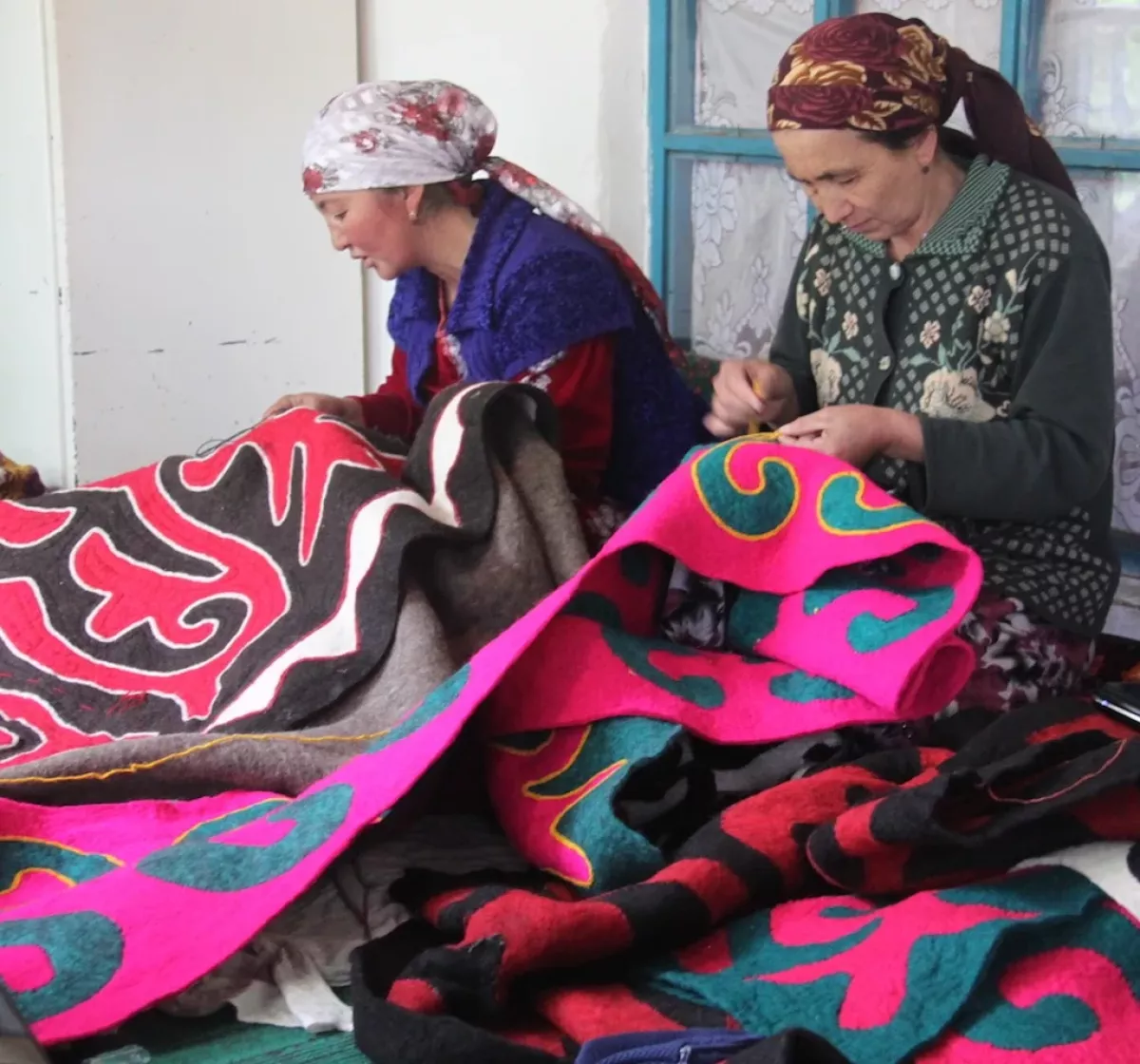
The article points out, however, that this arrangement creates a new vulnerability. Once Kyrgyz sellers transfer their inventory to a Wildberries warehouse in Russia, the goods are physically outside their control. A warehouse destroyed in a Ukrainian strike can therefore turn damage to Russian infrastructure into direct losses for a Kyrgyz business.
Kyrgyz media have already documented cases of this happening. Following the first strikes, Kyrgyz sellers reported destroyed inventories and warned that some businesses could face bankruptcy. Around 800 Kyrgyz e-commerce retailers appealed to their government for support with compensation claims. While these individual reports cannot establish the overall scale of Kyrgyz losses, they demonstrate how quickly disruption at a distant logistics hub can affect businesses operating in Bishkek.
In response to the Ukrainian attacks on Wildberries warehouses, Kyrgyz authorities announced financial support through preferential loan agreements and a “tax holiday” for small and medium-sized garment producers from August 1 until the end of the year. Compensation for destroyed goods, however, remains largely a promise.
Wildberries’ seller agreement classifies damage caused by drones and other military activity as "force majeure" — an uncontrollable and unforeseeable event — limiting the company’s liability for losses.
By Nazrin Sadigova







 editor@caliber.az
 +994 55 444-88-98
 Азербайджан, Баку, ул. Низами, 203, Af Business House, 5-й этаж