










“366” — the bloody code of the Khojaly tragedy Overview by Teymur Atayev
34 years ago, Armenian terrorists, with the participation of servicemen from the 366th regiment of the Soviet-Russian army, carried out the genocide of the people of Khojaly.
The ashes of Khojaly remain forever in our hearts. It could not be otherwise: in a single moment, the lives of hundreds of innocent civilians, including children, were brutally cut short—solely based on their ethnic and religious identity. Armenian armed formations killed innocent victims with particular cruelty, feeling their impunity. This was largely because servicemen of the Soviet army participated in this barbaric act.
As noted in 1999 by the National Leader, Heydar Aliyev, “In the 20th century, Armenians repeatedly committed acts of aggression and genocide against the Azerbaijani people. The most terrible of these is the Khojaly tragedy, the genocide. Seven years ago, on that dreadful night in February, Armenian armed forces, with the assistance and participation of the 366th regiment of the Soviet Army, carried out a horrific genocide against the residents of Khojaly, one of the most remarkable corners of Azerbaijan. This genocide, executed with unbelievable cruelty, became one of the most horrifying tragedies of the 20th century.”
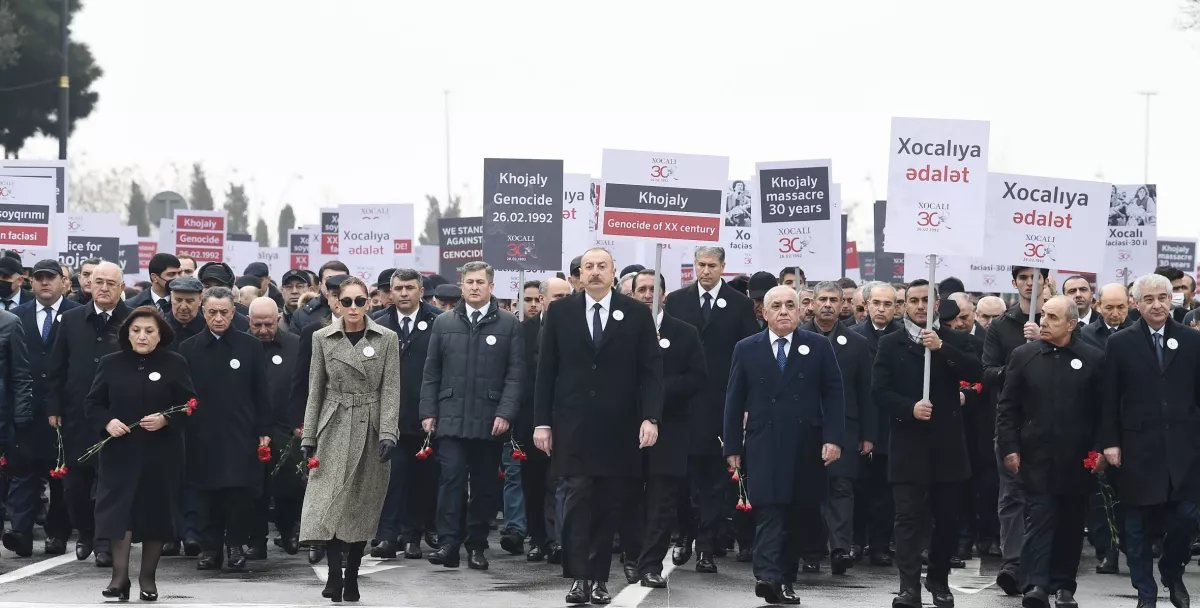
It should be recalled that this regiment was part of the 23rd Division of the 4th Army of the USSR.
President Ilham Aliyev emphasised that, “Together with ruthless Armenian detachments, the 366th Regiment of the Soviet Union perpetrated the Khojaly genocide. Yes, the Armenians made up the overwhelming majority of servicemen in this regiment. Still, it was a Soviet Union’s regiment that played a decisive role in ethnic cleansing against the Azerbaijanis, the Khojaly genocide, and our lands' occupation. Otherwise, the Armenians could not have occupied our lands on their own.”
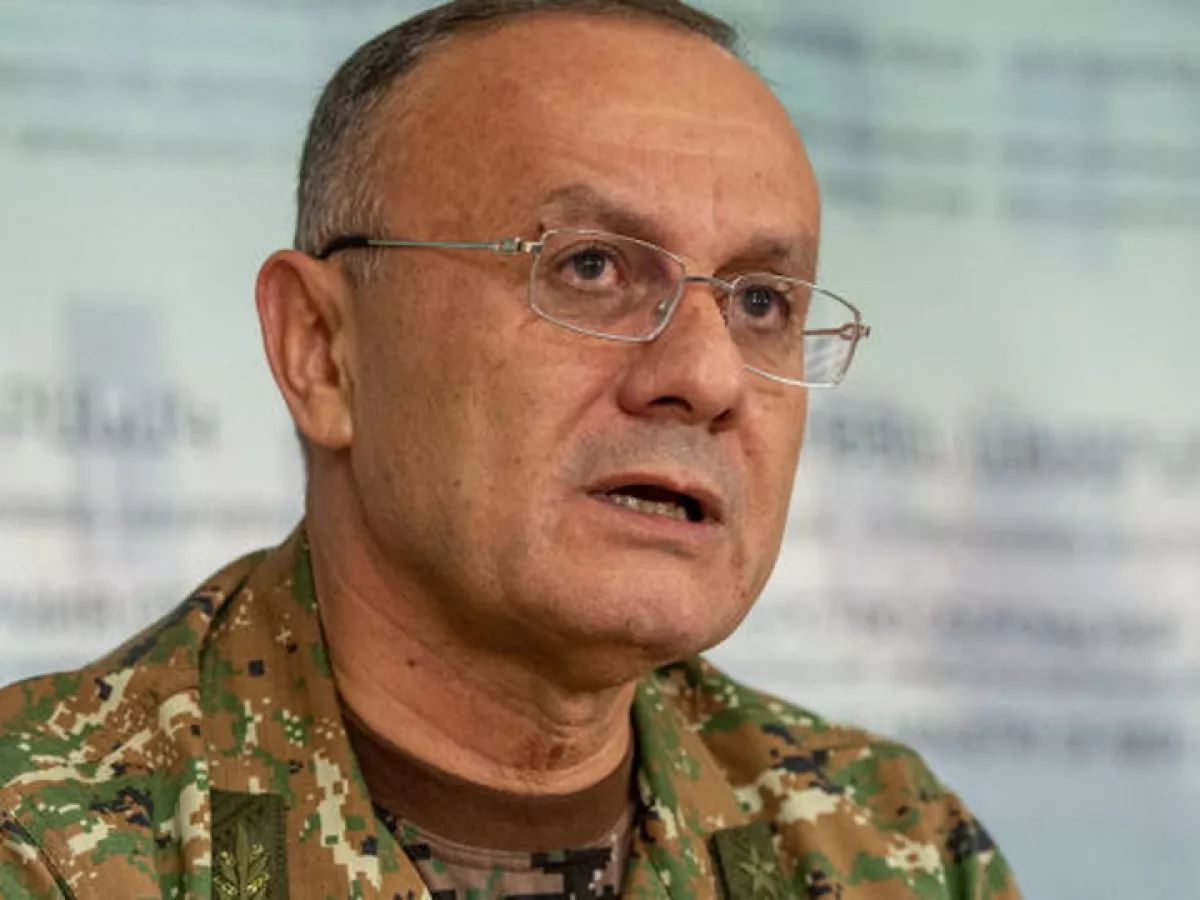
As established, the operation to attack Khojaly was led by the commander of the 2nd Battalion of the 366th Regiment, Seyran Ohanyan; the commander of the 3rd Battalion, Yevgeni Nabokikh; and the chief of staff of the 1st Battalion, Valery Chitchyan. The regiment’s armoured vehicles were involved in the operation, which could hardly have occurred without orders from Moscow.
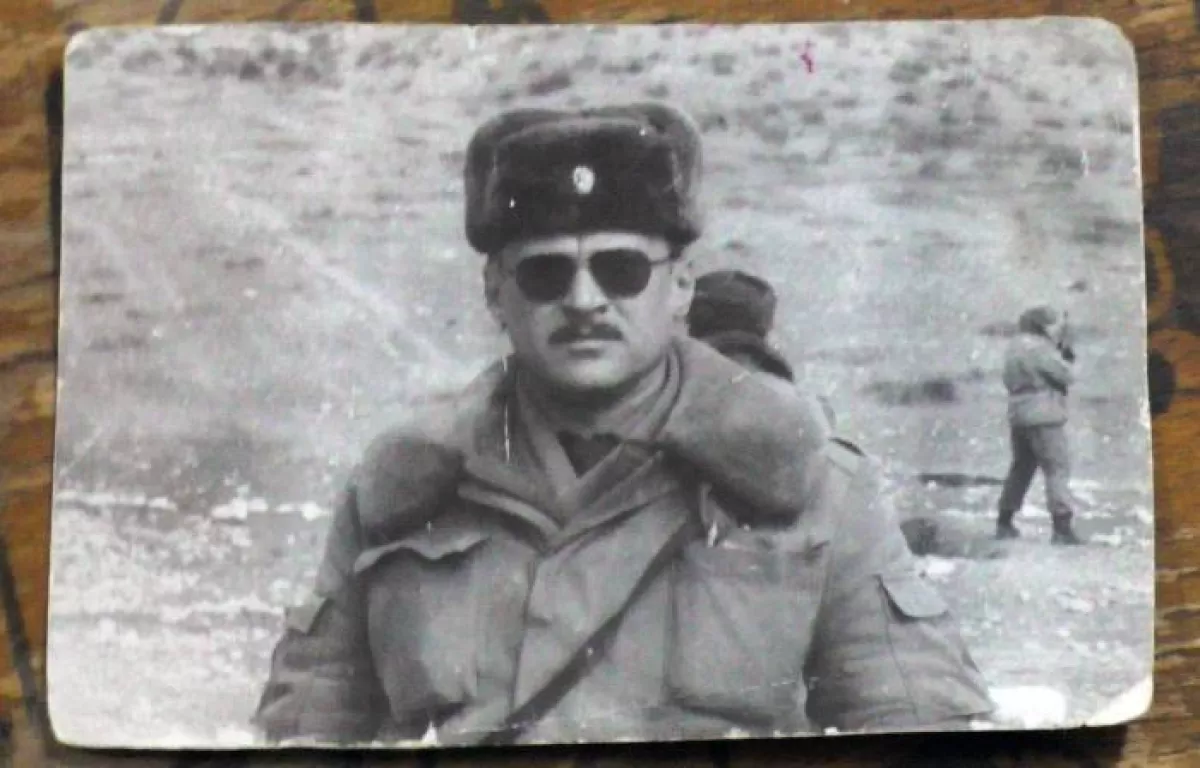
A report by the Russian human rights centre Memorial specifies that “fighting vehicles of the 366th regiment and their crews took part in the assault on the town.”
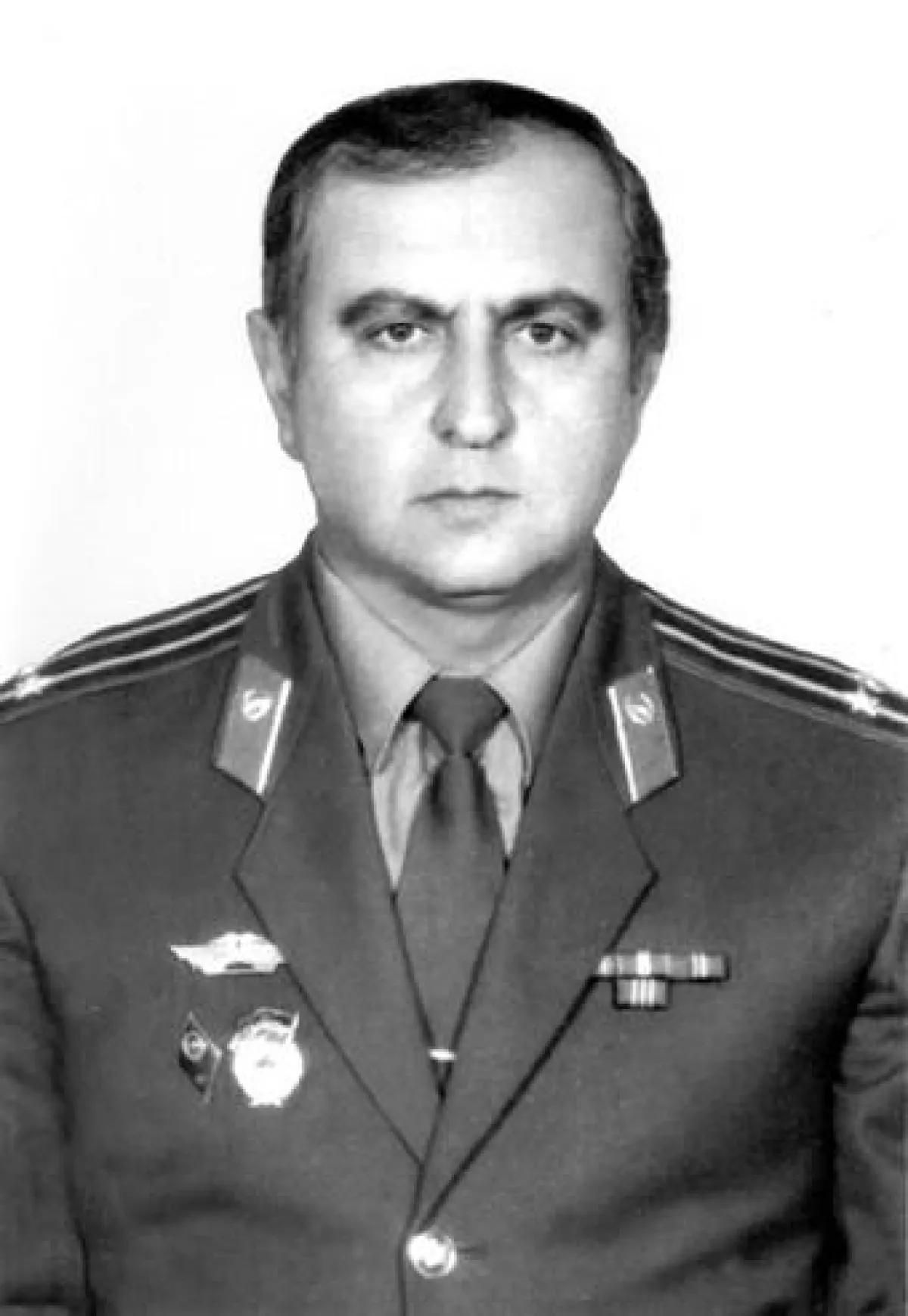
To conceal the involvement of the 366th Regiment in the crime, after the military operation in the city of Khojaly, it was hastily withdrawn from Karabakh and redeployed to Georgia. At the same time, a significant portion of its military equipment was handed over to Armenian armed formations and later used in subsequent criminal actions against the Azerbaijani population.
Some readers may understandably wonder: why did this anti-Azerbaijani tandem become a historical reality? In this context, the statement of the Armenian Soviet poet Gevorg Emin is often cited: “The Russian people do not necessarily need to know the history of Armenia—they must look to their own history, and then they will stand in defence of Armenia, because the interests of our states have always coincided.”
It is particularly telling that these very lines were quoted by Vladimir Stupishin, Russia’s ambassador to Armenia from 1992 to 1994. In his memoirs, he expressed the view that a “strategic alliance” between Moscow and Yerevan was necessary “for Russian state interests,” since “Armenia is a natural and reliable ally of Russia in the South Caucasus, as it has no other path to survival as an independent nation except by orienting itself toward Russia.” Accordingly, “it is in Russia’s long-term national interests to preserve Armenia as a state allied with us,” as well as to strengthen the “Russian presence” in the country.
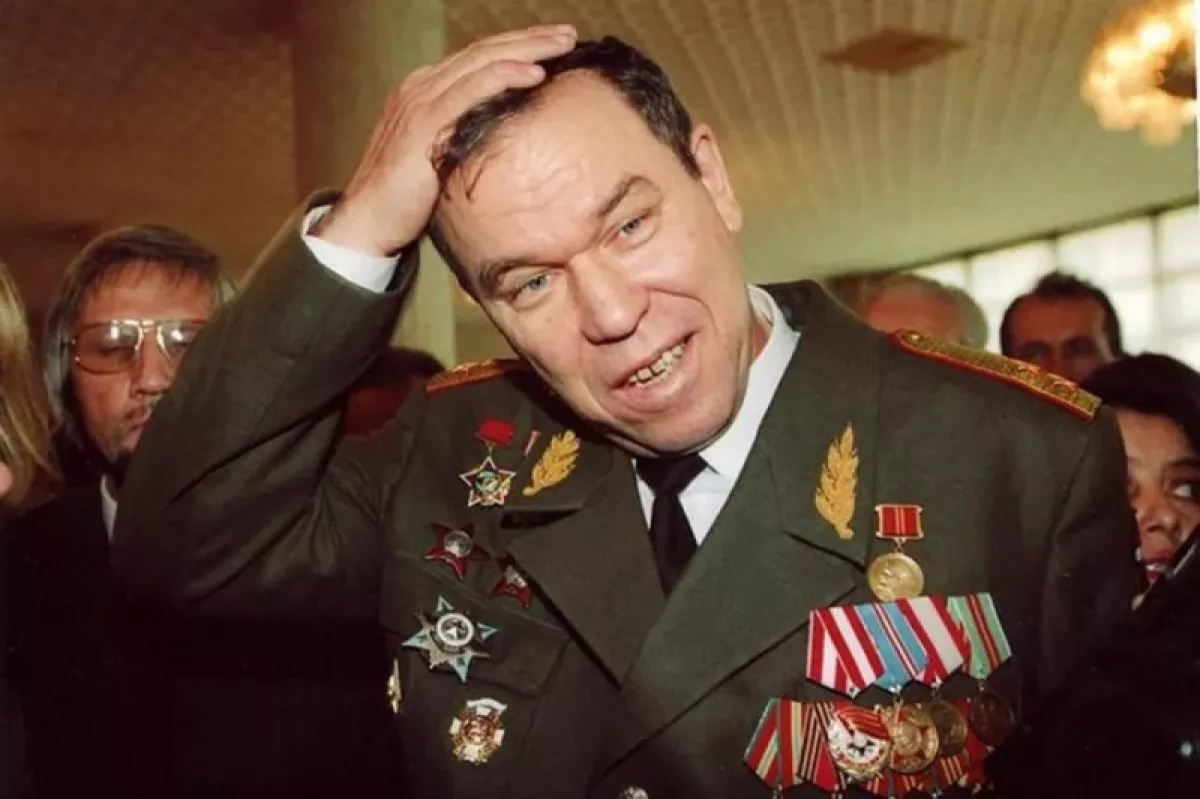
Short and clear, isn’t it? Therefore, the data presented by Soviet and Russian military journalist, publicist, and writer Viktor Baranets are hardly surprising. At the initial stage of the so-called “Armeniangate” investigation, initiated in 1997 by the then-chairman of the Russian State Duma Defence Committee, Lev Rokhlin, it was possible to "document that from August 1992 to January 1994, about 1,300 tonnes of ammunition were transported to Yerevan on 66 Il-76 flights and two An-12 flights from the Mozdok airfield.” And this is just one of the episodes cited by Baranets.
These figures fit squarely with the candid reflections of the same Stupishin: “Armenia has been our strategic ally from the very beginning until today. Accordingly, we must act toward it. Toward it and toward Karabakh, because without Karabakh there is no independent and friendly Armenia. And without them, Russia will have no positions in the South Caucasus at all… We simply must take Karabakh under our protection.”
That’s how it was—short and clear. And not for a moment did the ideologists or practitioners of this approach consider either compliance with international law or the principle of Azerbaijan’s territorial integrity. This allows us to trace the line of this “strategic alliance” from the events in Khojaly to the massacre of unarmed Azerbaijanis in Baku in March 1918, carried out by the Bolshevik–Dashnak tandem.
According to a direct witness of those events, a member of the Russian National Council in Baku in 1918–1919, Boris Baykov, “apart from the Bolsheviks, all large masses of Armenians opposed the Azerbaijani population.” As a result, “the Dashnaktsakans launched an offensive” against Azerbaijani positions, buildings were destroyed one after another—“especially those dear to Muslims: the Juma Mosque, the house of the Muslim charitable society.” The Bolsheviks “began mass arrests” of Azerbaijanis, and requisitions of premises and homes commenced.
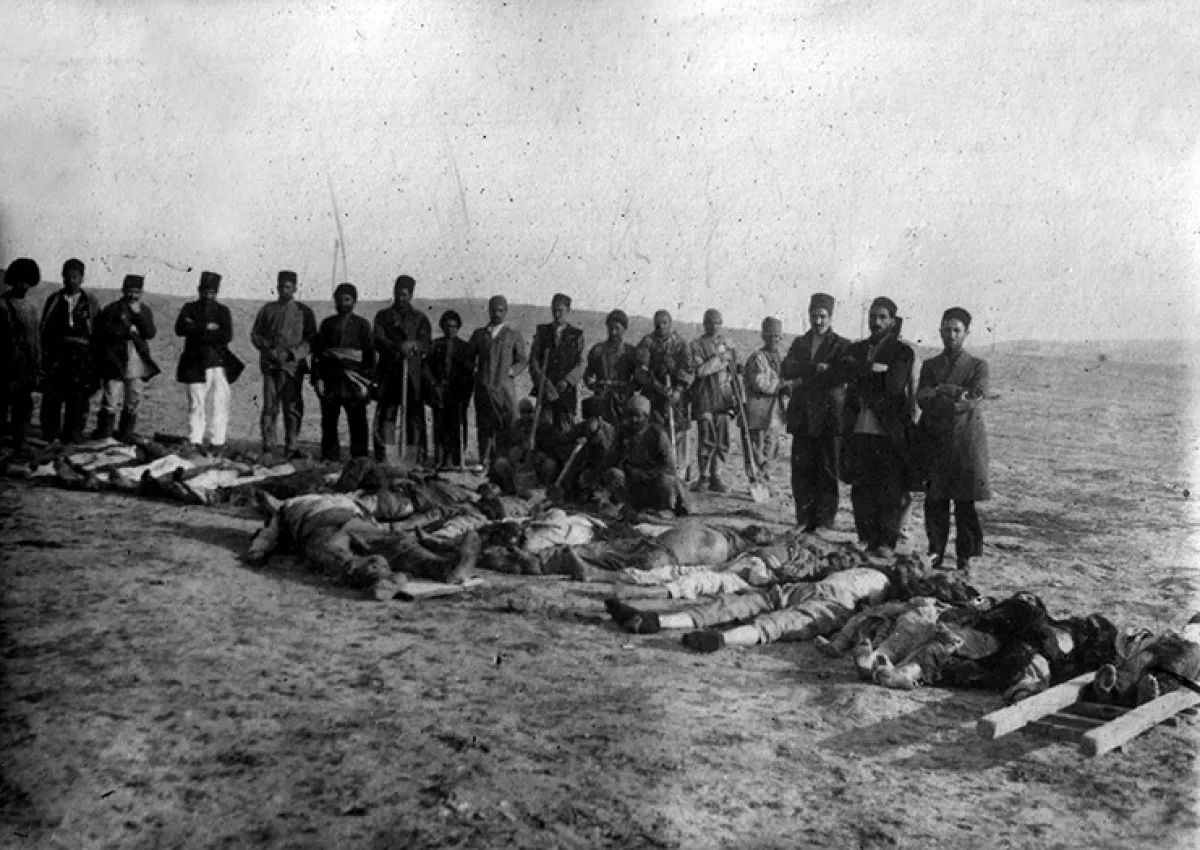
Notably, the Armenian Soviet academician and former director of the Institute of History of Armenia, Hrant Avetisyan, reported that in Baku, “four brigades of the Caucasian Army, consisting of 25 battalions and 18,000 Red Army soldiers, fought for Soviet power, about 70% of the Red Army soldiers were Armenians” (quoted in Kommunist newspaper, Yerevan, August 26, 1989, No. 199). Thus, the massacre of Azerbaijanis in March 1918, presented by Soviet historiography as the “suppression of the counter-revolutionary Musavatist rebellion,” was in fact carried out by a Bolshevik–Dashnak tandem.
The reason we refer to this tragic episode of history is likely clear to the reader. It is about the continuity of such a “union-strategic alignment,” so vividly manifested in the context of the Khojaly tragedy.
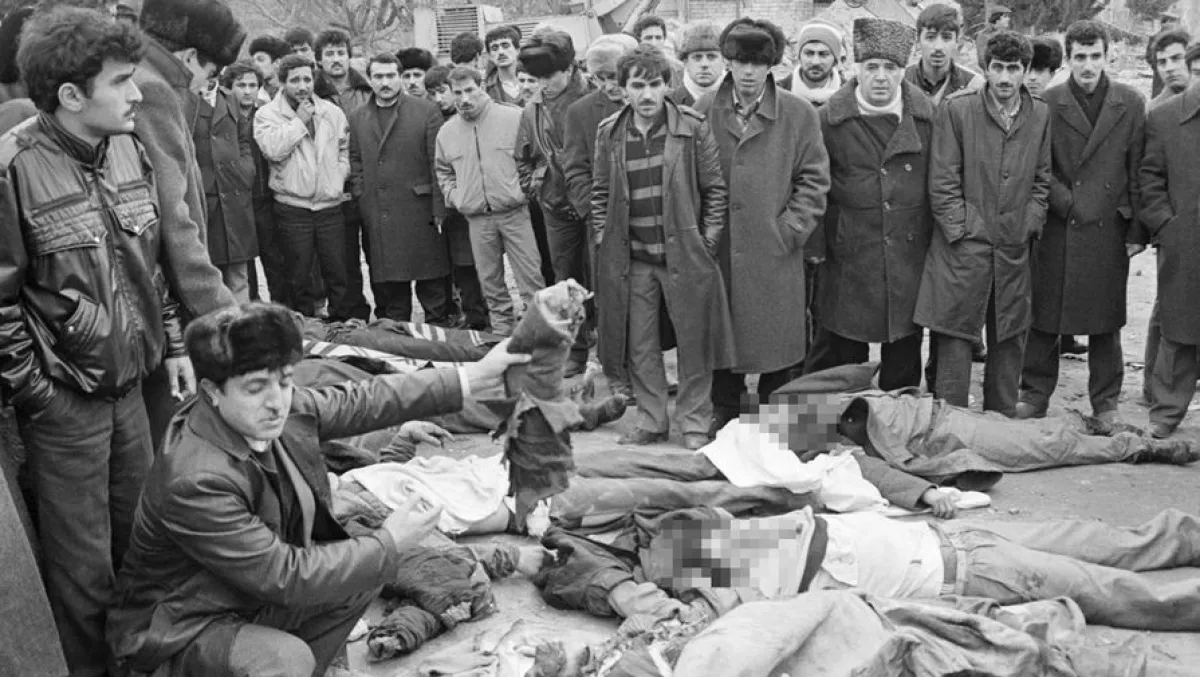
In this context, one cannot fail to recall the tragedy of Baku’s Black January in 1990, when, according to the well-known Russian director Stanislav Govorukhin, as reported in his contemporaneous article Rehearsal?, on the night of January 20, 1990, “the Soviet army entered a Soviet city as an occupying army. According to the military commandant, ammunition expenditure that night was 60,000 rounds.” The director cites the testimony of a ten-year-old girl who saw from her balcony how tanks “moved against people” standing in the square “holding hands,” that is, unarmed. He noted that “there would have been fewer casualties if people had not been convinced that the army—their army—would not shoot its own citizens” (Moskovskiye Novosti, February 18, 1990).
A familiar pattern emerges—this time with the participation of reservists of Armenian nationality from the southern regions of the then RSFSR in the January 1990 military operation against Azerbaijanis. This ill-fated tandem in a distinct anti-Azerbaijani format reappeared on February 26, 1992, in Khojaly.
However, the spirit of the Azerbaijani people was not broken. In this regard, the words of National Leader Heydar Aliyev come to mind: “The will of the people of Khojaly was not broken; people heroically, with courage, sacrificed themselves. They endured this tragedy with bravery. Proud Khojaly residents, even today, on the 7th anniversary of the tragedy, continue to live heroic lives…”
Heydar Aliyev further made a crucial clarification: “We will not allow even a grain of our land to remain in the hands of invaders. We will not yield even an inch to them.”
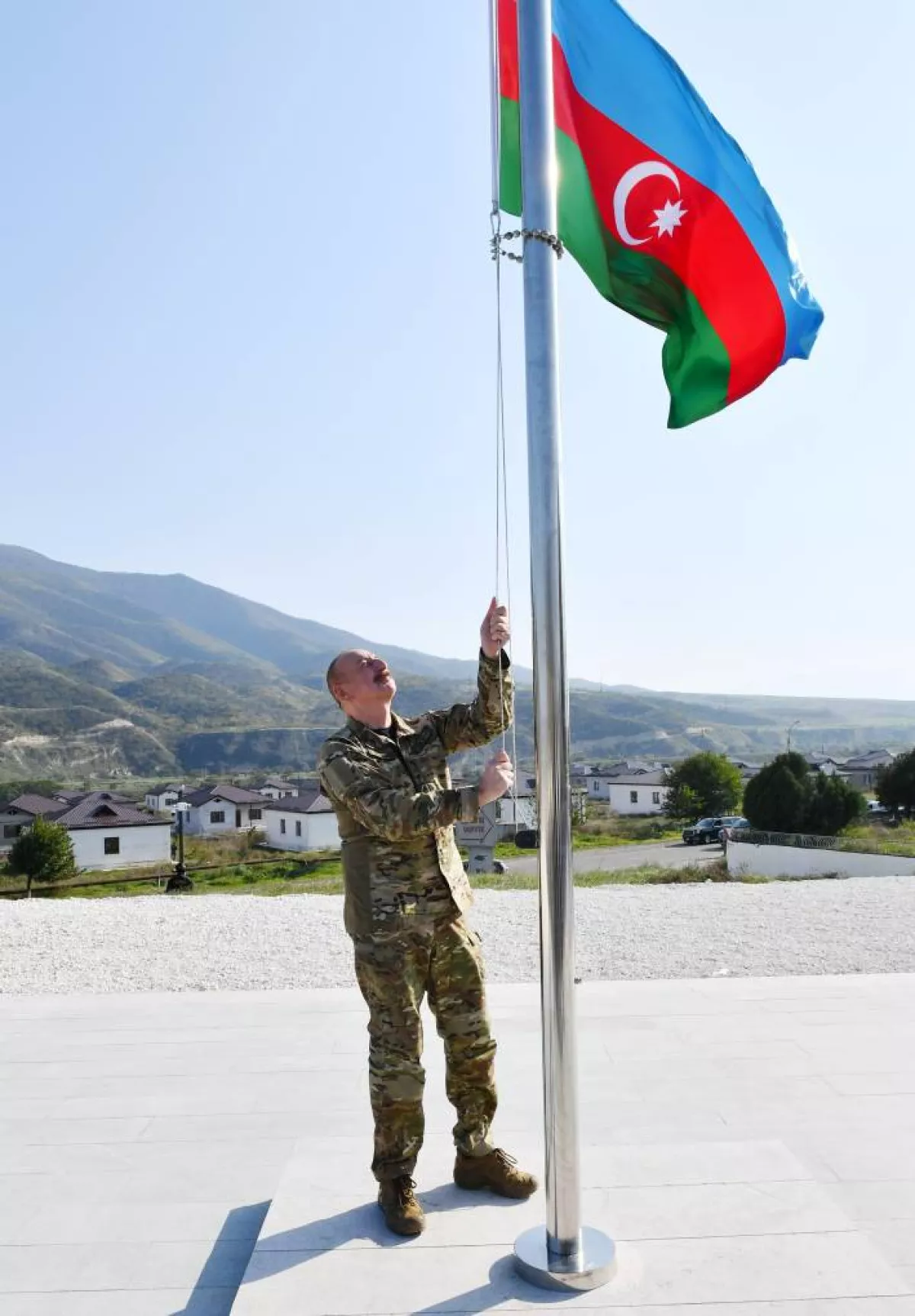
Actions speak louder than words. Twenty-four years after those words, on October 15, 2023, President Ilham Aliyev raised the State Flag of the Republic of Azerbaijan in Khojaly. On February 26, 2024, the head of state laid the foundation of a memorial for the victims of the genocide in Khojaly. And on a date symbolic for our people—28 May—the first 20 families returned to Khojaly. This process continues under the “Great Return” programme: on February 16 of this year, another stage of resettlement took place in Khojaly.
It is also particularly symbolic that in his address to the nation on December 1, 2020, President Aliyev, listing the enemy equipment destroyed or taken as trophies from the Armenian occupiers, mentioned the enemy tanks: “287 destroyed, 79 taken as trophies, a total of 366 tanks.” A striking number.
May Allah have mercy on all our martyrs! As President Ilham Aliyev said, “… the blood of our martyrs did not remain unavenged. We took revenge on the battlefield, for our soldiers, officers, civilians, victims of Khojaly, the martyrs of the First and Second Karabakh wars, as well as the anti-terrorist operation.”







 editor@caliber.az
 +994 55 444-88-98
 Азербайджан, Баку, ул. Низами, 203, Af Business House, 5-й этаж