










Securing the framework for peace Prestigious award for Aliyev and Pashinyan
Today in Abu Dhabi, a meeting took place between the President of Azerbaijan, Ilham Aliyev, and the Prime Minister of Armenia, Nikol Pashinyan. Just a few hours later, both leaders were awarded the prestigious Zayed Award for Human Fraternity. They received the honour in recognition of their efforts in the peace process, which brought an end to a decades-long conflict and the humanitarian suffering in the Caucasus.
The Zayed Award for Human Fraternity was established in 2019, based on a document signed by the Chairman of the Muslim Council of Elders, Sheikh of Al-Azhar Al-Sharif, Grand ImamAhmed Mohamed Ahmed El-Tayeb, and the late Pope Francis. The award aims to promote the humanitarian legacy and values of the founder of the United Arab Emirates, the country’s first president, Sheikh Zayed bin Sultan Al Nahyan.
Ahead of the ceremony, the award’s Secretary-General, Mohamed Abdelsalam, noted that the peace agreement signed in Washington between Yerevan and Baku represents a “major diplomatic achievement” and an important milestone on the path to global peace.
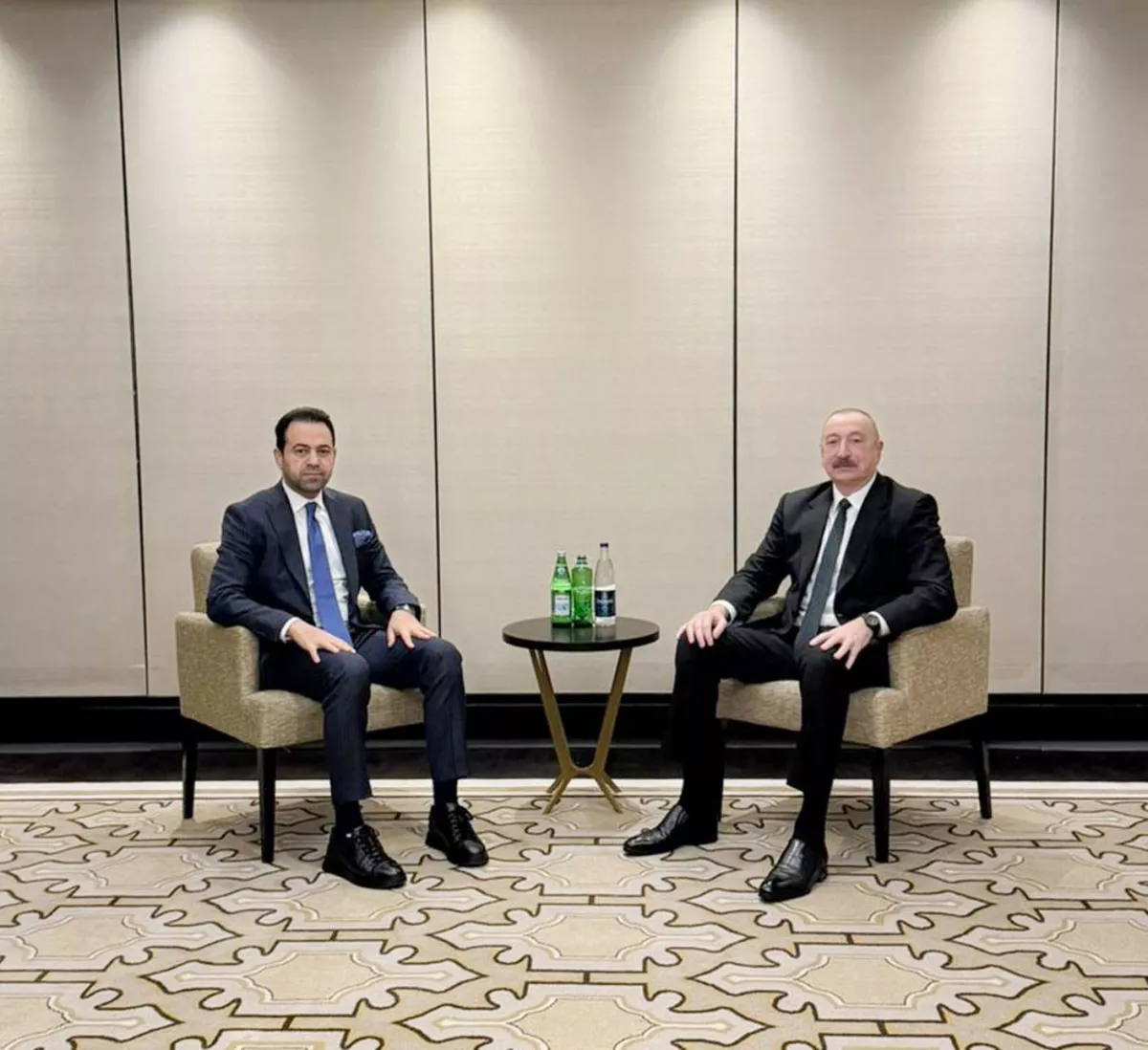
It is also important to highlight the role of the United Arab Emirates itself in the Armenia–Azerbaijan settlement. In July 2025, a key meeting was held in Abu Dhabi, marking a significant stage in the negotiation process between Armenia and Azerbaijan. This meeting, supported by the new U.S. administration, laid the groundwork for the August summit in Washington, during which a draft peace agreement was initialled and a Joint Declaration was signed. Among its provisions was the announcement of the Trump Route for International Peace and Prosperity (TRIPP) project.
Thus, the awarding of the Zayed Award is an event that, among other things, provided Baku and Yerevan with another opportunity to reaffirm their commitment to peace and previous agreements—both symbolically and politically.
Following the historic meeting in Washington, both sides have already taken concrete steps demonstrating their commitment to sustainable peace. Azerbaijan has, to date, sent several shipments of petroleum products to Armenia. Since November of last year, grain from Kazakhstan and Russia has been transported to Armenia through Azerbaijani territory. Meanwhile, last month Armenia agreed with the United States on a framework for the operation of the Trump Route.
Recently, Armenian Prime Minister Pashinyan expressed Yerevan’s interest in unifying the energy systems of the two countries. According to him, this would expand the circle of potential clients to whom both sides could supply surplus electricity. On its part, Azerbaijan has already begun construction of the 1,000 MW Zangezur power transmission line, which is planned to pass through Armenia’s Syunik region to the Nakhchivan Autonomous Republic. In the long term, this could pave the way for the creation of an international energy corridor linking Yerevan and Baku with Türkiye and European Union countries.
As we can see, both sides have made significant efforts to rightfully merit the Zayed Award. However, while welcoming Prime Minister Pashinyan’s steps toward peace, it is important to remember the path that led the Armenian leader to recognise the necessity of these measures. Azerbaijan, despite being the victorious party, did not seek territorial gains or compensation from Armenia for the thirty years of occupation of its lands. On the contrary, Baku was the first to propose the initiation of a comprehensive and fair peace process, presenting five principles for settlement. In doing so, the Azerbaijani leadership demonstrated the highest degree of tolerance, goodwill, and commitment to peace. Respect for international law remained the guiding principle: Azerbaijan defended its rights without encroaching on others. It was in this spirit that President Aliyev responded to Donald Trump’s question during a bilateral meeting last August: “Why did you stop? You had the victory. You have a large army.”
At the same time, alongside its goodwill, Baku has demonstrated unwavering determination in defending its sovereignty, preventing any attempts at speculation or efforts to secure special status for any part of the liberated territories. This was clearly evident in April and September 2023, when the Lachin border checkpoint was established and a highly effective one-day counterterrorism operation was conducted, decisively closing the chapter on Armenian separatism in Azerbaijan.
In Abu Dhabi, it is evident that they fully recognise Azerbaijan, under the leadership of Ilham Aliyev, as the key actor shaping the long-term development strategy of the South Caucasus.
It is precisely this combination of Baku’s goodwill towards peace and its firmness in defending national interests that gradually led the Armenian leadership to realise the need to turn the page on hostility with Azerbaijan. Today, Nikol Pashinyan must remember that, above all, it is thanks to Baku’s policies that he holds in his hands a prestigious peace award.
None of the above diminishes the merits of Nikol Pashinyan, who faces serious domestic challenges on the path to peace with Azerbaijan. He has consistently promoted the idea of peaceful coexistence and resisted revanchist and radical forces supported by external actors and the Armenian diaspora abroad. On this path, the Prime Minister can be wished courage and continued success.
Ilham Aliyev and Nikol Pashinyan are undoubtedly deserving of this award. It is to be hoped that the presentation of the Zayed Award to both leaders not only recognises their contributions but also serves as a powerful incentive to continue advancing along the path of peace.







 editor@caliber.az
 +994 55 444-88-98
 Азербайджан, Баку, ул. Низами, 203, Af Business House, 5-й этаж