










Brussels lights the fuse in the South Caucasus EU vs Baku and Trump’s peace plan
There is no shortage of jubilation in Armenia’s political and public arena. And why shouldn’t our geographical neighbours rejoice, eagerly circulating news that the EU Council has approved the allocation of €20 million to Armenia from the European Peace Facility? All the more so since the European structure known—no less—as the “Peace Facility” has framed the purpose of funding Yerevan as strengthening the logistical and material support of the Armenian Armed Forces (AF), masking the military component with references to the protection of civilians “in crisis and emergency situations.”
However, the explicitly military dimension soon emerged as the core of this €20 million package. The initiators of the move, emphasising the importance of bolstering Armenia’s “resilience,” pointed to the need to accelerate “the interoperability of its Armed Forces in case of possible future participation in international military missions and operations, including those deployed by the EU.”
Everything here is surely clear to everyone, especially since the EU Council’s website specifies that the total amount of Brussels’ support for Armenia has now increased to €30 million. In this context, it is worth recalling that the first €10 million from the European Peace Facility was allocated by Brussels to Yerevan back in 2024. At the same time, Armenian sources enthusiastically quote the words of EU High Representative for Foreign Affairs Kaja Kallas, who described this step by the European Union as a significant decision aimed at closer cooperation between Brussels and Armenia “in the area of security and defence.”
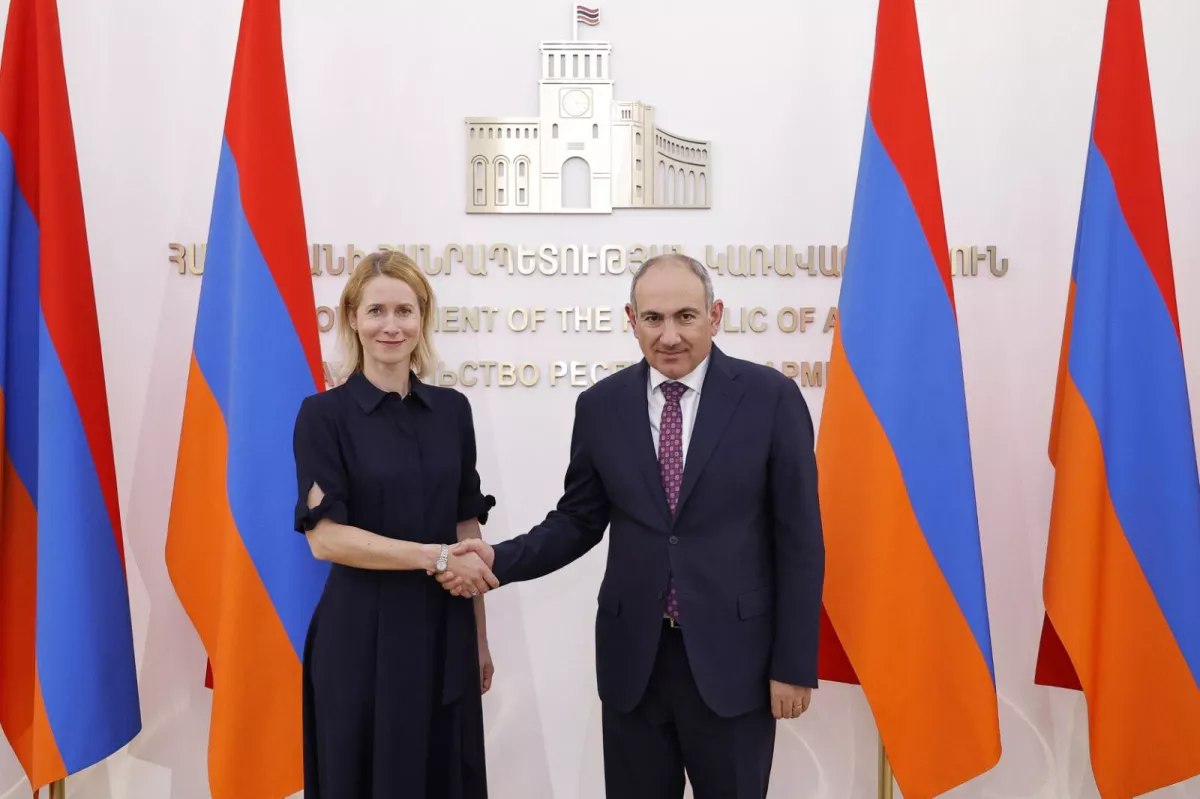
This is how it unfolds. The EU, which for nearly 30 years of occupation of sovereign Azerbaijani territories by Armenian armed forces failed to call the aggressors aggressors and the separatists separatists, is now—through its direct actions and without any caveats—openly encouraging the expansion of revanchist ideas in Armenia. These ideas continue to envelop our geographical neighbours, who still hesitate to take steps to transform their country from an object of global politics into its subject.
Instead of urging the Armenian authorities to urgently amend the country’s constitution—which still enshrines aggressive claims against Azerbaijan—Brussels officials are taking fundamentally different decisions, effectively attempting to set the South Caucasus alight. In this context, judging by Brussels’ recent moves regarding the South Caucasus, it appears that EU leaders are fuelling anti-Azerbaijani sentiments within Armenian society.
Consequently, it is none other than the EU’s governing apparatus that appears intent on slowing down the peace process in the region—a process that, thanks to Baku’s peace-oriented steps, could become irreversible. This is all the more evident given that, following the well-known August 2025 agreements reached in Washington between Azerbaijan and Armenia in the presence of Donald Trump, the situation in the South Caucasus began to shift towards peace with kaleidoscopic speed. Developments surrounding the Zangezur Corridor—including its Armenian section (TRIPP)—and the growing engagement of the US side in this context indicate that the full opening of regional communications is becoming a historic reality.
In other words, Washington is making it clear just how interested the United States is in sustaining the peace process in the South Caucasus, one that was initiated through unilateral steps by official Baku. Further confirmation of this can be seen in the planned February visit of US Vice President J.D. Vance to Armenia and Azerbaijan. Moreover, in a post on the social media platform Truth Social, the US president voiced the Washington administration’s intention to strengthen its strategic partnership with Azerbaijan.
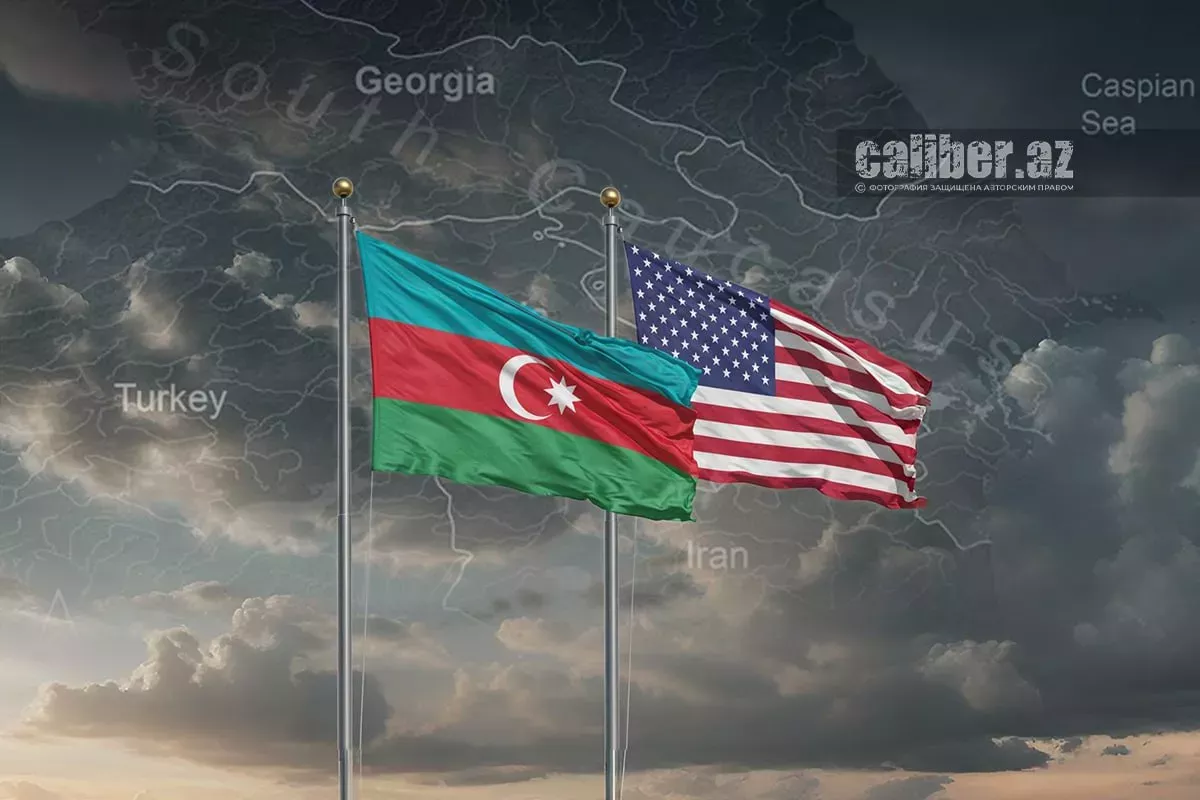
As a result, Brussels’ line of action to torpedo the development of the peace process in our region becomes strikingly clear—not only due to entrenched anti-Azerbaijani sentiments, but also in direct opposition to the position taken by Trump on this track. In this context, the issue is no longer one of Brussels’ double standards, but rather of the absence of any standards at all in the very heart of Europe.
There is no other way to assess what is unfolding, as Brussels is, in effect, openly throwing obstacles in the way of the further advancement of the regional peace process by introducing a military paradigm into the area—something that amounts to nothing less than provoking a new phase of hostilities.
It would be naïve to assume that Brussels is unaware of how damaging its latest decisions are to the cause of peace in the South Caucasus. Yet, as it appears, EU leaders are fully capable of offsetting their one-sided and biased approach towards Azerbaijan—and they can do so in a very straightforward way: by adhering to a genuine balance in their policy towards the South Caucasus.
The path to this lies in allocating, through the same European Peace Facility, a sum equal to the tranche provided to Armenia—this time to Azerbaijan as well. Only in this way can Brussels demonstrate objectivity in its approach to the evolving situation in our region. And this is precisely what Baku is demanding from the EU. “If the European Peace Facility decides to allocate financial assistance to Armenia, an equivalent amount of support must also be allocated to Azerbaijan,” Azerbaijani Foreign Minister Jeyhun Bayramov stated.
So now we await adequate steps from Brussels’ officials in power.







 editor@caliber.az
 +994 55 444-88-98
 Азербайджан, Баку, ул. Низами, 203, Af Business House, 5-й этаж