










Russian fakes and the realities of Ukraine War, language, and manipulation
Professor Preobrazhensky, in Mikhail Bulgakov’s immortal novella Heart of a Dog, persistently advised anyone concerned about their digestion not to read Soviet newspapers before lunch. I can say with full responsibility that watching news and “analytical” programs on Russian federal channels is just as harmful, where lies sit upon lies and chase one another endlessly.

Incidentally, in Azerbaijan, people have experienced this repeatedly—before, during, and after the 2020 Patriotic War—when these channels broadcast a great deal of false information about the causes and consequences of the Armenian-Azerbaijani conflict. However, without a doubt, a special place in these broadcasts has long been reserved for Ukraine, where speakers of all ages and genders regularly compete to see who can lie most shamelessly about the reasons for Russia’s full-scale invasion of Ukraine.
At the same time, the choice of topics for pouring a fountain of lies on the Ukrainian side is completely unrestricted. Often, one can hear false claims about the “suppression of the Russian language” in Ukraine. The discussion itself on this subject—amid an ongoing full-scale war lasting almost four years, during which Ukrainian cities are struck daily by missile and drone attacks—is, to put it mildly, shocking.
However, an even greater shock comes from actually immersing yourself in the reality of the situation. Speaking with full responsibility, I can say that in Kyiv I have never once encountered condemnation for switching from Ukrainian to Russian. All my interlocutors, seeing my imperfect—though admittedly limited—command of Ukrainian, suggested switching to the language of the country that had committed an enormous number of atrocities against Ukrainians on their own soil.
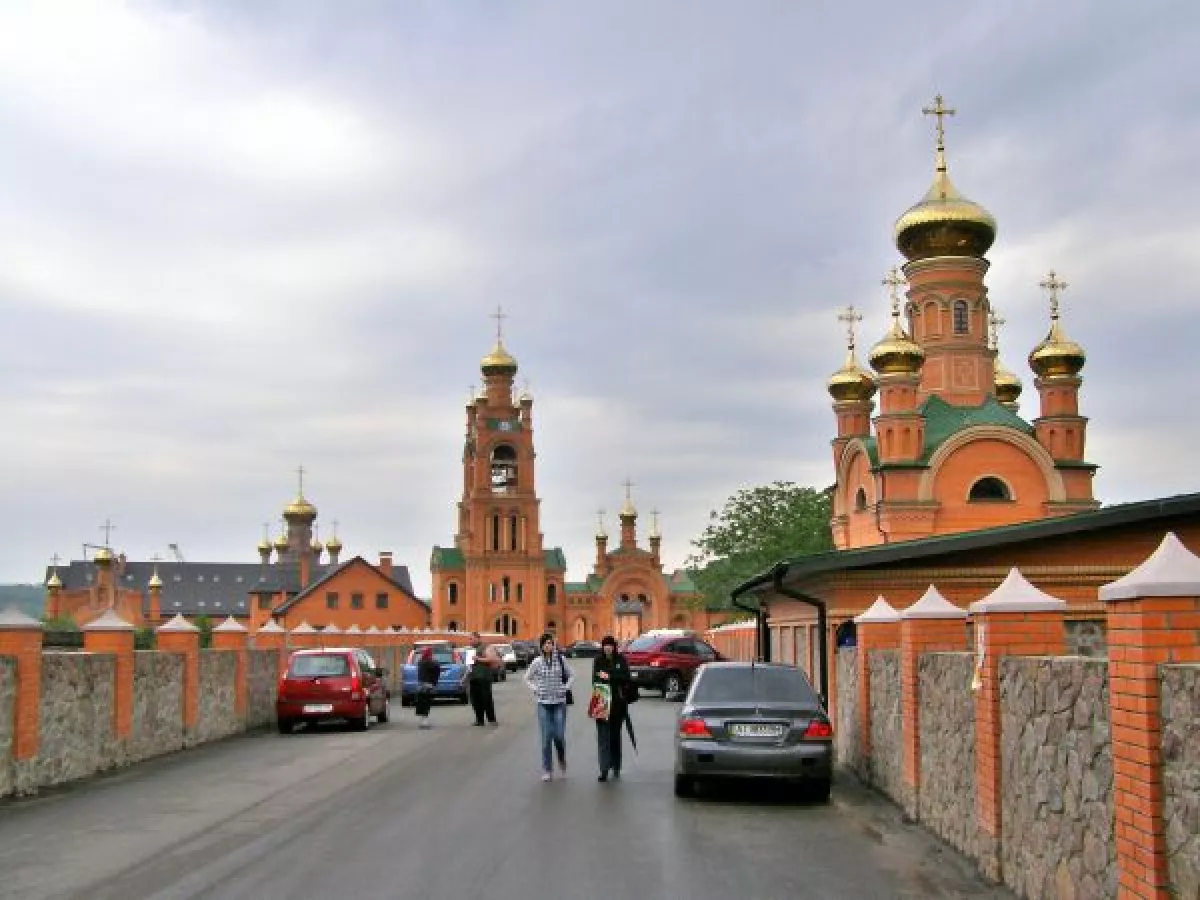
I anticipate claims that my experience is an isolated case, so I suggest taking a look at a scandal that has been widely discussed in the media. It turns out that at the monastery of the Ukrainian Orthodox Church of the Moscow Patriarchate, Holosiivska Pustyn, there is an underground school where the children of parishioners are taught using Soviet textbooks, shown Russian films, and taught Russian songs.
As noted in an investigation by Slidstvo.Info, more than 60 children from first to ninth grade are currently enrolled there. According to the head of the institution, the school employs 16 teachers. The investigation also revealed that the underground school follows the Soviet system of education. For example, the usual four grades of primary school have been reduced to three, and in the first-grade schedule, journalists noticed a subject called “Slavic language.” However, teacher Larisa Abrosimova explained that this is, in fact, the Russian language.
The school’s director at the monastery added that in music lessons, children sing Soviet songs: “Of course, there were wonderful songs. Now even the older students learn: ‘Under the blue sky there is a golden city’” (a song by the Russian band Aquarium). One must agree that all this paints Russian propagandists in a rather absurd light.

But that’s not all. Here’s another example: in Kyiv, police detained three young women for performing Russian songs in a car and handed the case materials over to the Security Service of Ukraine (SBU). The women, aged 21, 22, and 24, had posted a video on social media showing themselves driving through the capital while singing the songs “Moscow Never Sleeps” and “Mother Earth.” Once the recording circulated, the police tracked them down and drew up administrative reports for petty hooliganism. Yes, the women were detained—but only after they posted their performances online! Without that, there would have been no consequences for deliberately singing in Russian in central Kyiv.
In this context, it’s worth recalling another case from October of last year, when Ukrainian law enforcement held a 29-year-old Kyiv resident accountable for threatening a street musician in a wheelchair. The man demanded that the musician perform Russian songs, and after being refused, began cursing and threatening physical violence. Again, the case only became publicly known because a friend of the musician posted a video of the incident on social media. As we can see, the reality is exactly the opposite of what Russian propagandists broadcast.
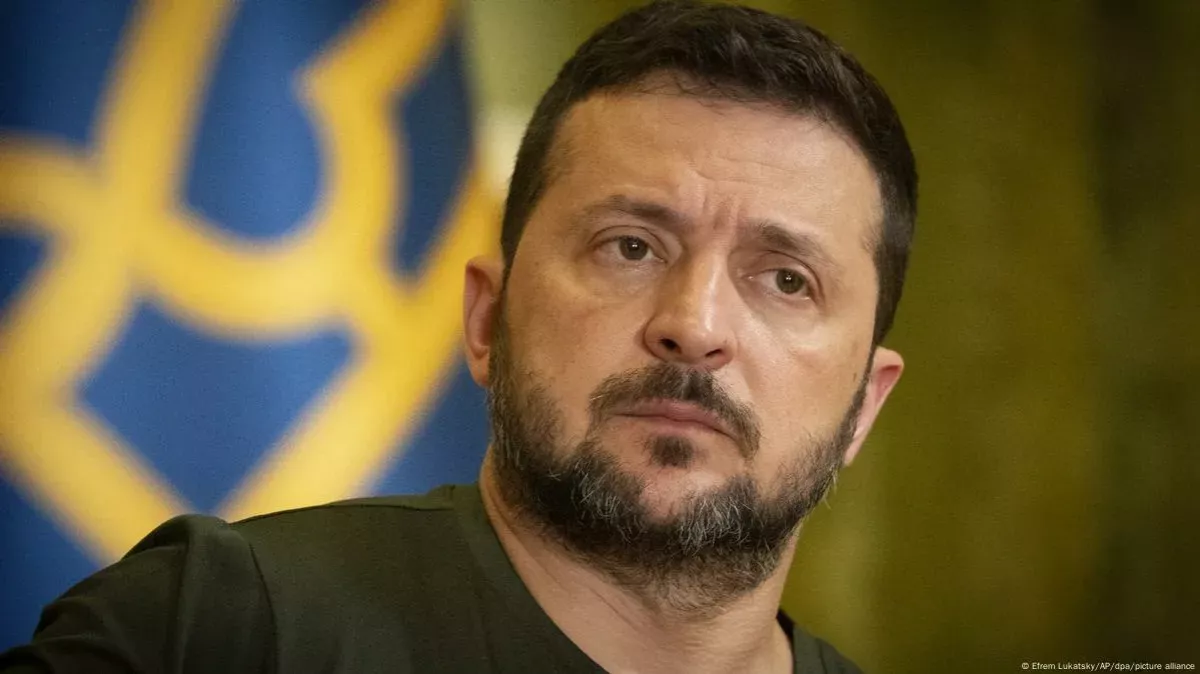
And here arises a legitimate question: “Why do so many representatives and supporters of the ‘Russian world’ feel so comfortable in Ukraine?” The answer is simple—and bitter: because the behaviour of Ukraine’s leadership reeks of falsity from a mile away—all its officials publicly speak Ukrainian. At one press conference, President Volodymyr Zelenskyy even pretended to forget some words in Russian. But in reality, this is an act. Former Presidential Office adviser Oleksiy Arestovych has repeatedly confirmed that members of the Ukrainian leadership actually speak Russian among themselves.
Incidentally, even those accused of corruption—Kvartal 95 co-founders Timur Mindich and Oleksandr Tsukerman, who were located in Israel by Ukrainian journalists—spoke exclusively in Russian, and according to audio recordings leaked to the media, other participants in the corruption scheme discussed transferring funds “dvushechka to Moscow.” This phrase referred to moving part of the corruption money (about $2 million) from Ukraine to Moscow as part of an established scheme. And that, folks, is nearly four years of bloody war!

For those who find the above facts insufficient, it is worth noting that Andriy Melnyk, deputy director of one of the departments of the State Property Fund, declared nearly 5 tonnes of gold worth €782.17 million, “issued” by the Moscow-based company KITON 21 VEK. At the same time, he does not actually possess the gold itself. According to his declaration, he owns “negotiable securities—a commodity certificate for settlement with the holder in goods—backed by gold in Euro-standard bank bars 999.9,” issued by the Russian company. This likely means that the company issued the securities, giving Melnyk the right to 5 tonnes of gold.
All of this is seen and observed by ordinary Ukrainian citizens, including supporters of the “Russian world,” who, despite all the suffering Russia has brought to Ukrainian soil, shockingly remain numerous in the country.







 editor@caliber.az
 +994 55 444-88-98
 Азербайджан, Баку, ул. Низами, 203, Af Business House, 5-й этаж