










President Aliyev and the logic of grand diplomacy This is how world history is written
Yesterday, President of Azerbaijan Ilham Aliyev once again demonstrated to the entire world that he is a political leader of truly global stature. Yes—global, because the head of our state offered his personal involvement in addressing an issue that is currently among the most widely discussed worldwide. We are referring to the situation surrounding our neighbour Iran, which many political analysts and conflict specialists already regard as being on the verge of U.S. strikes—almost a fait accompli.
What does a confident political leader do—one who thinks not only in terms of the country he leads, but of the entire region? He picks up the phone to offer his assistance in de-escalating a situation that has been pushed to the very brink, beyond which lie bloodshed, tears, and tragedy. And President of Azerbaijan Ilham Aliyev did exactly that, calling President of the Islamic Republic of Iran, Masoud Pezeshkian.
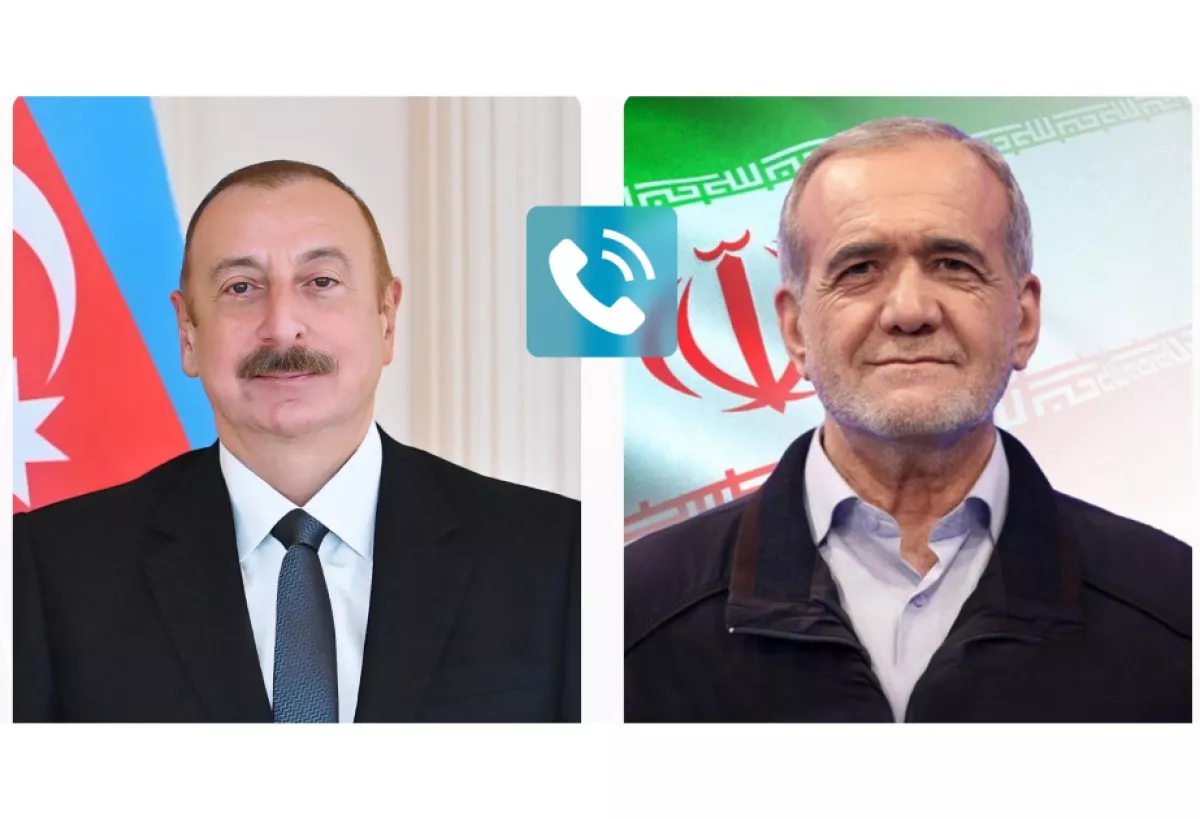
I will deliberately omit most of the official statement made in connection with this phone call. I will focus on what matters most: the head of our state expressed concern over the situation that has emerged in the region, declared Azerbaijan’s readiness to contribute to easing tensions, and stressed that our country advocates resolving such issues through negotiations and mutual understanding.
It is difficult to imagine a clearer, bolder, firmer, or more unequivocal position under these circumstances. The President of Azerbaijan—the leader of a state that achieved a historic victory by restoring its sovereignty and territorial integrity through military and political means—knows full well the price of both war and peace. And precisely for this reason, he has assumed the role of a statesman advocating a diplomatic, bloodless resolution to the crisis in U.S.–Iranian relations.
I would also like to draw attention to another important fact: Azerbaijan is not closing its embassy in Iran, nor is it urging its citizens to leave the neighbouring country. Many of the world’s leading states have already rushed to take precisely such steps. Azerbaijan, however, is acting not merely as Iran’s neighbour, but also as its friend. And this is something that should be remembered in Iran once and for all.
I emphasise all of this for a reason: our country has never demonstrated hostility towards the Islamic Republic of Iran. The opposite, however, has occurred—regrettably, more than once. There is much we can recall, ranging from the involvement of Iranian companies in the plundering of Azerbaijan’s temporarily occupied territories to statements by various Iranian politicians who attempted to issue threats against Azerbaijan.
We also remember the openly provocative remarks made by the now former Iranian ambassador to Armenia, Mehdi Sobhani, as well as reports aired on Iranian television channels that were filled with explicit military threats against our state. And, of course, we all remember the attack on Azerbaijan’s embassy in Iran. Yet the greatness of a political leader endowed with far-reaching strategic thinking lies precisely in the ability to build relations with neighbours not on the basis of the past, but with an eye to the present and the future.
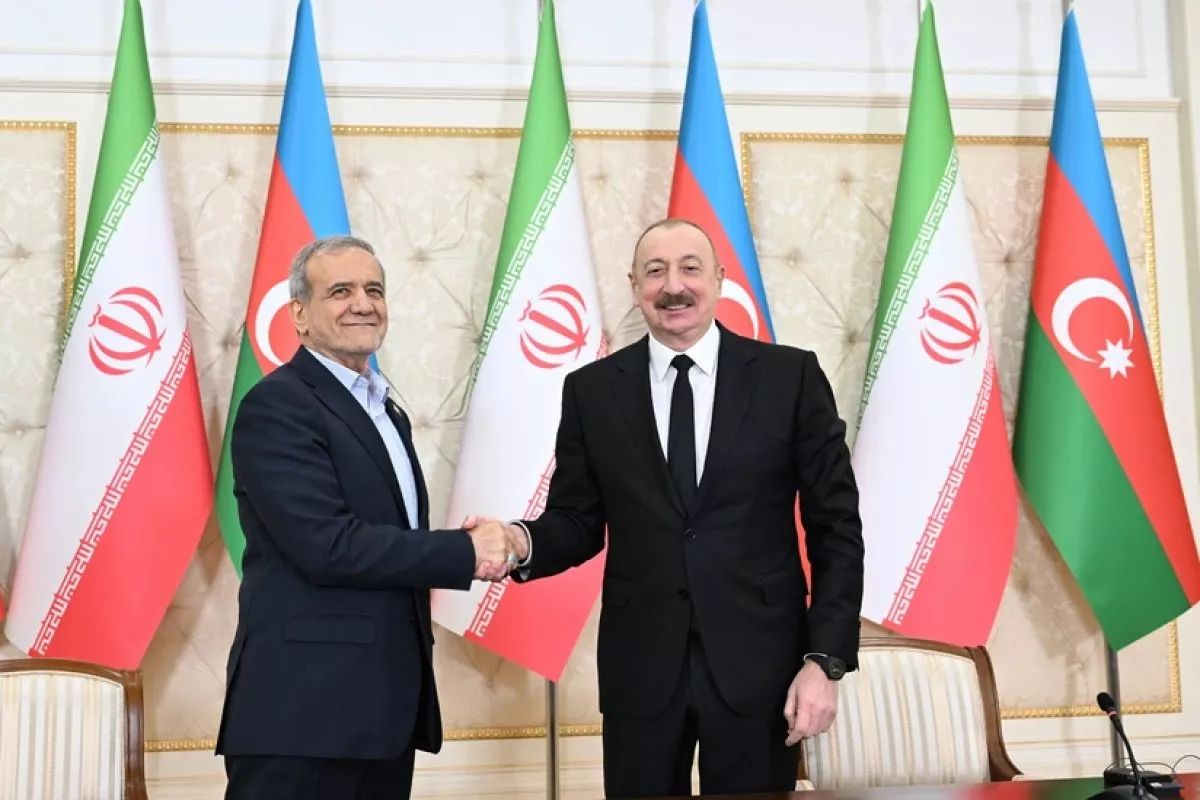
By demonstrating strategic patience during the most difficult periods in relations between Baku and Tehran, President of Azerbaijan Ilham Aliyev has succeeded in achieving a significant thaw. In this regard, it should also be noted that President of Iran Masoud Pezeshkian bears considerable personal credit as well. And now we have reached a culmination: yesterday, the head of our state offered his mediating services to avert a disaster—let us call things by their proper names—that could engulf not only Iran, but our entire region.
And it is precisely here that, slowly but surely, understanding is beginning to emerge in Iran of what was previously met with outright hostility: the historical legitimacy of Azerbaijan’s long-standing, mutually respectful, and strategic relations with Israel. Of course, not everyone understands this yet. This process of realisation is taking place primarily within that segment of the political elite capable of pragmatic thinking. Yes, for a long time Azerbaijan was criticised in Iran for these relations—criticism that was unfounded. But when a real threat of a major war loomed over the region, time put everything in its proper place. It is Azerbaijan—capable of conveying its weighty arguments to Israel’s leadership—that can play an important and unique role in preventing the most negative scenario from unfolding.
Moreover, and this is equally important, President of Azerbaijan Ilham Aliyev has succeeded in building very warm, close, and mutually respectful relations with U.S. President Donald Trump. There is ample evidence that the head of the White House holds the leader of our state in genuine regard. And the fact that Azerbaijan has become one of the founding members of the Board of Peace is yet another testament to the political foresight of our country’s president.
After all, the Board Peace is a platform where the agenda of the future will be shaped—where not slogans, but practical mechanisms for stabilising regions that have undergone conflict and transformation will be discussed. I do not deny that this organisation has many critics, but take note of the immense practical advantage that Azerbaijan’s membership could bring within a body established personally by U.S. President Donald Trump.
This could help prevent a U.S.–Iran war, including through the mediation of President of Azerbaijan Ilham Aliyev—who, let me remind you, once played a crucial role in normalising relations between Türkiye and Russia. He represents a unique example of a political leader who always knows what needs to be done, how it should be done, and when the moment is right.







 editor@caliber.az
 +994 55 444-88-98
 Азербайджан, Баку, ул. Низами, 203, Af Business House, 5-й этаж