










The collapse of the blitzkrieg Four years of the Russian–Ukrainian war
This devastating tragedy began exactly four years ago. On the morning of February 24, 2022, Russia launched a full-scale invasion of Ukraine. By 3:40 a.m. local time, the first reports emerged of fighting along several sections of the Russia-Ukraine border, including areas in Luhansk. These initial clashes involved ground forces and artillery shelling, paving the way for widespread attacks across the country. At 5:30 a.m., the Russian president announced the start of a “special military operation.” Shortly afterward, explosions and missile strikes targeted multiple military sites throughout Ukraine.
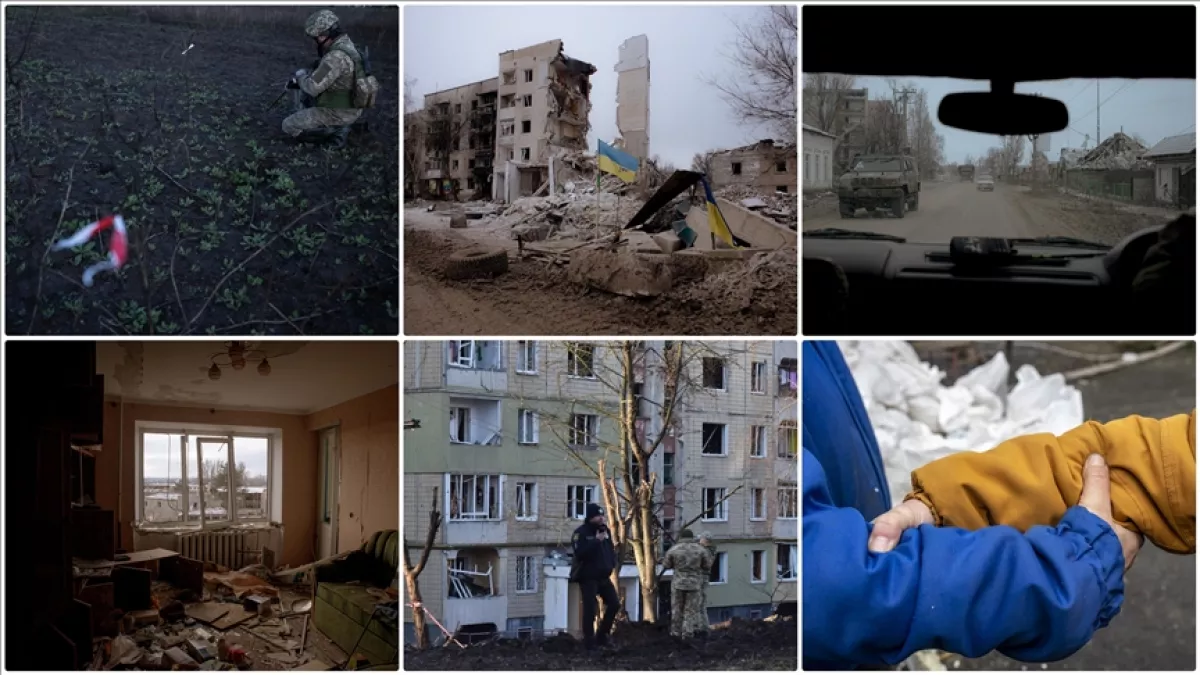
Numerous sources reported that dozens of cruise and tactical missiles were launched in the very first hours of the war. The initial strike included at least 30 cruise missiles, including missiles from the Kalibr family. Overall, within the first 24–48 hours, the total number of missiles fired is estimated at 100–160.
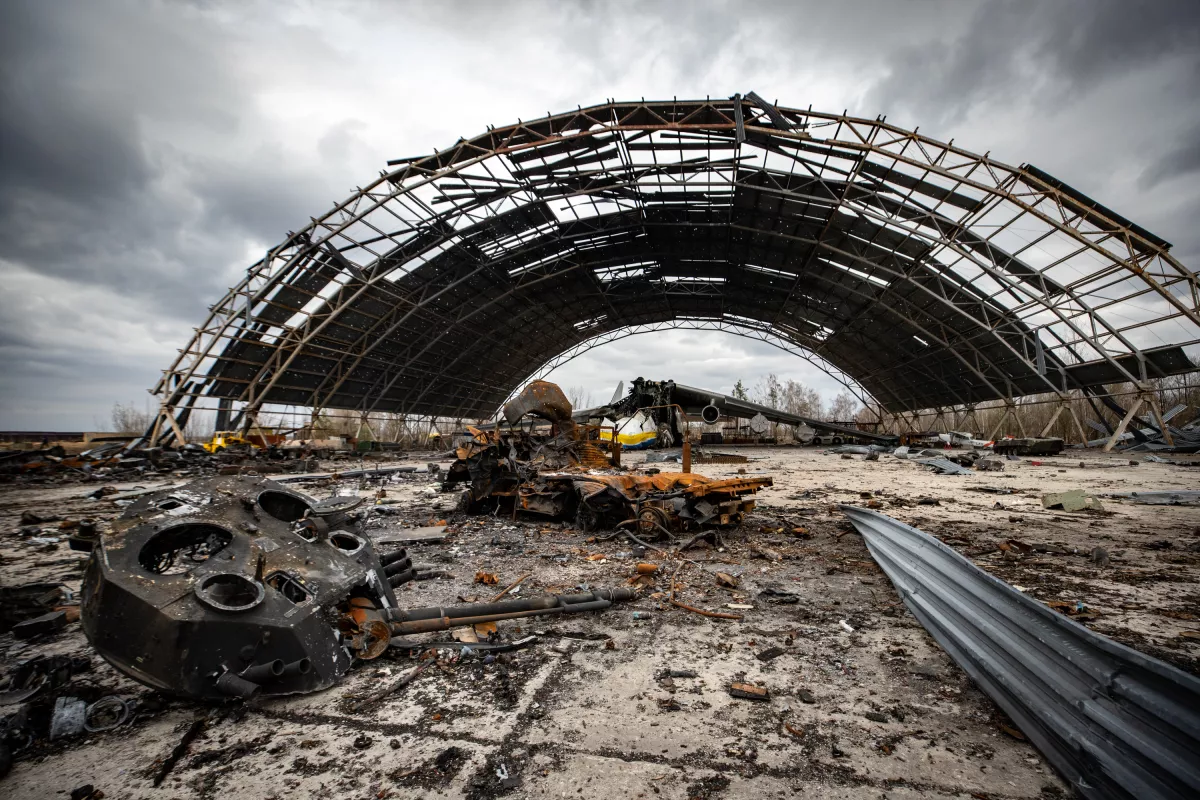
One of the key and most notable episodes of the first wave of Russian strikes was the helicopter assault operation in Hostomel. It involved 20 to 34 Russian Ka-52 and Mi-24 attack helicopters providing cover. The operation aimed to deploy around 500–600 paratroopers. The objective was to seize the airport in order to establish an “air bridge” to Kyiv. Simultaneously, the airport and surrounding facilities were targeted by strikes, including cruise missiles.
In Chuhuiv, the airfield was struck, resulting in the destruction or damage of training aircraft and several Bayraktar TB2 drones. Other airfields — including Boryspil, Vasylkiv, Kulbakino, and Chornobaivka — were also targeted, primarily through cruise missile and air strikes. Throughout the day, combined attacks continued against military facilities and command posts.
The strategic aim of this initial wave of strikes was to neutralize Ukraine’s air capabilities, air defense systems, command centers, and airfields, thereby clearing the way for advancing ground armored columns and a potential naval landing from the south, via Crimea.
It was sheer hell. The Russian side was convinced that Ukraine would not recover from the initial strike. This fueled boastful claims from propagandists and politicians about “taking Kyiv in three days.” Yet, four years on, Ukraine continues to mount heroic resistance against Russian forces.
The buildup of Russian troops along the Ukrainian border began as early as April 2021, signaling preparations for a possible attack. The Russian leadership repeatedly denied any plans of invasion, yet history offers numerous examples of how statements and agreements with Moscow have often proven short-lived.

On February 21, 2022, Russia recognized the “independence” of the territories under its control — the so-called Donetsk People’s Republic (DPR) and Luhansk People’s Republic (LPR). This was marked by a highly staged Security Council meeting, centered on Russian President Vladimir Putin. His interactions with the participants had a mocking tone. Particularly awkward was the demeanor of Sergey Naryshkin, Director of Russia’s Foreign Intelligence Service, who, visibly nervous, struggled to articulate his position.
“Yes, I am supporting the suggestion about making Donetsk and Luhansk people’s republics to make them part of the Russian federation,” Naryshkin stated, prompting an ironic reaction from the Russian president.
“That’s not what we are talking about. That’s not what we are discussing. We are talking about recognizing them as independent entities,” Vladimir Putin replied.
After this, Naryshkin clarified that he supported the proposal to recognize the “independence” of the so-called DPR and LPR.
In essence, this was a classic Freudian slip. There has never been—and will never be—any “independence” for the LPR and DPR. These are territories of another sovereign state under Russian occupation.
Moreover, over the past four years, Russia has still failed to fully reach the administrative borders of Ukraine’s Donetsk and Luhansk regions or establish complete control over them. Estimates suggest that the number of Russian soldiers killed or wounded during this period has exceeded one million.
Currently, the Russian side, using overtly terroristic methods of warfare, regularly targets peaceful Ukrainian cities and villages, devastates energy infrastructure, and, in an attempt to intimidate the population of the neighboring country, pushes in negotiations for a “frozen” conflict—on the condition that the Ukrainian Armed Forces withdraw from the territories they hold in Donetsk and Luhansk regions.
Thus, by exerting pressure on official Kyiv, Moscow seeks to establish control over a significant portion of another country’s well-fortified territory without engaging in direct military confrontation.
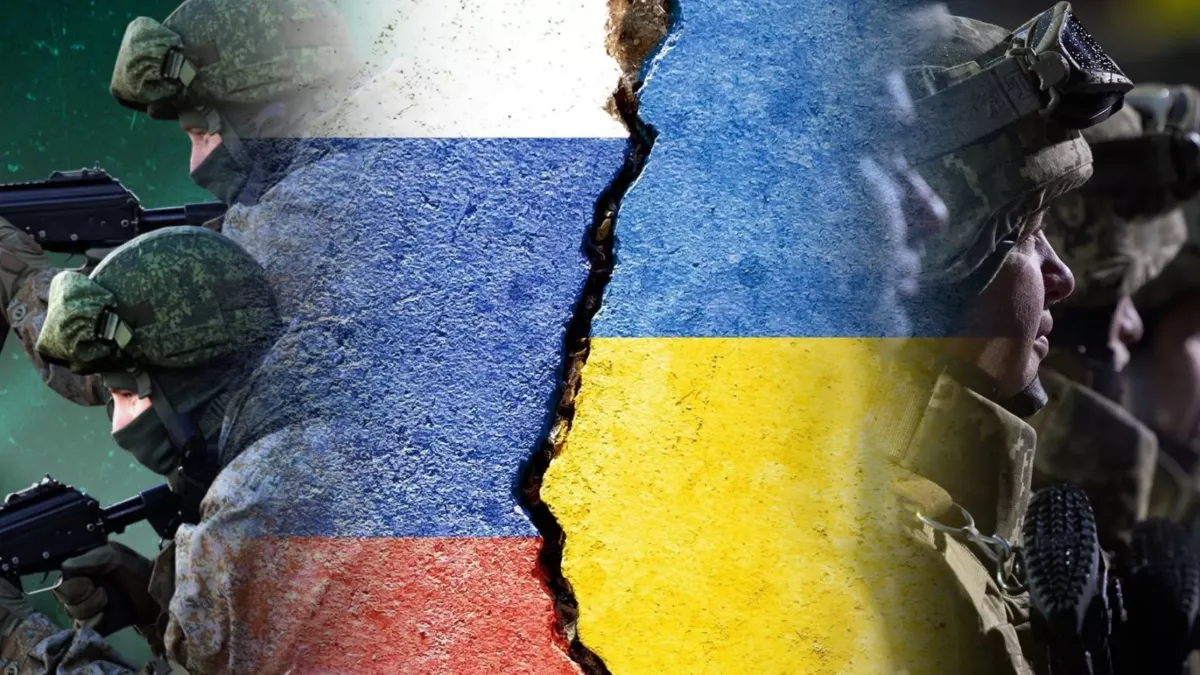
Ukrainian President Volodymyr Zelenskyy has firmly rejected such proposals to end the war—especially since there are no guarantees that Russia, once it regroups and restores its strength, will not launch another offensive against Ukrainian cities. From the very outset of the full-scale invasion, the Kremlin’s strategic goal was the elimination of Ukrainian statehood. Yet it is now clear that this objective is unattainable. Ukraine has endured—at the cost of tremendous losses—preserving its independence and continuing to resist, remaining a state with genuine potential to become strong both militarily and economically in the future.







 editor@caliber.az
 +994 55 444-88-98
 Азербайджан, Баку, ул. Низами, 203, Af Business House, 5-й этаж