










Minotaur’s labyrinth: when force meets resistance Reflections by Emin Galali
Once again, I found myself drawn to ancient Greek mythology. Perhaps some will recall the Labyrinth of the Minotaur. According to legend, it was built on the island of Crete by the famed inventor Daedalus. It had a very specific purpose — to imprison the Minotaur. To keep the creature from growing too violent in its attempts to escape, seven young men and women were sent into the labyrinth each year to be devoured.
I will not retell the story of Theseus and Ariadne (after whom the guiding thread is named). The labyrinth came to mind because of what is happening in and around Iran. It is, indeed, a labyrinth — one in which not only the devil, but his entire bureaucracy, would struggle to find a way out.
We predicted that in the conflict between the United States and Israel on one side, and Iran and its allies on the other, there would be no real winners. Not in terms of mutual benefit, but in the sense that neither side can afford to acknowledge defeat, regardless of the losses and damage incurred. If we set aside — and this may sound almost sacrilegious — the blood and suffering of the immediate victims, and look at the situation schematically, we are dealing with two sides that simply cannot afford to lose.
The United States and Israel. The world’s most powerful military, a country with the strongest economy, plus one of the most technologically advanced and sophisticated armies; a state with the most powerful lobbying system on the planet, combined with a deeply militarised (partly out of necessity) society. Two leaders (Trump and Netanyahu), whose main guiding principle is not to retreat and not to surrender. And to disregard conventions, rules, and constraints. For example, not only the destruction of civilian infrastructure, but even the threat of its destruction in the context of armed conflict may be considered a war crime. I honestly cannot recall the exact provision, but it is set out somewhere in the Geneva Conventions or their Additional Protocols.
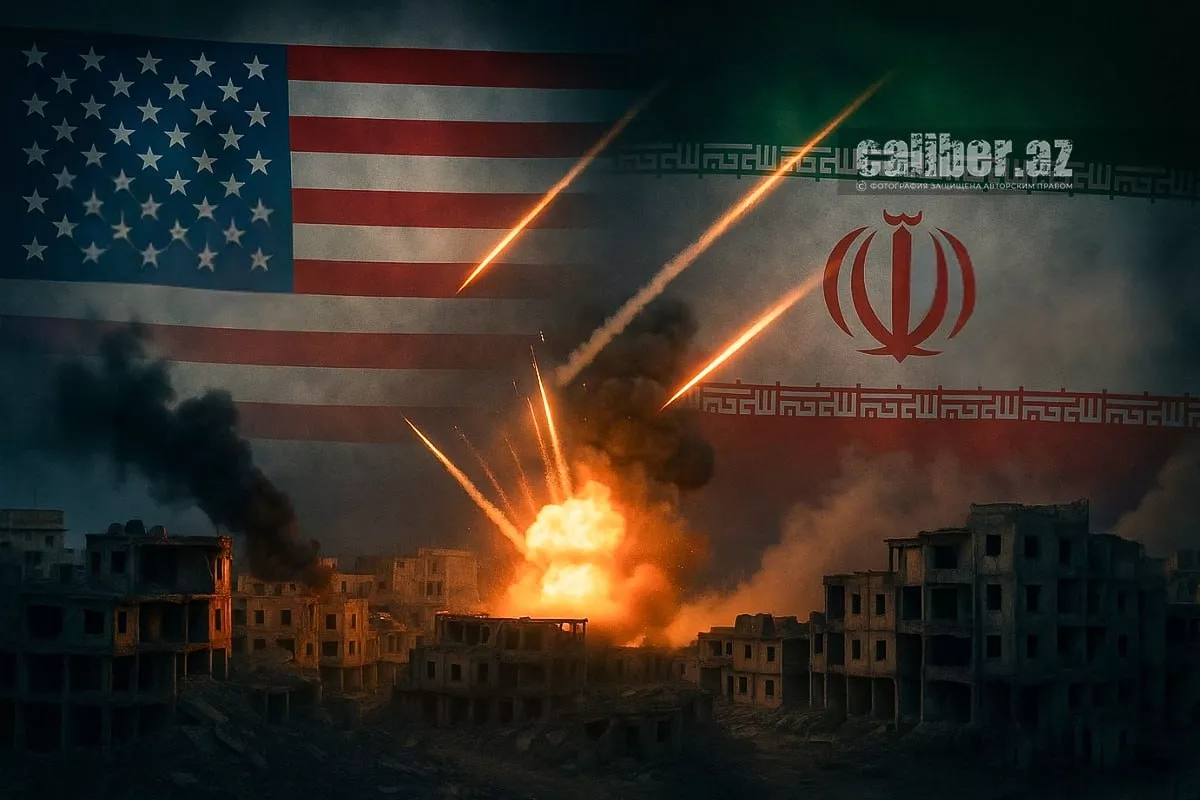
Iran. A country of fanatics, in reality, is far more complex. Claims that the Iranian public is eagerly awaiting “liberation” from the rule of the clerical establishment — in loose analogy with the “dictatorship of the proletariat” — have proven, to put it mildly, greatly exaggerated.
Such sentiments do exist within Iranian society, but those who hold them tend to remain silent. Partly out of fear — Iran is swift in punishing dissent, as the deadly crackdowns on protests have shown. But also because many, despite their grievances, are not prepared to side with those who are methodically destroying their country.
At the same time, there is a hardened core of ideologically driven actors — deeply religious, radical, and willing to go to extremes. Drawn to sacrifice, even self-sacrifice, they speak the language of martyrdom and endurance. These are people for whom death, in certain circumstances, can hold greater meaning than life itself.
And that, my friend, is no exaggeration.
Israel. We are well acquainted with the capable, resilient side of this country, whose entire history has been a story of survival against the odds. These are the intellectuals, engineers, scientists, and administrators who have shaped Israel into what it is today — an advanced state the world is compelled to reckon with. It is built on a clear national idea rooted in Jewish identity, which is both logical and historically grounded.
But there is another Israel as well. A more hardline current, where strict religious orthodoxy can, at times, manifest in exclusionary or uncompromising ways. These are groups that reject pluralism, clash with other communities, and assert a maximalist vision of identity and belonging. Even moderate politicians — though not all — are often forced to take this constituency into account. Not only in Israel, but also in the United States. Why? Because they are highly organised and vote in disciplined blocs.
There is a Russian expression: “scythe has hit the stone.” In an open field, little can withstand the sweep of a sharpened blade — a single motion, and the grass is cut. Unless, beneath it, there is a stone. Small, perhaps, but firmly embedded. The blow does not leave the stone untouched — it may chip, even crack. But the blade, too, suffers. And it cannot be sharpened indefinitely.
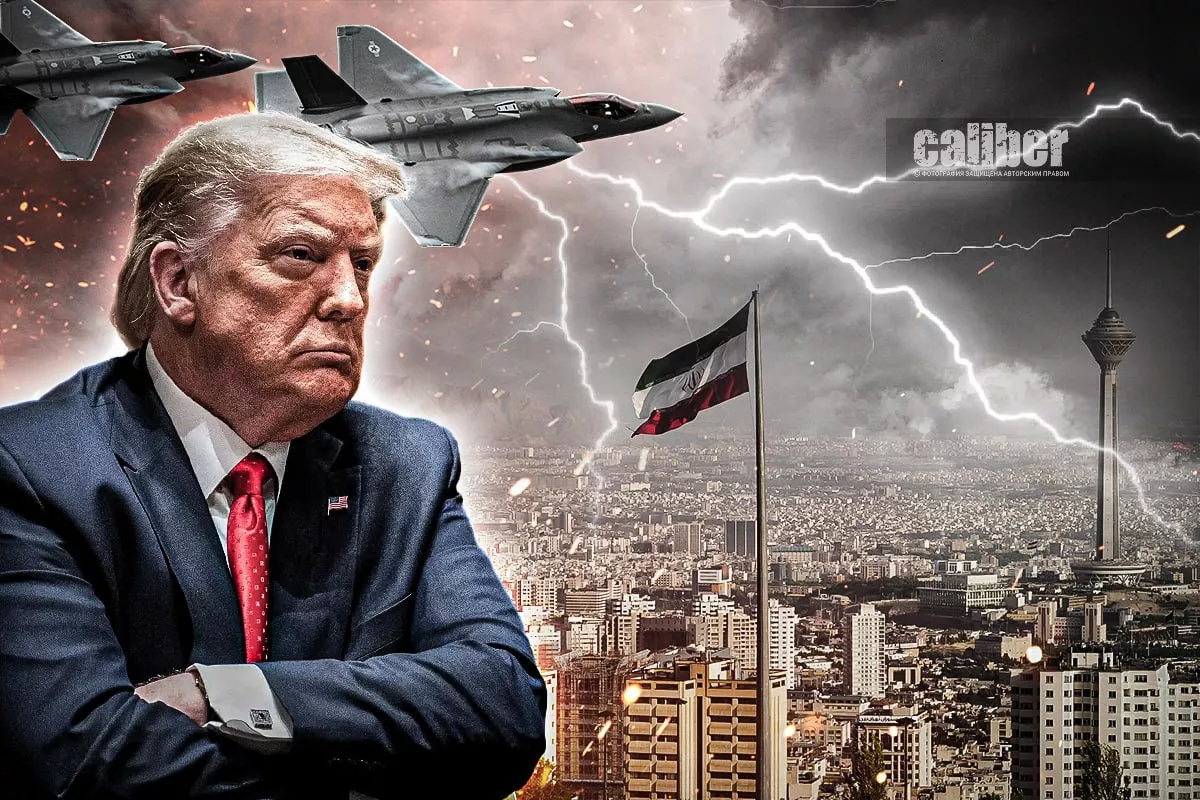
It feels like a vicious circle. Washington did not anticipate facing such determined resistance, backed by a well-developed defence infrastructure whose destruction has proved far from a matter of days. Tehran, for its part, underestimated the resolve of the US president and his unwillingness — or inability — to restrain his own impulses.
Israel has its own interests, but such deep reliance on the United States comes with a reverse side: when Washington calls for a pause, you are expected to comply. Donald Trump can be surprisingly sensitive in certain matters, and he does not tolerate defiance. We have seen more than once that, for him, the distance between favour and hostility is not a step, but an inch. And once something snaps, there is little to hold him back.
If he has not hesitated to confront the Pope — despite the enduring influence of the Catholic Church in the United States, even if diminished in recent years — then the potential discontent of a segment of the US electorate that is strongly pro-Israel is unlikely to weigh heavily on his calculations. Moreover, secular Jews in America are far from monolithic in their views on developments in the Middle East.
What usually happens when rivals realise that outright victory is out of reach, and neither side is willing to bleed through all twelve rounds? In the absence of a referee, both can be declared winners — or simply declare themselves as such, which is, in essence, what we have already discussed.
One could stop here, but it is important to add one more thing: under no circumstances should the Minotaur be allowed to emerge from the labyrinth. Because if it does, neither Theseus nor Ariadne will be of any help.







 editor@caliber.az
 +994 55 444-88-98
 Азербайджан, Баку, ул. Низами, 203, Af Business House, 5-й этаж