










A week of silence shattered Record-breaking missile strikes hit Ukraine
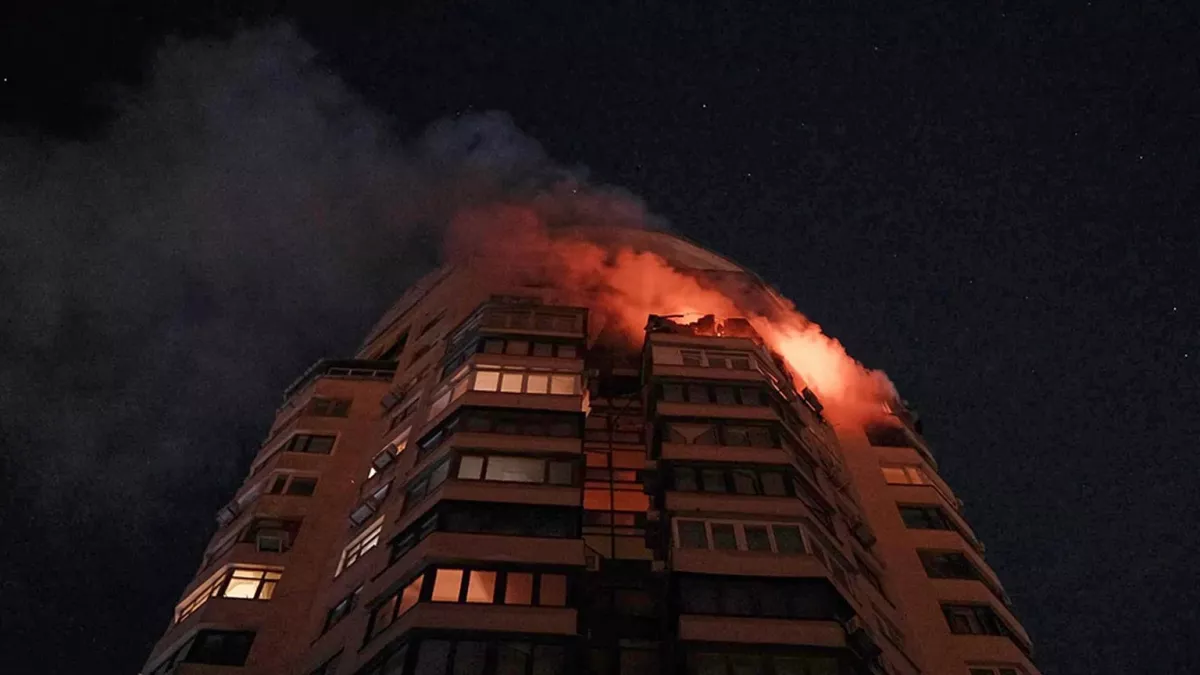
On the night of February 3, Russia carried out massive strikes on eight regions of Ukraine, launching more than 70 missiles and 450 attack drones. This marked the end of the so-called “energy truce.”
In response to the Russian attack, President Volodymyr Zelenskyy posted a video message on Facebook, noting, among other things, that it was the U.S. president who had proposed temporarily halting attacks during the diplomatic efforts and the cold winter weather.
"We are expecting the United States to respond about the Russian strikes. It was America’s proposal to suspend strikes on energy facilities during this period of diplomacy and cold winter weather. This was a personal request from the President of the United States. What we see is that Russia responded to this request with a ballistic record. Not even four days have passed. Whatever else Russia promises or may promise—if their word is already not being kept now, what can we expect next?" — he said.
Essentially, the head of the Ukrainian state blamed not only Russia for this latest monstrous act but also the United States, emphasising that “Ukraine is awaiting the reaction of the United States of America to Russia’s strikes.” A reaction did follow, but it was far from what Kyiv had hoped for. As Ukraine’s first president, Leonid Kravchuk, once said, “we have what we have.”
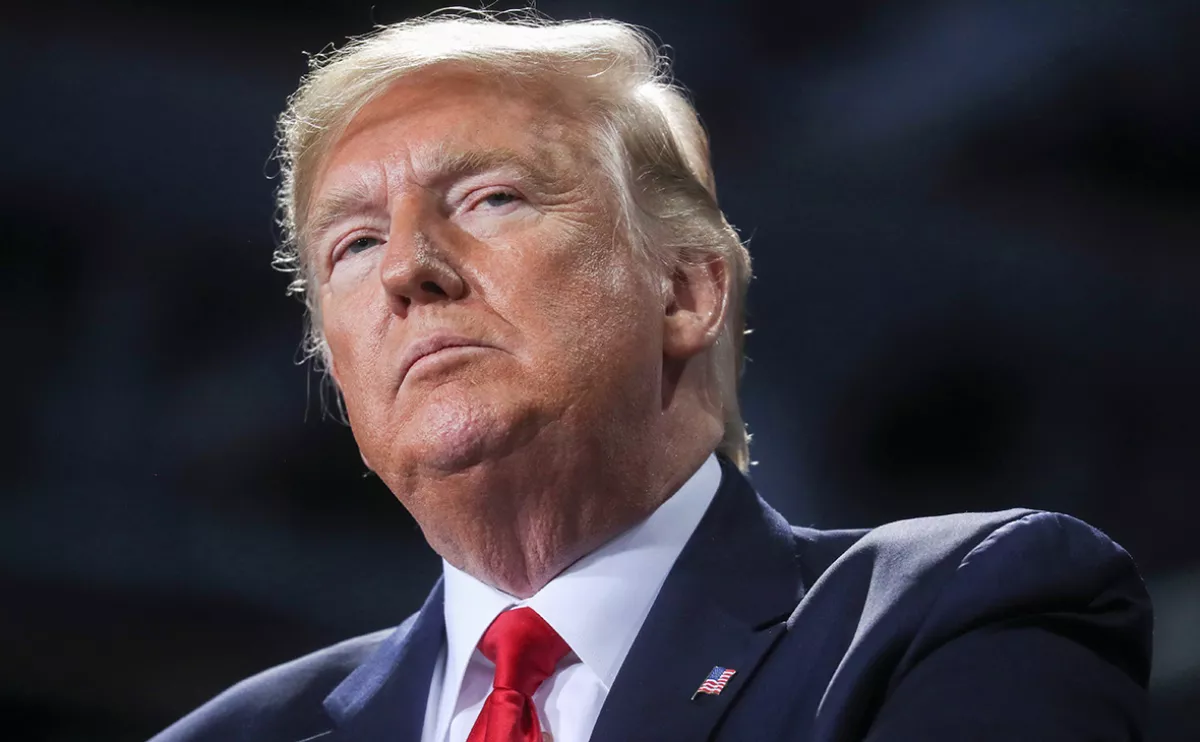
The White House chief also stated that President Vladimir Putin had kept his promise not to carry out missile strikes on Ukraine for a week: "It was Sunday [January 25] to Sunday [February 1], and it opened up and he hit them hard last night. He [Putin] kept his word on that … we’ll take anything, because it’s really, really cold over there [in Ukraine]."
In addition, White House Press Secretary Karoline Leavitt said that the trilateral talks between Ukraine, the U.S., and Russia in Abu Dhabi on February 4–5 remain on track: "So, the special envoy (Witkoff) and Jared Kushner and President Trump made the impossible possible with respect to peace in the Middle East, and I know they're looking to do the same with respect to the Russia-Ukraine war."
However, against this backdrop, Republican Senator Lindsey Graham called on Trump to begin providing Ukraine with long-range Tomahawk missiles, which he said would be “a game changer militarily”:
"In the coming days and weeks, we must apply more pressure to Putin. Any negotiation that is seen as overly rewarding aggression will set in motion catastrophes all over the world. The opposite is equally true. If negotiations result in a free, strong and independent Ukraine – who had to make concessions – then the world will be far more stable. Time is of the essence."

However, all of this is, in the grand scheme, just another banality. The U.S. president will not provide Ukraine with Tomahawk missiles; he will most likely prefer to strengthen economic pressure on Moscow, believing that this will have a sobering effect on Putin.
Thus, there are increasing grounds to believe that, ultimately, if no agreement is reached between the parties to freeze the war—and we have already noted that this moment is crucial for Trump before May 15—the U.S. president will simply announce a withdrawal from the negotiations. He will likely blame not only Russia and Ukraine, who are unwilling to compromise, but also the former U.S. administration led by President Joe Biden, as he has stated repeatedly.
Such a scenario would be a final tragedy for Ukraine, because without U.S. support, even in its current form, it will not be able to resist Russia for long, despite the assistance of the North Atlantic Alliance, which its Secretary-General Mark Rutte mentioned. In particular, during his speech in the Verkhovna Rada, he expressed respect for Kyiv and assured that NATO “stands alongside Ukraine.”
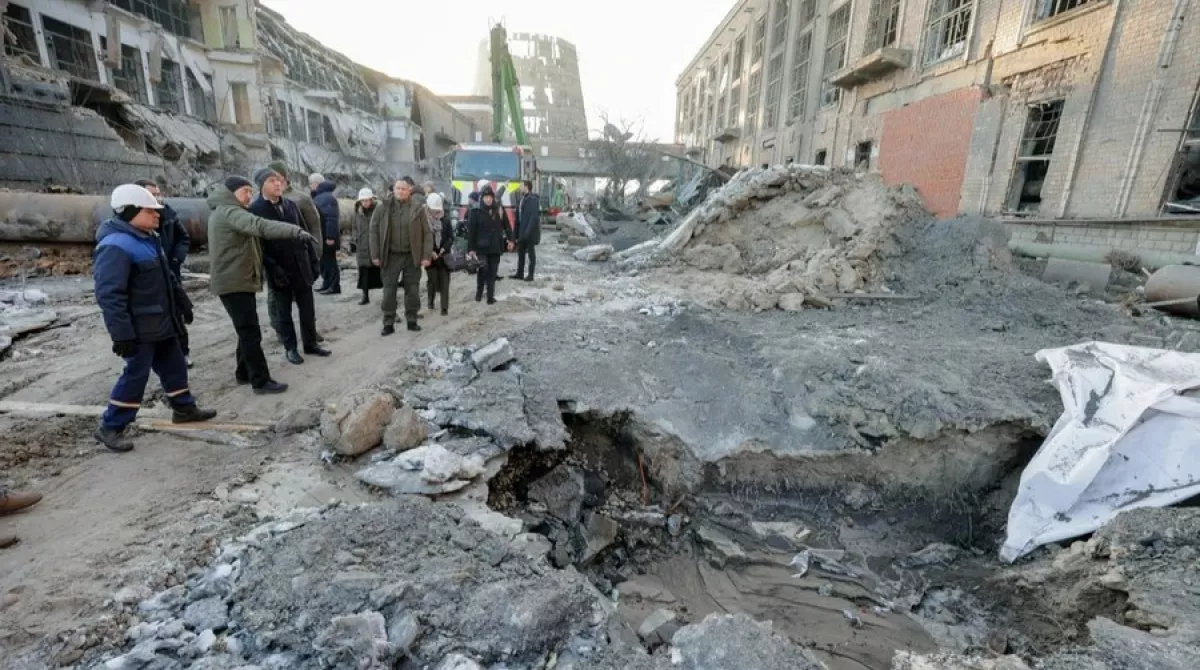
Meanwhile, Ukraine’s Minister of Energy, Denys Shmyhal, reported on Facebook that he, together with Rutte, visited one of Kyiv’s thermal power plants that Russia attacked on the night of February 3. In their conversation, Shmyhal emphasised the importance of strengthening the protection of heat and electricity supply facilities. As we can see, the NATO Secretary-General promised assistance, but exactly when it will arrive and in what volume remains a rhetorical question. It is worth noting that during the Secretary-General’s current speech, the Verkhovna Rada chamber was only half full.
Some specifics were provided, however, by a Reuters report stating that Sweden and Denmark will jointly procure Tridon air defence systems for Ukraine, at a total cost of about $290 million.
Brief overview: The Tridon Mk2 is a self-propelled and remotely controlled 40-mm anti-aircraft gun system developed by BAE Systems for short-range air defence. It provides a flexible, rapidly deployable solution to protect troops and critical infrastructure from modern threats, including drones, cruise missiles, aircraft, and armoured vehicles.
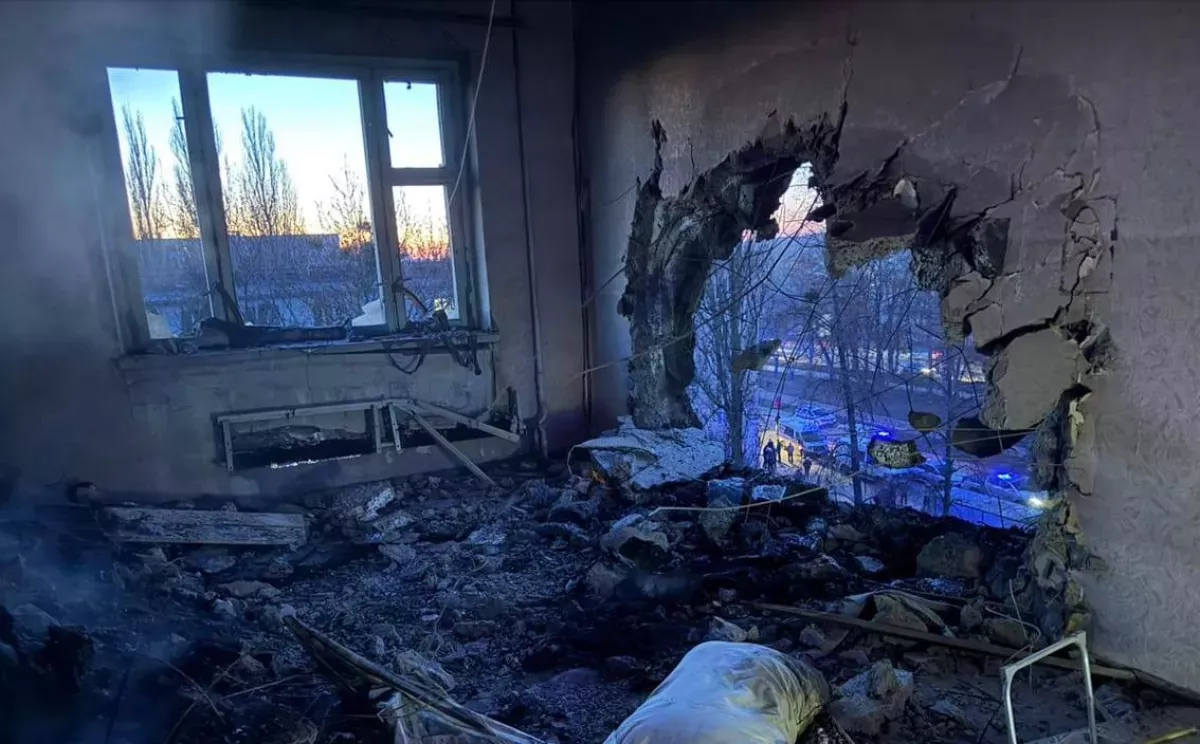
Undoubtedly, the delivery of these systems is important, but by the time they arrive, how many more missile and drone strikes will have been carried out on Ukrainian cities, and what condition will those cities be in in terms of even minimally providing people with electricity, heat, and water—no one has an answer. Likewise, no one can answer why Ukraine, despite receiving such colossal funding from the U.S. and EU, has still not reached the production level of 3,000 missiles per year promised by Zelenskyy.
In November 2024, the Ukrainian president set the defence-industrial complex the following target: to produce at least 3,000 cruise missiles and missile drones in 2025 as part of the overall armament build-up plan (alongside 30,000 long-range UAVs). These figures were announced during the presentation of the “Resilience Plan” in the Verkhovna Rada, but they have remained only on paper.







 editor@caliber.az
 +994 55 444-88-98
 Азербайджан, Баку, ул. Низами, 203, Af Business House, 5-й этаж