










Azerbaijan: triumph of justice From urbicide to revival
On December 24, on his birthday, President of Azerbaijan Ilham Aliyev and First Lady Mehriban Aliyeva participated in the opening of the second residential complex in Aghdam and met with the residents who had moved there.
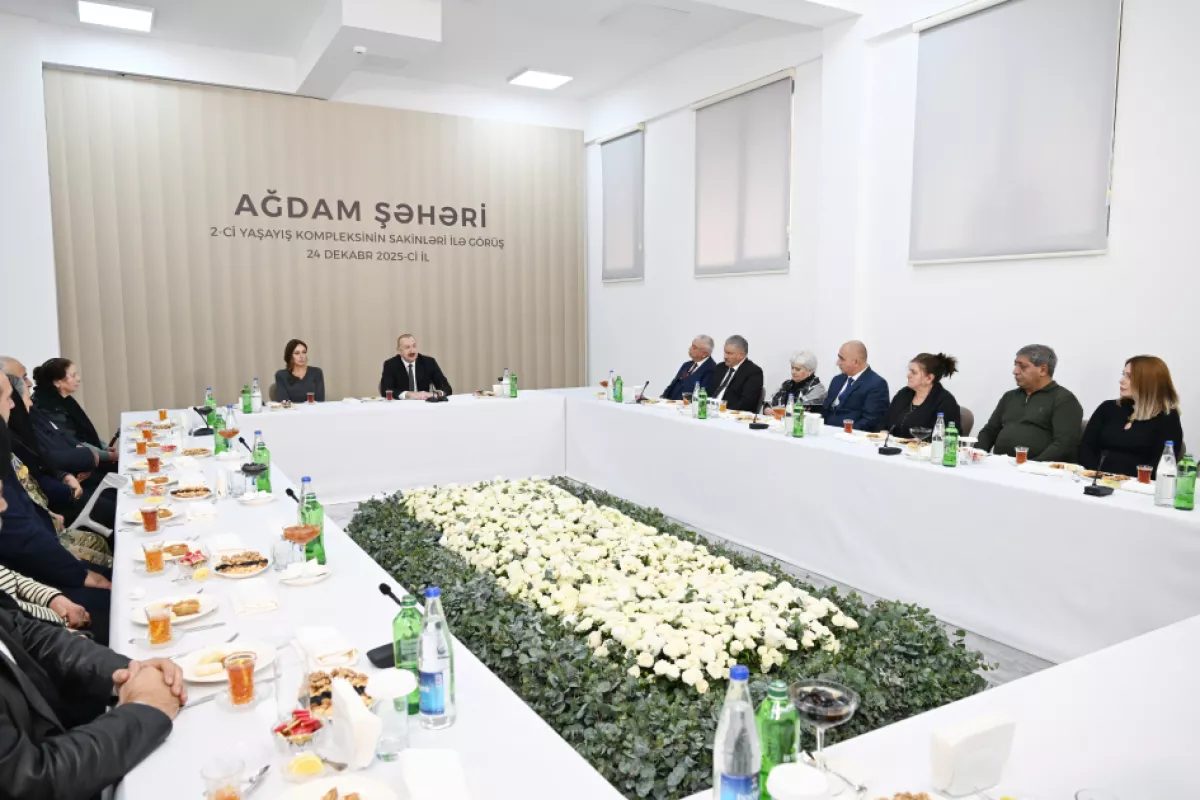
During the meeting, Emin Huseynov, the President’s special representative for the Aghdam, Fuzuli, and Khojavand districts, reported that in December, 104 families (426 people) would be resettled in Aghdam, and in January–February 2026, another 1,164 families (4,772 people) would return.
Thus, we are witnessing a large-scale historical process—the formation of a new reality in the liberated Azerbaijani territories, where the return of former displaced persons is accompanied not by mere declarations, but by the creation of modern, dignified living conditions, such as comfortable housing, developed infrastructure, and modern social facilities. This revival of Aghdam, as well as other liberated cities, towns, and villages, commands well-deserved respect and admiration worldwide.
However, while building the future, the Azerbaijani people do not forget the past. We will never forget what the occupiers turned this once-flourishing part of our homeland into. Aghdam was practically wiped off the map—world media even called it “the Hiroshima of the Caucasus.” This was a deliberate destruction of the city—its residential quarters, cultural, historical, and religious sites, and infrastructure—which President Ilham Aliyev described directly and firmly as follows: “Aghdam was subjected to urbicide during the years of occupation.”
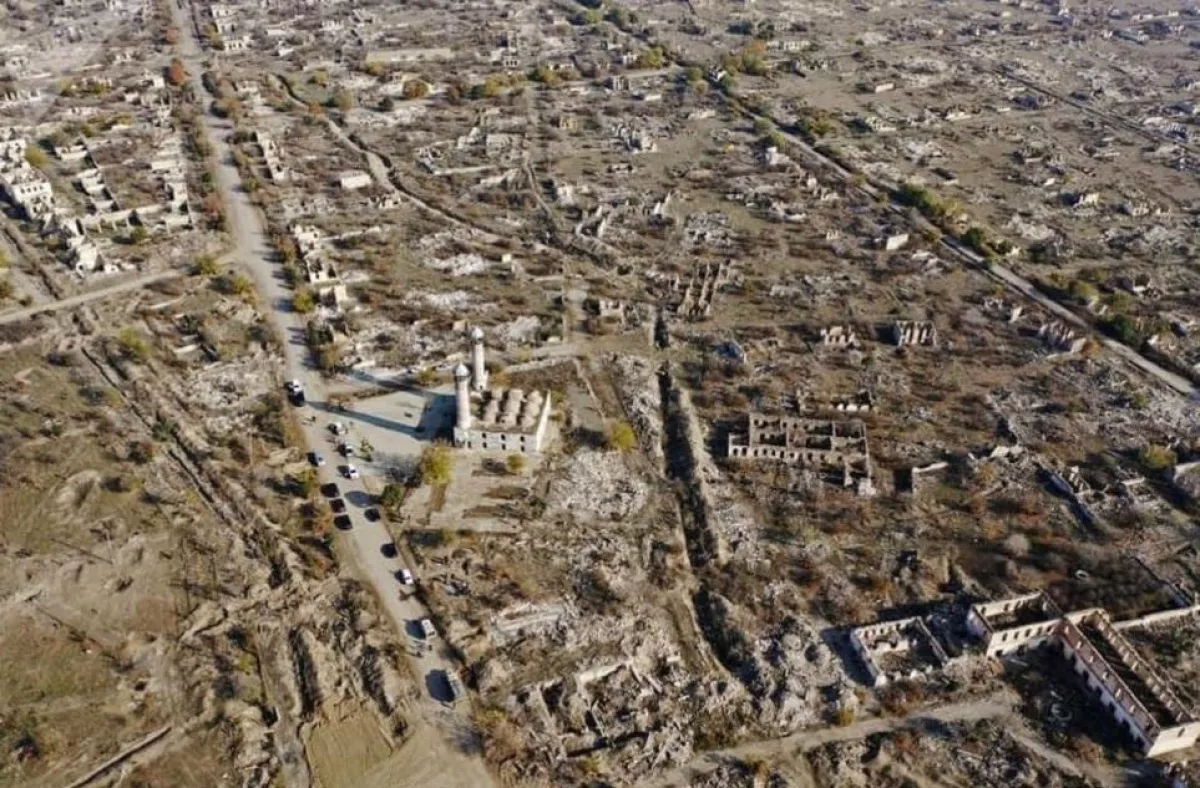
“In other words, the city was razed to the ground by the Armenian state. This was a clear example of a deliberate policy by Armenia and an expression of its hostility toward us. Their goals were also clear. First and foremost, it was looting, as the stones of all the buildings were dismantled one by one and sold in various places in Armenia. On the other hand, the Armenian state sought to fully erase the historical heritage of the Azerbaijani people in these regions. A third goal was to render the city uninhabitable, so that Azerbaijanis could never think of returning. But they made a mistake. We, the people of Azerbaijan, lived all these painful years with only one goal in mind: to return to our native ancestral land and restore these territories, cities, and villages. The people of Azerbaijan never came to terms with the occupation,” said the head of the Azerbaijani state.
We also remember the inaction of international bodies, which were supposed to work on conflict resolution, but in practice, undermined the negotiation process. Ilham Aliyev has repeatedly emphasised that international mediators effectively sided with the occupying state.
The OSCE Minsk Group, in particular, distinguished itself in this regard, receiving a pointed assessment from the Azerbaijani leader: “Instead of resolving the issue, the goal of the group and its co-chairs was to make the occupation permanent, justify Armenia, and coerce the Azerbaijani people and state into accepting it. I had been in contact with the OSCE Minsk Group co-chairs for 17 years, holding numerous meetings. Over the years, I observed that their goal was not to resolve the issue, end the occupation, or implement UN Security Council resolutions, but to make the occupation permanent. It seemed as though Armenia and the Minsk Group co-chairs were on one side of the negotiating table, and Azerbaijan was on the other. This was the conclusion of the countless meetings I had over these 17 years. They thought they could succeed, that they could convince us to give up our ancestral lands. But they were mistaken, just like the Armenian state.”
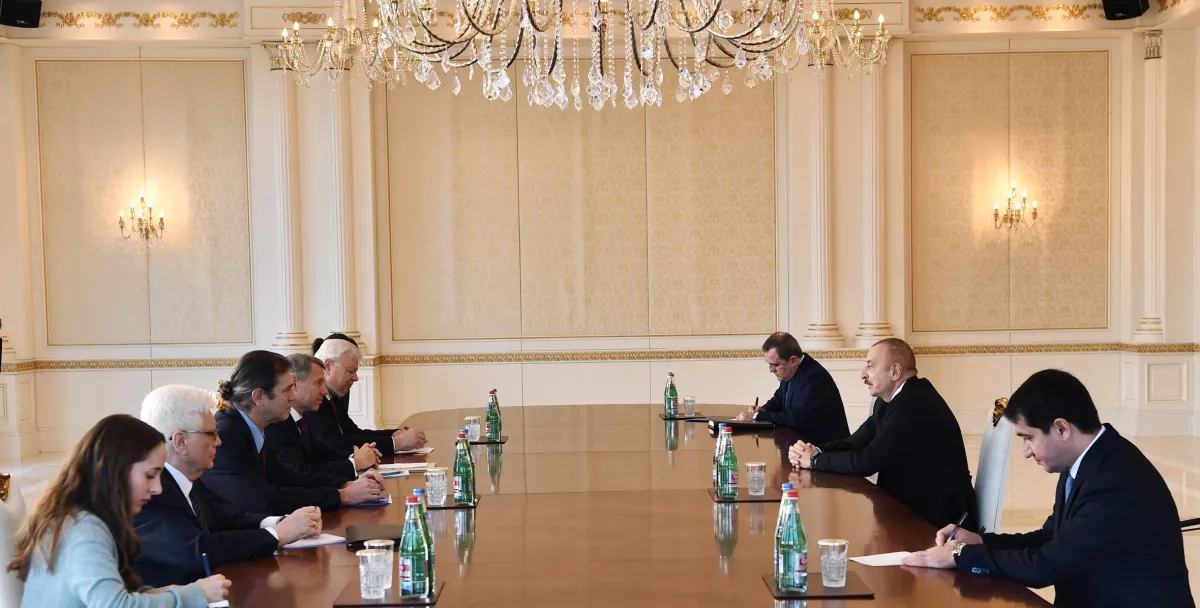
In this context, the following telling episode comes to mind. After the end of the Patriotic War, on December 12, 2020, the co-chairs of the OSCE Minsk Group arrived in Baku. During meetings with them, President Ilham Aliyev stated, in particular:
“I did not invite the Minsk Group to come. But when I was informed that the Minsk Group wants to come, I said okay, I don’t mind, maybe they have something to tell me. If you want to do it in front of the cameras, it’s okay, if not, I can tell them to leave.”
These are the words of the president of the victorious country—a clear example of a strong leader acting confidently, openly, and without regard to power centres. Moscow, Washington, Brussels, and Paris were forced to accept a new reality in which their wishes and plans no longer determine Azerbaijan’s policy. And none of the co-chairing countries could prevent the anti-terrorist operation in Karabakh in September 2023, after which Azerbaijan’s territorial integrity was fully restored. The logical conclusion of the Minsk Group’s existence was seen on December 1, 2025, when it was officially and permanently dissolved.
We also remember those who, throughout the years of occupation of Azerbaijani territories, not only failed to impose any sanctions on Armenia and exert the slightest pressure on the aggressor country, but, on the contrary, supported Yerevan in various ways. Inevitably, a parallel with Russia comes to mind, which faced strict international sanctions for the annexation of Crimea and the invasion of Ukraine, raising the natural question: “How does the territorial integrity of Azerbaijan differ from the territorial integrity of Ukraine?”
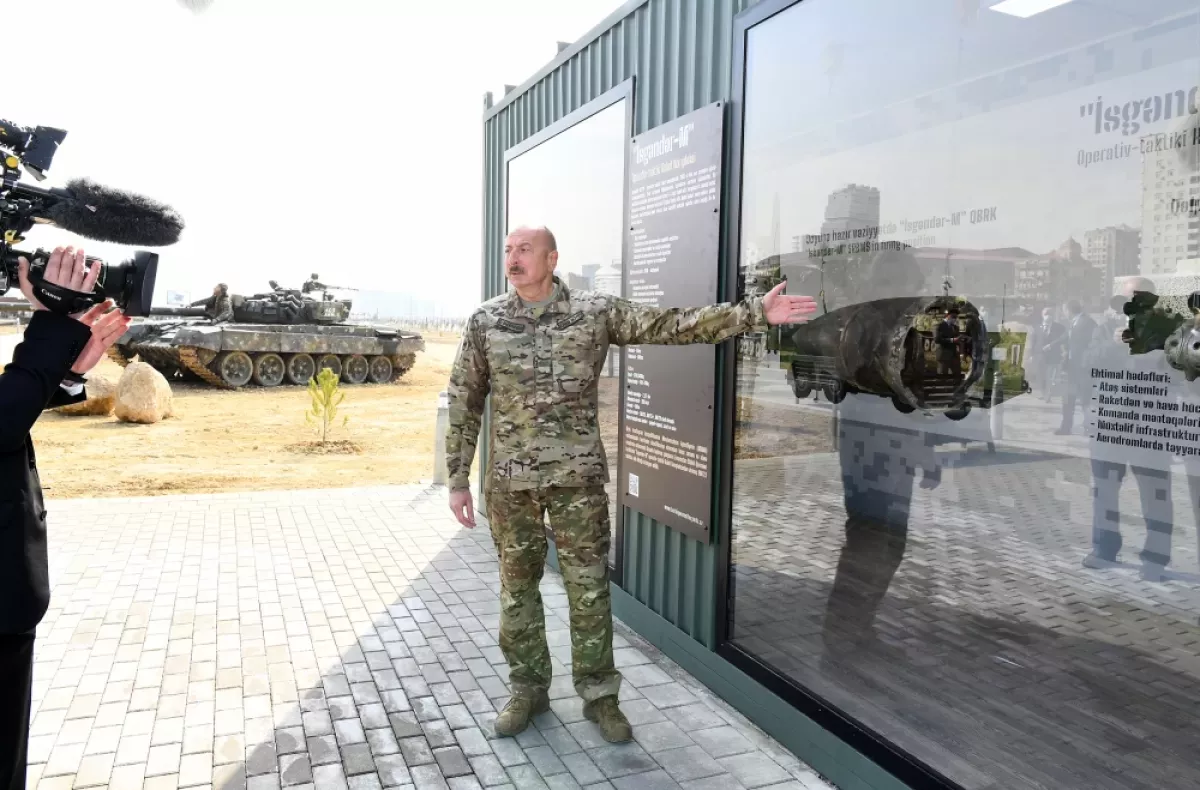
In particular, it is well known that as early as 1998, Russia supplied Armenia with weapons worth approximately $1 billion (according to a parliamentary investigation by General Rokhlin), and these deliveries continued in the following years. After the April 2016 clashes, Yerevan received Iskander operational-tactical missile systems, which the Armenian side used during the 44-day war to shell Shusha. To verify this, one only needs to visit the Military Trophy Park in Baku, where anyone can see the remnants of an Iskander-M missile—something Armenia should not have possessed, as its export is prohibited. Nevertheless, the fact remains, and as we know, facts are stubborn.
During the 44-day war, arms deliveries to Armenia were carried out by air, including via Iranian territory, as confirmed by published flight routes and video materials. This is something Azerbaijan will never forget, just as it will not forget the involvement of foreign mercenaries on the Armenian side. The scale of external military assistance to Armenia is further reflected in the total value of destroyed and captured weaponry, which amounted to $5–6 billion. Today, the militarisation of Armenia by France and India is a matter of serious concern, casting doubt on the sincerity of official Yerevan’s claims of pursuing peace.
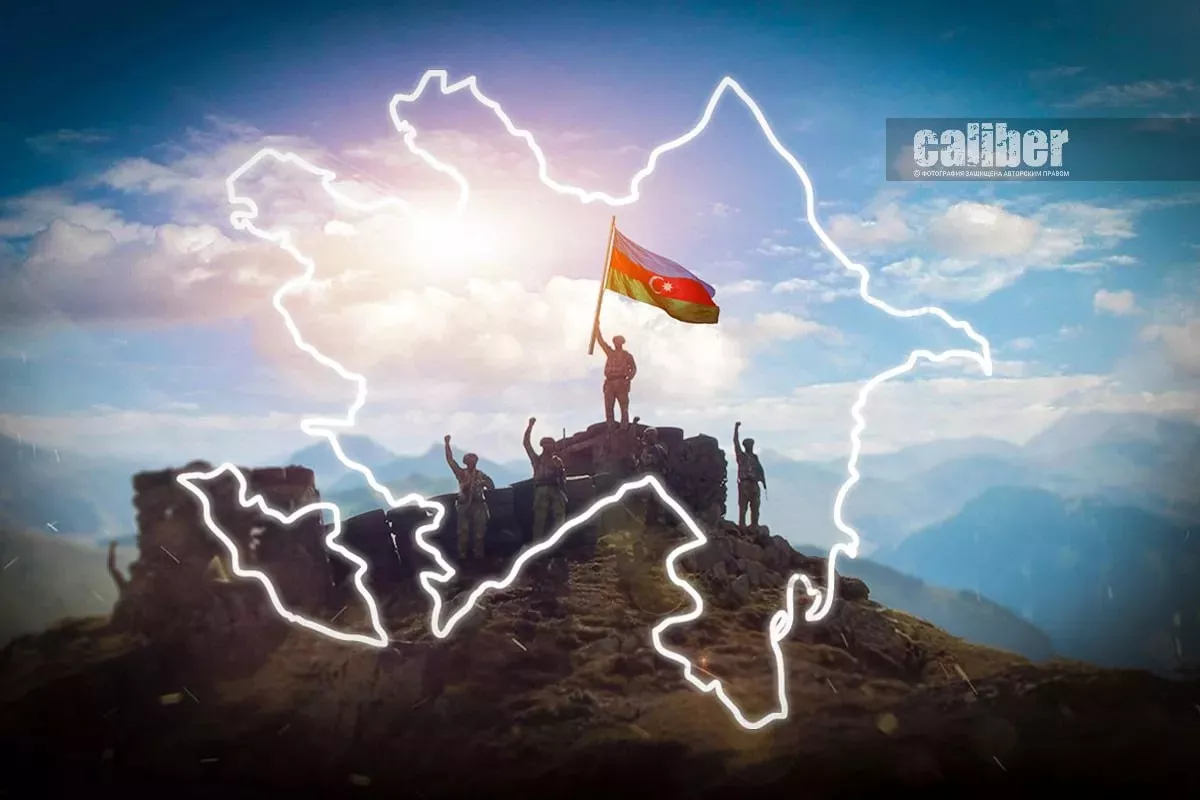
Looking back, we increasingly recognise the enduring significance of the historic victory of the Republic of Azerbaijan in the Patriotic War of autumn 2020. This was a victory not only over Armenia—the occupying country—but also over global Armenian lobbying and a number of states that had no interest in restoring the territorial integrity of our country. It is a triumph of justice, dignity, and sovereignty. And the great return of all formerly displaced persons to their native lands is a true miracle, made possible thanks to the principled stance, political will, and determination of the head of the Azerbaijani state, the Victorious Supreme Commander-in-Chief Ilham Aliyev.







 editor@caliber.az
 +994 55 444-88-98
 Азербайджан, Баку, ул. Низами, 203, Af Business House, 5-й этаж