










Iran's strategic oil hub emerges as next flashpoint in US-Iran confrontation PHOTO
U.S. President Donald Trump said on March 13 that American forces had "obliterated" military targets on Kharg Island, a key hub in Iran’s oil export network. He stressed, however, that he had deliberately chosen not to "wipe out" the island’s oil infrastructure, warning that the situation could change if Iran disrupts maritime traffic through the Strait of Hormuz.
Following the strikes, Iran’s military warned that it would target regional oil companies cooperating with the United States if Iranian energy facilities came under further attack. The response highlights the strategic importance of Kharg Island to Iran’s energy sector, according to industry commentary cited in an article by UAE-based The National.
Also referred to as the “Forbidden Island” among Iranians, Kharg Island lies roughly 30 kilometres off Iran’s south-western coast. Crude oil from Iranian oilfields is transported to the island through undersea pipelines, where it is loaded onto tankers for export.
The facility plays a central role in Iran’s oil industry, handling about 90 percent of the country’s crude exports. Estimates place its loading capacity at around 7 million barrels per day, with a storage capacity of roughly 30 million barrels.
Iran holds the third-largest proven crude oil reserves in the world, estimated at 208.6 billion barrels, accounting for nearly 12 percent of global reserves.
Most oil shipments leaving Kharg Island are destined for Asian markets, with about 80 percent reportedly going to China.
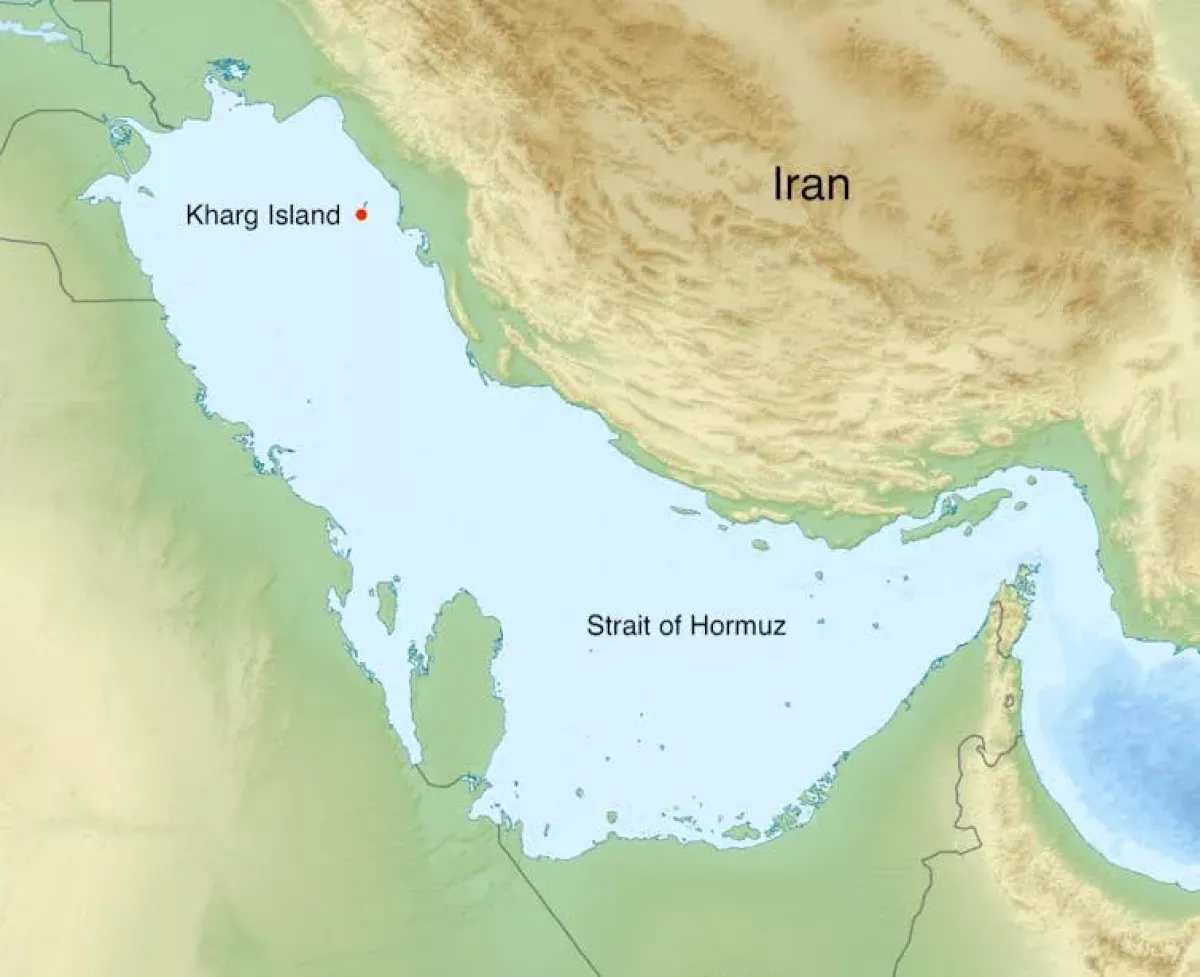
Any disruption to operations on the island could rapidly ripple through global energy markets. “quickly affect energy prices and have unpredictable consequences for the global economy”, said Yong Liang, deputy head of treasury at the Industrial and Commercial Bank of China.
At the same time, analysts note that broader geopolitical shifts are underway. Tehran has increasingly encouraged oil transactions priced in Chinese yuan, signalling a gradual shift toward renminbi-based energy trade with China, according to Mazhar Pasha, executive director at Syndicate Capital in India.
"Under the pressure of sanctions and conflict, what was once a theoretical discussion about de-dollarised commodity markets is beginning to take practical shape," he told the outlet.
"The episode underscores a broader reality of war economics. Iran’s leverage has long rested on two foundations: energy resources and geography. While the US may degrade military infrastructure around export hubs, Iran retains the ability to influence the global economy through control of strategic waterways and the flow of Gulf energy."
Analysts told The National that Tehran is unlikely to relinquish control over either Kharg Island or the Strait of Hormuz, which remains one of its most powerful strategic assets.
Zohaib Ahmed, founder of the Pakistan-based consultancy Synorix, said the waterway represents far more than a shipping route for Iran.
"That is why expectations of surrender or unrestricted maritime passage are unrealistic. From Iran’s perspective, this conflict is framed as a war of survival," he said.
"The immediate consequence of strikes … is therefore more likely to be volatility in global energy markets and further regional escalation, rather than the rapid collapse of Iranian resistance that American messaging suggests."
Beyond its strategic role, Kharg Island also has ecological and tourism significance. Often described as the “crown jewel” of Iran’s oil infrastructure, the island is one of the few locations in the Arabian Peninsula with freshwater resources. It is home to diverse wildlife, including gazelles, hawksbill and green sea turtles, goats, ospreys, large white-headed seagulls, house crows and migratory bird species.
By Nazrin Sadigova







 editor@caliber.az
 +994 55 444-88-98
 Азербайджан, Баку, ул. Низами, 203, Af Business House, 5-й этаж