










Tymoshenko on trial: bail, bribes, and braids A political spectacle in wartime Ukraine
Ukrainian domestic politics has always been turbulent, but even by these standards, the situation surrounding Batkivshchyna party leader Yulia Tymoshenko stands out.
On January 16, the Ukrainian High Anti-Corruption Court (HACC) partially granted prosecutors’ requests, setting Tymoshenko’s bail at 33.28 million hryvnias (~$765,000). The court also imposed a series of restrictions, including mandatory appearances upon the prosecution’s request, a ban on leaving Kyiv and Kyiv Oblast, reporting any changes in employment or residence, and refraining from contacting individuals potentially involved in the case.
Background: On January 13, Ukraine’s anti-corruption authorities reported the arrest of a faction leader in the Verkhovna Rada for allegedly engaging in bribery. According to the National Anti-Corruption Bureau (NABU) and the Specialized Anti-Corruption Prosecutor’s Office (SAP), the politician offered deputies payments in exchange for voting “for” or “against” certain bills.
The following day, Yulia Tymoshenko, head of the Batkivshchyna faction, was formally served with a suspicion under Article 369, Part 4 of the Criminal Code of Ukraine (“Offering an unlawful benefit to an official”), which carries a penalty of five to ten years in prison.
The investigation alleges that Tymoshenko “initiated negotiations with individual members of parliament to implement a systematic mechanism for providing unlawful benefits in exchange for loyal behaviour during votes.” According to anti-corruption authorities, this was not a one-time arrangement but a long-term scheme involving advance payments and coordinated actions.
NABU released footage with transcripts of negotiations in which Tymoshenko allegedly participated. In the videos, she appears to arrange with an unidentified deputy that he and two others would vote in line with Batkivshchyna’s instructions. During her arrest, authorities reportedly found $40,000 in her possession.
This follows a December 2025 investigation in which NABU and SAP exposed an organized criminal group including sitting members of parliament. Ukrainian media suggest that some deputies from the pro-presidential Servant of the People faction may have also been involved.
However, it must be noted that Yulia Volodymyrivna Tymoshenko has been a fixture in Ukrainian politics for so long that expecting a full confession immediately would be unrealistic—a point made clear during Friday’s court session.
The prosecutor reported that a monoblock computer had been seized from Tymoshenko’s office. On its desktop were an account named “Kassa” (cash account) and a folder called “Report” containing Excel spreadsheets from 2022 to 2026. These reportedly included records “on the receipt of funds and their expenditures, indicating purposes, dates, amounts, and sources, among which were ‘YV’s funds’ and ‘issued by YV’.” The prosecutor also said that certain lists of Servant of the People party deputies were found on the device.
In response, Tymoshenko argued that the computer was not her personal device but one from her office reception. “Where it says ‘Kassa’ and ‘Funds given by YV’—that’s just a few thousand hryvnias in cash used for tea, coffee, and biscuits. Can you imagine these manipulations and this farce? … These lists—who voted how in parliament—are the work of my office and secretariat. How can a petty cash account for buying biscuits, coffee, and tea be connected to parliamentary voting analytics?” she said indignantly.
Furthermore, Yulia Tymoshenko claimed that the recordings released by NABU were made by Servant of the People deputy Ihor Kopytin, allegedly under pressure from the anti-corruption bureau, which is reportedly investigating him in a separate criminal case.
Meanwhile, the head of the ruling party’s faction in the Verkhovna Rada, David Arakhamia, told Ukrainska Pravda via the faction’s press service that he was unaware of any conversations between Tymoshenko and Kopytin. “We have no knowledge of this. All we can say about Igor Kopytin, based on statistics of his attendance at plenary sessions and participation in votes, is that he is one of the most disciplined deputies and a patriot of his faction,” Arakhamia said.
Tymoshenko herself did not deny that the conversation took place, but clarified that it concerned parliamentary activities, and that the portion of the recording suggesting monetary offers to deputies for controlled voting had been edited or taken out of context.
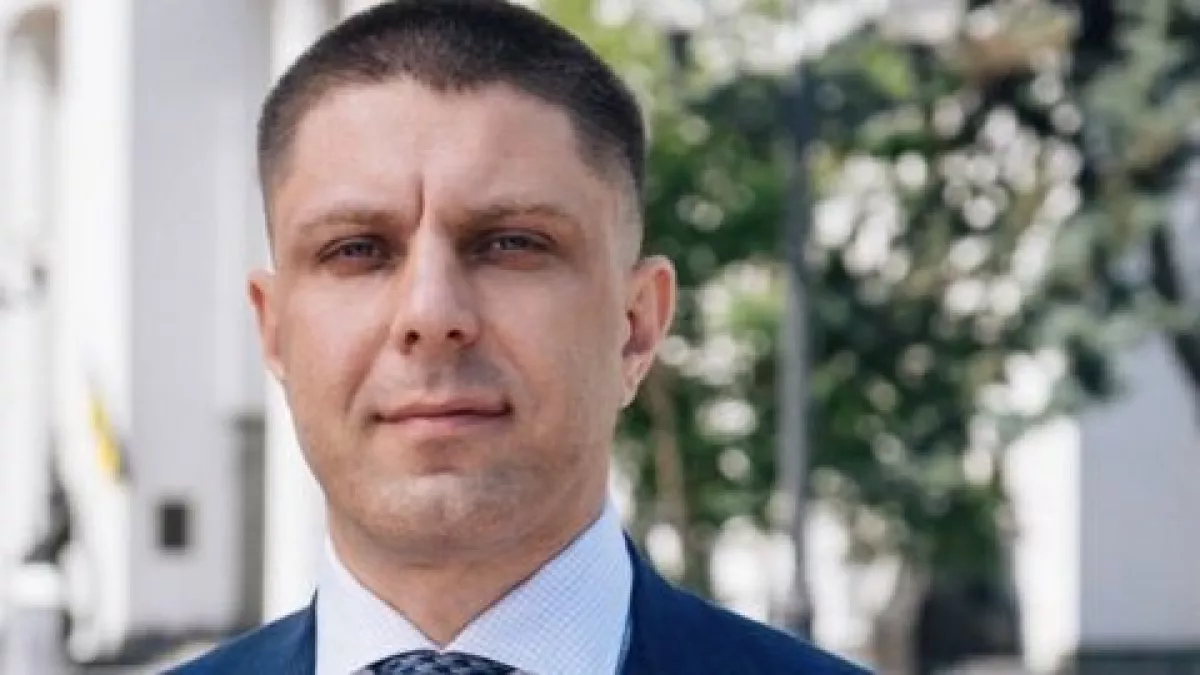
Ihor Kopytin himself did not stay silent, writing on Telegram: “In the information space these days, a number of statements, assumptions, and accusations have been spread about me that do not correspond to reality and have no verified basis. I am being drawn into political interpretations of procedural actions and events to which I have no relation.”
He also added that he “does not participate in political games” and, moreover, “does not comment on the actions of law enforcement authorities”: “I consistently support the course of fighting corruption and ensuring the effective work of anti-corruption institutions. It is the legal procedure, not public statements or insinuations, that should provide answers to all questions.”
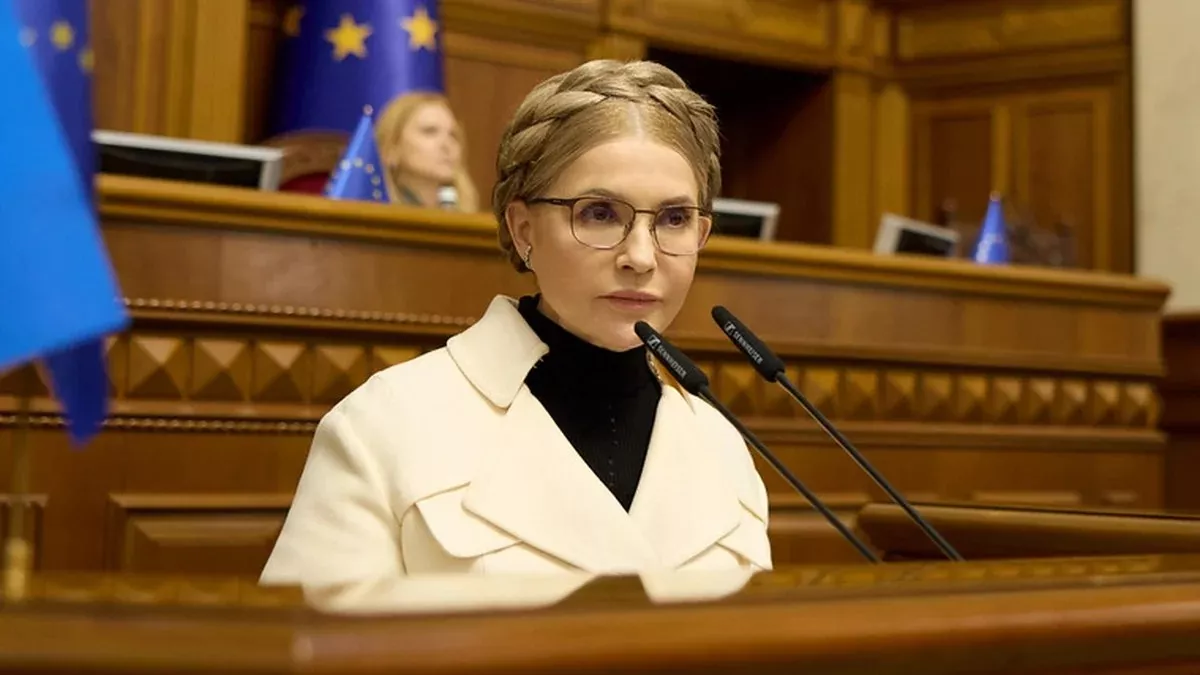
It doesn’t take a genius to understand that Tymoshenko, well-versed in political intrigue, will have her own explanation for Kopytin’s statements. Denying everything while trying to appear convincing is the MP’s trademark style, which makes it unsurprising that she claimed the $40,000 found during her search was compensation from the U.S., allegedly received for persecutions during the time of the fugitive ex-president Viktor Yanukovych. Listening to her, one might confidently assume that everyone carries $40,000 “just in case.”
At the court hearing, Yulia Tymoshenko also stated that she would not leave Ukraine, even if forcibly removed, and would remain until “the country is liberated from the fascist regime.” Those exact words—and no others—were used. One might dare to say that Russian propagandists applauded this part of her speech, as she echoed verbatim the phrase they regularly use to characterise the current Ukrainian authorities.
“They broke in without any documents, without anything, at night, just like in ’37,” — this is how the Batkivshchyna leader described her detention.
It is, however, difficult to imagine that, under the repressive conditions of 1937 Stalinist Soviet Union, the head of an opposition party would be living a luxurious lifestyle, with tens of millions of hryvnias in her bank accounts—even if temporarily frozen.
This comparison is not made lightly. It illustrates the scale of the political adversary that President Volodymyr Zelenskyy and his team have created for themselves. To provide a fuller picture, it is worth reviewing Yulia Tymoshenko’s biography.
In 1991, Yulia Volodymyrivna Tymoshenko, together with her husband Oleksandr Tymoshenko and family friend Oleksandr Gravets, founded the Ukrainian Gas Corporation (KUB). She initially served as commercial director and later as general director. Four years later, KUB became the foundation for United Energy Systems of Ukraine (UESU), which specialised in barter transactions—importing Russian gas into Ukraine in exchange for products from Ukrainian enterprises. For her leadership of UESU, Tymoshenko earned the nickname the “Gas Princess.” Through the resale of Russian gas, she accumulated significant wealth.
It is important to note a key nuance: the sale of natural gas has always been, for modern Russia, not merely business but high-stakes politics—a sphere rarely open to outsiders. Yet Tymoshenko, despite her strongly anti-Russian rhetoric, was clearly not a stranger to Moscow. One only needs to recall an incident during her tenure as prime minister, when she was seen giggling alongside Vladimir Putin as he criticised President Viktor Yushchenko.
Today, Tymoshenko highlights the fact that she was once imprisoned under Viktor Yanukovych. However, a notable detail is worth mentioning: after his overthrow, the freed Yulia Volodymyrivna was brought straight from the prison to Maidan in a wheelchair, yet she appeared as usual—with her signature braid and towering heels—demonstrating her mastery of political theatre. Supporting this point, it is worth recalling that Tymoshenko, who now declares in court that she would never leave Ukraine, was reportedly spotted on a beach in Dubai in the summer of 2023, while the Russia–Ukraine war was already underway.
In summary, it is clear that the current Ukrainian authorities face a cynical and formidable adversary in Tymoshenko—someone who can present herself as a “victim of the regime” while relying on the support of her electorate. Paradoxically, many will indeed believe her.







 editor@caliber.az
 +994 55 444-88-98
 Азербайджан, Баку, ул. Низами, 203, Af Business House, 5-й этаж