










From ghost city to Azerbaijan’s industrial hub Aghdam’s historic revival
The “Hiroshima of the Caucasus” or a “ghost city” — this was how Aghdam appeared after its liberation from the grip of the aggressors. Once one of Azerbaijan’s most picturesque and spiritually rich centres, the city was effectively erased from the face of the earth by the inhumane and barbaric actions of the occupiers — reduced to nothing, with no other words to describe it.
Following the 2020 Patriotic War, the scale of devastation across the liberated territories was laid bare for the entire world through extensive video documentation. The world witnessed the barbaric destruction by Armenian occupiers of cultural heritage sites, the desecration of mosques and holy places throughout Karabakh, and especially in Aghdam. During the years of occupation, Armenians dismantled and removed buildings, structures, and any property of material value — not only to Armenia, but also to other countries. Azerbaijan’s natural resources were plundered in a predatory manner, including forest areas, gold deposits, and other mineral resources.
After the occupiers were driven out, Azerbaijan faced extensive landmine contamination left by Armenian forces, designed to prevent the return of civilians and causing numerous casualties in the post-war period.
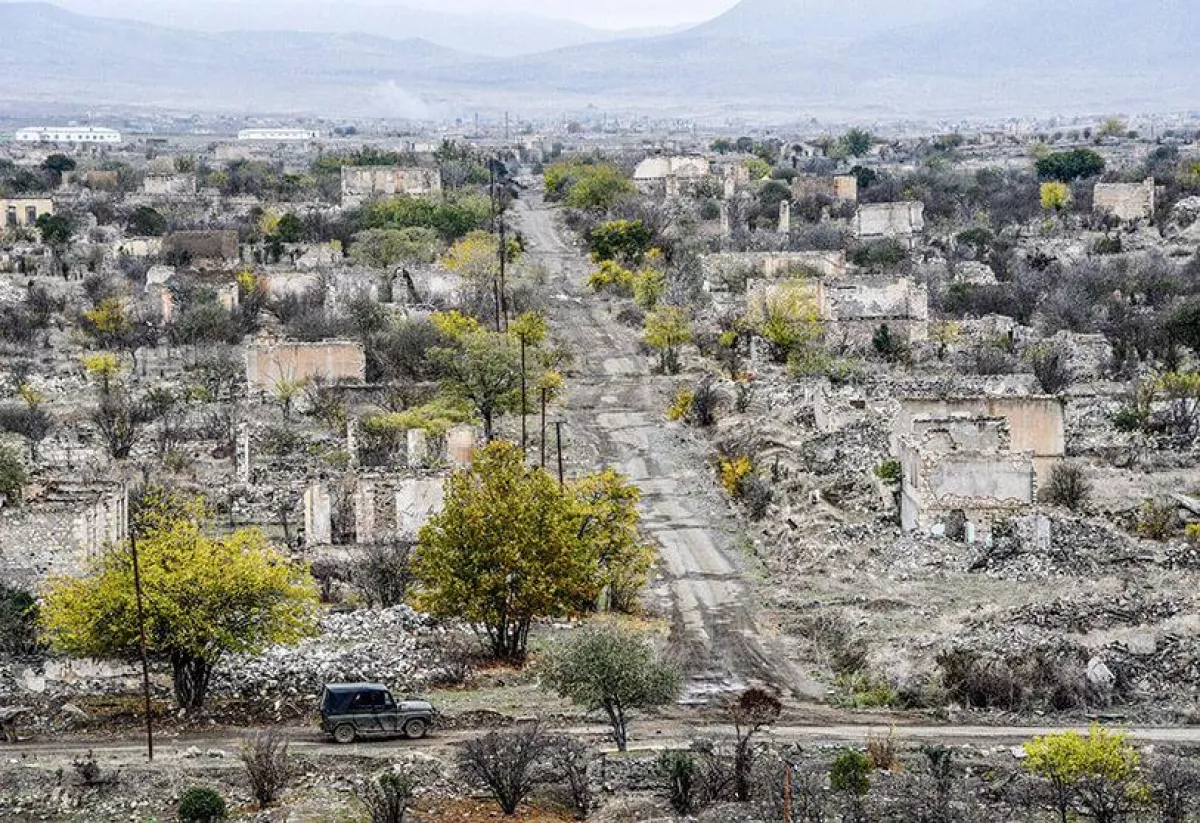
However paradoxical it may seem, the city continued to live — in souls, hearts, and memory. And not only in the memory of Aghdam’s natives, but of the entire Azerbaijani people, regardless of ethnic or religious affiliation. This is because our people did not turn — to borrow the idea expressed by the outstanding writer Chingiz Aitmatov in his novel The Day Lasts More Than a Hundred Years — into mankurts: individuals who have lost their roots, forgotten their name and childhood, their parents, and even their sense of themselves as human beings.
The people of Aghdam lived, created, and built — even if not in their native city, then within their own country.
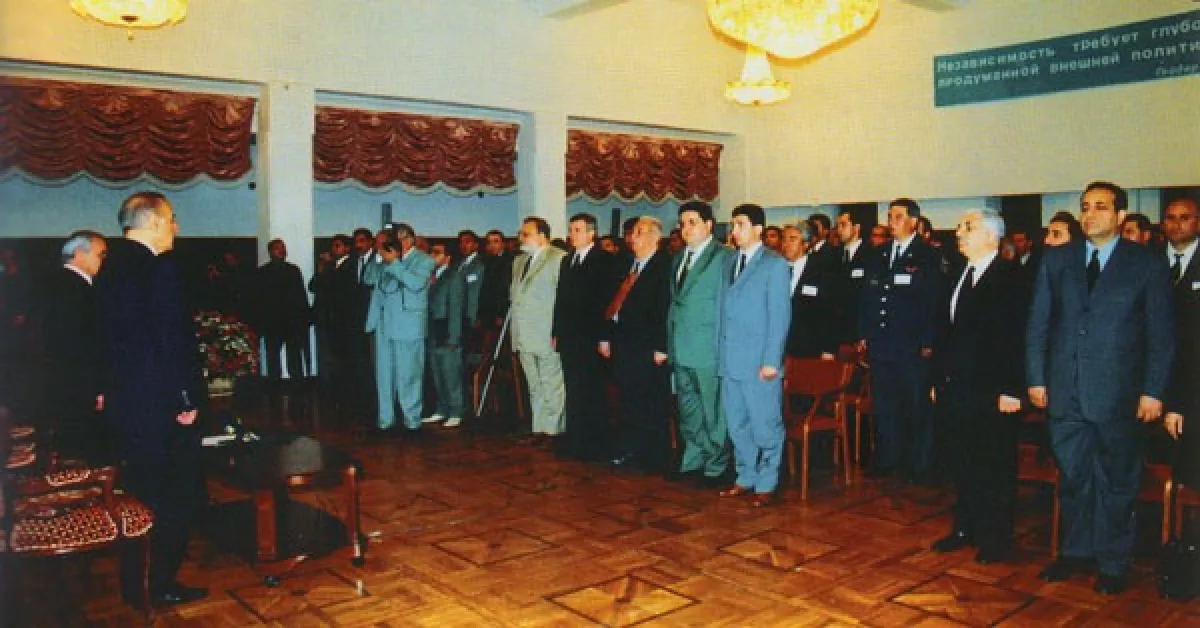
This nuance was emphasised with particular clarity by the National Leader Heydar Aliyev, who noted that Azerbaijanis forced to leave their lands “would not go anywhere. This is the psychology of our people. Each of them longs to return to their village, to their native land, to the graves of their ancestors. And I hold this position. We must achieve this — and we will.”
And in 1996, thousands of people received with enthusiasm Heydar Aliyev’s words underscoring that it was impossible for the Azerbaijani people to reconcile themselves to their lands remaining under occupation for a prolonged period.
“We cannot come to terms with this,” Heydar Aliyev stated at the time, “and if, up to a certain point, we fail to resolve this issue by peaceful means, then we will undoubtedly have to resort to all available measures. Therefore, the people of Shusha and Lachin, Aghdam and Fuzuli, Jabrayil and Kalbajar, Zangilan and Gubadli — and not only them, but all citizens of Azerbaijan, our youth — must know that everyone is obliged to be ready to defend their land and to liberate it from the occupiers.”
Two years later, the National Leader was already speaking of the day when “I will come to Shusha for the Novruz celebrations, then to Kalbajar, Aghdam, Fuzuli, Jabrayil, Zangilan and Gubadli. I am confident that this will happen. I believe in it, I live by this belief, I work with it, and with this belief I lead the Azerbaijani people.”
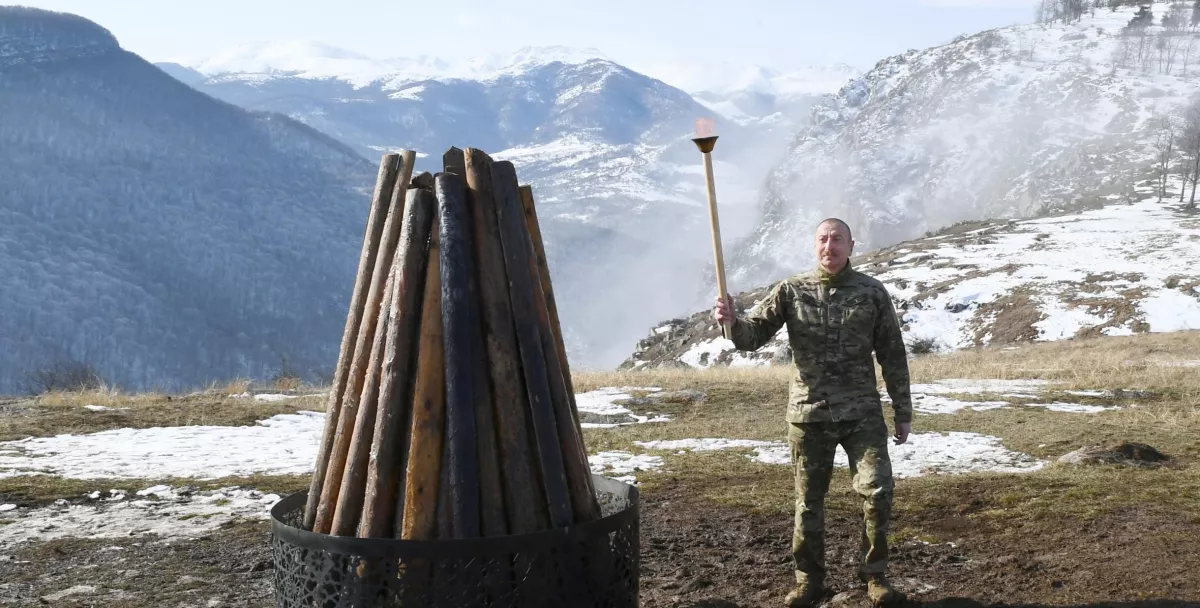
Unfortunately, Heydar Aliyev was not destined to personally celebrate Novruz Bayram on Azerbaijani lands liberated from occupation. However, through his unique and far-sighted steps, he laid an exceptionally strong foundation for achieving this goal. His political successor — President Ilham Aliyev — in 2021, together with members of his family, lit the festive Novruz bonfire in Shusha, on Jidir Duzu, emphasising that throughout his presidency he had promised that, after the restoration of the country’s territorial integrity, he would “celebrate Novruz Bayram in Karabakh — and that day has come.” Already the following year, Novruz was celebrated in Aghdam. Thus, the promises of Heydar Aliyev and Ilham Aliyev were not merely fulfilled — they were realised on a grand scale.
And so, on 24 December 2025, on his 64th birthday, President Ilham Aliyev took part in the opening of the second residential complex in Aghdam and met with residents who have resettled there and are due to move into nearly 1,300 apartments. The head of state highlighted the symbolic significance of this date in the city’s history, stressing that “after a long break, the natives of Aghdam are returning” to this most beautiful corner of the country, which had been subjected to urbicide.
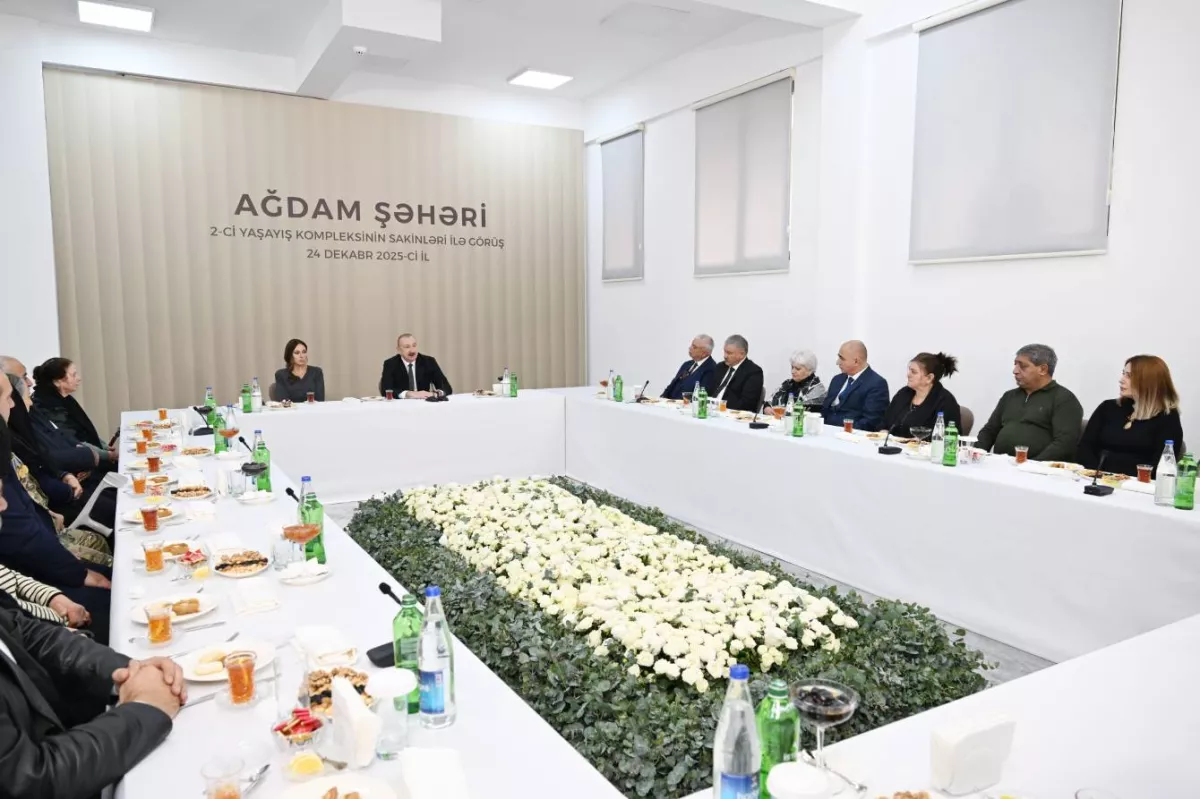
Armenia, the President noted, sought to completely erase the historical heritage of the Azerbaijani people in the occupied regions. However, as he emphasised, we all believed in the restoration of historical justice.
Yes, international organisations — first and foremost the notoriously ineffective OSCE Minsk Group — in effect sought to make the occupation permanent. But the unity of the people, which took the form of the “Iron Fist,” led to the fulfilment of a sacred mission. And, as the President stressed, “in order to live in peace and security from now on, we must never forget this history.”
Moreover, the firm will of the people, crucial political decisions, and the strength of the country’s Armed Forces shaped new realities in the region, which were formalised in August of this year with the participation of the President of the United States.
It is fair to say that we have already grown accustomed to the fact that all key speeches by President Ilham Aliyev — whether delivered domestically or at international forums — are programmatic in nature, with every phrase carrying symbolic weight and a clearly defined addressee.
This was also the case in Aghdam, where the head of state underlined that for several decades the Azerbaijani people had faced blatant injustice: neither international organisations nor major powers — unlike in other situations — forced the occupier to leave the occupied territories, despite the existence of UN Security Council resolutions, nor were any sanctions imposed.
Against the backdrop of the political and moral support that, throughout all these years, Azerbaijan received solely from its Turkish brothers, the occupiers were supplied with free aid and weaponry — including the Iskander-M ballistic missile, which was used against civilians in Shusha and which Armenia should never have possessed, as its export is prohibited.
At the same time, separatists — who are now standing trial in Baku — participated in propaganda telethons in the United States and France, presenting themselves as so-called “official representatives.”
This once again confirms that the primary objective of biased external forces was to preserve the status quo in the South Caucasus, including by encouraging and shielding acts of violence against the Azerbaijani people. Only the heroism of our nation prevented this injustice from prevailing. Historical memory and the bright memory of the martyrs will forever remain in our hearts.
Yes, the victorious country became the initiator of the peace process between Armenia and Azerbaijan; however, we harbour no illusions about sweet rhetoric and continue consistently to strengthen our own military potential.
There is no doubt that the addressees of the President’s message understood the full weight and meaning of his words. In this context, one can only hope that Azerbaijan’s adversaries will recognize the futility of injustice toward our people, having learned from their own mistakes. It is no coincidence that the head of state placed particular emphasis on historical memory in his address.
We remember. We stand vigilant. And at its rightful place stands our eternal fist of unity — capable, if necessary, of transforming into iron in an instant. Our strength lies in truth, in love for the Motherland, and in patriotism. In that fleeting moment when we all become Karabakhis or Western Azerbaijanis, we believe — and know — that historical justice in our region will fully prevail, without remainder. All the more so because our strength, grounded in truth, is also firm, tangible, and unwavering.
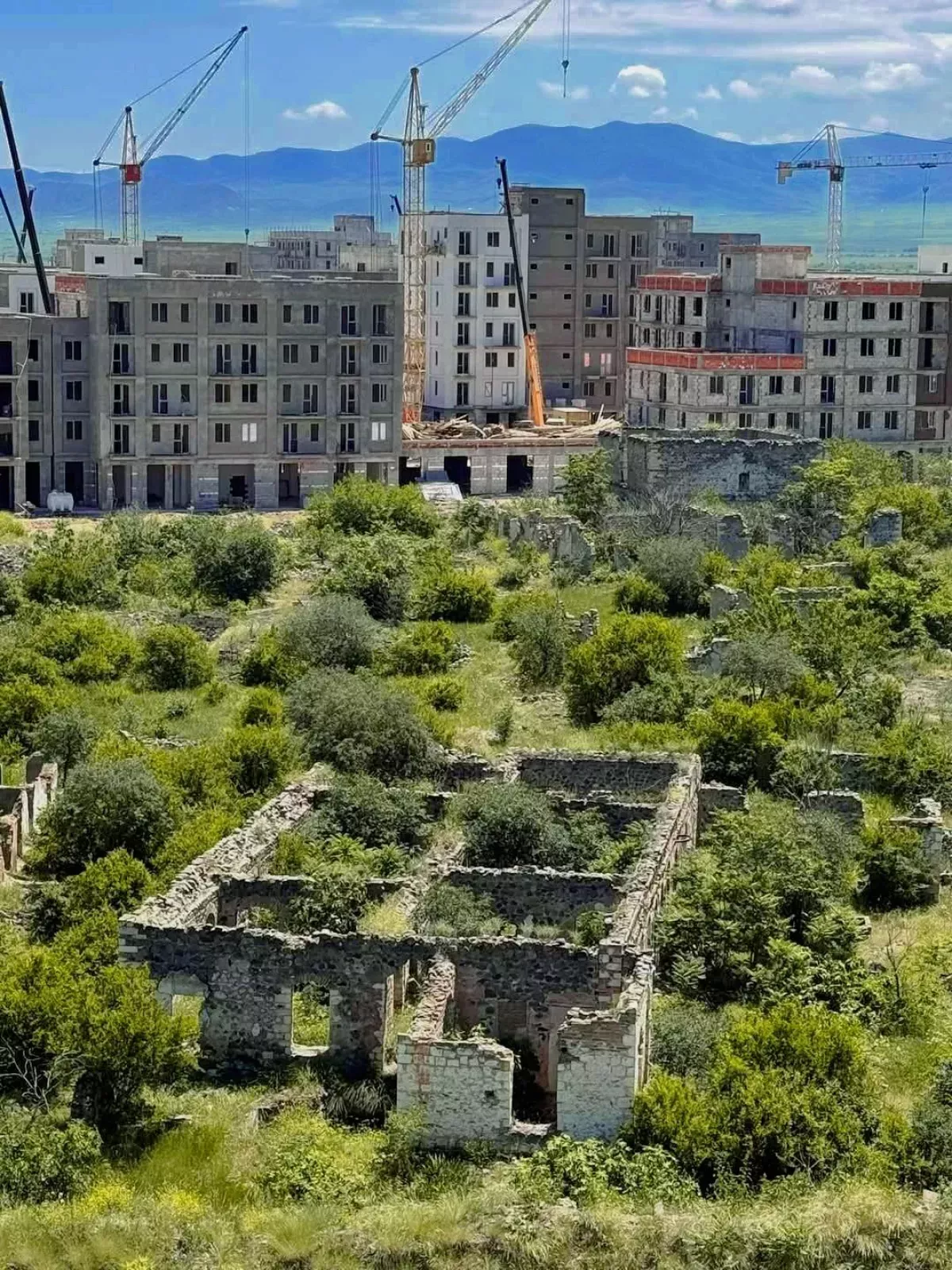
Meanwhile, life has returned to Aghdam, as well as to the Karabakh Economic Region and East Zangezur as a whole. The unprecedented pace of reconstruction is, in large part, driven by the return of the cities’ rightful owners. Instantly, the land, springs, and nature have come back to life. The call to prayer once again echoes from the mosques. The Khachinchay Reservoir has been restored. The Aghdam Industrial Park is expanding. Transportation routes are taking shape, including the under-construction Aghdam–Khankendi railway, an initiative first launched by the National Leader Heydar Aliyev.
All of this is transforming Aghdam into the country’s fourth industrial hub, after Baku, Sumgayit, and Ganja.
The significance of these developments is further underscored by the fact that much of this progress is being achieved through Azerbaijan’s own efforts — alongside parallel successes in diplomacy, economy, culture, and sports.
It is fitting to end on a symbolic note. On his birthday, President Ilham Aliyev participated in the opening of Victory Park in Khankendi. That the country’s second Triumphal Arch — after Baku — was inaugurated precisely in Khankendi carries deep meaning.
Historical memory in action. Indeed.







 editor@caliber.az
 +994 55 444-88-98
 Азербайджан, Баку, ул. Низами, 203, Af Business House, 5-й этаж