










The sunset of PACE “An extension cord” for Russia’s liberal “lamps”
The Parliamentary Assembly of the Council of Europe’s (PACE) decision to approve the composition of the so-called “platform of Russian democratic forces” is pure tragicomedy—or, if you prefer, cheap cabaret—where the same characters appear on stage over and over again, and the audience is expected to applaud and pretend that they are witnessing the future of Russia.

However, the platform proclaimed by PACE is not a political platform at all; it is a brightly lit display case, behind the glass of which are presented faces long familiar to everyone—people proven by grants and absolute inability to influence anything in Russia itself. The list, admittedly, looks impressive if judged by the recognizability of names rather than their political weight. It includes Garry Kasparov, who has spent many years playing chess with an imaginary Kremlin; Mark Feygin, confidently acting as a universal expert on everything except real politics; and Dmitry Gudkov, the perennial candidate of the eternal “anti-Putin tomorrow.” And, of course, it wouldn’t be complete without Mikhail Khodorkovsky, whose absence would make such gatherings feel incomplete.
Ironically, one could also note that the list could have included actor Aleksei Panin or former “Dom-2” participant Rustam Solntsev. They also left Russia, and therefore have joined its so-called “elite.”
Meanwhile, speaking seriously, one thing is missing from this list: a real connection to the society on whose behalf all these people supposedly speak. Against this backdrop, the absence of Yulia Navalnaya is especially striking. On the face of it, she would seem an ideal candidate for the European pantheon. Time magazine included her in its list of the world’s most influential people in 2024, and Western media, in general, had long and carefully crafted her image as a symbol of the “other Russia.” Yet, in PACE, it seems they decided that even for this stage, she is too problematic, and the reason is likely not mere formalities.
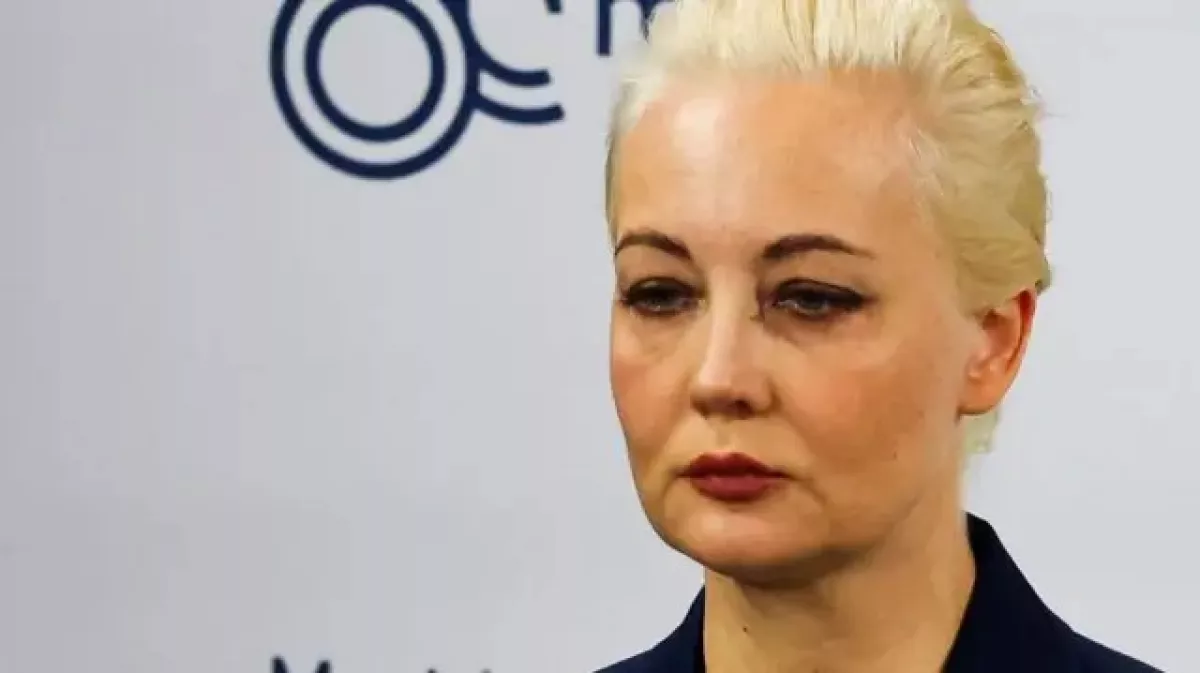
Navalnaya has repeatedly stated that Russia’s war against Ukraine is “not a war of Russians.” The phrase is convenient, soft, and reassuring, especially for residents of Russia. Yet in reality, it has about as much connection to the truth as claiming Russian missile strikes on Ukrainian cities are “purely defensive.” Sociology, as we know, is stubborn, and it repeatedly shows that Russians largely supported the annexation of Crimea and the seizure of other Ukrainian territories, turning a blind eye to their army’s war crimes. Therefore, talk of a “war not of Russians” is a blatant lie—one that fits perfectly into the tradition of collective shirking of responsibility.
While Navalny’s absence could still be attributed to behind-the-scenes political maneuvering, the presence of Mikhail Khodorkovsky is outright farcical. Still portrayed in Europe as a symbol of liberal resistance, Khodorkovsky in 2020 produced a text during the Second Karabakh War that could have appeared on any Russian state-controlled platform—uncensored. It included everything: hysterical claims that “Turkey overstepped,” insinuations about Russia’s supposed special rights, the usual disregard for international law, and outrage that Russia had not backed Armenia—even as Azerbaijan was liberating its historic lands from Armenian occupation, leaving Moscow with neither legal nor moral grounds to “defend” Yerevan.
For Khodorkovsky, however, none of this mattered. Imperial thinking, it seems, cannot be cured by a prison sentence or by living outside Russia. It either exists or it doesn’t.
The irony of the situation also lies in the fact that most of these figures have long since comfortably settled into Ukrainian media. They are invited on broadcasts, quoted, discussed—but not because they can actually influence anything. Ukraine still seems to fail to realise that these are merely political tourists, incapable of mobilising, persuading, or effecting any change in Russia. Their main resource is constant self-reminding, retelling rumours, and regularly producing loud but empty statements—sometimes with the same imperial undertone, merely dressed up as “democracy and human rights.”
The most accurate diagnosis of this crowd was once offered by Alexander Nevzorov, who compared the Russian opposition to floor lamps—dead, dusty, and utterly useless. They, he said, “come alive” only when plugged into Ukraine’s struggle and protest energy. The metaphor is painfully precise, since these constructs have no energy of their own—just an extension cord.
At the same time, drawing these political dwarfs into PACE’s orbit is no longer about Russia—it’s about Europe itself and its fear of acknowledging the obvious: today, there is no viable Russian democratic alternative. That is why the Old Continent prefers to stage a show: appoint representatives, approve platforms, pose for photos with “leaders” who represent no one but themselves.
For anyone who wants to see the sunset of Europe—not in metaphors, but in practice—it is enough to take a close look at the composition of the so-called “platform of Russian democratic forces.” It is hard to imagine a more glaring, more grotesque, or more degrading example for the very concept of “democracy.”







 editor@caliber.az
 +994 55 444-88-98
 Азербайджан, Баку, ул. Низами, 203, Af Business House, 5-й этаж