










Trump’s Board of Peace: a challenge to the UN’s reign Reform or die
Donald Trump’s Board of Peace remains one of the most actively debated topics. Those selected for the Board were hand-picked. Azerbaijan is among the invitees. The US president has gathered figures whose names and words carry real weight globally. Some may say “carry weight for Trump,” but today he is judge, jury, and bailiff all rolled into one. Against the backdrop of cries about the “funeral of the UN,” the “collapse of the world order,” the “creation of a shadow world government,” or even a “coven of renegades,” it is worth highlighting several fundamental points.
While repeating incantations about the need for reform, the UN made no serious move to reform itself. Realising that even battering-ram methods could not drain the swampy expanses reliably protected by the UN’s own legal thickets, the US president decided to create an alternative. It’s like in the movies: you don’t have a room for me in your hotel? I’ll buy the hotel. It’s not for sale? No problem—I’ll build my own. And soon all your clients will be mine.
How realistic is it for the Board of Peace to become a UN stand-in? Mr Trump does not need a parallel structure for things he is largely indifferent to—such as the Millennium Development Goals, conventions, declarations, assemblies, discussions, and so on. The fate of USAID is proof enough. But where politics intersects with economics, where concrete action is needed—of the “said today, done tomorrow, but started yesterday” kind—Donald Trump is uncompromising.
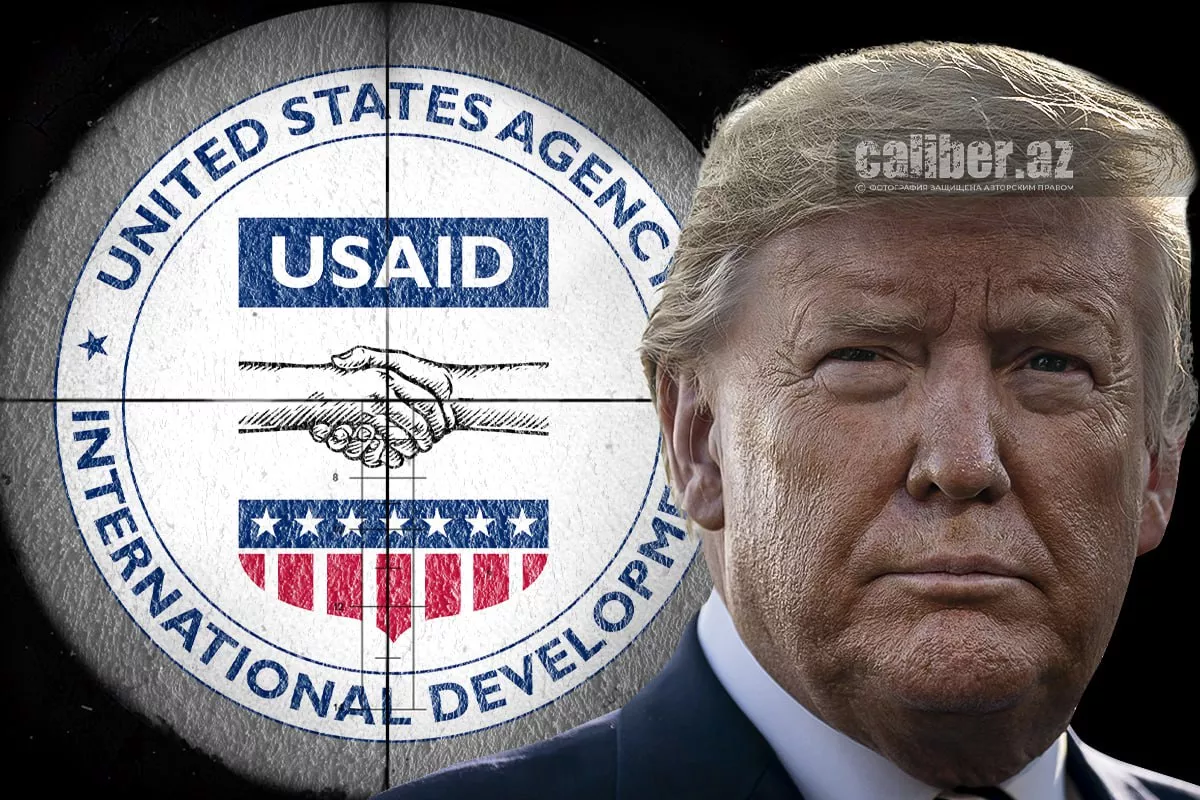
Let us start with finances—or rather, with their absence. A liquidity crisis combined with an inability to resolve crises: that is the brief formula for the misfortunes of the global organisation. In 2025, the UN’s total budget exceeded $3.7 billion. Not a small sum. The UN claims this money is an investment in a better life for the most vulnerable groups on the planet. However, what was once an axiom has today become not merely a contested theorem, but a statement outright rejected by a significant number of key players as sheer heresy.
The amount each state is required to contribute to the UN budget is determined by formulas incomprehensible to most of the organisation’s own staff. For the United States, this amounts to 22% of the total budget, while the least developed countries are supposed to pay 0.001%. “Supposed to” because, in reality, many do not pay—Americans included. Azerbaijan is one of the countries that pays on time and in full.
But the paradoxes of financial reality do not end there. Beyond the “presence of an absence” of funds—over which UN structures in various countries engage in fierce competitive hunting (the UN has virtually no money of its own, and funds are “mobilised” from donors, with no talk of solidarity under the blue flag in the struggle for a dollar)—there is yet another “elephant in the room,” as English-speaking colleagues put it when describing a problem that is impossible not to notice, yet is deliberately ignored. The quality of work.
And it is here that the greatest danger lies—the one the Board of Peace would pose to the UN if it begins implementing programmes and projects on the ground. UN structures would be unable to withstand competition from a post-crisis recovery mechanism operating along private-sector lines. Market laws would come into play, under which clients prefer the provider whose product is better and whose service meets expectations.
Let us imagine any armed conflict. It ends, and reconstruction begins. If this task is undertaken by the UN using its traditional recipes (together with the World Bank and the European Union), it will be completed at approximately “never.” Legal and logistical coordination, compensation issues, organisational mandates, the interests of the affected states, insufficient funding, unacceptable levels of risk for personnel, the lack of rooms for breastfeeding mothers (I am not joking), and leave for non-breastfeeding fathers (I am joking—but not entirely): there is enough work here for “forever.” But if it is handled by “Trump and his team,” the entire process—from demining and debris removal to the construction of buildings and the restoration of infrastructure—will be swift and effective. Mistakes? There will be some. Corruption? That too. But what—where the UN does it, is everything always clean and smooth?
Trump knows how to build. And who among those invited to the Board of Peace represents international institutions? The World Bank. Why? Because it is the World Bank—and because it holds the mandate for post-crisis reconstruction. If necessary, it is precisely through this institution that selected resources can be channelled to specialised UN agencies whose mandates do not provoke allergic reactions in Washington, such as UNICEF.
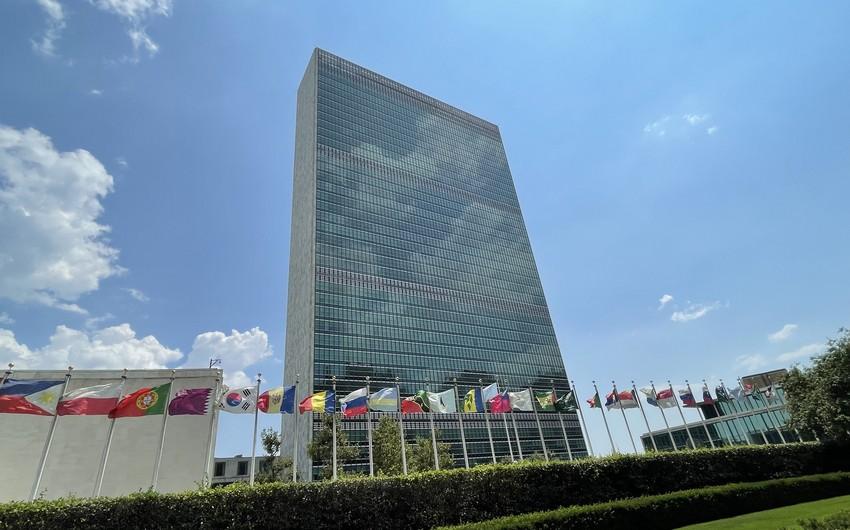
If the Board of Peace materialises in full, it is destined to become the grave-digger for several—but significant—elements of the UN’s work. The UN no longer intervenes directly in conflicts themselves (it is not permitted). Humanitarian programmes and post-conflict reconstruction remain within its remit, but even here it is steadily losing ground. NGOs that once played an active, UN-coordinated role have been sidelined by the US, which openly declared its preference: we will work directly with governments, without intermediaries. What remains is largely corridor-bound paperwork.
But who will fund it? Traditional donors—Scandinavians, Germans, and Japanese—are unlikely to restore the balance. There is a high likelihood of centrifugal processes emerging: ornaments from the old UN tree—still appealing—will be removed and placed on Trump’s tree. In some cases, entirely new decorations will be crafted for the new tree. Meanwhile, some old ornaments will be left forgotten, gathering dust on the thinning branches of the old tree.
Appetite for Trump’s team will grow with the feast. As their work progresses, they will reach for neighbouring plates, adding ever more dishes to their own table—not out of malice, but to achieve maximum results. They will have no hesitation in discarding what they find unpalatable. There is, of course, a risk of repeating the UN’s pattern of “starting small and eventually taking on everything,” but I believe this team will avoid the same pitfalls. Their interests are far narrower, and unlike the UN, universality is not part of their mission.
Another curious episode is that whereas the United States once jealously guarded its role as the main headquarters of the UN, today many here are clearly not averse to getting rid of the blue flags occupying office buildings in New York. On the site of the UN headquarters, for example, one could build a premium residential complex overlooking the East River. Marinas, boats, water taxis, and beautiful parks right in the heart of Manhattan, with direct access to the famous FDR (Franklin D. Roosevelt East River Drive). Don’t you think? Think about it.
The UN Population Fund is tensely searching for exit routes after the United States officially withdrew from it. UNDP is relocating either to Spain, or to Germany, or perhaps to both at once.
Reform or die. A simple formula—yet one difficult for the UN system and its connected structures and circles to accept. But there is no alternative. Consider the thousands of conversations about the UN over recent years: everyone agreed on one point—the organisation is imperfect and must change, yet it is immortal, because it is needed and there is no substitute.
Today, the notions of “immortal” and “there is no alternative” are no longer valid. While institutions of this scale do not vanish overnight, if the UN hopes to reach its 85th anniversary—the 80th jubilee having passed quietly for obvious reasons—the time to act is now, before others act on its behalf.
My global, peaceful advice to the UN is simple, and I echo what has been said above: reform or die. But better to reform. That would be better for everyone.







 editor@caliber.az
 +994 55 444-88-98
 Азербайджан, Баку, ул. Низами, 203, Af Business House, 5-й этаж