










Dugin’s Eurasianism unmasked Russian philosopher’s imperial syndrome
The latest statements by Russian philosopher and political analyst Alexander Dugin, who presents himself as the leader of the so-called International Eurasian Movement, once again revealed the essence of imperial ideology.

This time, he openly spoke out against the sovereignty of several post-Soviet states, including Azerbaijan, Armenia, Georgia, Kazakhstan, Uzbekistan, and Kyrgyzstan. According to him, Moscow should not “tolerate” the existence of independent states in this space, because otherwise, they would allegedly become “a foothold for other centres of power,” primarily the United States of America.
Such rhetoric is not merely provocative; it contradicts international law and, in effect, justifies the right of the strong to destroy the statehood of other countries. Dugin is far from alone here—he merely voices openly what a significant part of the Russian political and expert community prefers to express in a veiled manner.
Meanwhile, Azerbaijan causes particular irritation for Dugin and many Russian ideologists. This is by no means accidental. Throughout its years of independence, the Azerbaijani state has consistently pursued an autonomous, pragmatic foreign policy focused on national interests. Baku has neither joined nor intends to join the European Union or NATO, nor does it plan to become a member of the Eurasian Economic Union or the Collective Security Treaty Organisation (CSTO). Azerbaijan is a respected and active member of the Non-Aligned Movement, consistently upholding the principles of sovereignty, non-interference, and equality among states.
It is precisely this independence that irritates Russian imperialists. The Republic of Azerbaijan refuses to be “someone’s sphere of influence,” rejects the role of a junior partner, and does not accept the imposed logic of geopolitical subordination. They are particularly displeased with the peace process between Yerevan and Baku, especially the text of the peace agreement, which was initialled on August 8 last year in Washington in the presence of the leaders of the two countries, Ilham Aliyev and Nikol Pashinyan, and U.S. President Donald Trump. At the time, Dugin called the “signing of the peace agreement between Azerbaijan and Armenia in Washington” a disgrace for Russia—in other words, he described the advance of peace, based on the principles of international law, as something shameful.
This serves as further confirmation that certain forces in Russia have never been genuinely interested in real peace between Azerbaijan and Armenia. Moreover, the restoration of Azerbaijan’s sovereignty and territorial integrity—first during the 44-day war in the autumn of 2020, and later through the one-day anti-terrorist operation in September 2023—was perceived in Moscow as a geopolitical defeat.
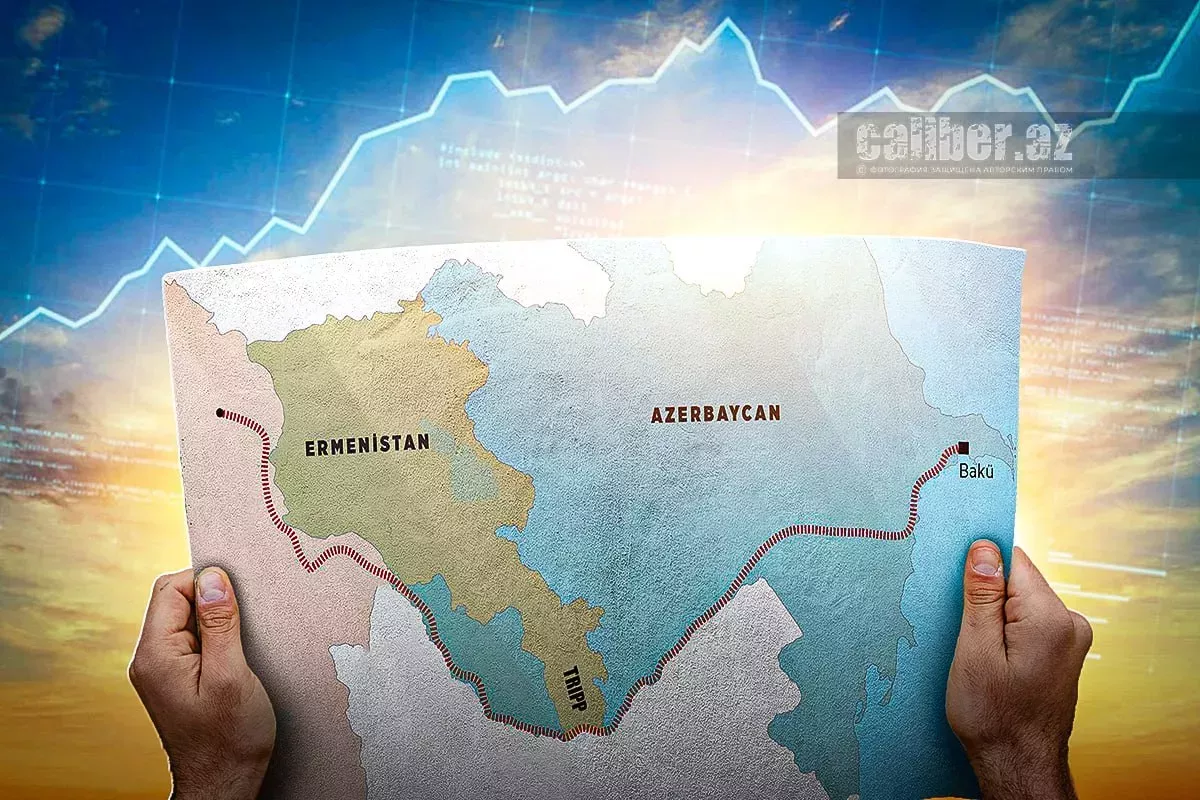
Particular attention should also be paid to the agreement on implementing the “Trump Route for International Peace and Prosperity” project, a deal that was likewise reached in Washington. This became yet another source of irritation for the Russian side, as Moscow was not assigned any role in it. And here lies the root of the problem: Russia is outraged not so much by the integration itself, but by the fact that it can happen without its involvement and control.
Meanwhile, in its January report “Global Economic Prospects,” the World Bank emphasises that the peace agreement between Armenia and Azerbaijan will contribute to strengthening stability and deepening regional integration in the South Caucasus. According to the World Bank, progress in the peace process could serve as a driver for economic growth and sustainable development in the region. Yet neither Dugin nor his like-minded peers are interested in economic benefits or regional security—their ultimate desire is control.
The goal of Russian imperialists is not dialogue, but subjugation—and what Russia is willing to do to achieve it the world has been witnessing for almost four years in Ukraine, the very country once called “brotherly” by Russia. Today, this “brotherhood” is expressed through constant strikes on peaceful cities, the destruction of energy infrastructure, and the reduction of entire districts of Kyiv, Kharkiv, Odesa, and Lviv to ruins. Witnessing all this, one cannot help but realise that living under illusions is dangerous. We must frankly acknowledge that Russia has never come to terms with the independence of the former Soviet republics. Had it the means, a scenario similar to Ukraine’s would have been carried out against other post-Soviet states as well.
Given this reality, these states have only one path—to strengthen their sovereignty, armies, and security systems. Here, Azerbaijan provides a clear example of how this can be done: consistently, sovereignly, and effectively. This is precisely the kind of strong response needed against Dugins and other apologists for imperial revival.
To start with, it would be appropriate to recognise Alexander Dugin—already included in the sanctions lists of the U.S., EU, Ukraine, Switzerland, Japan, Australia, and New Zealand—as persona non grata in other former Soviet countries. This would be a fitting acknowledgement of his so-called “achievements.”







 editor@caliber.az
 +994 55 444-88-98
 Азербайджан, Баку, ул. Низами, 203, Af Business House, 5-й этаж