










Chronicle of the Russian military machine’s impunity From Baku to Khojaly
The Khojaly Genocide… This tragedy resonates painfully in the hearts of every Azerbaijani citizen, and even time cannot erase from our nation’s memory the bloody atrocities committed on that icy night in 1992, when the city was attacked and virtually razed to the ground, and children, women, and the elderly were killed with cruel and deliberate brutality.
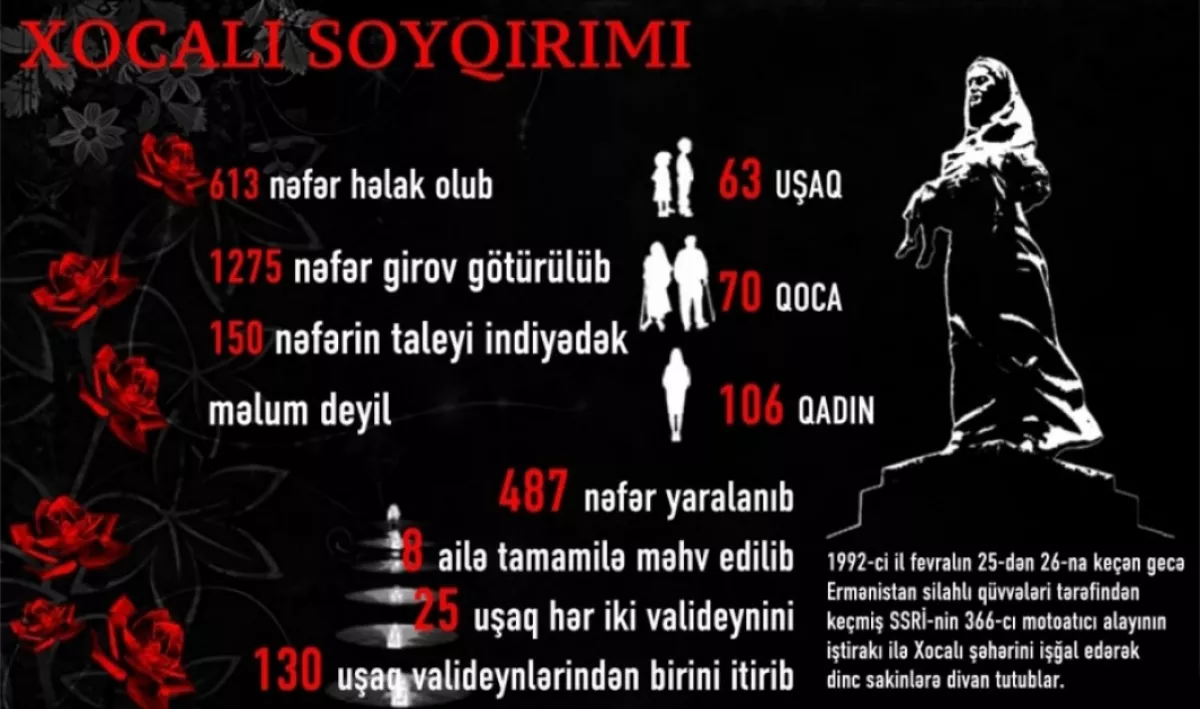
The tragedy of Khojaly is not only one of the most horrific crimes of the late 20th century and a bloody chapter of the now-ended Karabakh conflict, but also a clear testament to the systematic role of Soviet and Russian military structures in the aggression against Azerbaijan.
The Khojaly Genocide was not a “wartime excess,” as some dare to claim, but a carefully planned and executed punitive operation, in which the 366th Motor Rifle Regiment of the former Soviet Army, stationed in Khankendi at the time, played a key role alongside Armenian armed formations. This was neither a “spontaneous support” nor a “loss of control”; it was the direct involvement of a military unit—equipped with heavy armour, artillery, and trained personnel—acting according to the logic of imperial military thinking, a mindset inherited and now implemented by Russia.
A clear confirmation of this is the fact that, after the regiment was disbanded, a significant number of its officers and contract servicemen settled in Russia without facing any accountability for their actions. Among them was officer Yuri Zarvigorov, whose name is directly linked to the events in Khojaly. In other words, Russia effectively became a refuge for those who took part in the brutal massacre of the civilian population of the Azerbaijani city. Such cases are by no means exceptional; rather, they reflect a consistent pattern.
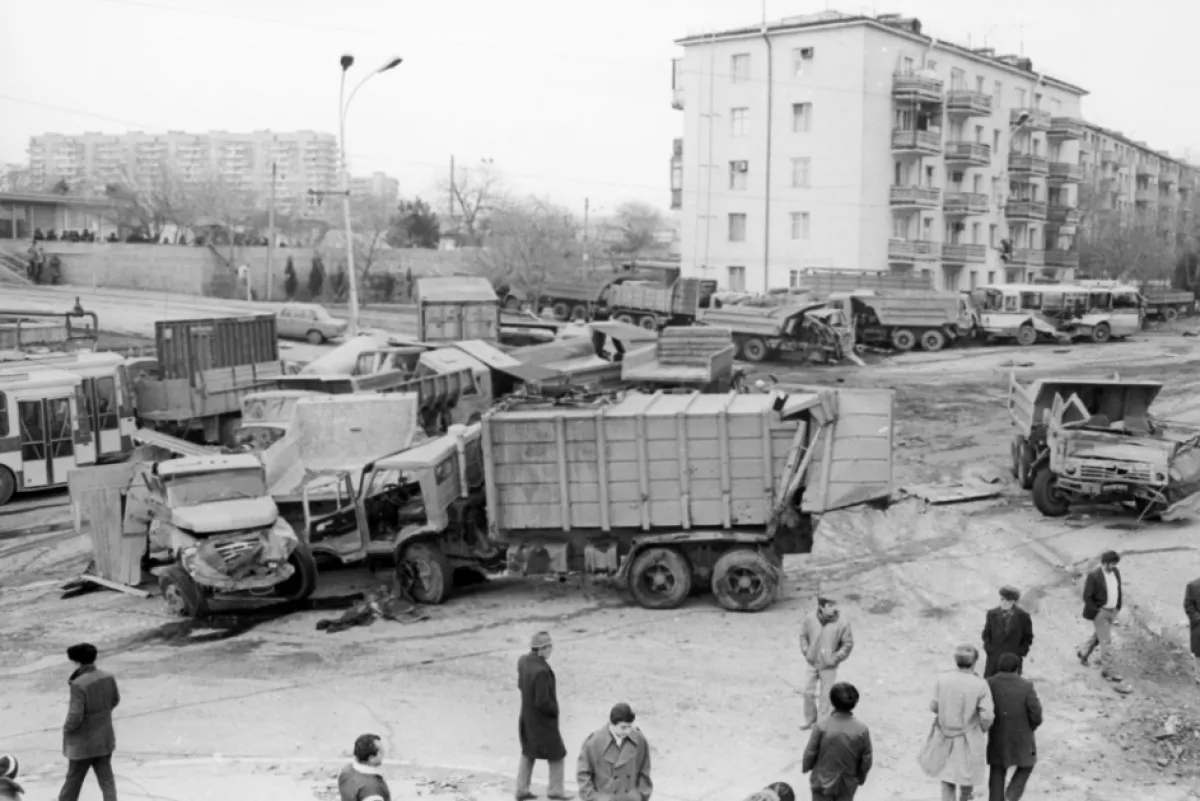
Two years before the Khojaly tragedy, on the night of January 19–20, 1990, units of the Ministry of Defence, the Committee for State Security, and the Ministry of Internal Affairs of the USSR entered Baku and several other regions of Azerbaijan. This invasion was marked by exceptional brutality: people were shot in the streets, crushed under the tracks of tanks and armoured personnel carriers, killed in their own yards and apartments; fire was even directed at hospitals, ambulances, and buses. More than 140 people were killed, 744 wounded, and over 800 arrested. None of the organisers or perpetrators of this horrific crime were held accountable, and many went on to continue their service and careers in Russia.
In this context, it is worth noting that even Armenian politicians have acknowledged the decisive role of Russian military forces in the occupation of Azerbaijani territories. Former Armenian Prime Minister Hrant Bagratyan publicly stated that, without the support of Russian servicemen, the seizure of Azerbaijani lands would have been impossible. Russian journalist Alexander Nevzorov also repeatedly pointed out the participation of Russian forces in combat operations on Armenia’s side in the early 1990s, specifically the paratroopers of the Pskov Division. These statements can be considered impartial evidence, as they come not from the Azerbaijani side, but from those who have no interest in “rewriting history” in Azerbaijan’s favour.
Today, as we witness the crimes of Russian troops in Ukraine, the historical continuity is impossible to ignore: the same methods—terror against civilians, shootings, deportations, the destruction of cities. And the same impunity, along with the now proverbial disregard for international law. The only difference is geographical coordinates: at the end of the 20th century, it was Baku and Khojaly; in the 21st century, it is Bucha, Mariupol, and Irpin.
All of these tragedies reaffirm an enduring truth: a state that for decades has neither acknowledged nor been held accountable for its crimes is inevitably doomed to repeat them. At the same time, these events serve as a damning indictment of the Russian military-political apparatus, which has been and remains a source of aggression, violence, and destabilisation across various regions of our planet.







 editor@caliber.az
 +994 55 444-88-98
 Азербайджан, Баку, ул. Низами, 203, Af Business House, 5-й этаж