










The Azerbaijan phenomenon Partnership beyond borders and faiths
The visit of United States Vice President J.D. Vance to Azerbaijan marks a landmark moment that is set to inject fresh momentum into US–Azerbaijani relations. These ties have already gained renewed impetus following Donald Trump’s return to the White House, and the Vice President’s visit underscores Washington’s growing recognition of Azerbaijan’s strategic role.
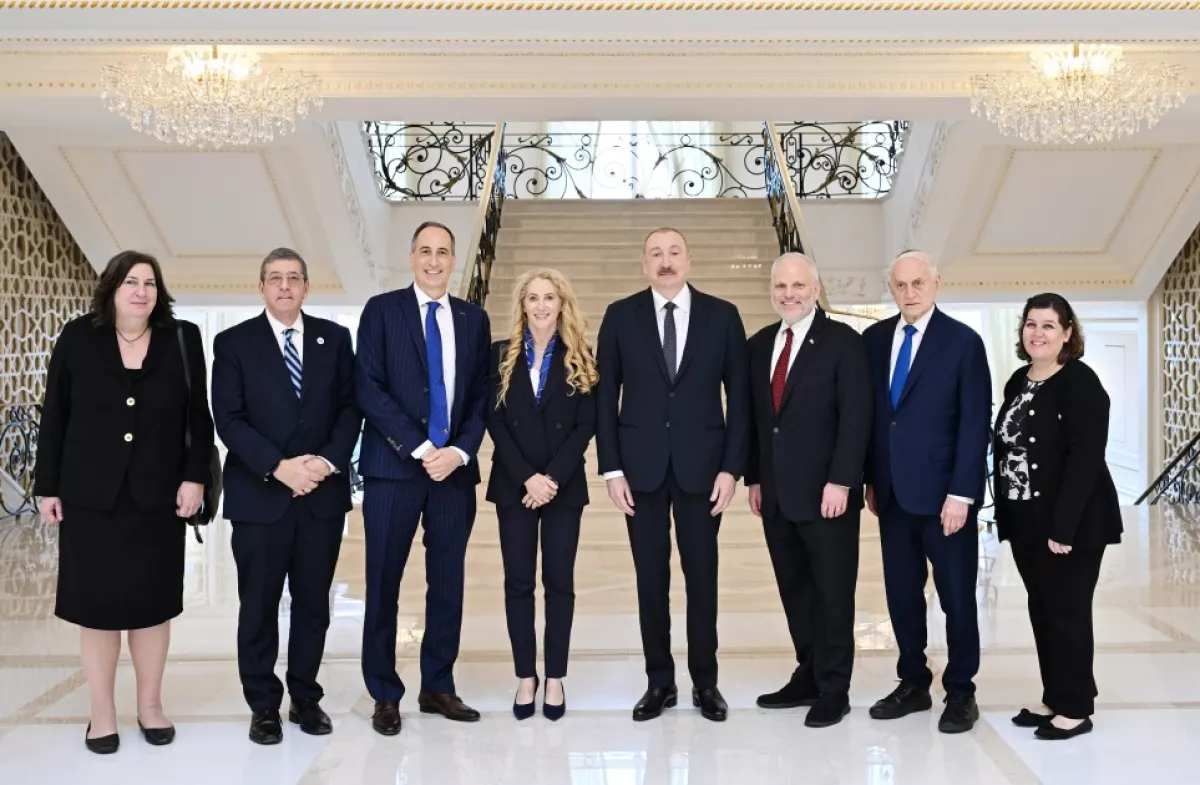
In this context, the recent visit to Azerbaijan by a delegation led by Betsy Berns Korn, Chair of the Conference of Presidents of Major American Jewish Organisations, is particularly significant. During her meeting with President Ilham Aliyev, she highlighted Azerbaijan’s strategic importance and its unique relationships with both the United States and Israel. These observations were not merely diplomatic courtesies toward Baku; rather, they accurately reflected the geopolitical reality.
Equally noteworthy against this backdrop is the memorandum of cooperation signed last week between Israel and Azerbaijan in the field of artificial intelligence. Its importance can hardly be overstated. This is a genuinely historic and breakthrough step, opening a new era in relations between the two states, which have long demonstrated that their partnership is built not on situational interests but on deep mutual trust and strategic mutual benefit.
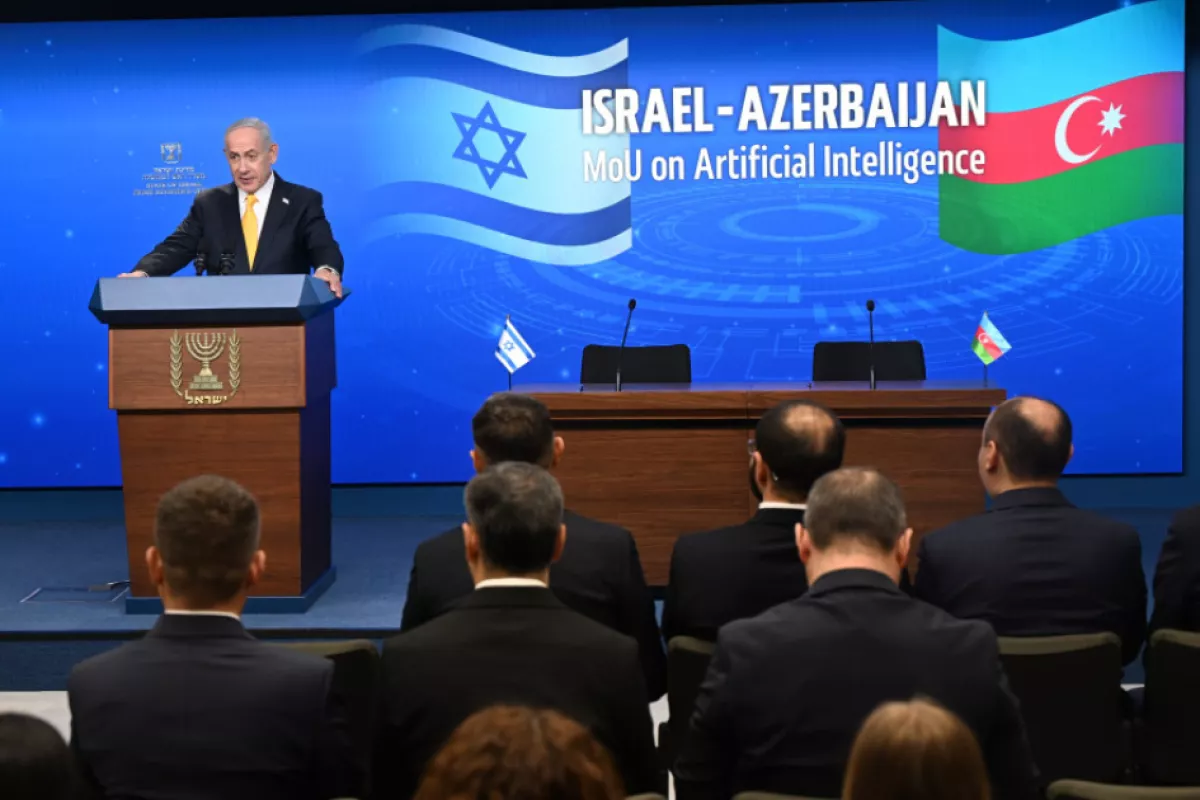
The signing ceremony took place with the participation of Israeli Prime Minister Benjamin Netanyahu. The document was signed by Erez Askal, Director of the National Artificial Intelligence (AI) Directorate under the Office of the Prime Minister of Israel, and Rashad Nabiyev, Azerbaijan’s Minister of Digital Development and Transport. These details underscore the high political status of the agreements reached and demonstrate that this is not merely a declaration of intent, but a serious state-level project designed with a long-term perspective.
Overall, relations between Azerbaijan and Israel serve as a clear example of how two countries belonging to different regions and cultural spheres can build a sustainable partnership based on pragmatism and mutual respect. This is precisely what Betsy Berns Korn stated during her meeting with the Azerbaijani president, and what was reaffirmed by other guests to the country.
In particular, in November last year, the Republic of Azerbaijan was visited by a delegation of the Zionist Rabbinic Coalition led by Rabbi Stuart Weinblatt. Such a visit, aimed at strengthening Jewish unity and developing ties between Israel, Jewish communities worldwide, and Azerbaijan, stands as further evidence of the respect for traditions and cultures of diverse peoples that prevails in the republic.
This was also underscored by Rabbi Weinblatt, who noted that the delegation was deeply impressed by the respectful attitude towards the Jewish community in the country. The guests visited three synagogues in Baku, a Jewish school and cultural centres, and also travelled to Red Sloboda—one of the few Jewish settlements outside Israel.
“We were truly moved by the Mountain Jews Museum, which tells the story of Azerbaijan’s Jewish community in a profound and touching way. We also learned that renowned Israeli performers Yaffa Yarkoni and Omer Adam have Azerbaijani roots— a vivid example of the cultural ties between our peoples,” Rabbi Weinblatt said at the time.
The delegation also visited a kosher restaurant, noting the high level of service and hospitality. It was further emphasised that Azerbaijan demonstrates to the world how a Muslim-majority country can maintain friendly relations with Israel and create a safe environment for Jewish life.
“We left with a deep sense of respect and gratitude. Azerbaijan has shown the entire world that multiculturalism and religious tolerance are not slogans, but a lived reality in which people coexist in peace and mutual understanding,” the rabbi stated. And this is far from the first fair and well-founded assessment of this kind.

Thus, in January 2025, former Chief Rabbi of Israel Yisrael Lau, speaking at the Parliamentary Assembly of the Council of Europe (PACE) during an event marking International Holocaust Remembrance Day, noted that Azerbaijan—a Muslim-majority state—has long been a friend of Israel. He emphasised that throughout its history, the Azerbaijani people have never shown violence towards Jews living on their land.
“Moreover, during the Holocaust, more than 55,000 Jews fleeing extermination found refuge in Azerbaijan. And after the tragedy of 7 October (the Hamas attack – ed.), hundreds of Azerbaijani citizens came to the Israeli embassy, bringing bouquets of flowers and letters of condolence. The Creator commands us to remember evil deeds. But we must also remember and express gratitude to those in whose hearts there burns a fire of love and brotherhood towards the people of Israel,” Yisrael Lau stated from the PACE rostrum.

This speech is yet another vivid confirmation of the atmosphere of tolerance that prevails in Azerbaijan and stands as one of the key priorities of state policy. A telling example of this is the fact that every year financial assistance is allocated to all religious communities in the republic, including the Mountain Jews Community of Baku, the Baku Religious Community of European Jews, the Baku Religious Community of Sephardic Jews, the Baku and Azerbaijan Diocese of the Russian Orthodox Church, the religious institution of the Apostolic Prefecture of the Catholic Church in the Republic of Azerbaijan, and the Albanian-Udi Christian religious community.
A truly unique model of multiculturalism has been established in Azerbaijan. The visit of Sheikh ul-Islam Allahshukur Pashazade to the Vatican, at the personal invitation of the Holy See and the head of the Catholic Church, Pope Leo XIV, is yet another symbol of recognition of this reality. It reflects the high level of religious freedom, interfaith dialogue, and respect for diversity that exist in the country not merely at a declarative level, but as an institutionalised and consistently implemented state policy.







 editor@caliber.az
 +994 55 444-88-98
 Азербайджан, Баку, ул. Низами, 203, Af Business House, 5-й этаж