










The stench of European provocation The hypocrisy of the Old Continent
In early May 2026, Yerevan will host forums reflecting the Armenian authorities’ pro-European ambitions — the European Political Community summit and the EU–Armenia summit.
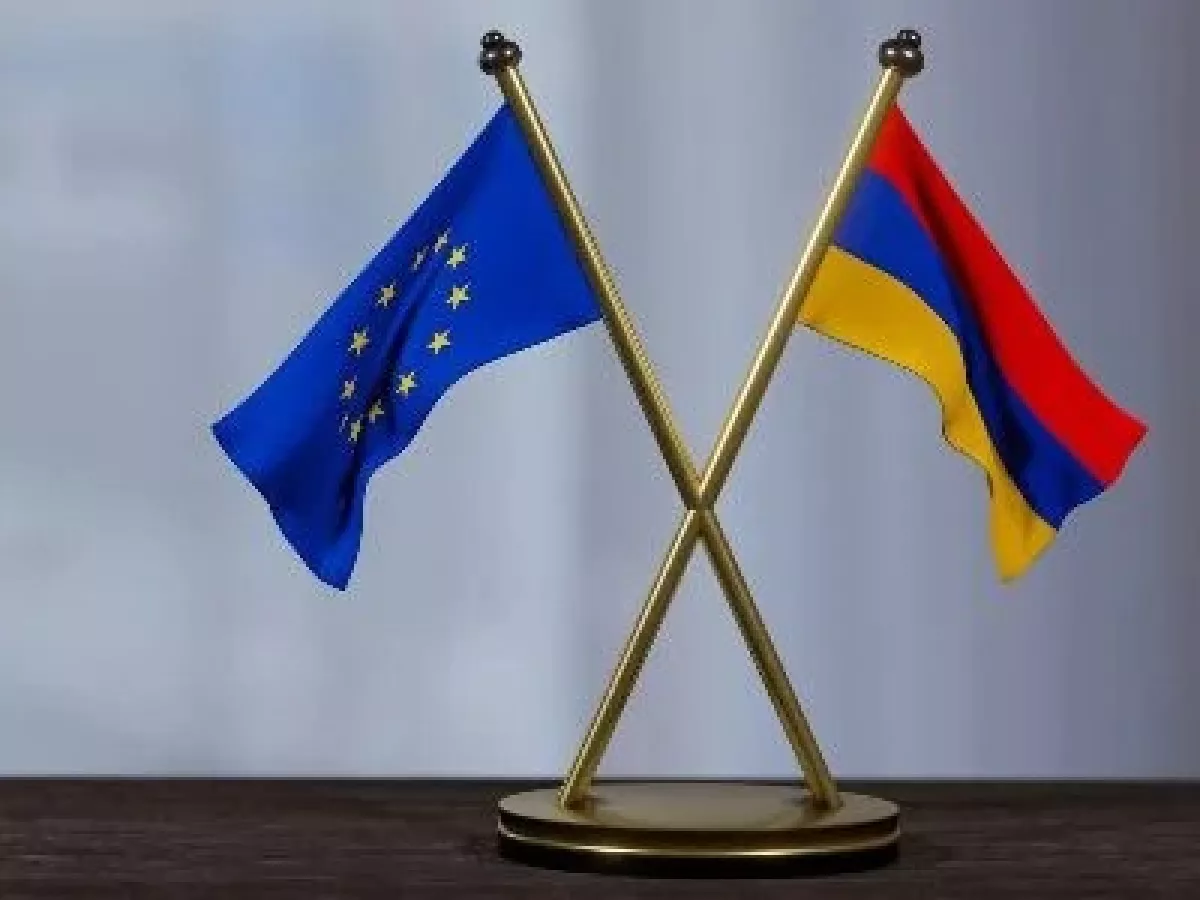
In principle, there is nothing unusual about this, as every country has the right to host events of any scale or significance. However, what drew attention were the emphatic formulations used by some Armenian media outlets, which described the EU–Armenia summit as a “historic milestone,” a “turning point in relations between Brussels and Yerevan,” and claimed that it is aimed at “deepening bilateral cooperation and strengthening peace, connectivity, and economic development in the South Caucasus.”
Behind this rhetorical façade surrounding the event lies a more grounded reality: it is not about a qualitative breakthrough, but rather an attempt to provide external political backing to Prime Minister Nikol Pashinyan’s government ahead of the upcoming parliamentary elections. This reading is reinforced by the fact that the EU side will be represented at the forum by European Council President António Costa and European Commission President Ursula von der Leyen. As can be seen, the level of Brussels’ representation speaks for itself and clearly indicates that the main message of the event is political in nature. In other words, it serves as a signal of support for the Armenian authorities and an effort to strengthen the position of the incumbent prime minister domestically.
Notably, this logic is also reflected in the decision taken in early April to establish a new EU civilian mission (EUPM Armenia), designed to enhance Armenia’s resilience and its capacity to respond to contemporary threats, including cyberattacks and external interference.

At the same time, the repeatedly proclaimed objective of the EU–Armenia summit — its stated aim of strengthening “peace, security, connectivity and prosperity in the South Caucasus” — can only evoke a rather ironic reaction among informed observers. And this irony is not directed at the Armenian side; it is fully addressed to the opposite party to the event. To avoid making unfounded assertions, it is worth briefly revisiting not-so-distant history.
If the European Union is truly such a committed advocate of peace, it had the opportunity to demonstrate this when the internationally recognised territories of Azerbaijan were under Armenian occupation. However, Brussels not only refrained from imposing sanctions on the aggressor state — Armenia — but also allowed its member states, in particular France, to openly display a distinctly pro-Armenian stance.
These facts are well known. For instance, French cities concluded so-called “twinning” agreements with illegal structures in the Azerbaijani territories that were under occupation, and French politicians — including presidential candidates — made unauthorized visits to Karabakh. Such anti-Azerbaijani policies continued during the Second Karabakh War and in the post-conflict period as well. In particular, the French Senate adopted a so-called “resolution” on the recognition of the so-called “NKR,” while official Paris made active efforts to promote measures against Azerbaijan within the United Nations Security Council.
At present, the EU’s role in maintaining peace in the South Caucasus is clearly illustrated by documents adopted in the parliaments of Belgium and the Netherlands, as well as by initiatives within the European Parliament, where, ahead of the Yerevan summits, a draft resolution is being discussed containing unsubstantiated accusations against Azerbaijan. The defining features of such documents remain unchanged: they include the use of outdated and politically motivated terms such as “Nagorno-Karabakh,” as well as manipulation regarding so-called “Armenian prisoners of war,” although these individuals were in fact convicted by the courts of the Azerbaijani Republic for specific crimes against the state and its people.
Against this backdrop, any statements by the European Union about its commitment to peace in the South Caucasus appear, at the very least, questionable and fail to inspire confidence. From this perspective, they are often perceived as a façade behind which Brussels conceals a policy of double standards and political bias.
Baku, in turn, proceeds from realities rather than declarations. Having achieved victory in the Second Karabakh War, Azerbaijan put forward a peace agenda to Armenia. And today, de facto peace has been established in the South Caucasus, which is the result exclusively of the purposeful policy of the Azerbaijani state. No attempts by European structures will change the fundamental balance of power in the region. Baku fully understands the value of peace and clearly recognises the need to protect it, including by countering external attempts at interference and pressure.







 editor@caliber.az
 +994 55 444-88-98
 Азербайджан, Баку, ул. Низами, 203, Af Business House, 5-й этаж