










You can never have too much peace Armenian PM pledges stability in Warsaw speech
During his official visit to Poland, Armenia’s Prime Minister Nikol Pashinyan delivered a speech at the Institute of International Relations, presenting his vision of a new South Caucasus to an audience of diplomats and experts.
The central focus of Pashinyan’s speech was peace between Armenia and Azerbaijan, which, according to him, has become a reality thanks to the Joint Declaration signed on August 8, 2025, in Washington with the personal involvement of U.S. President Donald Trump. According to Pashinyan, the “architecture of peace is based” on the principles of the 1991 Alma-Ata Declaration. The prime minister also noted that 2025 became the first year in the history of independent Armenia when not a single soldier was killed on the border with Azerbaijan. “And now there is real peace in our region,” Pashinyan emphasised.
It is easy to notice that the word “peace” occupied a particularly prominent place in Pashinyan’s latest speech. If one were to count how many times it was mentioned during the Warsaw event, one might reasonably conclude that the Armenian prime minister set a record in this regard. If there is still any doubt, here is another excerpt from his remarks, in which the word “peace” appears three times: “That is the main idea that I am trying to convey to our people, that now we have peace, but peace must be strengthened, institutionalized, and for this we need to make continuous efforts, because peace exists, but it cannot be neglected, otherwise it may be destroyed.”
That said, the intention here is not to mock Pashinyan or his speech. Rather, the frequent repetition of the word “peace” appears to be not merely a reflection of his political and emotional messaging, but part of a carefully crafted pre-election strategy.
Overall, Pashinyan’s current actions appear to be focused on strengthening the electoral standing of the ruling Civil Contract party. In this context, it is no coincidence that he speaks so frequently about peace, as it represents one of the most tangible achievements the incumbent prime minister can present to voters.
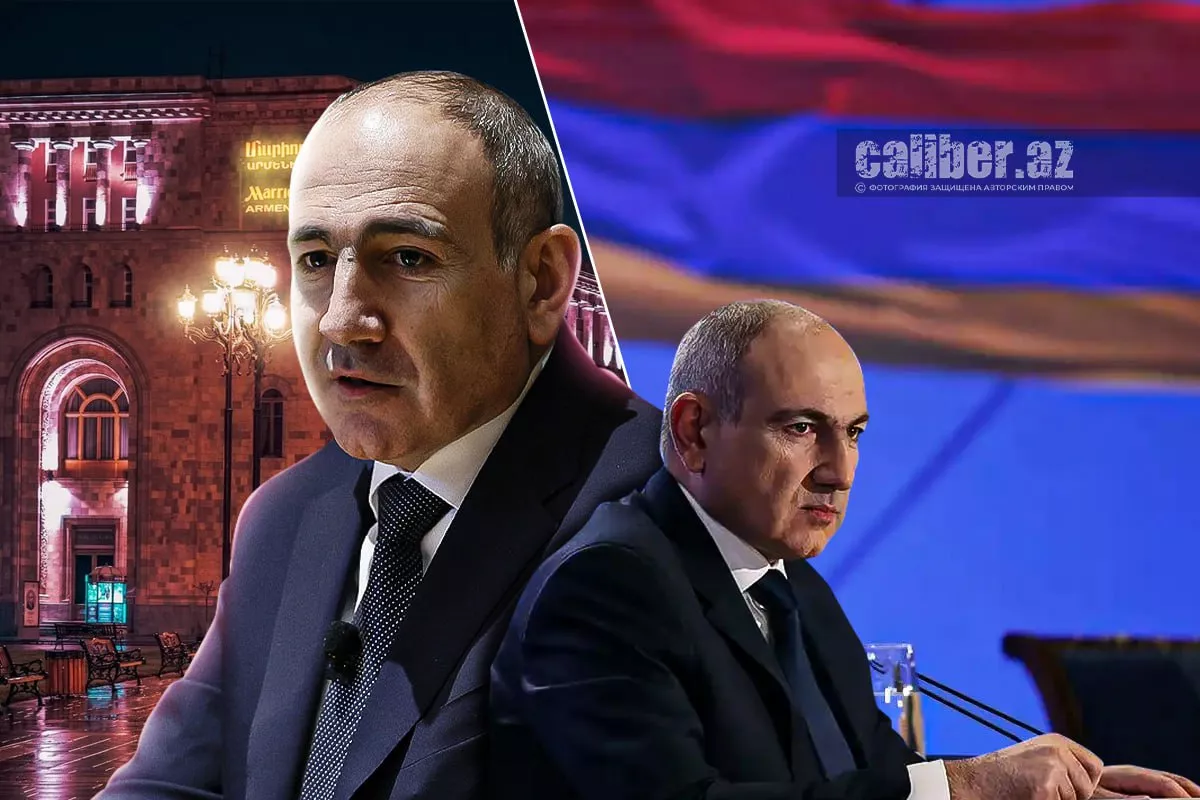
Another asset of the ruling party is its skilful exploitation of the Russian factor. In one of our previous articles, we examined Ararat Mirzoyan’s appeal to the EU for assistance in countering alleged Russian hybrid interference in the upcoming elections. Here, it is also important to emphasise another dimension of that appeal—its manipulative nature. By openly portraying Russia as a threat to Armenian democracy and calling on the European Union for support, Yerevan fosters a heightened sense of vulnerability within society, implicitly positioning itself as the only force capable of safeguarding the country’s democratic future.
Adding to this is Pashinyan’s PR campaign, featuring videos of him listening to a wide range of music, making heart gestures with his hands, and even performing as a drummer in a band—efforts that help successfully portray the prime minister as a relatable, down-to-earth leader close to the people.
Of course, the economic factor also works in Pashinyan’s favour. Economists may debate which of Armenia’s economic gains are driven by favourable external conditions and which stem from deliberate government policy, but the fact remains that the country’s gross domestic product (GDP) is growing rapidly, and the public tends to associate this progress with Pashinyan’s leadership. The prime minister has also added the Trump Route for International Peace and Prosperity (TRIPP) project to this list of achievements, which, notably, was one of the central points of his speech in Warsaw, where he emphasised its importance for all stakeholders.
Thus, the “Trump Route” represents yet another powerful electoral asset for Pashinyan. It is reasonable to assume that all of the above-mentioned factors combined will yield results, enabling the Civil Contract party to secure a convincing victory in the elections scheduled for June, 2026.
Such a development can only be welcomed, but on one condition: Pashinyan must hold a referendum and persuade Armenia’s citizens to formally renounce territorial claims against Azerbaijan in their constitution. Without this step, no route will be able to lead Armenia out of its current geoeconomic and geopolitical deadlock.







 editor@caliber.az
 +994 55 444-88-98
 Азербайджан, Баку, ул. Низами, 203, Af Business House, 5-й этаж