










Azerbaijan’s role in the new global architecture Regional leader, key partner
The first meeting of the Board of Peace, held yesterday in Washington, was, without exaggeration, an event of international significance. The creation of this new global structure, initiated by U.S. President Donald Trump, reflects the current Washington administration’s desire to establish an institutionalised framework for the peaceful resolution of the Gaza conflict and the subsequent reconstruction of the Palestinian territory.
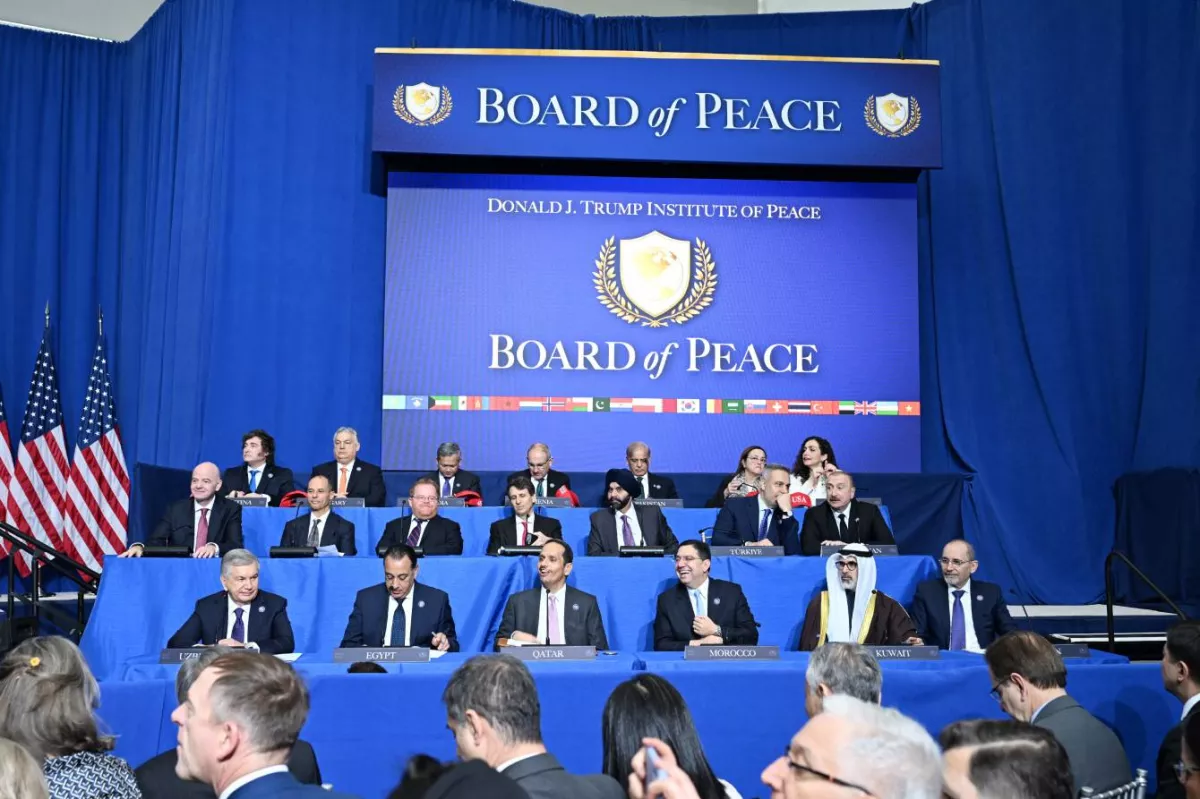
The composition of participants at the inaugural meeting demonstrated that this is not a formal diplomatic platform, but rather a political mechanism on which the White House places serious expectations.
By invitation of the U.S. President, the President of Azerbaijan, Ilham Aliyev, also participated in the first meeting of the Board of Peace. This fact vividly illustrates Azerbaijan’s growing international authority and recognises Baku’s role as a responsible and predictable actor in global politics. In today’s increasingly complex international environment, such invitations are not merely ceremonial—they reflect the genuine demand for a country’s participation in decision-making processes.
Indeed, Azerbaijan consistently pursues a multi-vector foreign policy, avoiding strict alignment with any single geopolitical centre of power. This approach has enabled Baku to build stable channels of interaction with states and unions whose interests often diverge. It is precisely this flexibility that makes Azerbaijan a valuable partner in crisis regions.
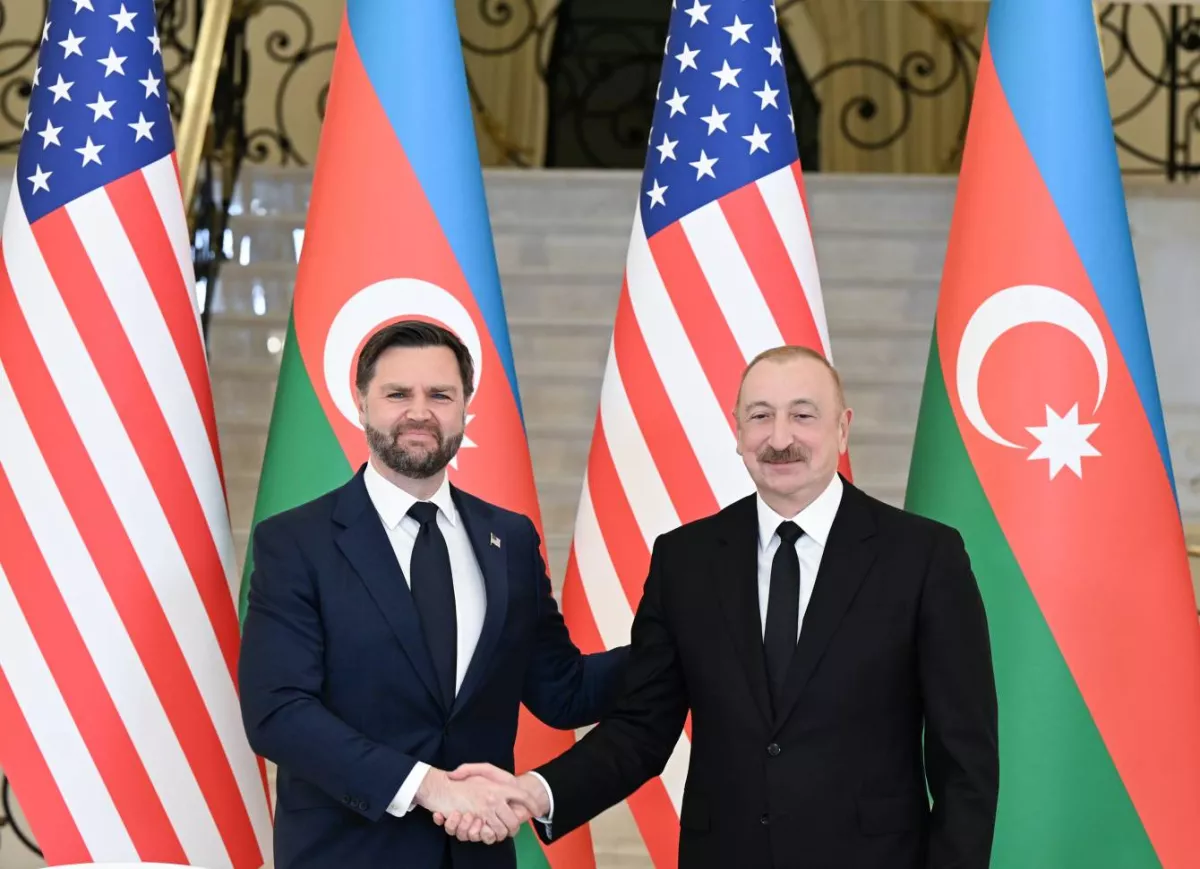
This was further confirmed by the recent visit to Baku of U.S. Vice President J.D. Vance, who specifically highlighted the unique position of Azerbaijan. According to him, the country is one of the few that maintains consistently warm relations simultaneously with both Israel and Türkiye, which objectively enhances its significance as an important mediator and stabilising factor in the Middle East and the South Caucasus.
Over the past several years, the peace agenda has been actively promoted by President Ilham Aliyev. It is regarded not as a declarative slogan, but as the outcome of a consistently implemented strategy. Notably, during the Board of Peace meeting, both the U.S. President and Vice President addressed him on multiple occasions, demonstrating a high level of trust and the intensity of political dialogue.
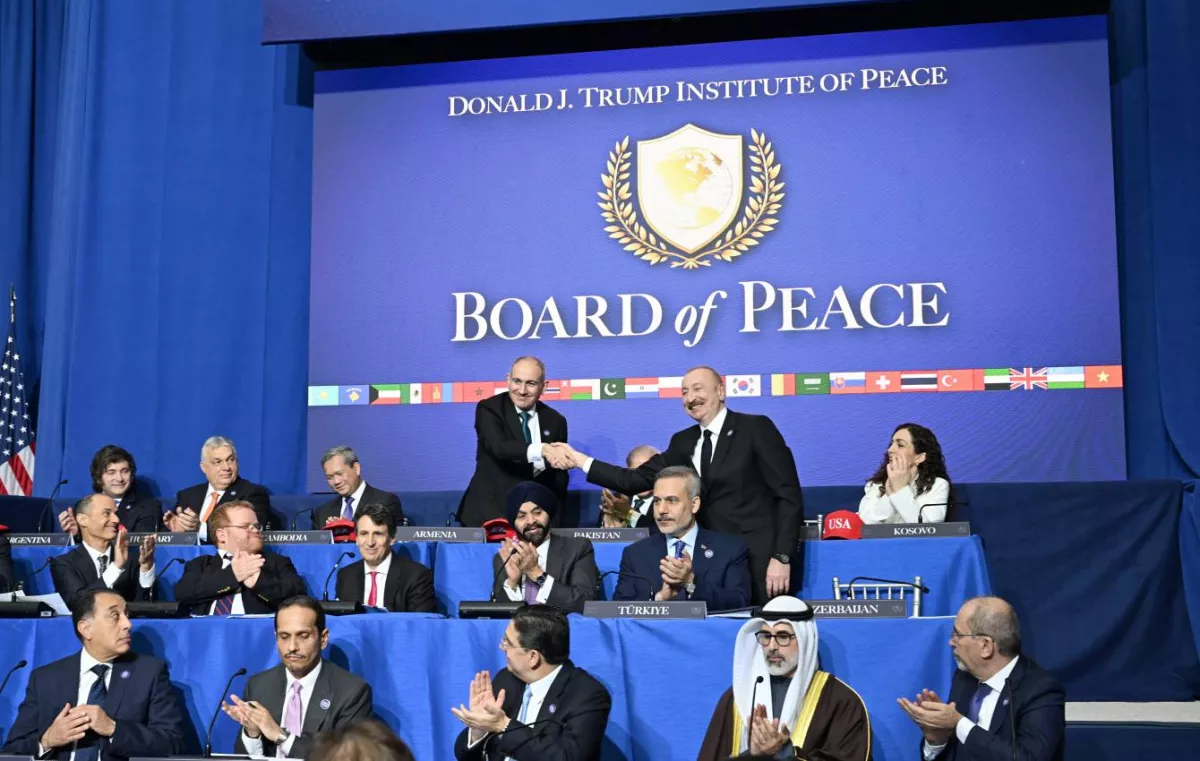
A symbolic moment was the handshake between the President of Azerbaijan and the Prime Minister of Armenia during yesterday’s event. This gesture underscores the new regional realities. President Aliyev’s strategy allowed the country to restore its sovereignty and territorial integrity through military-political means, marking a turning point for the entire South Caucasus. Equally important, however, is the fact that after achieving these objectives, Baku itself initiated a peace agenda in relations with Armenia, proposing a transition from confrontation to political dialogue. The current developments are a direct result of this approach.
One of the key points on the agenda of the meeting was the creation of a special financial fund for Gaza, as well as the launch of reconstruction programmes and humanitarian missions. These are large-scale projects involving multi-billion-dollar investments and long-term international presence. Particular attention was given to the initiative to establish Stabilisation Forces in Gaza, first announced by the U.S. President in Sharm El-Sheikh as part of a 20-point plan for comprehensive conflict resolution. Azerbaijan’s position on this issue was clearly articulated long before the first meeting of the Board of Peace.
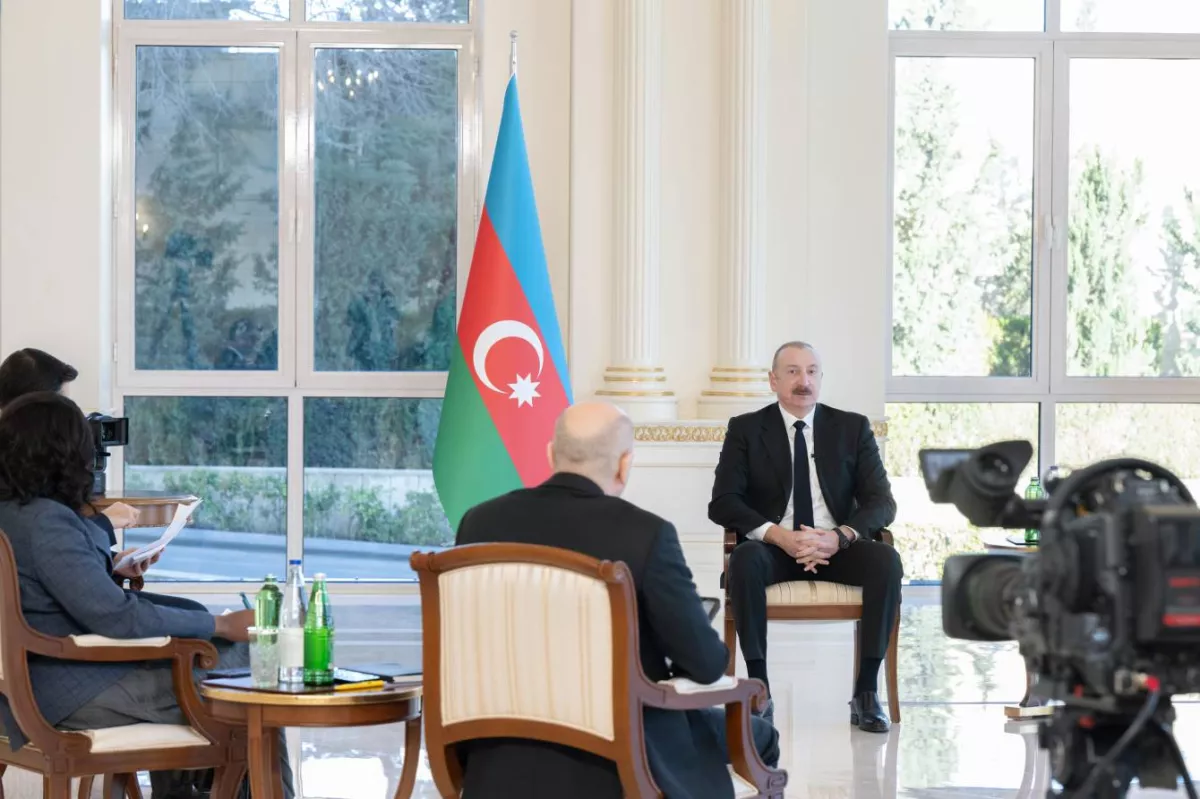
In an interview with local media on January 5 of this year, President Ilham Aliyev stated:
“[…] we must clearly understand what the mandate of the operation would be and what kind of operations are planned. We have experience participating in peacekeeping operations in Iraq, previously in Kosovo, and certainly in Afghanistan; therefore, we are well-acquainted with the operational structure.
Regarding the situation in the Gaza Strip, in our view, it remains unclear who will issue the mandate and what its nature will be. Will these be "peacekeeping" operations or "peace enforcement" operations? These are two different things. We are naturally not ready for the latter, nor have we ever considered participating in it. Regarding our peacekeeping mission in Afghanistan, fortunately – and partly due to our position – we did not suffer a single casualty. There were no losses throughout those years because we defined our function as the protection of strategic sites. We never engaged in combat operations, and I am not considering any participation in combat operations outside of Azerbaijan.
The second factor, which we communicated to our American partners, is that my country has suffered from aggression; it is a country that has endured heavy losses – to a lesser extent in the First Karabakh War, but significantly in the Second Karabakh War. Every Azerbaijani citizen is precious to us. We have no intention of risking the lives and health of Azerbaijanis for the sake of others.”
This position is dictated not only by military or legal considerations. It reflects a responsible approach that takes into account both national priorities and public opinion. At the same time, Baku does not distance itself from the process of Gaza’s reconstruction. On the contrary, Azerbaijan is considering active participation in humanitarian missions and investment projects, acting as both a donor and an investor. The country possesses unique experience in post-conflict reconstruction—currently being implemented in Karabakh and East Zangezur—which could be of practical interest to the international community.
Azerbaijan has already provided humanitarian assistance to Palestine, both through UN structures and on a bilateral basis. In the future, participation in investment projects on commercial terms is also possible. At the same time, participation in the $7 billion fund in its current configuration is not being considered.
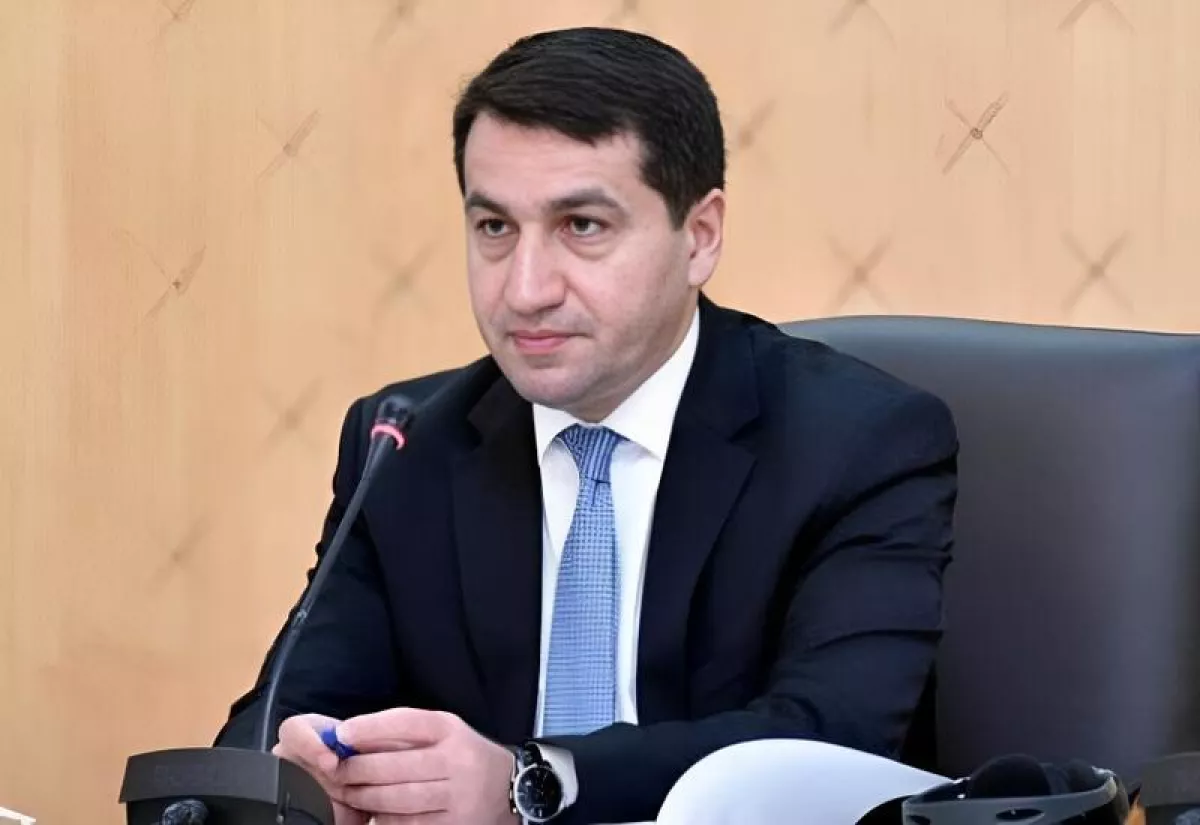
This was reported by Hikmet Hajiyev, Assistant to the President of Azerbaijan and Head of the Department for Foreign Policy Affairs of the Presidential Administration. According to him, in the future, Azerbaijan may consider participating in investment projects in Gaza within the framework of the Board of Peace: “However, I would like to clarify one point. Azerbaijan doesn’t envisage to participate in the USD 7 billion financial initiative related to Gaza that was announced during today’s meeting of the Board of Peace,” Hajiyev stated.
Baku’s chosen position is consistent with the reputation the country has built in recent years. It is a state capable of providing timely and targeted support to partners—whether Türkiye, Georgia, Ukraine, Syria, or other countries. At the same time, Azerbaijan consistently sets the boundaries of its involvement, avoiding actions that could undermine internal stability or strategic priorities.
Overall, participation in the Board of Peace became yet another confirmation that Azerbaijan is regarded on the international stage as an independent actor, capable of proposing solutions and assuming responsibility. It is precisely this pragmatic and measured approach that makes Baku a sought-after participant in global processes amid instability.







 editor@caliber.az
 +994 55 444-88-98
 Азербайджан, Баку, ул. Низами, 203, Af Business House, 5-й этаж