










Tango for two: Beijing sets its strategy for Trump visit Review by Teymur Atayev
It is no secret that behind the façade of most geopolitical confrontations around the world, the dynamics of U.S.–China relations are clearly visible. Although at the current stage of history the world more frequently witnesses direct American involvement in various conflicts, the Chinese dimension—less visible but no less significant—can still be distinctly traced in many global crises. In this context, an important perspective for understanding China’s geopolitical stance emerged from the answers given by China’s Foreign Minister Wang Yi to questions from both Chinese and foreign journalists on March 8.
First and foremost, Wang Yi emphasised that against the backdrop of ongoing geopolitical tectonic shifts in the world, China is moving along the path toward national strength and the great rejuvenation of the nation.
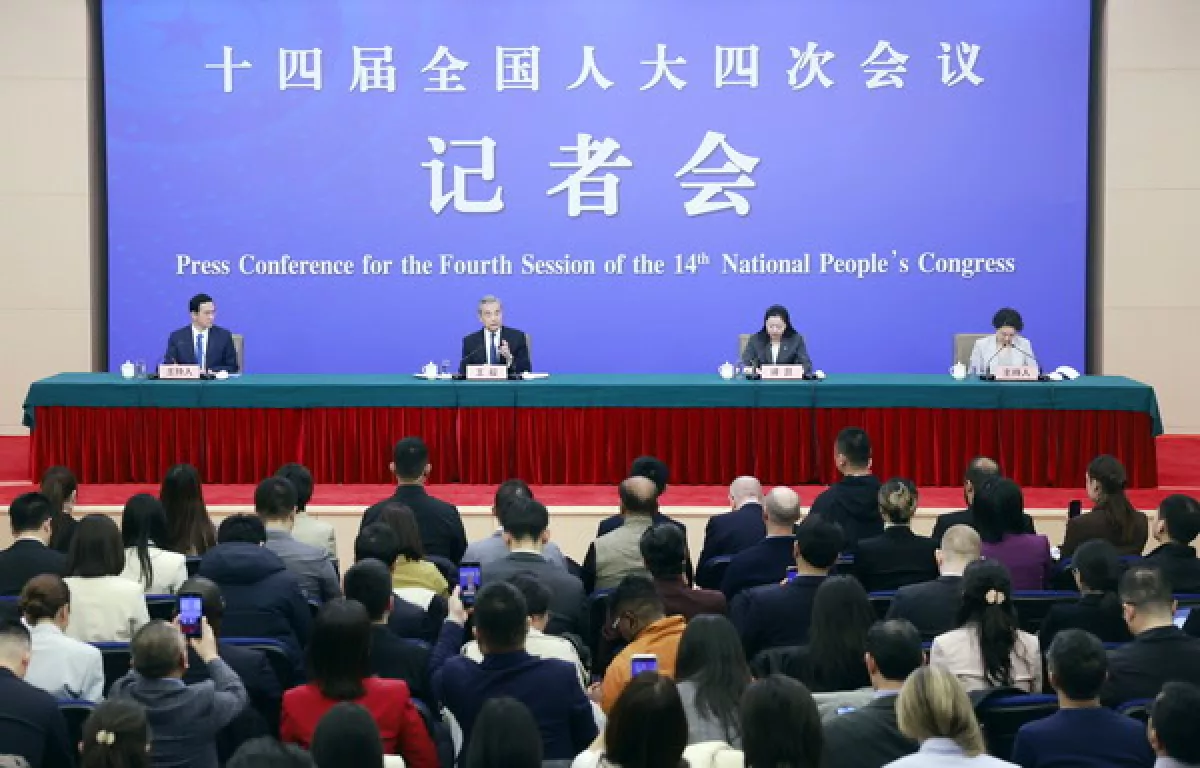
In countering various forms of hegemony and coercion, China, he said, seeks—together with like-minded partners—to “write new chapters of peace, development and win-win cooperation for our times.” The foreign minister, describing the true nature of human society as diversity and interdependence, underscored the relevance of a multipolar international order.
In this context, Wang Yi highlighted the upcoming informal meeting of leaders of the Asia-Pacific Economic Cooperation (APEC) economies, whose theme is framed as building “universal security and shared prosperity.”
Next, Wang Yi drew attention to the upcoming China–Arab States Summit. In the same vein, he described China–Russia relations as “rock-solid against all odds,” emphasising that they are fundamentally based “on equality, respect and mutual benefit since day one.”
He also highlighted the alignment of strategic perspectives between Beijing and Moscow on both international and regional agendas, extending to close coordination on matters of safeguarding the global order and international stability.
Regarding the Middle East crisis, the Chinese foreign minister once again stressed the urgent need for a ceasefire. According to him, war in the Middle East benefits no one, as the core issues at play cannot be resolved through force. Military actions only generate new animosities, while resolving the situation around Iran is impossible without respect for national sovereignty.
In this regard, Wang Yi, emphasising that innocent people must never become victims of war, spoke out against the abuse of force, which could return the world to “the law of the jungle.” From Beijing’s perspective, the true masters of the Middle East should be the peoples of the region themselves, so attempts to instigate “colour revolution” or regime changes will not gain popular support. Accordingly, as a “sincere friend and strategic partner, China stands ready to work with Middle Eastern countries,” and is committed to jointly promoting the Global Security Initiative put forward by Beijing, aiming to restore normalcy in the region.
At the same time, Wang Yi drew special attention to the Global Governance Initiative, whose ideology, he said, aligns “closely with the values upheld by the U.N.” A Group of Friends of Global Governance has already been established at the UN headquarters, primarily including countries of the Global South. Highlighting China’s steadfast support for the Global South, which has taken root there, Wang Yi stressed that the central role of the UN must not weaken. While the Foreign Minister acknowledged the need for reform within the organisation, he dismissed attempts to create alternative structures as unpromising.
Wang Yi did not speak directly about the “Board of Peace,” even though he was asked about it in the context of resolving the situation in Gaza. Noting that the events in the Gaza Strip touch on the red lines of international morality, he reiterated that the only solution to the Palestinian issue remains the “two-State solution.” At the same time, he briefly noted that “new mechanisms” should not undermine this approach.
To prevent the Palestinian issue from being pushed to the sidelines, the UN, in his view, “has a greater responsibility to play a lead role in driving the process.” Accordingly, respecting the legitimate rights of the Palestinian people, China will continue to steadfastly support the just cause of the Palestinian people.
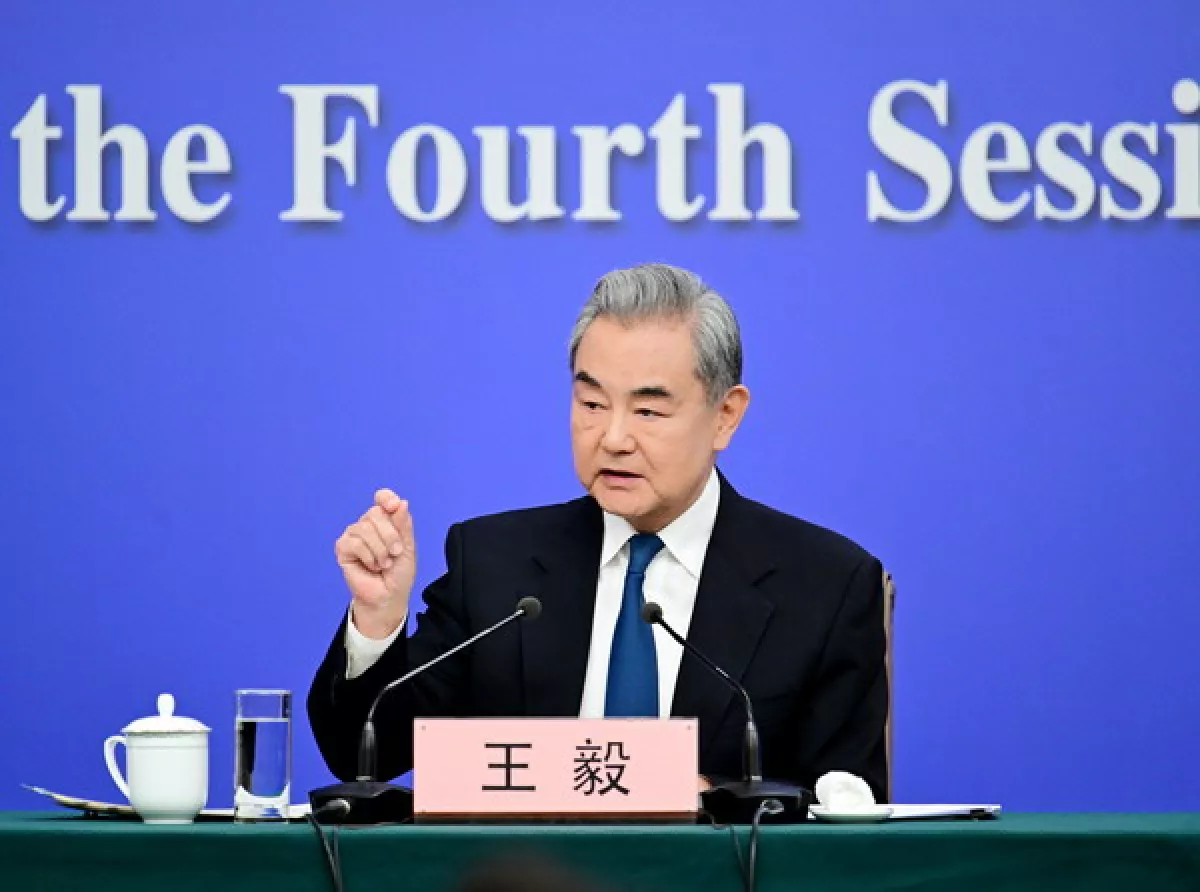
Naturally, Wang Yi placed special emphasis on the anticipated visit to China by U.S. President Donald Trump at the end of March, sending a clear message to all interested parties that the U.S.–China relations affect the entire world. As he stressed, a lack of contact between the two “big countries” could lead to misunderstandings that might escalate into confrontation, with consequences for the whole planet.
Following this, China’s foreign minister emphasised that Beijing and Washington cannot transform each other. In this context, he placed utmost importance on adherence to the principles of peaceful coexistence, which serve the interests of the peoples of both countries and meet the expectations of the international community.
According to him, both nations must foster a favourable environment for risk management and the removal of unnecessary obstacles.
“China’s approach remains constructive and open, but it takes two to tango,” Wang Yi remarked metaphorically, and “showing sincerity and honesty on both sides will help continuously expand the list of areas of cooperation, reduce the list of outstanding issues, and, under the strategic guidance of the two heads of state, achieve results that satisfy our peoples and build consensus within the international community.”
At the same time, the Chinese foreign minister identified Europe as an important force in maintaining the stability of the international order, describing the continent as a “key partner for China in our modernization.” In this context, Wang Yi emphasised that “we are witnessing a growing consensus among wise minds in Europe that China is not a competitor but a global partner.” According to him, Beijing welcomes Europeans stepping out of the “‘small attic’ of protectionism” and into the “fitness club” of the Chinese market to enhance their competitiveness.
Another key element in Wang Yi’s presentation of China’s vision of global affairs was the reaffirmation that Taiwan is an inseparable part of China and can under no circumstances become an independent state. The Foreign Minister stressed that “Taiwan affairs are purely China’s internal affairs,” forming the core of the country’s vital interests and representing a “red line” that no one is permitted to cross.
Clearly, Wang Yi’s remarks reflected China’s official position on key issues of global geopolitics. This is extremely important for forecasting the developments of tomorrow. Indeed, China once again emphasised the concept of multilateralism—or, as some might call it, multipolarity—advocating for the functioning of a single, united human community on the planet.
At the same time, through Wang Yi, Beijing underscored the central importance of U.S.–China relations, sending a series of serious messages to Washington ahead of the visit by the White House occupant—particularly in the context of the UN and the so-called “Board of Peace.”
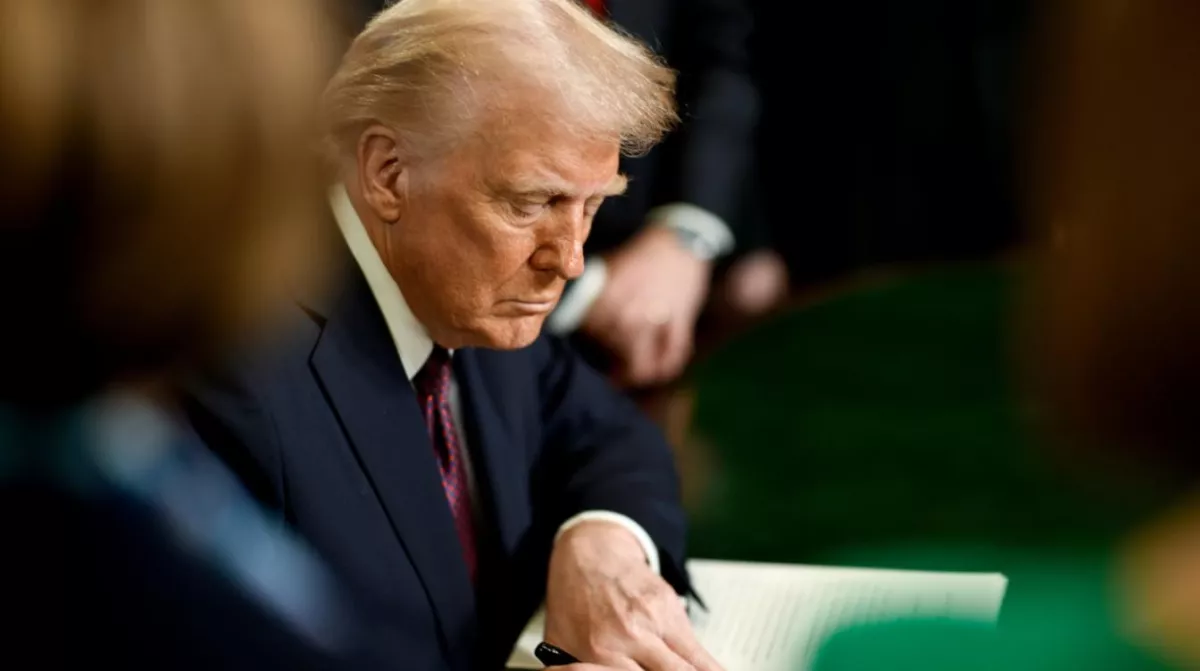
There is little doubt that the Trump administration will study Beijing’s statements closely. Wang Yi addressed issues ranging from the Middle East situation and China–Russia relations to Europe and the highly sensitive Asia-Pacific region for Washington.
Overall, the views expressed by China’s foreign minister on key aspects of the contemporary world are well known. However, developments today around and within the Middle East—where China’s geopolitical interests are directly involved—will undoubtedly become one of the main themes of the upcoming meeting between the two world leaders. In this context, it is possible that, ahead of his visit to China, Trump may attempt to deliver a decisive statement in the anti-Iran narrative. The question, of course, is how successful he will be.
It is equally unlikely that Washington will remain silent in response to Wang Yi’s emphases regarding Russia, Europe, the Asia-Pacific region, and the Global South. For this reason, the meeting between Chinese President Xi Jinping and U.S. President Donald Trump promises to be quite “heated.”







 editor@caliber.az
 +994 55 444-88-98
 Азербайджан, Баку, ул. Низами, 203, Af Business House, 5-й этаж