










Who will transport American LNG? Overview by Teymur Atayev
On March 2, QatarEnergy halted the production of liquefied natural gas (LNG) and related materials, which immediately drove up the price of American LNG even further. The very next day, shipowners and brokers made offers to charter vessels with a 100 per cent premium (which is even higher today).
And what will happen tomorrow, when major buyer countries start facing problems with the “blue gold”? Whatever the developments in this market, one fact remains: LNG tanker owners are already becoming a crucial link in global geopolitics. Some may believe that the U.S. will rise as a star in this arena, since American LNG offerings currently appear the most attractive—especially for the European route.
In 2025, the main buyers of American liquefied natural gas were France, the Netherlands, and the United Kingdom, followed by Spain and Türkiye. At the same time, surprisingly, Washington practically does not have its own LNG tankers. Only in the summer of 2025 did Hanwha Shipping, the American subsidiary of the Korean shipbuilding corporation Hanwha Ocean, order an LNG tanker worth more than $250 million. According to the agreements, the tanker is scheduled to be delivered at a shipyard in Korea in 2028.
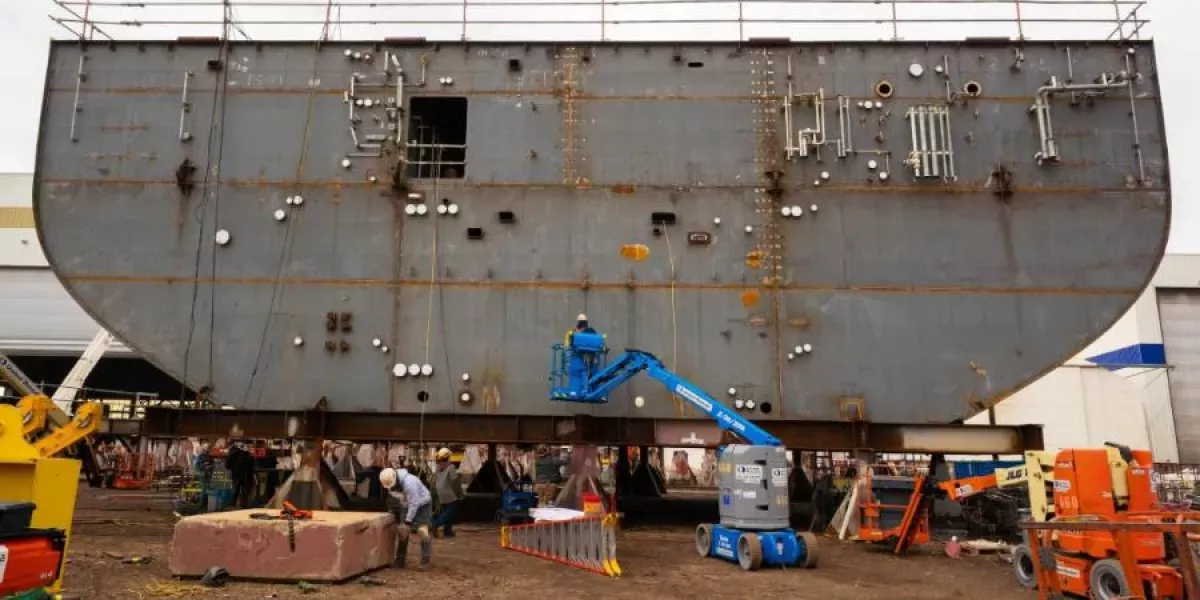
Hanwha Shipping emphasized that this contract became the first American order for an LNG tanker under the U.S. flag in almost 50 years. However, this fact did not arise out of nowhere.
In 2025, U.S. President Donald Trump signed an executive order called “Restoring America’s Maritime Dominance,” which set out to develop an action plan in this direction. The “America’s Maritime Action Plan” (AMAP) was directly drafted by Secretary of State Marco Rubio and his team and released by the White House in February 2026. The document is a set of national policy initiatives aimed at restoring the potential of American shipbuilding and increasing the U.S. commercial fleet through ships built in the country and operating under the American flag. The plan proposes a so-called “bridge strategy,” in which the first vessels under these contracts are built at foreign shipyards, followed by investments in shipbuilding within the U.S. The core of this strategy is the development of American shipbuilding.
According to a statement by the U.S. Trade Representative, starting in 2029, LNG producers will be required to transport 1 per cent of their exports on ships built in the United States. By 2047 and beyond, this figure is expected to reach 15 per cent.
One of the key components of the plan is the section “Protecting the Maritime Industrial Base,” which includes both the goal of increasing cargo volumes for American commercial vessels in international trade and the study of targeted actions by China in the maritime, logistics, and shipbuilding sectors.
The latter emphasis is quite telling. It effectively confirms Beijing’s strength in this industry, as evidenced by 2025 data on the fleet of the Chinese state-owned shipping, logistics, and industrial corporation COSCO—one of the world’s leading shipping companies. COSCO operates a powerful LNG tanker fleet: 45 active vessels and 40 more under construction, with a total capacity of 6.5 million tons of LNG, accounting for about 12 per cent of the global LNG fleet. These COSCO tankers handle shipments for PetroChina, Sinopec, ENN, and QatarEnergy LNG.
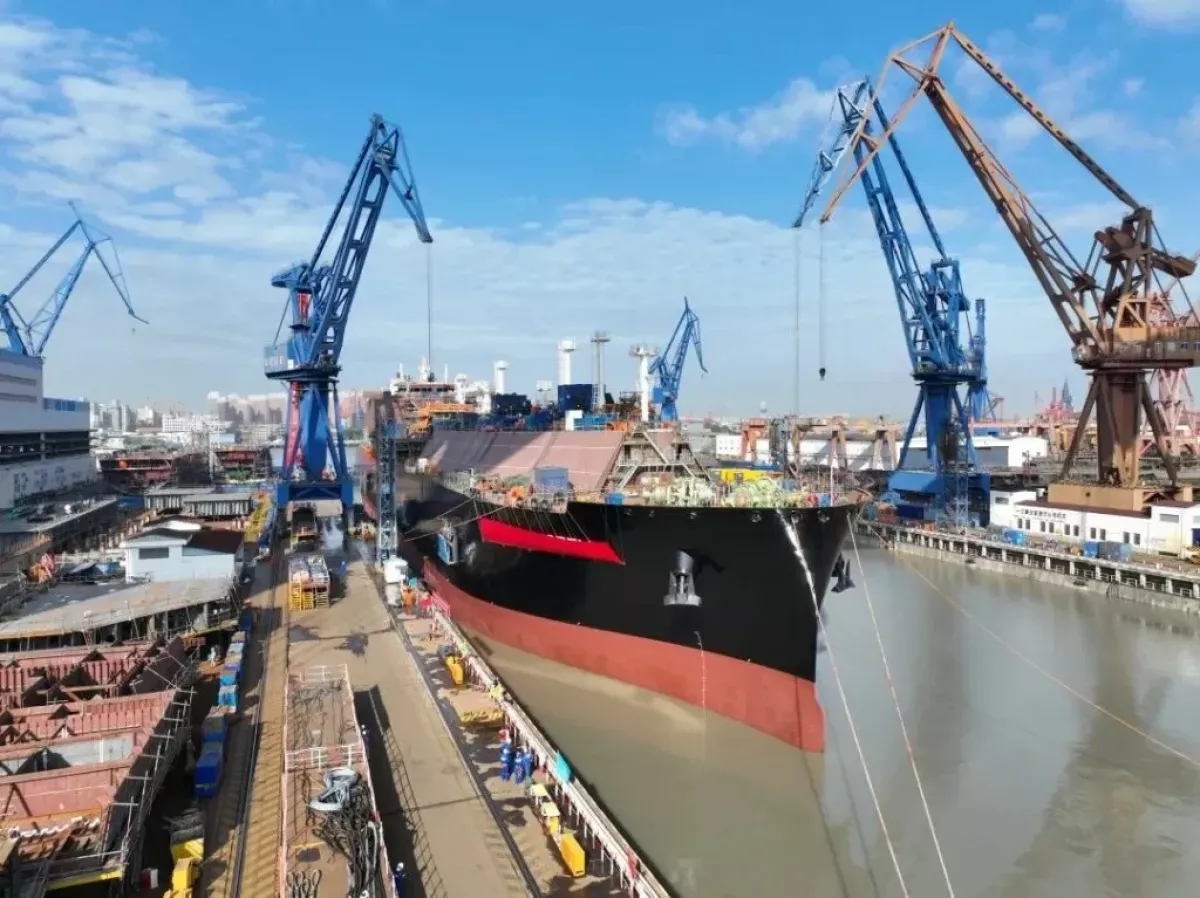
Thus, Chinese shipbuilders, represented by the state-owned corporation CSSC, are among the key suppliers of LNG tankers to the global market. Its subsidiary, Hudong-Zhonghua Shipbuilding, has significantly strengthened its position in the LNG tanker segment in recent years. According to Chinese sources, the design and construction of large LNG carriers is a concentrated embodiment of the comprehensive strength of the country’s shipbuilding sector.
Amid the sharp rise in demand for such vessels, Chinese shipyards’ revenues more than doubled. At the same time, in 2025, reports indicated that the orders fulfilled by Chinese shipyards could account for up to 15 per cent of the global LNG fleet by 2031.
This creates a kind of paradox: the near shutdown of the Strait of Hormuz and the halt of QatarEnergy’s LNG production—while increasing the importance of American liquefied gas—could lead to a situation where its transport is carried out… by Chinese LNG tankers. Whether this becomes reality, or Washington relies on Korean tankers, only time will tell. But these are the kinds of intriguing nuances that emerge in light of military actions in the Middle East.







 editor@caliber.az
 +994 55 444-88-98
 Азербайджан, Баку, ул. Низами, 203, Af Business House, 5-й этаж