










From energy to logistics: Baku and Vienna expand cooperation Review by Khazar Akhundov
Geopolitical changes in recent years have accelerated the development of economic ties between Azerbaijan and European Union countries, particularly in expanding natural gas supplies through the Southern Gas Corridor (SGC). This year has seen a positive trend in Azerbaijani-Austrian business relations, following the start of gas deliveries to this Alpine republic. Against this backdrop, Austrian business circles have become more active, showing a growing interest in Azerbaijan’s non-oil sectors. The prospects for increasing trade turnover and mutual investments were the focus of recent meetings in Baku with Severin Gruber, Secretary General of Austria’s Federal Ministry for Economy, Energy and Tourism.
Since 1992, when Azerbaijan’s independence was recognised and diplomatic relations were established, Azerbaijani-Austrian relations have developed positively, based on mutually beneficial business and humanitarian ties. These relations received a further boost from the visits of Azerbaijani President Ilham Aliyev to Austria. To date, 41 agreements have been signed between the two countries, including in the economic sphere, and since 1999, a bilateral commission has been operating on economy, agriculture, industry, engineering, and technology. Additionally, Azerbaijani cultural centres have been established in Vienna and Salzburg, and the Society of Azerbaijanis in Austria has been created.
Trade relations between the two countries have experienced several peaks and troughs and have been largely based on the trade of domestic energy resources and the supply of industrial equipment from Austrian companies. In particular, Austria primarily exports to Azerbaijan specialised machinery, steel products, electrical equipment, textile and leather-processing machines, with some shipments including medical equipment, pharmaceuticals, and confectionery. Azerbaijan’s exports to the Alpine republic are mainly oil, as well as raw cotton, vegetables and fruits, and non-ferrous metal products.
The highest point in Azerbaijani-Austrian trade was reached in 2018, with a turnover of €422 million. However, in subsequent years, this trend declined noticeably due to global crises. Nevertheless, last year saw a rise in shipments of Azerbaijani oil and petroleum products to Austria: exports reached 177,500 tonnes, valued at $88 million, an increase of 1.8 times, which had a positive impact on the overall dynamics of bilateral trade.
Regarding joint business initiatives, in recent years, around 15 Austrian companies have been operating in the Azerbaijani market. In the first three quarters of last year, Austria’s foreign direct investment (FDI) in Azerbaijan’s economy amounted to $21.809 million, reflecting a 29% decline compared to the year before last. In contrast, the peak of Azerbaijan’s investment activity in Austria occurred between January and September 2024: Azerbaijani FDI in the Austrian economy reached around $49 million, nearly 40 times higher than previously.
The largest Azerbaijani investor in the Alpine republic is the subsidiary of the State Oil Company of the Azerbaijan Republic (SOCAR) — SOCAR Trading, which operates a network of petrol stations in Austria. In 2017, SOCAR Energy Holdings acquired petrol stations from company A1 and Pronto Oil, which was engaged in the trade of petroleum oils, and in 2019, the first SOCAR petrol station opened in Graz. Currently, SOCAR Trading manages 87 petrol stations in Austria.
Notably, Azerbaijani-Austrian cooperation in the energy sector is taking on a new and highly promising dimension starting this year.
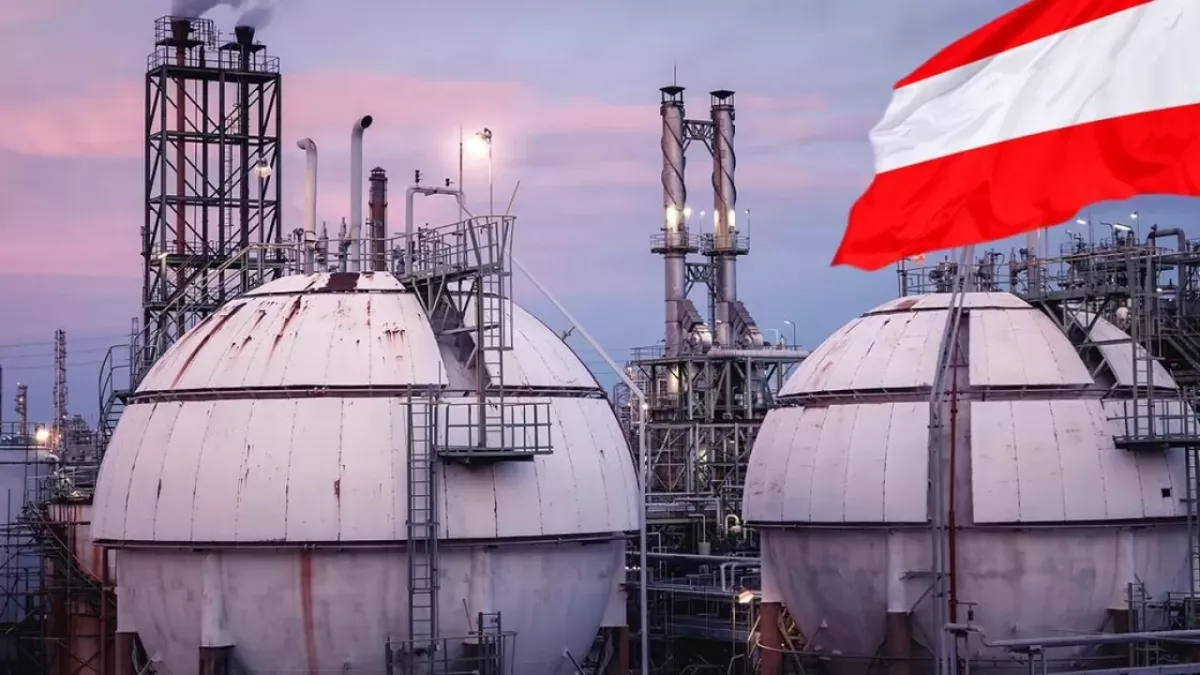
“By selling significant volumes of gas transported via the Trans Adriatic Pipeline (TAP) — the European segment of the Southern Gas Corridor — SOCAR has taken the next important step in exporting Azerbaijani gas: starting January 2026, Azerbaijani gas is being supplied to Austria and Germany via Italy, expanding the geographic reach of deliveries,” the State Oil Company of Azerbaijan (SOCAR) reported. Under the ten-year contract signed last June, SOCAR will deliver 1.5 billion cubic metres of gas annually to Germany through the German energy holding Sefe. According to media reports, approximately up to 1 billion cubic metres of gas per year are expected to be supplied to Austria. Further increases in deliveries will depend on investments and the expansion of pipeline infrastructure capacity towards these countries.
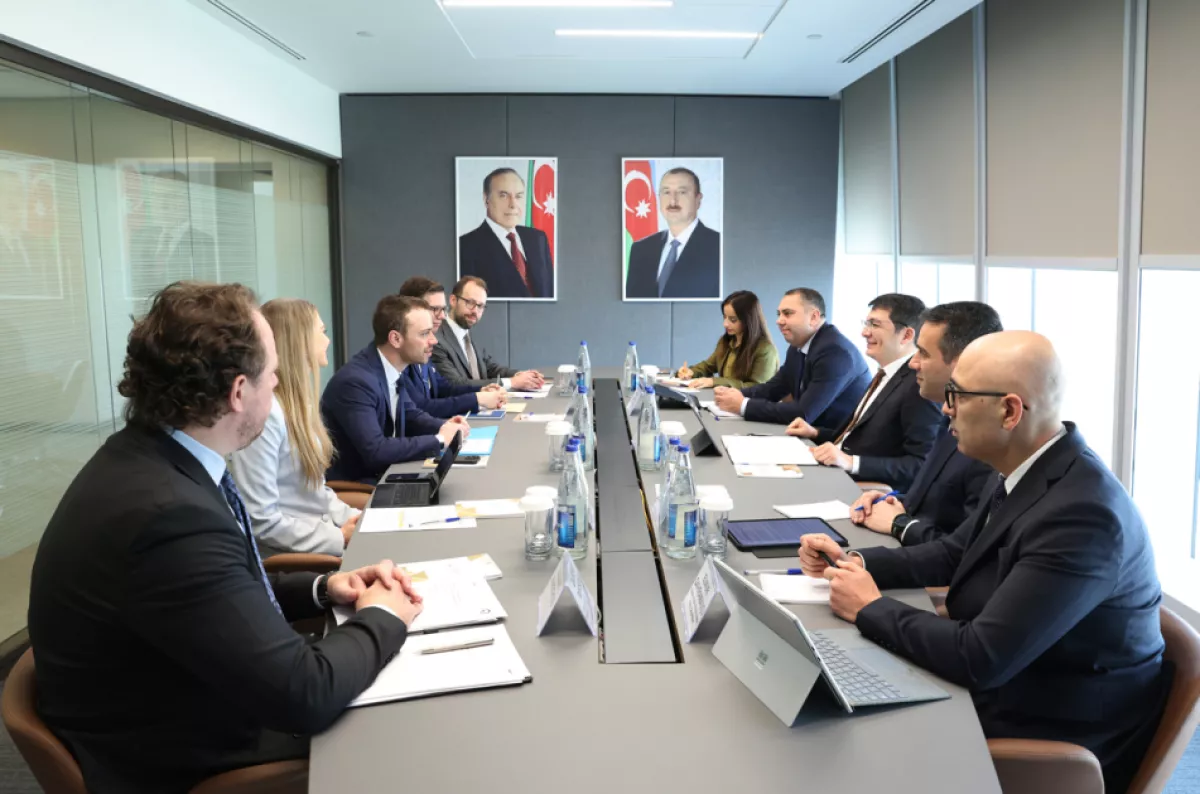
SOCAR’s gas contracts, together with the expansion of cooperation with the Austrian state-owned gas company OMV, have acted as a key driver, providing an additional boost to Azerbaijani-Austrian business partnerships. Recently, during a visit to Azerbaijan by Severin Gruber, Secretary General of Austria’s Federal Ministry for Economy, Energy and Tourism, meetings were held with Azerbaijan’s Ministries of Economy and Energy.
“During the meeting with Elnur Aliyev, First Deputy Minister of Economy of Azerbaijan, discussions focused on increasing trade turnover, expanding mutual investment opportunities, and developing industrial cooperation between Azerbaijan and Austria. The parties explored the potential for joint projects, exchanged views on cooperation with Austrian companies in the Karabakh and East Zangezur regions, and discussed strengthening partnerships in industry, agriculture, and energy, including green energy,” the Ministry of Economy of Azerbaijan reported.
Both sides intend to make fuller use of existing potential and to promote direct contacts between the business communities of the two countries.
A similarly constructive dialogue took place at the Ministry of Energy, where Minister Parviz Shahbazov met with Secretary General Severin Gruber and OMV board member Berislav Gašo. “We are pleased to note that our cooperation with Austria, one of the principal natural gas transit hubs in Central Europe, covers both only crude oil and the natural gas supply. We shared our views on the importance of pursuing a pragmatic policy on natural gas in order to ensure sustainable energy security,” Shahbazov wrote on his X account.
Energy cooperation, however, is not the only area where Baku and Vienna plan to expand their partnership. Alongside industry, green energy, the IT sector, agriculture, railway infrastructure, and water supply, tourism is seen as a priority. Austrian companies, for example, have acted as consultants and contractors in the construction and operation of the Shahdag ski resort in northern Azerbaijan. Since 2011, a partnership has been ongoing to train personnel for Azerbaijan’s recreational sector under a cooperation agreement between Austria’s Krems University of Applied Sciences and the Azerbaijan Tourism Institute.
To further develop the tourism sector, from January 15–18 this year, the Azerbaijan Tourism Bureau, the Azerbaijani Cultural Centre in Vienna, and Dreamland Baku showcased the country’s recreational potential at the Ferien-Messe Wien tourism exhibition in Vienna. The promotion of local tourist destinations in the Alpine republic has been quite successful: according to the State Tourism Agency of Azerbaijan, in 2025, the number of Austrian tourists visiting Azerbaijan increased by 6% compared to the previous year.
Finally, the transport and logistics sector is seen as a highly promising area of cooperation. As part of the Trans-Caspian International Transport Route (TITR), Baku and other countries in the Caspian region have partnered with the Austrian Federal Railways and its subsidiary, Rail Cargo Group, which in 2020 signed an agreement with the Baku International Sea Trade Port to expand cargo shipments from Europe to Central Asia and China. Earlier, in 2017, Rail Cargo Group concluded similar agreements with Azerbaijan Railways CJSC.
Moreover, the Austrian Federal Railways also collaborates with Azerbaijan under plans to integrate the countries of the Black Sea–Caspian region into the Trans-European Transport Network (TEN-T) by establishing a Southeast axis, aiming to increase multimodal transportation.







 editor@caliber.az
 +994 55 444-88-98
 Азербайджан, Баку, ул. Низами, 203, Af Business House, 5-й этаж