










Two roads for Yerevan Georgia and the Zangezur Corridor in focus
On March 3–4, 2026, the Armenian prime minister paid a working visit to Georgia, accompanied by a fairly representative government delegation. During the visit, the 15th meeting of the Intergovernmental Commission on Economic Cooperation took place, chaired by the prime ministers of both countries — Nikol Pashinyan and Irakli Kobakhidze — where cooperation in the fields of economy, energy, transport, infrastructure, agriculture, and tourism was discussed.
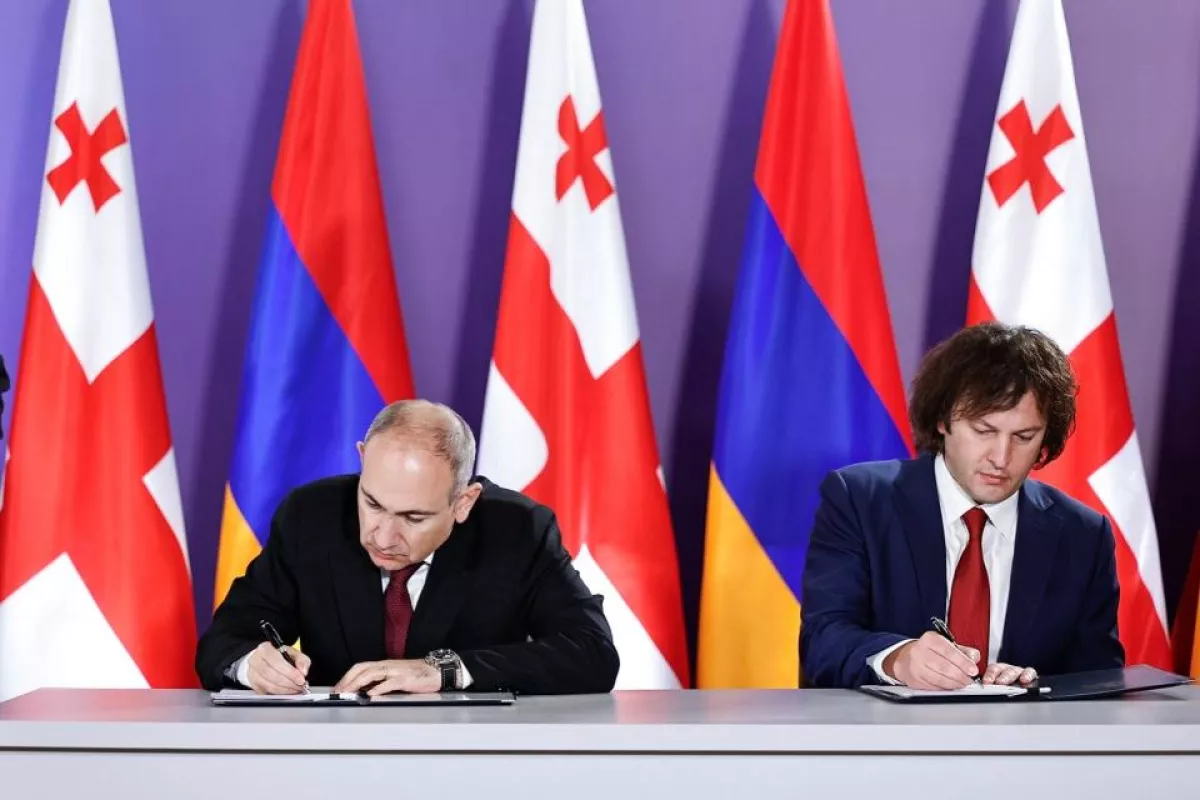
The working visit of Nikol Pashinyan to Georgia took place against the backdrop of dramatic military events surrounding Iran. On March 2, at the “Norduz” checkpoint, the crossing of the Armenian-Iranian border for civilians was temporarily suspended, formally due to an internet connection failure. It only resumed on the morning of March 3. The movement of heavy-duty transport across the Armenian-Iranian border has so far not been stopped; however, escalating political and military risks could make it problematic at any moment.
Under such circumstances, the Armenian leadership objectively needs to value its existing communications with Georgia. It is in Armenia’s state interest to “hurry” with the unblocking of connections with Azerbaijan and Türkiye, primarily through the opening of the Zangezur Corridor — especially given that, in conditions of military escalation in the Middle East, should the situation worsen, the route through Zangezur from Armenia to Iran may cease to be a reliable channel of communication.
The military events in Ukraine and the Middle East are making both the routes through Georgia and the Zangezur Corridor increasingly in demand for international transit. In this context, closer coordination among all three South Caucasus states in developing international communications passing through their territories is becoming necessary. Judging by the outcomes of Nikol Pashinyan’s visit to Tbilisi, the current Armenian leadership seems to understand this.
During a meeting with Georgian Prime Minister Irakli Kobakhidze, Nikol Pashinyan expressed Yerevan’s desire to deepen regional cooperation, including in a trilateral format with Georgia and Azerbaijan.
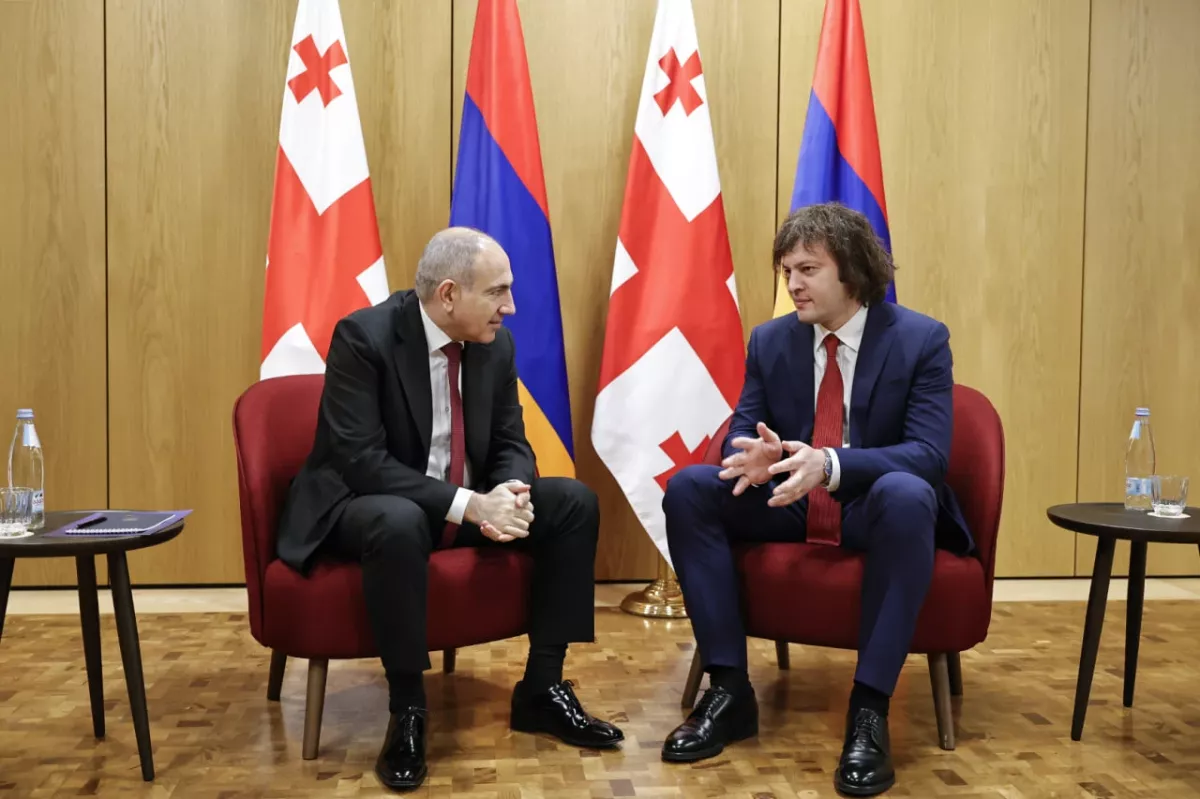
“With the support of Georgia, Georgia’s role in this matter has been extremely important, we are also trying to deepen trilateral regional cooperation between Georgia, Azerbaijan and Armenia,” he noted.
Pashinyan reported that, after a long hiatus, trains are once again arriving in Armenia via Azerbaijan and Georgia. He expressed hope that Armenian goods would soon begin to be exported by rail as well.
The Armenian government’s real commitment to maintaining communication through Georgia was also demonstrated by Nikol Pashinyan’s reaction to a question from opposition MP Garnik Danielyan, posed after Pashinyan returned to Yerevan on March 4, 2026, during a government session in parliament. Garnik Danielyan, known for his strongly nationalist and revanchist views, asked the Armenian prime minister whether he had raised, in his meeting with the Georgian prime minister, the issue of why Armenian freight carriers “are subjected to illegal monetary extortions” when crossing the Armenian-Georgian border. Nikol Pashinyan responded rather sharply, stating that if Danielyan was aware of the problem but had not yet approached law enforcement, his question was provocative in nature.
“I believe that with your provocations you are trying to create problems in order to then talk about them here. Then move on to new provocations and talk about those,” said Nikol Pashinyan.

The fact that certain forces are trying to create a negative atmosphere even around Georgia, Armenia's current main "window to the outside world," accusing the Georgian side of alleged “illegal monetary extortions” without providing evidence, indicates that revanchists in Armenia have no interest in reliable communications with neighboring countries. For politicians like Garnik Danielyan, the principle is “the worse, the better.” The forces behind them clearly want to turn Armenia once again into a militarized “besieged fortress.” This implies that provocations are also possible regarding the unblocking of communication from Armenia to Azerbaijan and Türkiye, including the Zangezur Corridor.
Nikol Pashinyan’s clear stance that unsubstantiated accusations against neighbouring states are provocative is, overall, a positive signal for both Georgia and Armenia’s other neighbours. It could reflect a genuine willingness on the part of the current government in Yerevan to work toward unblocking regional communications.
By Vladimir Tskhvediani, Georgia, exclusively for Caliber.Az







 editor@caliber.az
 +994 55 444-88-98
 Азербайджан, Баку, ул. Низами, 203, Af Business House, 5-й этаж