










Iranian ultimatum from the rubble Baku rejects blackmail and threats
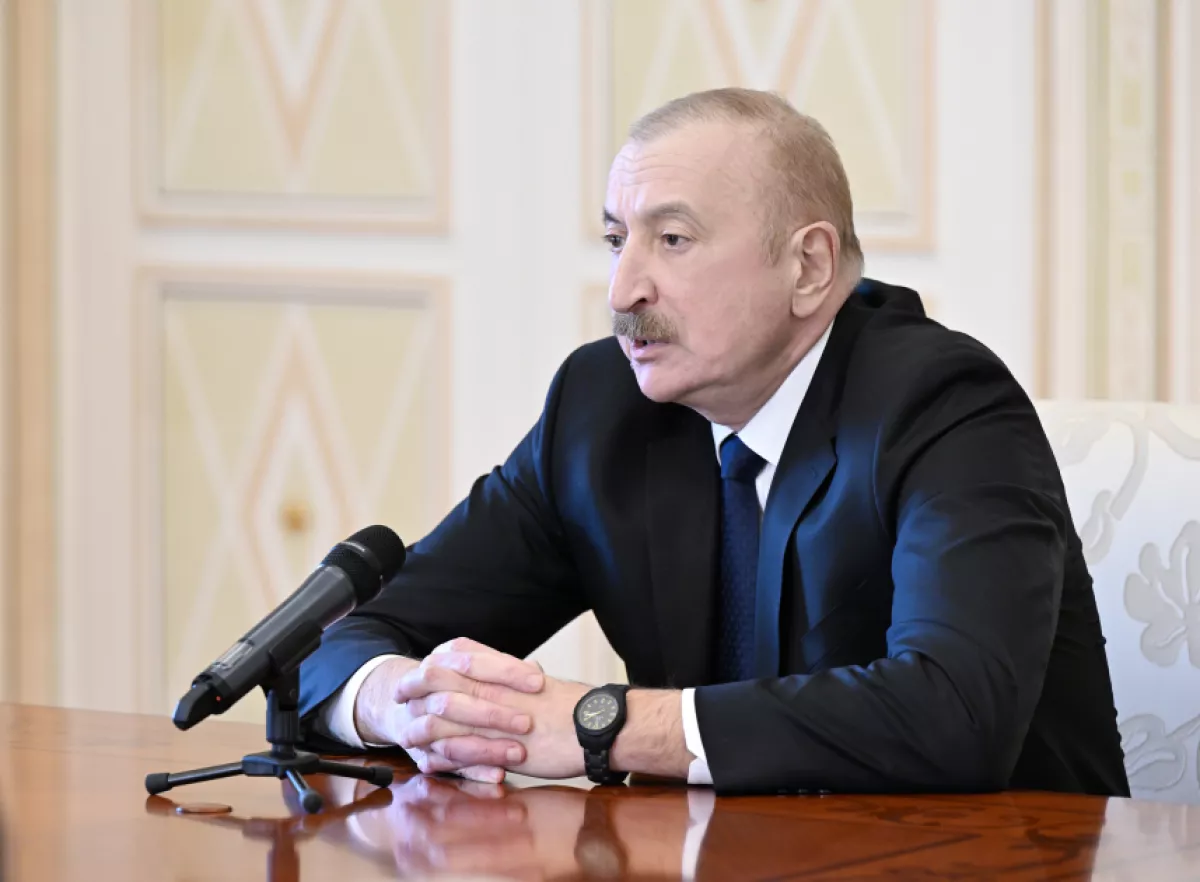
When a country whose military infrastructure is being destroyed in real time—and whose supreme leader was killed on the very first day of the conflict by an airstrike—starts issuing ultimatums to a sovereign neighbour, it is a clinical picture of a regime in agony, disconnected from reality. This is precisely how the statement by a representative of the Central Headquarters of “Khatam al-Anbiya” should be interpreted, demanding that Azerbaijan “immediately expel the Zionists” from its territory under threat of military action. This demand, made against the backdrop of the total destruction of Iran’s military capabilities by the U.S.-Israeli coalition, appears at once grotesque and ominous—because it is driven not by strategic calculation, but by the inertia of a terrorist machine that keeps operating even after its control mechanisms have been buried under the rubble of Tehran’s command centres.
In Azerbaijan, the statements made by Iranian officials have been unequivocally classified as ultimatums that violate international law and the principles of good-neighbourliness. The Azerbaijani side has repeatedly stressed at the official level that there is no foreign military presence on its territory, and Baku will never allow its land to be used by external forces against neighbouring states, including Iran. This is not a new position—Ilham Aliyev had reiterated this stance both before the war and during the emergency session of the Security Council on March 5, when Iranian drones had already targeted Azerbaijani territory. However, a fundamentally new emphasis has now been added: Azerbaijan has warned that, in the event of any threat to its territorial integrity or sovereignty, Baku will decisively exercise its right to self-defence.
To grasp the scale of Iranian cynicism, it is necessary to revisit the chronology of recent days. On March 4, following the elimination of Khamenei, Ilham Aliyev personally visited the Iranian Embassy in Baku to offer condolences. This was a gesture far beyond mere protocol—a gesture that Tehran, by all logic, should have recognised as extraordinary. No other head of state had done anything comparable.
Yet less than 24 hours later, on March 5, four Iranian drones were cynically directed toward the Nakhchivan Autonomous Republic. One struck the terminal building of Nakhchivan International Airport, while another fell in close proximity to a secondary school in the village of Shakarabad. Four civilians were injured. The airport—the autonomous republic’s only air gateway—was temporarily put out of service, and flights to Baku were rerouted through Iğdır, Türkiye.
Aliyev described the attack as a terrorist act: “striking Nakhchivan in such a vile and dishonorable manner. This stain will never be erased from their disgraceful and unsightly record.” The republic’s armed forces were placed on full combat alert. Iranian Ambassador Mojtaba Dermichilu was summoned to the Ministry of Foreign Affairs, where a formal protest note was delivered. On March 6, Baku decided to evacuate all diplomatic personnel from Tehran and Tabriz. Azerbaijan’s southern airspace has been closed.
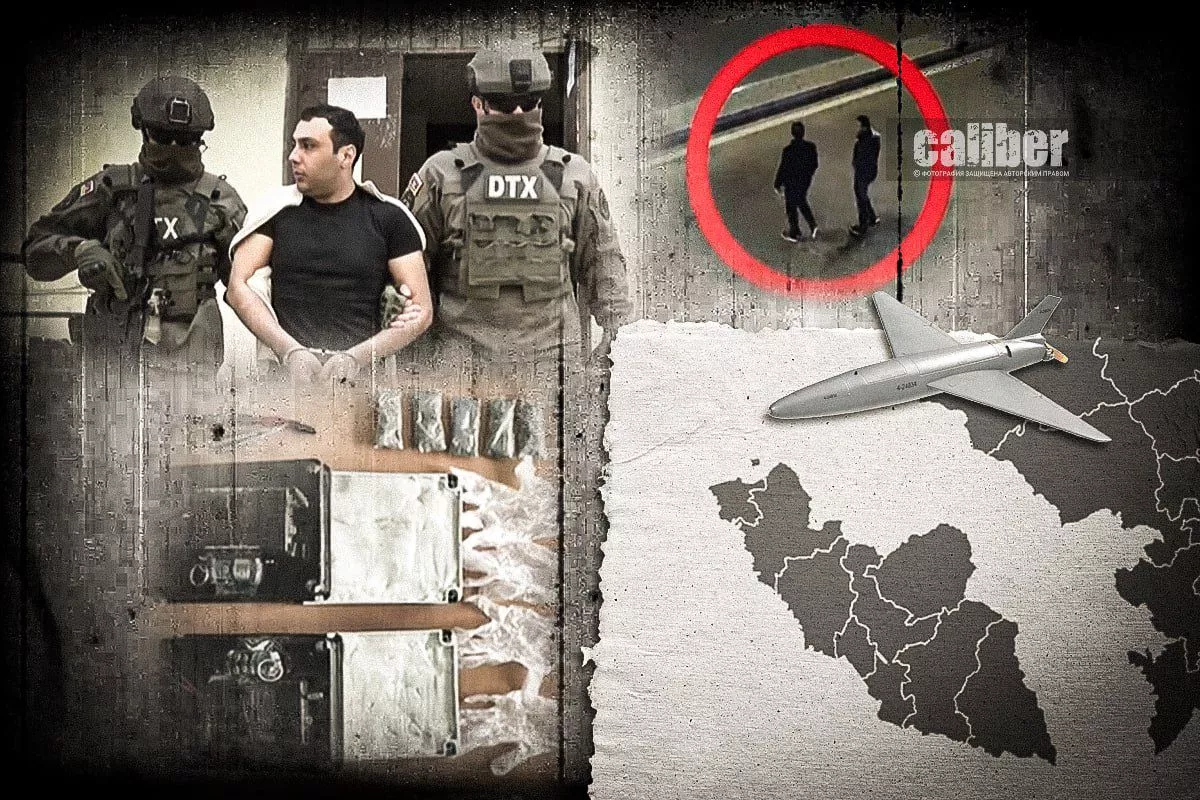
But the drones were only the tip of the iceberg. On the same day, the State Security Service of Azerbaijan reported the prevention of a series of terrorist acts planned by the IRGC on Azerbaijani territory. Targets included the Baku–Tbilisi–Ceyhan oil pipeline, the Israeli Embassy in Baku, an Ashkenazi synagogue, and one of the leaders of the Mountain Jewish community.
Three explosive devices were smuggled into Azerbaijan—7.73 kilograms of C-4 plastic explosives intended for the destruction of infrastructure and concrete structures. The devices were discovered and neutralised. Eight Azerbaijani citizens were arrested, and several Iranian nationals have been placed on an international wanted list. Among the operation’s coordinators, the investigation named IRGC intelligence officer Ali-Asgar Bordbar Sheramini.
In addition, IRGC coordinator Hafez Tavassoli contacted Azerbaijani citizen Narmina Shabanova, instructing her to conduct reconnaissance at the workplace of an Azerbaijani public figure: photograph the building, the individual, and access routes. Simultaneously, a foreign hired assassin was scheduled to enter Azerbaijan from a third country, whom Shabanova was to receive, accommodate in a hotel, and provide with weapons and transport.
Against this backdrop, Tehran is demanding that Baku “expel the Zionists.” Ultimatum and terror are two sides of the same coin. Baku is fully entitled to respond bluntly: it is the Iranian side that must apologise to the people of Azerbaijan for the attacks on civilian infrastructure in Nakhchivan, carried out without any military necessity, and must cease attempts to interfere in the country’s internal affairs.
Particular attention should be paid to the institutional context of the threat. The Central Headquarters of “Khatam al-Anbiya” is the highest operational command body of the Armed Forces of the Islamic Republic of Iran, responsible for planning and coordinating joint military operations within Iranian forces. Its representative speaks not as a marginal commentator, but as the voice of the military leadership. And when this voice declares that “they will become targets for Iranian armed forces,” it constitutes a direct threat to a sovereign state and a gross violation of the UN Charter and fundamental norms of international law.
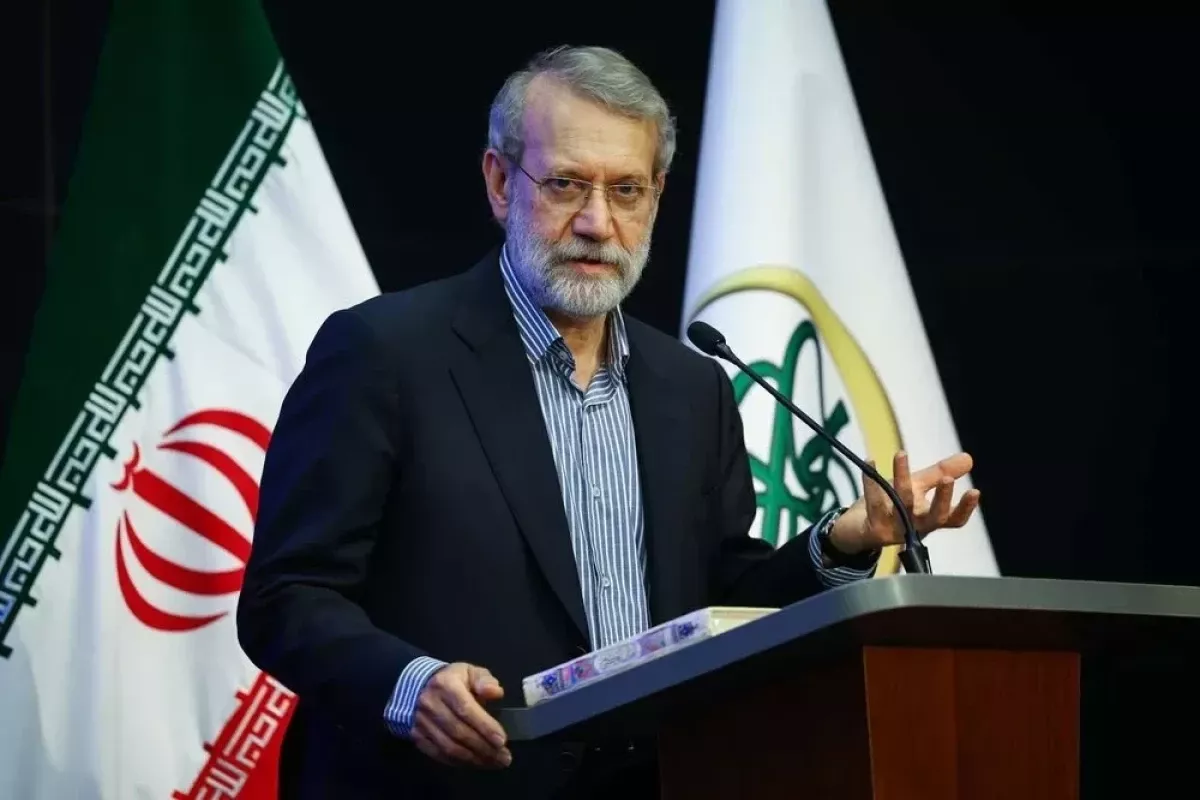
Iran’s Secretary of the Supreme National Security Council, Ali Larijani, reinforced this stance in an earlier statement: “We have no problems with Azerbaijan, but if a conspiracy against Iran is carried out from the territory of this country, we will respond.” There is no “conspiracy”—only Azerbaijan’s sovereign right to develop relations with any country in the world, including Israel, based on its own national interests.
The paradox of the situation is that Tehran is issuing ultimatums at a time when it has neither the resources nor the capacity to enforce them. The joint military operation launched by the United States and Israel on February 28 had, by the end of the first week, systematically destroyed Iran’s command hierarchy, eliminated missile bases, naval infrastructure, drone storage facilities, air defence systems, and sites connected to the nuclear programme. Khamenei has been eliminated. Dozens of generals have been killed. Internet access in Iran has been cut off for nine consecutive days. According to Flashpoint and the Institute for the Study of War (ISW), there is widespread desertion among the officer corps. The temporary governing council—Pezeshkian, Mohseni-Ejei, and Arafi—does not control the IRGC, which, according to available information, had already gained full autonomy in military decision-making after the “twelve-day war” of summer 2025, well before the current conflict began.
This very autonomy likely explains the apparent irrationality. The army command and the IRGC operate as independent military-political forces, acting without coordination with the political leadership. On March 7, President Pezeshkian apologised to neighbouring countries for strikes on their territories—only to be immediately rebuked by his own hawks. Ultra-conservative MP Hamid Rasaei called the apology “weak and unacceptable.” Meanwhile, “Khatam al-Anbiya” continued issuing ultimatums as if the president’s words did not exist. This is a collapse of the command system. And it is precisely this collapse that makes the situation dangerous: irregular elements, operating without political control, are unpredictable by definition.
The international context is also crucial. The United States strongly condemned the strike on Nakhchivan and affirmed full solidarity with Azerbaijan, describing the incident as a violation of the country’s sovereignty. The State Department explicitly stated: “The United States stands in full solidarity with Azerbaijan against these threats. Attacks on the territory of our partners in the region are unacceptable and will be met with resolute U.S. support for those partners.” This statement carries particular weight in the context of the Strategic Partnership Charter between Azerbaijan and the U.S., signed on February 10, 2026—a document that establishes a fundamentally new framework for bilateral relations.
Türkiye reacted instantly and unconditionally, declaring that it “will stand by Azerbaijan, as it always has.” The Council of Ministers of the Organisation of Turkic States, at its March 7 meeting in Istanbul, “strongly condemned” the strikes on Nakhchivan and reaffirmed support for the sovereignty and territorial integrity of both Azerbaijan and Türkiye. Serbia, the United Kingdom, Israel, the Gulf countries, and many others have also expressed solidarity with Baku. Azerbaijan is not alone—and Tehran understands this.
Baku’s logic in this crisis is crystal clear. Azerbaijan is not participating in the war—and has no intention of doing so.
Azerbaijan remains committed to good-neighbourliness. But good-neighbourliness must be reciprocal. The republic, having restored its territorial integrity and sovereignty and standing as the leading regional power in the South Caucasus, possesses both the political will and the military means to protect its national interests. Ultimatums issued from the rubble of destroyed command centres will not change that. All they achieve is to confirm the assessment of those who long ago characterised the clerical regime as terrorist—incapable of rational behaviour even in the face of its own destruction.







 editor@caliber.az
 +994 55 444-88-98
 Азербайджан, Баку, ул. Низами, 203, Af Business House, 5-й этаж