










Half a ton of morality A response to inappropriate criticism
In the Turkish media space, criticism of Azerbaijan for its military-technical and economic cooperation with Israel has long been commonplace. In the brotherly country, reproaches toward Baku regularly surface: why does Azerbaijani oil flow to Israeli ports? Why does Baku purchase Israeli drones and weapons systems? This criticism is well known both to those who follow Turkish domestic politics and to those who observe the regional dynamics of the South Caucasus. However, recent developments in the American defense industry cast this topic in a completely unexpected light—so unexpected, in fact, that Ankara’s usual moral reproaches begin to look, to put it mildly, rather ambiguous.
This week, according to Anadolu, the U.S. State Department approved an emergency sale of 12,000 BLU-110A/B 1,000-pound bomb bodies to Israel, with a total value of $151.8 million. Secretary of State Marco Rubio invoked emergency powers, citing the war with Iran, which allowed the deal to bypass the Congressional review process required under the Arms Export Control Act. The State Department’s notification stated that part of the bombs would be drawn from existing stockpiles, with Repkon USA, based in Garland, Texas, named as the main contractor. This transaction is part of a larger package, which, according to Israeli media, includes over 27,000 MK-80 series bombs valued at approximately $660 million.
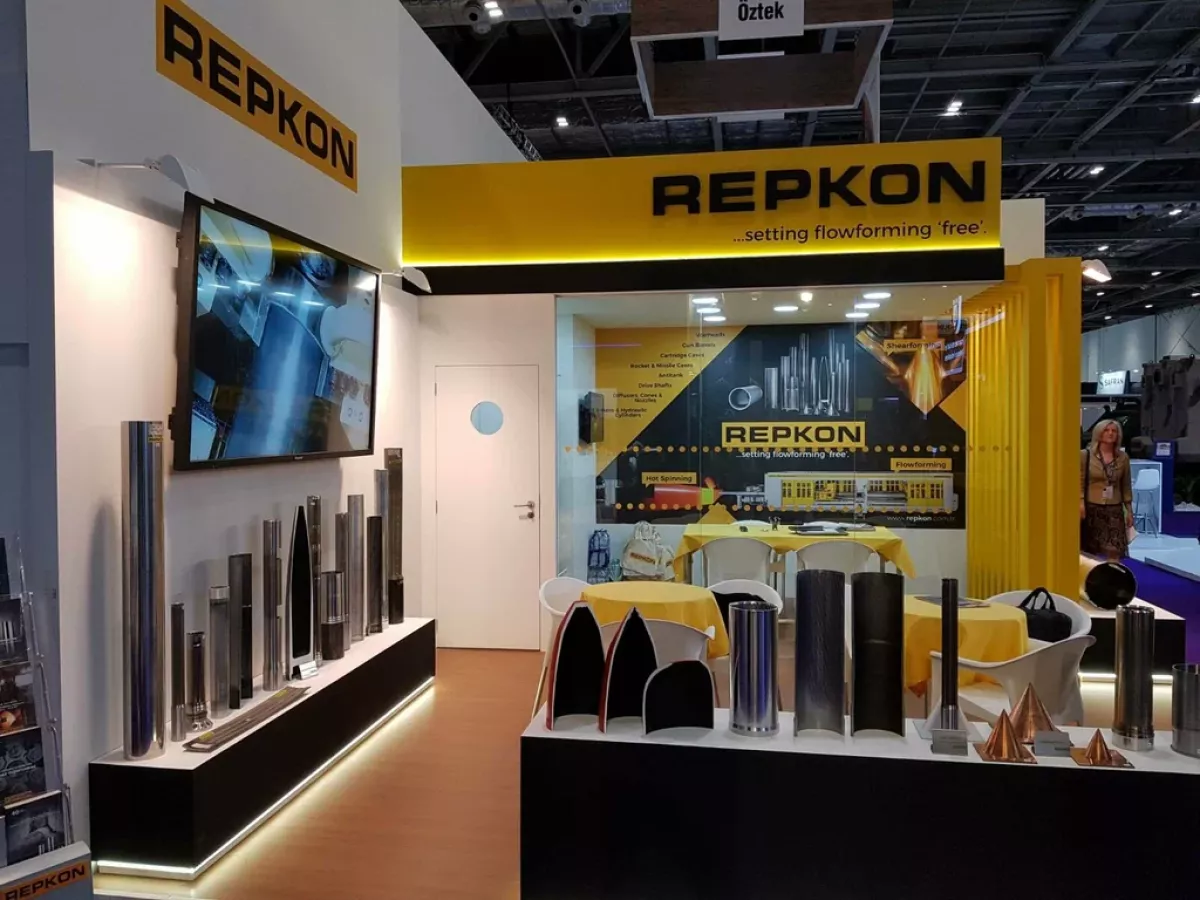
The U.S. decision to provide emergency military aid to Israel is, in itself, a topic worthy of separate analysis. What is far more interesting, however, is who actually manufactures these bombs. Repkon USA is the American subsidiary of the Turkish defence conglomerate Repkon. The headquarters of Repkon USA Holdings is located in Tampa, Florida; the company employs around 400 people and operates manufacturing facilities across several states.
In the spring of 2025, Repkon USA acquired a production complex in Garland from the American defence giant General Dynamics — a 38-acre facility north of Dallas, specialising in the manufacture of metal components for the defence and aerospace sectors. A key detail: the Garland plant is the only facility in the United States capable of producing MK-80 series bomb bodies, which form the basis for JDAM precision-guided kits, widely used by both the U.S. Air Force and the Israeli Air Force.
The March 2026 deal is by no means the first contract linking Repkon USA to Israeli military procurement. On February 28, 2025, the U.S. State Department approved an emergency weapons package for Israel worth $675.7 million, including 201 MK-83 bomb bodies, 4,799 BLU-110A/B bomb bodies, and 5,000 JDAM guidance kits. The main contractors were listed as Repkon USA and Boeing.
Meanwhile, in November 2024, Repkon USA secured a $435 million contract from the U.S. Army to build a TNT production plant in Graham, Kentucky — the first such facility in the United States in several decades. The company also won a contract to design and construct a production line for 155-millimetre artillery shell casings in Texarkana, Texas.
In other words, the Turkish defence industry is not merely present in the U.S. defence sector — it is systematically integrating into critical munitions production infrastructure, directly supplying not only the Pentagon but also Israel’s military apparatus.
It is worth recalling the chronology of Türkiye’s decisions. In May 2024, Türkiye announced a complete trade embargo on Israel. In November 2025, the Istanbul prosecutor’s office issued arrest warrants for 37 senior Israeli officials, including the prime minister and defence minister. Türkiye joined a South African lawsuit against Israel at the International Court of Justice, accusing it of genocide. Diplomatic relations were effectively severed, air travel was suspended, and Turkish ports were closed to Israeli vessels.
Against this backdrop — full diplomatic rupture, trade embargo, genocide accusations, and arrest warrants — a Turkish company, through its American subsidiary, has become a key manufacturer of bombs for Israel. And this is not about small shipments of components routed through intermediaries. This is a direct contract for the production of bomb bodies used by the Israeli Air Force to carry out strikes — including against Iran. Repkon USA is listed as the contractor in official U.S. State Department notifications. This is not a leak of classified documents, not a journalistic investigation, and not a conspiracy theory. This is openly available information on the U.S. government’s website.
Some Turkish media outlets and political circles, with remarkable regularity, point to Azerbaijan’s “impropriety” in maintaining ties with Israel. Baku is reproached for purchasing Israeli drones, which played a crucial role in liberating occupied territories in 2020. It is blamed for the continued export of oil. It is criticised for not joining the trade boycott.
The result is an intriguing contradiction. Azerbaijan, a sovereign state pursuing a pragmatic foreign policy and never concealing its partnership with Israel, faces moral pressure from a country whose defence conglomerate, through its American subsidiary, is a key contractor producing aerial bombs supplied to Israel under emergency shipments. At the same time, Azerbaijan has never hidden the nature of its relations with Tel Aviv or masked them behind the banner of a foreign subsidiary. Baku openly cooperates with Israel in defence, agriculture, technology, and space — and sees no conflict with its identity as a Muslim-majority country, because these ties are grounded in mutual national interests rather than ideological slogans.







 editor@caliber.az
 +994 55 444-88-98
 Азербайджан, Баку, ул. Низами, 203, Af Business House, 5-й этаж