










From drones to sabotage Iran’s terror scenario in Azerbaijan
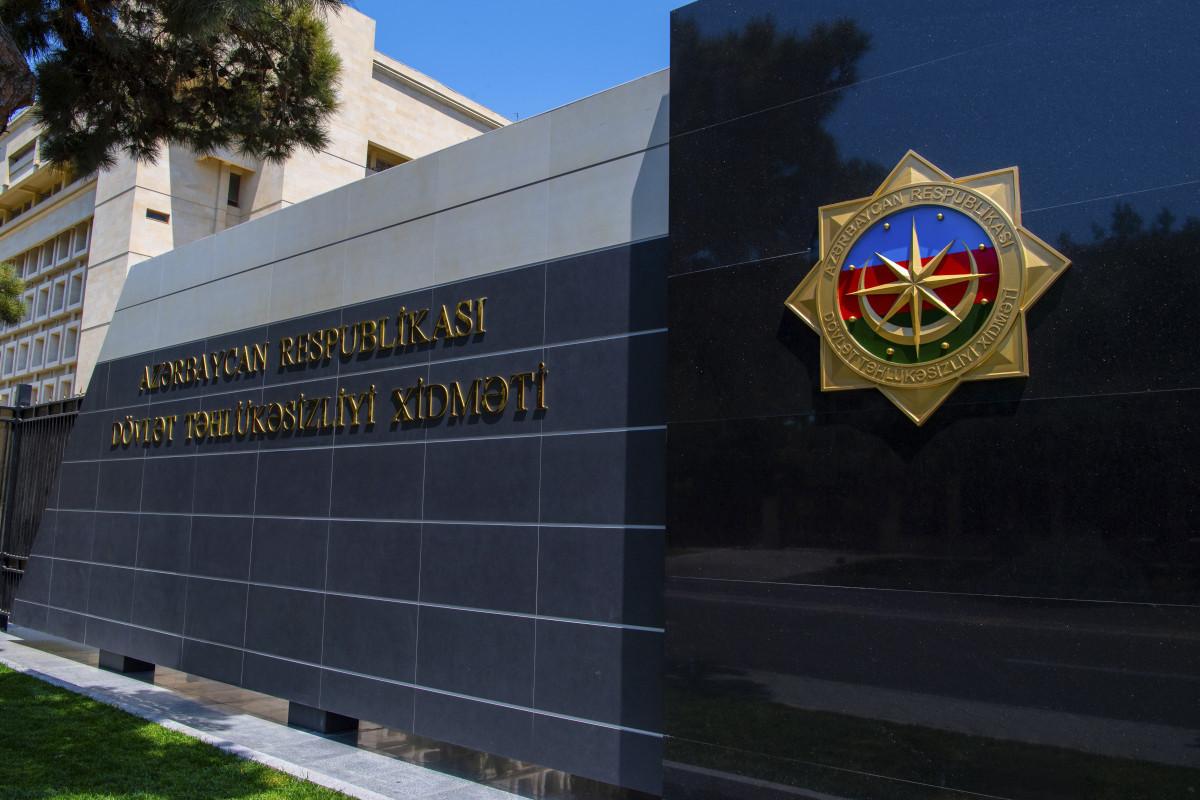
The statement issued by Azerbaijan’s State Security Service on March 6, 2026, is arguably the most detailed documented evidence in the history of Azerbaijani-Iranian relations showing that the Islamic Revolutionary Guard Corps (IRGC) deliberately and methodically prepared a series of terrorist attacks on the territory of a sovereign state. This involves the planning of an explosion on the Baku–Tbilisi–Ceyhan oil pipeline, an attack on the Israeli embassy in Baku, an assassination attempt on one of the leaders of the Mountain Jewish community, the bombing of an Ashkenazi synagogue, and the orchestration of a contract killing of a public figure. What we see is an extensive, meticulously developed special operation involving an intelligence network, smuggling channels, and the use of C-4 explosives.
The chronological coincidence of two events — the drone strike on Azerbaijani territory on March 5 and the disclosure of counterintelligence operation materials by the State Security Service (SSS) the following day — is, of course, no accident. If the drone attack demonstrated an overt military disregard for Azerbaijan’s sovereignty, the SSS revelations exposed the covert, creeping, sabotage-terrorist dimension of the same policy. Here it is — the true face of the clerical regime.
The scale and level of detail in the published materials are striking. The SSS did not limit itself to general statements. Specific names were mentioned: the organisation of the terrorist attacks involved an IRGC intelligence officer holding the rank of Colonel, Ali Asgar Bordbar Sheramini. International arrest warrants have been issued for Iranian citizens Yaser Rahim Zandkian, Behnam Sahibali Rustamzadeh, Hossein Savar Saber Azarundbileh, and Sajad Moghaddam Sati Sofi Evad. Furthermore, the recruitment scheme for Azerbaijani citizens was described, with precise addresses of caches, types and weights of explosives, and amounts of payments. Seven kilograms and 730 grams of C-4 plastic explosives, intended for demolishing targets, is clearly not a homemade garage bomb but a professional military sabotage device capable of destroying a section of the pipeline and triggering an international-scale ecological and economic catastrophe.
The choice of targets deserves a separate analysis. The Baku–Tbilisi–Ceyhan (BTC) pipeline is a crucial artery of European energy security, transporting Caspian oil to global markets while bypassing both Russian and Iranian territory. An attack on the BTC would have been an assault on the energy infrastructure of the entire region, a signal to investors about the instability of the transport corridor, and, importantly, an act of economic warfare against Türkiye, since the pipeline’s terminus is the Turkish port of Ceyhan. By selecting this pipeline as a target, the IRGC signalled its readiness to strike at the global energy architecture.
Even more striking is the antisemitic component of the planned attacks. The Israeli embassy, the Ashkenazi synagogue, and the leader of the Mountain Jewish community — these three targets are directly interconnected. They represent a direct projection of Iranian state ideology, in which the destruction of Israel and persecution of Jews is not metaphorical but a concrete programme of action. Azerbaijan, historically home to one of the most harmonious models of peaceful coexistence between Muslim and Jewish communities, in the eyes of the IRGC, becomes a hunting ground for Jews — just as it happened in Argentina in 1994, when Iranian agents bombed the AMIA Jewish cultural centre in Buenos Aires, killing 85 people. That operation, it should be recalled, was also organised by the IRGC with the involvement of the then-commander of the Quds Force — and more than thirty years later, the modus operandi has remained unchanged.
Attention is also drawn to how the Revolutionary Guards built their intelligence network inside Azerbaijan. The focus was on the criminal element — individuals already involved in drug smuggling and willing, for money, to carry out assignments of any kind. Iranian citizens played the role of coordinators, passing explosives through secret caches, while local operatives acted as couriers and custodians. This “terror without Iranian fingerprints” method, as characterised by Mossad in its October 2025 report on the IRGC’s global network, relies on maximum compartmentalisation: each participant knows only their own link in the chain, and direct contact with Tehran occurs through multiple intermediaries. This is precisely how the IRGC has operated in Greece, Australia, Germany, Senegal, and Uganda — wherever intelligence agencies have recorded the preparation of attacks on Jews and Israeli targets abroad.
The planned assassination of a public figure, as described in the SSS materials, is striking in its cold-bloodedness. IRGC coordinator Hafez Tavassoli contacted Azerbaijani citizen Narmina Shabanova, instructing her to conduct reconnaissance at the victim’s workplace: to photograph the building, the individual, and the access routes. Meanwhile, a foreign hired assassin was to arrive in Azerbaijan from a third country, whom Shabanova was responsible for meeting, accommodating in a hotel, and supplying with weapons and transportation.
When the “imported” killer became unavailable, a local operative, Naib Ismiyev, offered his services for 80,000 manats. He visited the public figure’s workplace, recorded video footage on his mobile phone to plan the crime and potential escape routes, and sent it to Narmina Shabanova, a member of the criminal group. They also agreed to search for and procure firearms and other means to commit the crime, thereby actively preparing the assassination attempt on the public figure.
What we see is a detailed scheme of a contract killing, organised by a foreign intelligence service on the territory of a sovereign state, involving both foreign and local operatives.
Azerbaijan responded with utmost precision and coordination. The SSS not only prevented the terrorist attacks but also conducted a multi-stage counterintelligence operation, including operational video surveillance, controlled delivery of explosives, and documentation of every link in the agent network. The perpetrators have been detained, and four Iranian citizens have been placed on the international wanted list. In doing so, Baku demonstrated that it will not allow itself to become the target or victim of Iranian terror.
All of this further confirms that the Islamic Revolutionary Guard Corps is a global terrorist corporation, and what occurred in Azerbaijan represents only one chapter in its extensive, bloody dossier.







 editor@caliber.az
 +994 55 444-88-98
 Азербайджан, Баку, ул. Низами, 203, Af Business House, 5-й этаж