










A quiet tone On Merz’s visit to Washington
This week, German Chancellor Friedrich Merz made a two-day trip to the United States. The visit was originally intended to focus on negotiations over trade disputes between the European Union and the U.S., as well as the war in Ukraine. However, in the days leading up to the meetings, the agenda naturally shifted: the Iran conflict came to the forefront.
Trump did most of the talking, commenting on international events and making blunt statements. Merz, meanwhile, opted for a highly restrained approach: during more than half an hour of press interaction, he spoke only briefly, allowing the American president to set the tone of the conversation. This caution appeared deliberate, considering that public disagreements with Trump often lead to diplomatic tensions. Yet it seems Merz may have overdone it, as Trump decided to rouse him with a friendly tap on the knee, accompanied by an equally friendly remark that the U.S. will hit Germany with tariffs.
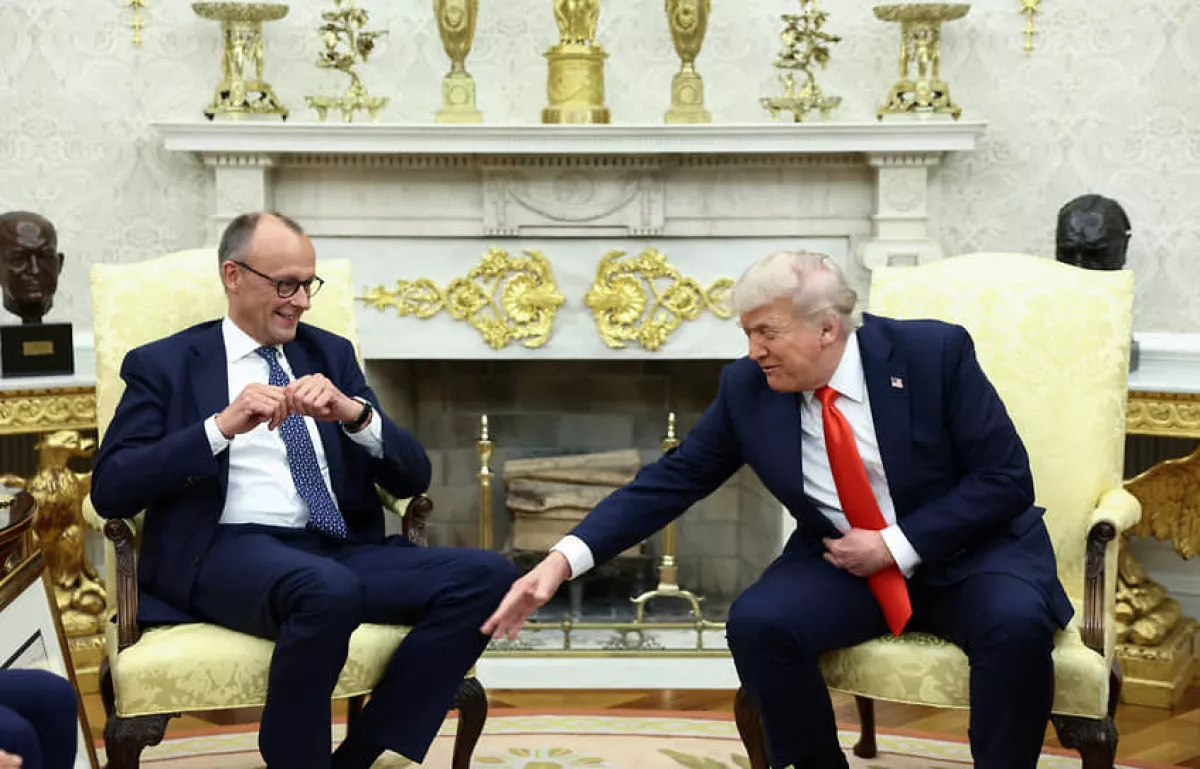
In other words, the atmosphere of the meeting was fairly cordial. Trump publicly praised Merz, calling him a successful and strong leader, though that did not stop him from taking jabs at other European politicians. In Merz’s presence, Trump sharply criticised Spain for refusing to allow the use of American bases on its territory for strikes against Iran and threatened to halt trade with Madrid, taking aim at Prime Minister Pedro Sánchez. British Prime Minister Keir Starmer also came under fire, with Trump remarking that he is “not Churchill.”
Following his previously mentioned strategy of avoiding public disputes with Trump, the German chancellor chose not to engage in a public argument at that moment. Later, Merz explained that this was intentional: he addressed contentious issues during the closed-door portion of the talks.
Nevertheless, this approach drew mixed reactions in Europe. For a politician aspiring to EU leadership, remaining silent while allies are criticised can appear to be a risky move.
Regarding the Iran issue, Germany effectively endorsed the strategic goals of the U.S. and Israel: Berlin views Iran as a destabilising factor in the Middle East, but has taken a cautious stance. By aligning with Washington’s overall position, Merz signalled that Germany does not intend to participate directly in military actions. Trump, in turn, emphasised that the U.S. is not demanding German troop deployments.
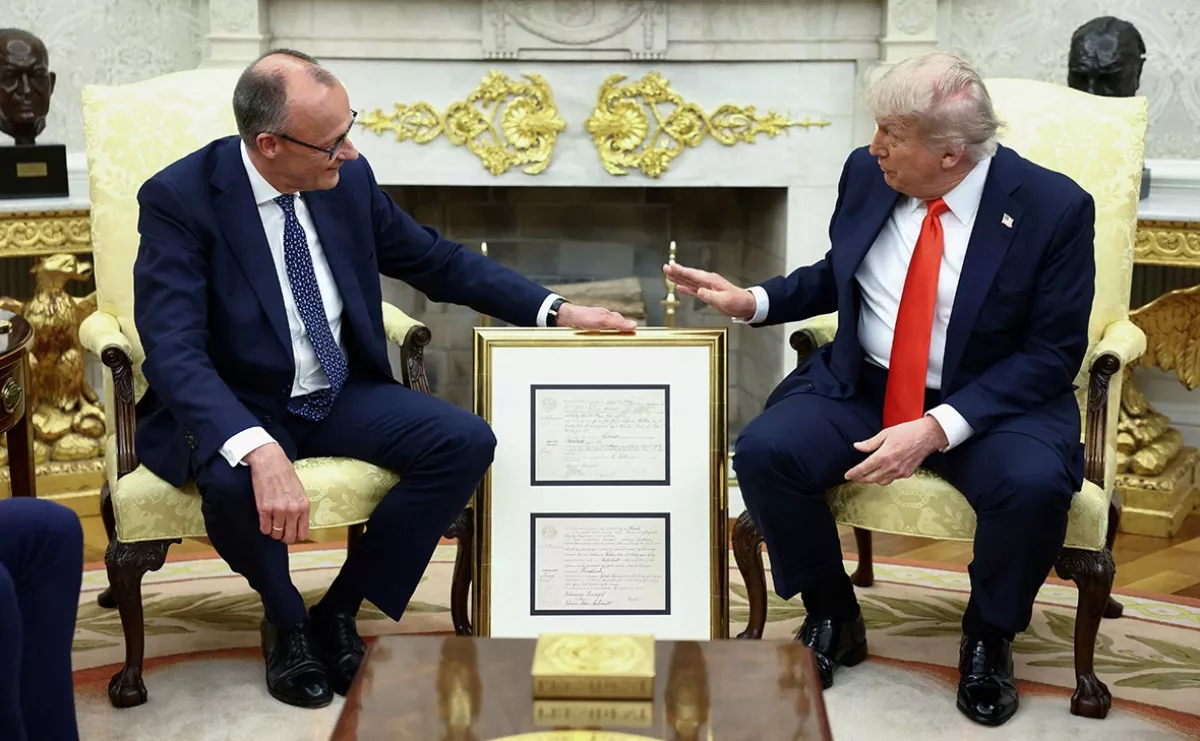
The trade agenda, which had largely motivated the visit, was overshadowed by the Middle East crisis, but it was still addressed. Merz pointed out that while Europe has a surplus in goods trade, the situation is reversed in services — the EU is heavily dependent on American companies. This came across as a cautious signal of potential countermeasures from Brussels. As a symbolic gesture, the chancellor presented Trump with a copy of the first trade treaty between Prussia and the U.S. from 1785, recalling the long history of economic relations. Merz’s approach seems to have paid off, as he later told the German press that the previously agreed tariff levels between the U.S. and EU — around 10% — will remain in place, with no further increases expected.
The war in Ukraine was also discussed, though without any notable breakthroughs. Merz once again emphasised that any potential peace agreement must take Europe’s and Kyiv’s positions into account.
Overall, Merz’s visit confirmed the new realities of Western politics. The chancellor relied on cautious diplomacy and sought to maintain working relations with the White House. However, it remains unclear what concrete outcomes were achieved. Sometimes, though, the process itself can be as important as the results.







 editor@caliber.az
 +994 55 444-88-98
 Азербайджан, Баку, ул. Низами, 203, Af Business House, 5-й этаж