










Beijing’s strategy: staying away from wars Analysis by Serhey Bohdan
Recently, Beijing denied rumours about its negotiations with Iran regarding arms supplies. There are reasons to believe them. Beijing is carefully avoiding attempts to drag it into conflicts far from its borders. An example of this is its essentially neutral policy toward the Russia–Ukraine war, as well as its cool attitude toward the expansion of organisations it created, such as the Shanghai Cooperation Organisation (SCO). Beijing lets others fight while it focuses on its own “peaceful rise.”
But it doesn’t stop there. If you look closely, the Chinese generally keep a distance from many global issues. Solidarity with other countries and alliances occupy a modest place in China’s foreign policy. While this approach is understandable in the case of countries opposing the West, is it equally justified in other cases? After all, China will not be able to move into more prominent global positions without actively building its international alliances and partnerships, which do not necessarily have to be directed against the West.
Model airplanes instead of fighters
In recent weeks, rumours have been circulating that Iran was supposedly about to strike a deal with China to purchase CM-302 supersonic anti-ship missiles. These rumours were even spread by Reuters, though in such vague wording that it was immediately clear the story was flimsy—but the rumours were telling nonetheless. Opponents of the West have for years speculated about China’s imminent involvement in various global conflicts, searching for any sign of its support to countries opposing the West.
Earlier, the radical Iranian opposition noticed that during the anniversary celebration of the Islamic Revolution, a Chinese military attaché presented the commander of Iran’s Air Force with a model of a Chinese aircraft. Media outlets then reported that Tehran was about to purchase Chinese fighter jets!
Stories like these are regularly circulated, and each time their authors are met with disappointment. Beijing continues its “peaceful rise” policy, counting on the idea that simply continuing its peaceful development will naturally elevate it to global leadership. In some ways, this mirrors the path by which the United States rose to the position of world hegemon: distancing itself from major European—and later global—conflicts, entering only at the last, most convenient moment.
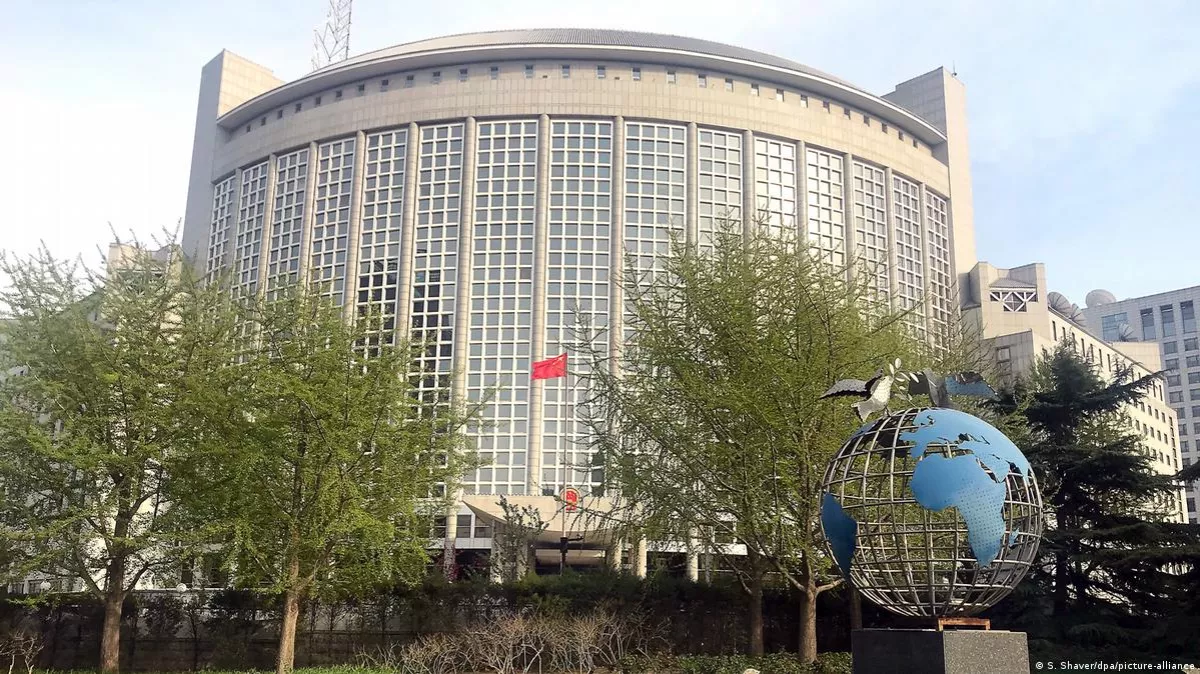
Recently, China’s Ministry of Foreign Affairs even explicitly denied rumours of a missile deal with Iran, which was quite notable since the rumours themselves were based on nothing substantial. After the 2025 U.S.–Israel conflict with Iran, there was much speculation about Beijing “quietly ramping up” some military supplies to Tehran. So far, however, there is no evidence suggesting that China has reconsidered its 2005 decision to halt arms shipments to Iran.
Of course, there are many claims about alleged secret deliveries or transfers of dual-use goods and technologies, but that is a separate matter and could occur even without the Chinese government’s consent.
In reality, we do not see any new Chinese weapons on the Iranian side. New Russian equipment, however, is immediately noticeable—EW systems, Mi-28NE, Yak-130, etc. As early as November 2023, Iran’s Deputy Defence Minister Mahdi Farahi announced contracts for the delivery not only of the Mi-28NE and Yak-130 (which, as we see, have since appeared in Iran) but also of the Su-35S. Moscow did not deny this, and it is likely that Tehran will also receive the Su-35.
The contrast between Russia and China in this regard is more than curious, especially against the backdrop of the good relations between Russia and Israel. There is, however, a theory that China is assisting Iran with satellite imagery—but it is difficult to prove.
For example, the images that the Chinese readily publish after Iranian attacks on U.S. targets serve Beijing at least as much as they serve Tehran. In this way, China exerts pressure on the United States and tries to show the world that the U.S. is not as invulnerable as previously thought. Surely, without Chinese imagery, the U.S. would have been able to conceal many of its losses, but by releasing visual evidence, Beijing has disrupted a long-established tactic used by the U.S. and its allies to obscure their losses.
China’s latest warning
Of course, after the start of the war, China and Russia convened an urgent UN Security Council meeting over the strikes on Iran. A few days later, China called on the U.S. and Israel to immediately cease the war with Iran and even condemned them. In other words, in terms of political action, nothing particularly significant was undertaken.
In this sense, U.S. Secretary of Defense Pete Hegseth was correct when he said that Russia and China “are not really a factor here.” He also emphasised: “And our issue is not with them, it’s with the nuclear ambitions of Iran.”
Essentially, China does not hide its stance of distancing itself from the war, believing its own strength to be sufficient.
On March 4, the People’s Liberation Army (PLA) published five brief conclusions from its analysis of the U.S. and Israel’s war against Iran. They essentially proclaim China’s self-sufficiency and reliance on basic material power, while also emphasising the need for vigilance—if not outright paranoia. These conclusions, so to speak, are not entirely logically airtight. Here are a few key points:
1) PLA: “The deadliest threat is the enemy within.”
In reality, even espionage and terrorist acts inside Iran—or, for example, the activation of Kurdish separatists—have not led and are unlikely to lead to a system collapse, largely due to Iran’s rejection of rigid control (unlike China) and its reliance on the autonomy of government branches and security forces. In the end, China’s own similar reliance on decentralised authority has often given its adversaries a pretext for intervention—the situation with the Uyghurs being one example.
2) PLA: “The most costly miscalculation is blind faith in peace.”
On one hand, this sounds unconvincing against the backdrop of China’s steadfast adherence to the principles of “peaceful rise” and “peaceful reunification.” On the other hand, if one does not believe in peace as an absolute imperative of ethical policy, how then do we differ from the cannibalistic superpowers of the most barbaric imperialist eras? And how did those superpowers end up?
3) PLA: “The harshest reality is the logic of superior firepower.”
This reflects a reliance on raw force—a strategy that has repeatedly proven ineffective. The Americans vastly outgunned the Vietnamese and Afghans in past wars, the French overpowered Algerian mujahideen, and the USSR outmatched the Afghan armed opposition, and so on. Yet none of this prevented defeat, because ultimately the human factor determines the outcome.
4) “Absolute confidence is self-sufficiency.”
This appears to be the key to understanding Chinese behaviour in recent years. China sees no need for alliances, even in a modern, globalised world, despite the fact that even the largest superpower cannot conduct a successful foreign policy without allies.
What is striking is what is missing here, though not long ago it was part of Chinese policy: references to solidarity and justice. What remains are principles of cynical and short-sighted Machiavellianism, a medieval philosophy of power meant for rulers of small, primitive principalities. You cannot build a global superpower on such principles. Mao Zedong, by the way, understood this perfectly and called for alliances “with the peoples of the world.”
Do China and Iran have shared interests?
China’s current distancing from the new war is hardly surprising. Some analysts have noted that the consequences of the ongoing war against Iran will also impact China, pointing out that on March 5, China already demanded its refineries halt the export of petroleum products and began reviewing certain contracts to avoid domestic shortages.
Additionally, the Middle East holds an important place in China’s “Belt and Road” initiative. However, a closer look reveals that, despite the obvious implications, its significance is somewhat overstated. Iran is the one effectively controlling the maritime routes of the Belt and Road by blocking the Strait of Hormuz, and although it allows that Russian and Chinese vessels may pass, this is unrealistic.
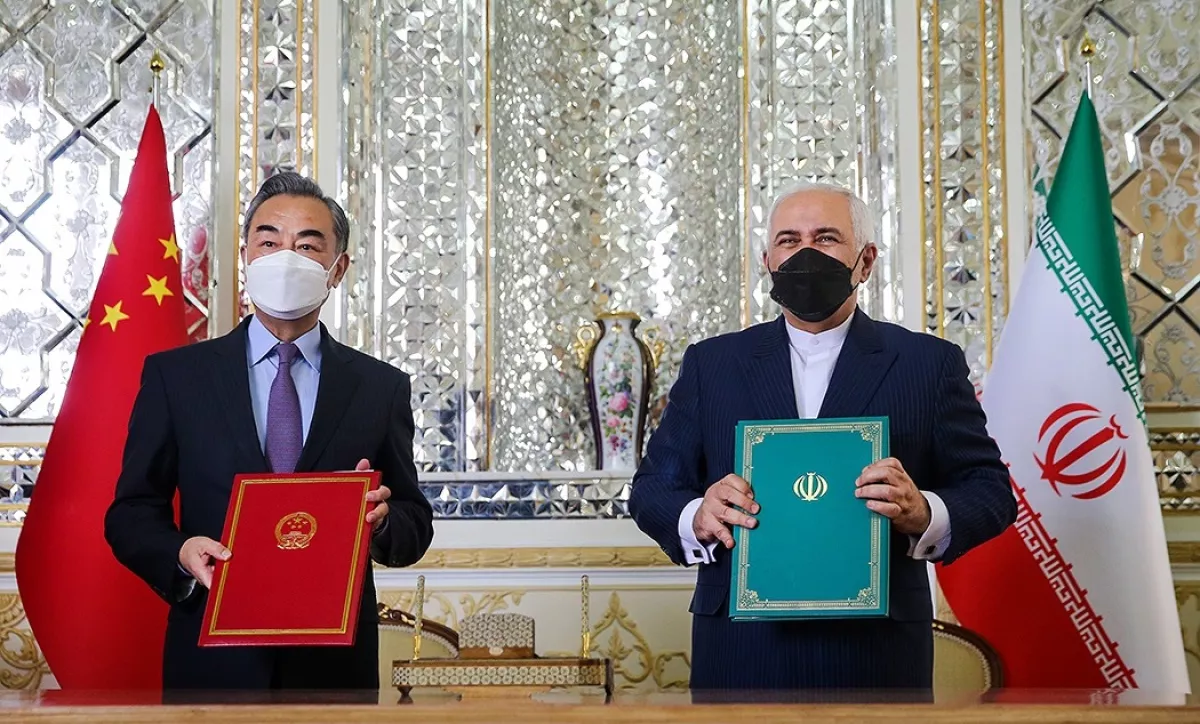
Furthermore, China’s main allies in the region are Saudi Arabia and Pakistan, not Iran. Despite the twenty-five-year Comprehensive Strategic Partnership signed in 2021, Beijing maintains much deeper relations with Islamabad and Riyadh.
Yes, in recent times, almost all of Iran’s exported oil went to China, but the largest supplier of oil to China has nevertheless been Saudi Arabia.
Anticipating a worsening crisis, China even began reducing its imports of Iranian oil this year. Iran’s supply can easily be replaced by five Arab countries in the Persian Gulf, which sent 1.4 billion barrels to China in 2025, compared to only 520 million from Iran.
In other words, based on the logic of the current situation, there is no alignment of interests between China and Iran. It becomes clear why Beijing is not rushing to get closer to Tehran. In the theoretical world of Western analysts and anti-Western activists, China and Iran are supposed to act together because both are driven by anti-Western ideology. In reality, however, their ideologies are fundamentally different, and anti-Western sentiment is often conditional. In fact, modern countries are frequently driven by anything but ideology.
Incidentally, Beijing is not only cautious about moving closer to Tehran. It has similarly maintained—and in some areas even increased—its distance from Russia following the start of the Russia–Ukraine war. Trade between the two countries has indeed grown due to Western sanctions on Russia. Yet Chinese investment has sharply declined: foreign direct investment from China to Russia fell from $500 billion to $220 billion in just three years of war. Moreover, since the beginning of the invasion of Ukraine, new large-scale Chinese investment projects in Russia have been minimal—some years saw none at all, while in others there were only a few projects, compared to a pre-war period when there could be a dozen or more.
Chinese banks also quickly scaled back operations involving Russia at the first signs of potential Western sanctions. For example, smaller banks began arbitrarily and unsystematically rejecting payments from Russia without explanation. Restrictions were even applied to Chinese partners of Russian businesses. Similarly, in the early 2020s, China not only limited Iranian business but even closed accounts of Iranian citizens to avoid problems with the U.S.
Even less can be accused of China in terms of military supplies: everything attributed to them so far involves dual-use goods or possible smuggling schemes by private individuals. A few years ago, China responded clearly to such accusations, with Chinese banks beginning to block payments from Russian counterparties for microelectronics components that could be used in drone assembly.
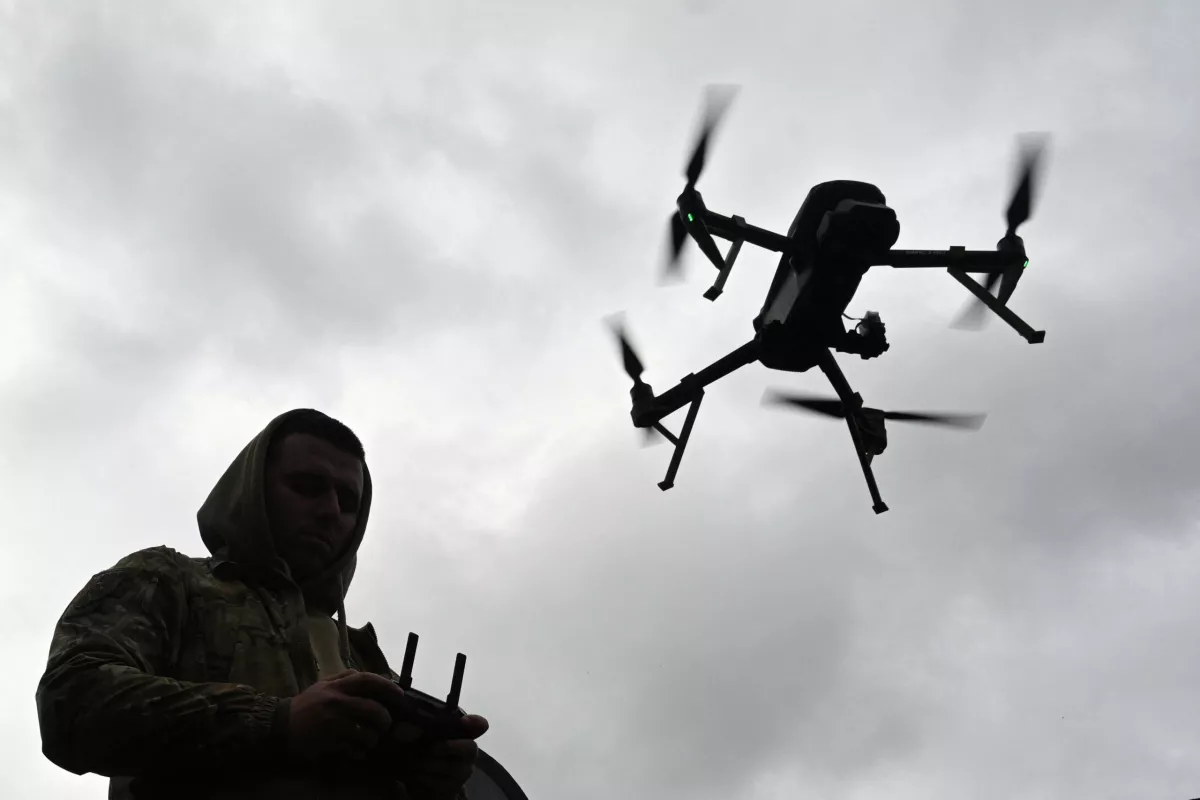
In any case, it is enough to look at the weaponry on the Russia–Ukraine war front: Chinese drones are present on both sides, but no other Chinese military equipment is with the Russians. By contrast, Iranian equipment appeared in large numbers on the front during the first year of the war, drawing attention from many observers, including in the West.
Interestingly, immediately after this (what a coincidence!), a “mass spontaneous movement” for women’s rights—“Woman, Life, Freedom”—erupted in Iran. This raises questions about the nature of modern uprisings, protests, and opposition movements.
The SCO of limited purpose
China’s caution with Russia and Iran is understandable: Beijing wants to develop by trading with the collective West, gaining investments and technology, while drawing closer to anti-Western opponents could interfere with this.
What is striking, however, is China’s rather cool attitude toward any kind of alliances—even those not involving states that challenge the West. China consistently maintains partnerships with key neighbours like Pakistan, but the history of the Shanghai Cooperation Organisation (SCO), created on China’s initiative, demonstrates Beijing’s extremely cautious approach to building alliances. It has not rushed its expansion: in a quarter-century, only four countries have been admitted. And it has been even slower in granting it real political functions. The so-called “Chinese NATO” exists only in the theoretical frameworks of Western analysts; in practice, it cannot be compared—not even with the Western prototype, let alone Russia’s “NATO” (i.e., the CSTO).
This may seem strange, given the constant talk of a Chinese “web” encircling the world. Yet, in light of these stark facts, reread the conclusions of the Chinese military’s analysis of the current war to understand that distancing itself from international conflicts and relying minimally—or even effectively not at all—on alliances is one of the core principles of Chinese policy.
Such a cautious stance by Beijing, however, has not secured it a favourable attitude from the collective West, which constantly suspects the Chinese of forming some kind of sinister axes and blocs. While China’s refusal to move closer to certain anti-Western actors logically follows from its goal of maintaining conflict-free interaction with the West, its policy on alliances and cooperation with other states appears more questionable.
Perhaps Beijing’s bet—that by avoiding involvement in international conflicts, China will inevitably become a global leader in the near future—might succeed. But even in that case, and even for such a powerful country, more active international engagement with other states is necessary. For now, in the absence of this, speaking of serious prospects for China taking the mantle of global leadership seems somewhat premature.







 editor@caliber.az
 +994 55 444-88-98
 Азербайджан, Баку, ул. Низами, 203, Af Business House, 5-й этаж