










How the shadow migration industry operates 21st-century slavery
The latest figures on modern slavery in Europe are shocking, forcing a completely new perspective on the migrant issue.
The slave market of the EU
Today, wars, famine, persecution, and countless other crises are forcing more and more people to leave their homes and seek refuge in countries of wealth and stability. Yet this tragic phenomenon has a side that is often ignored — neither right-wing populists, who stir hatred against “newcomers,” nor their liberal defenders address it.
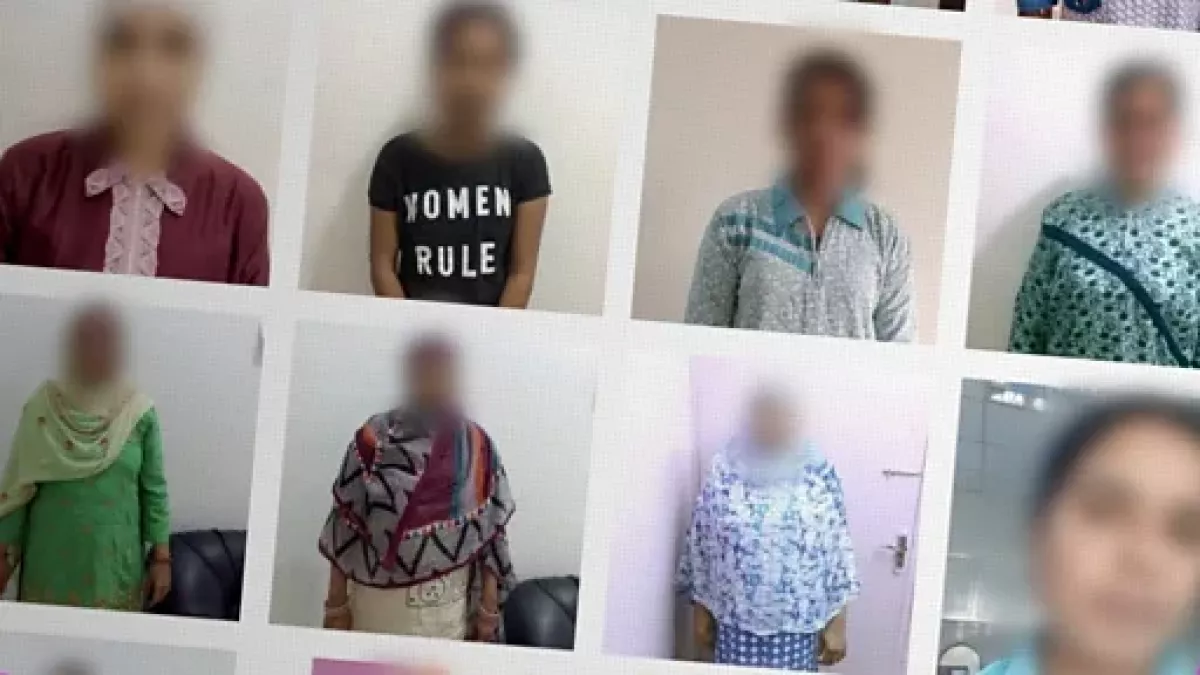
In reality, illegal migrants primarily represent an illegal business, a source of profit for far too many. Their exploitation involves a wide range of actors — from organised crime networks to legitimate companies and even state agencies. It all begins with the smugglers — the traffickers of human cargo. By paying them for passage to Europe and entrusting their lives, and sometimes the lives of their families and children, refugees from Africa or the Middle East immediately lose any legitimate status — and with it, their lawful rights and freedoms.
Do the refugees themselves think about this? Of course not. Behind them lies an even greater horror — often the threat of outright physical extermination. But in the so-called “blessed” EU, migrants frequently encounter anything but a paradise. In effect, they face the same jungles, interspersed with modern-day slave plantations.
In her investigative book, Barbie Latza Nadeau exposes shocking figures and facts about modern slavery. According to the American journalist, 70% of illegal migrants arriving from Africa become involved in forced labour under the control of organised crime, including the sex industry. Alarmingly, one-third of new European slaves are children and teenagers. Over the past five years, there has been a significant rise in modern slavery in Western countries.
Human trafficking — a profitable business
It is no coincidence that the subtitle of Nadeau’s study is “Human Trafficking: The Shadow Economy.” In recent years, human trafficking has become the fastest-growing criminal enterprise. Wars across all continents of the Eastern Hemisphere — now including Europe itself — have greatly fueled the expansion of this criminal industry.
The tentacles of the global slavery network stretch from Thailand to Eastern Europe, spanning from the Mediterranean to the North Sea. Yet this system is not composed solely of smugglers, mafia groups, and pimps; it also involves banks, prestigious fashion houses, and members of governments. Without the industrial-scale, systematic trafficking of humans, horrifying phenomena of our time — such as Epstein’s Island — would not be possible.
The specialisation of modern human traffickers goes far beyond the sex industry — it also includes domestic servitude and the trafficking of human organs. And this problem is not limited to Africa or Asia; it affects the enlightened, supposedly exemplary nations of Western Europe as well. In fact, the rate of human trafficking in Europe and Central Asia — 6.9 modern slaves per 1,000 people — is higher than in Africa, where the figure is 5.2 per 1,000.
While drug trafficking receives considerable attention in the media, human trafficking is far less reported — likely in part due to the EU’s desire to maintain a positive image.
It is clear that the organisers of sexual exploitation for the elite have long enjoyed powerful protectors. At the very least, the reporting and measures taken to address human trafficking clearly do not match the scale of this tragic phenomenon.

The scope of human trafficking is staggering: it is the second most profitable criminal business in the world, after drug trafficking. Traffickers generate around €150 billion per year, with tens of millions of people passing through their hands. Every 30 seconds, someone in the world becomes a new slave.
At the top of the list is sexual exploitation — including street prostitution and forced sexual services provided by women and men to wealthy VIP clients. In Italy, a Nigerian woman illegally brought into the country can “owe” her trafficker up to $30,000, which she repays through prostitution, working 12–14 hours a day and earning $5–$25 per client. Services involving minors cost three times as much.
According to the European Parliament, up to 16,000 migrants may be on the streets of Europe at any given time offering sexual services, mostly from Sub-Saharan Africa. The International Labour Organization (ILO) estimates that $99 billion of the $150 billion generated by modern slavery comes specifically from the sex industry.
Regional variations exist. In France, sexual exploitation accounted for over 80% of human trafficking victims in 2023. Of those forced into prostitution, 50% were young French women, typically from disadvantaged neighbourhoods and families; 13% were Chinese women, and 11% came from Eastern Europe.
In Germany, 40% of identified victims of sexual exploitation were citizens of Germany, Bulgaria, Romania, Thailand, Hungary, China, and Vietnam.
In Eastern Europe, forced sexual services account for 80% of all trafficking victims, while in Central and Southeastern Europe, the figure is around 50%.
The second category is labour trafficking. Labour exploitation predominates in Asia but is also widespread in Europe. For example, in southern Italy, there are factories where women are paid below the minimum wage to sew branded clothing. In the Italian agricultural sector, illegal migrant labour is particularly prevalent — in some years, “illegals” could make up up to 90% of workers. 68% of these plantation workers are from Nigeria, with women comprising up to 80%, though the number of men is increasing.
In Germany, the main countries of origin for victims of labour exploitation are Ukraine, Romania, Georgia, Bosnia and Herzegovina, Bulgaria, Slovakia, Moldova, and Lithuania.
According to the Group of Experts on Action against Trafficking in Human Beings (GRETA), the trend of labour exploitation has intensified in recent years. In Italy, for instance, the share of labour exploitation rose from 10% in 2018 to 38% of trafficking victims in 2022.
Today’s victims are forced not only into labour but also into drug distribution and other criminal activities, begging, domestic servitude, and forced marriages.
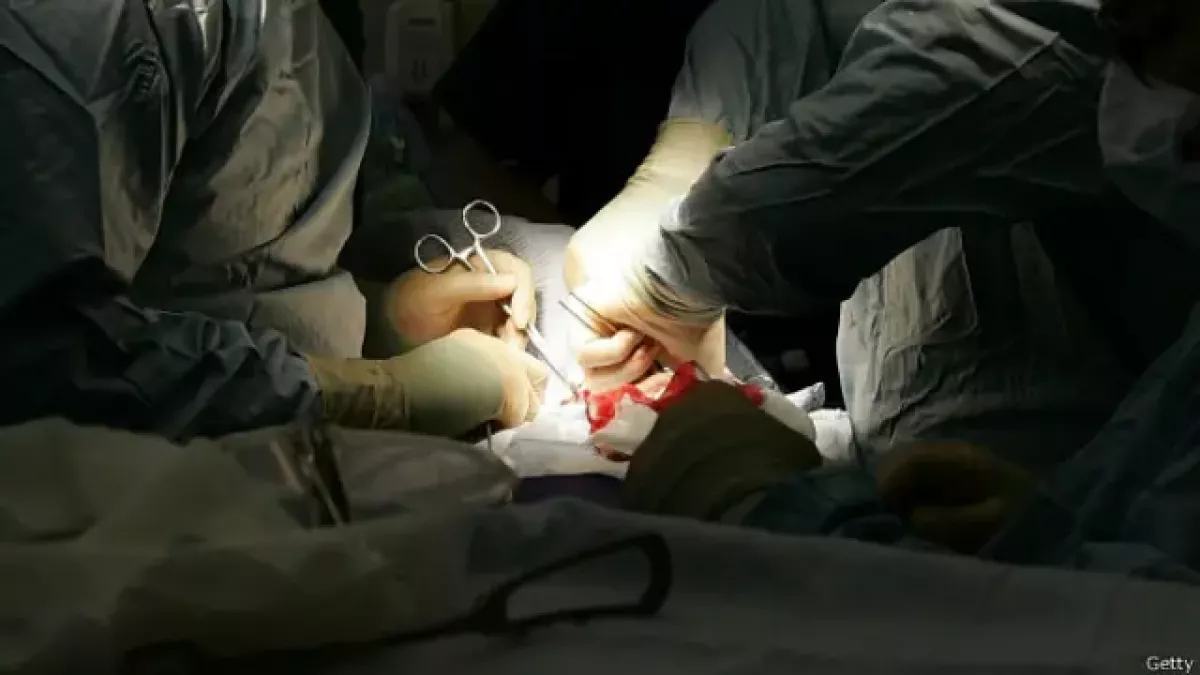
Another aspect of this criminal business is black-market organ trafficking. Often, the harvested human organs are transported along with their donors. These are unaware victims, deceived or coerced into one of the most inhumane forms of “live commodity” trade.
Referring to data from the International Red Cross, Barbie Latza Nadeau writes: “Organ trafficking takes place in the largest public and private hospitals in London and Los Angeles, as well as on battlefields — from Ukraine to Syria.”
It is notable that the slavery rate in Europe and Central Asia — 6.9 per 1,000 people — is higher than in Africa (5.2 per 1,000).
A global army of slaves
Despite the official concern of EU authorities about human trafficking, in practice, responses often remain largely symbolic. Meanwhile, human trafficking continues to thrive, generating profits not only for its organisers but also for officials and law enforcement. At the same time, modern slaves often struggle to find protection. According to GRETA, trafficking victims in Italy are still prosecuted for various illegal acts, even when these were committed under coercion or deception. Many victims also fear seeking help from authorities due to threats of punishment, deportation, or confinement in supervised shelters.
There is also a rapid digitalisation of human trafficking. The internet is increasingly used not only to lure and recruit victims but also to monitor and exert control over them. Individuals invited for high-paying IT jobs in certain Asian countries can ultimately find themselves in forced labour in fraudulent call centres.
At the same time, in recent years there has been a significant decline in global efforts to combat human trafficking. This is attributed to factors such as the war in Ukraine, rising international tensions, the diversion of resources to fight global climate change, and other priorities. It can also be argued that the use of cheap slave labour has become a tool of competitive advantage amid the global crisis of the modern economic system.
According to the 2025 report by the UN Global Commission on Modern Slavery and Human Trafficking, around 50 million men and women are currently enslaved — and their numbers continue to grow. Experts acknowledge that modern human trafficking has several deep-rooted causes, without addressing which it cannot be eradicated.
First, poverty generated by the contemporary model of neoliberal capitalism.
Second, the tight integration of forced labour into the global economy, which sustains and profits from it.

"We cannot view modern slavery and human trafficking in isolation from the broader global context," says Nasreen Sheikh, founder of the anti-slavery organisation Empowerment Collective and a survivor of modern slavery herself.
Third, wars and global climate change are creating millions of refugees today. In the near future, the number of people seeking to escape the horrors of conflict and other disasters may increase significantly — unless the leaders of certain influential Western countries reconsider their priorities and take action.







 editor@caliber.az
 +994 55 444-88-98
 Азербайджан, Баку, ул. Низами, 203, Af Business House, 5-й этаж