










Baku–Tbilisi: Unity on the security of regional communications An article by Vladimir Tskhvediani
Following the Iranian drone attack on Nakhchivan, Georgia was among the first countries to express unequivocal support for Azerbaijan. On March 5, Georgian Prime Minister Irakli Kobakhidze called Azerbaijani President Ilham Aliyev.

“Irakli Kobakhidze expressed solidarity with Ilham Aliyev and wished a speedy recovery to the citizens injured as a result of the incident. The sides emphasised the strategic partnership between the two countries, their close political relations, and the particular importance of maintaining peace and stability in the region,” the official statement from the Georgian government administration said.
President Ilham Aliyev thanked Irakli Kobakhidze for the phone call and for the position he had expressed. During the conversation, the parties exchanged views on the prospects for bilateral cooperation between Azerbaijan and Georgia, as well as on issues of mutual interest.
It is difficult to find two neighbouring countries in the world that are more economically and logistically interconnected than Azerbaijan and Georgia. All transit along the Middle Corridor—thanks to which Georgia’s economy is currently growing and developing—passes through Azerbaijan. Energy resources from Azerbaijan are also transported via Georgian territory in transit to Türkiye and further on to European countries. Any strike against Azerbaijan is, in effect, equivalent to a strike against Georgia and its interests.
Georgia was also deeply alarmed by the information released by Azerbaijan’s State Security Service about the foiling of preparations for terrorist attacks and sabotage, in which the Baku–Tbilisi–Ceyhan oil pipeline was listed among the potential targets.
The Baku–Tbilisi–Ceyhan pipeline was the first large-scale project designed to transport energy resources from Azerbaijan westward through the territory of Georgia. Sabotage against this pipeline could have been intended to cast doubt on the reliability and security of energy supplies delivered via Azerbaijan and Georgia.
It should also not be forgotten that, due to the military hostilities in the Persian Gulf region, maritime shipments of oil and liquefied gas—particularly through the Strait of Hormuz—have come under threat. Military risks affecting sea routes and export terminals are currently driving up global oil and gas prices. Amid a potential reduction in oil and gas supplies from the Persian Gulf, the importance of overland energy transportation routes is increasing sharply.
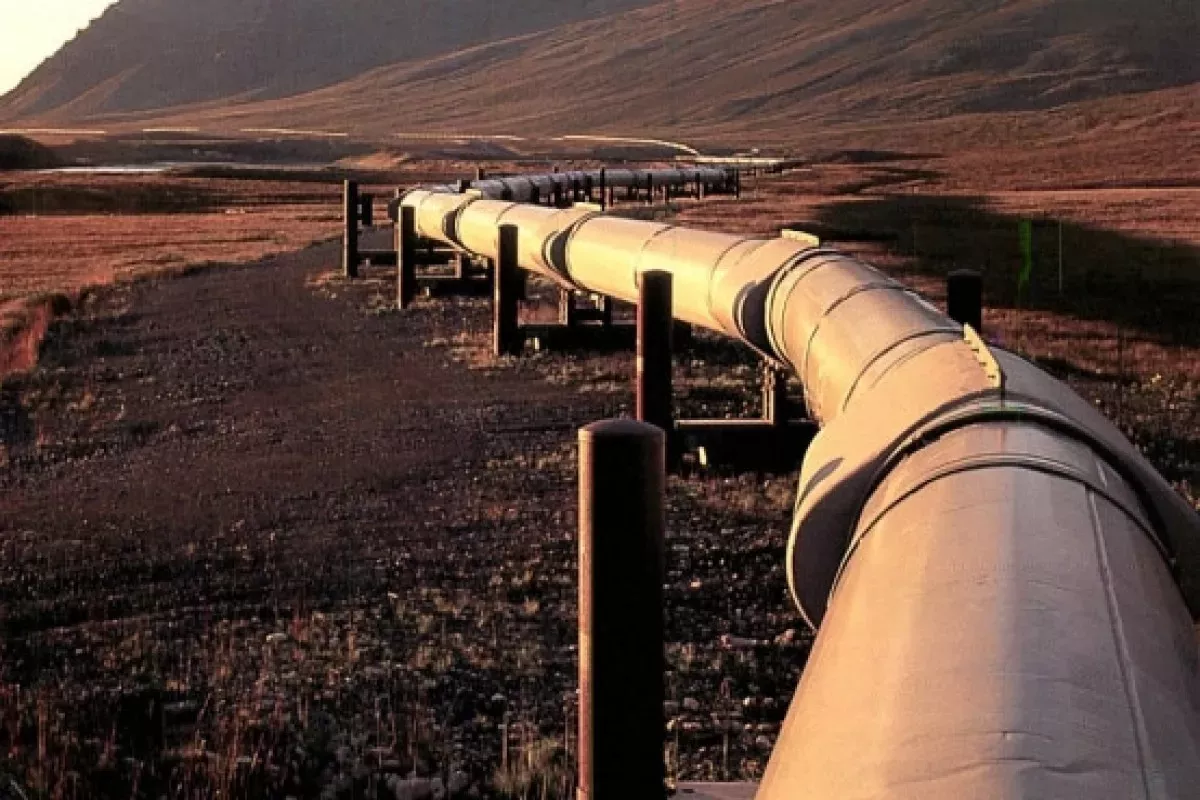
The Baku–Tbilisi–Ceyhan oil pipeline and the Southern Gas Corridor, both passing through Georgia, have acquired exceptional importance for Europe’s energy security. It cannot be ruled out that certain forces that previously opposed peace and stability in the South Caucasus may be tempted to deliberately create problems along these routes.
The escalation of military threats linked to the confrontation between the United States and Israel on one side and Iran on the other has become a reality for the Middle East and the broader region. The zone of military risk surrounding Iran is expanding. For the Georgian authorities, it is now crucial to prevent this instability from spreading to their country. In this regard, Georgia coordinates its actions with Azerbaijan and Türkiye, as the interests of all three countries fully align when it comes to ensuring a peaceful and stable South Caucasus with secure communications. Tbilisi also attaches great importance to Azerbaijan’s position, which unequivocally recognises Georgia’s territorial integrity and supports its swift restoration.
By Vladimir Tskhvediani, Georgia, exclusively for Caliber.Az







 editor@caliber.az
 +994 55 444-88-98
 Азербайджан, Баку, ул. Низами, 203, Af Business House, 5-й этаж