










Fight for Georgia: US and Russia prepare for decisive round Article by Vladimir Tskhvediani
As the United States expands its presence in the South Caucasus, effectively “pushing” Russia out of the region, the struggle for Georgia between Washington and Moscow is becoming virtually inevitable, and its outcome will be highly significant. Historically, Georgia was where the Kremlin launched its “neo-imperial” policy by supporting separatism and “biting off” the territories of others, a policy that ultimately led to the current war in Ukraine. Georgia could very well be where this process concludes. Either Moscow will find the will to reconsider its already proven disastrous policy of violating the territorial integrity of its neighbours and begin building mutually beneficial relations with Tbilisi, taking into account Georgia’s strategic importance, or it will be completely geopolitically “pushed back” beyond the Caucasus Mountains and, in the long term, risk losing its influence in Central Asia as well.
Meanwhile, for the United States, Georgia is highly attractive as a key country along the Middle Corridor, providing access deep into Asia. In fact, Washington has already begun cooperating with Georgia on the development of transit infrastructure, despite ongoing “by inertia” criticisms of the Georgian authorities from Brussels.
For example, the American industrial conglomerate Honeywell International will handle the design and licensing of oil refining facilities in the Georgian Black Sea town of Kulevi. The agreement was signed with Black Sea Petroleum (BSP), the company implementing Georgia’s first oil refinery project in Kulevi.
The announcement of the Honeywell agreement came amid media reports of potential EU restrictions on the port of Kulevi under a new sanctions package against Russia, reportedly targeting vessels of Russia’s “shadow fleet” transporting oil to the port. According to Bloomberg, Italy and Hungary—whose governments are considered major supporters of US President Donald Trump in the EU—oppose this proposal.
Honeywell is an American industrial and technology conglomerate operating in aerospace, industrial automation, and digital solutions. It is clear that an agreement on the port of Kulevi would hardly have been signed without the “blessing” of US President Donald Trump’s administration.
Georgia’s Foreign Minister Maka Botchorishvili recently also spoke about the positive signals in the new US administration’s policy toward Georgia. According to her, the year-long silence from the State Department indicates a different stance from the Trump administration compared to the clearly unfriendly approach of the previous administration (Joe Biden).
“That silence was, in its own way, a change of position. You will recall that before President Trump entered the White House, not a single day passed without Georgia featuring in some form on the previous administration’s agenda. There have probably been few subjects anywhere that generated as many hearings as Georgia did. Nevertheless, the fact remains that the so-called MEGOBARI Act was not passed, and I am quite certain it would not have been blocked if the State Department had not taken a stance against that policy.
As for what the new framework will look like, that, of course, requires work. It requires collaboration. And on our part, there is complete and unconditional readiness: whenever the United States considers it appropriate to build a new framework for relations with Georgia, we will be there to do exactly that,” the minister said.
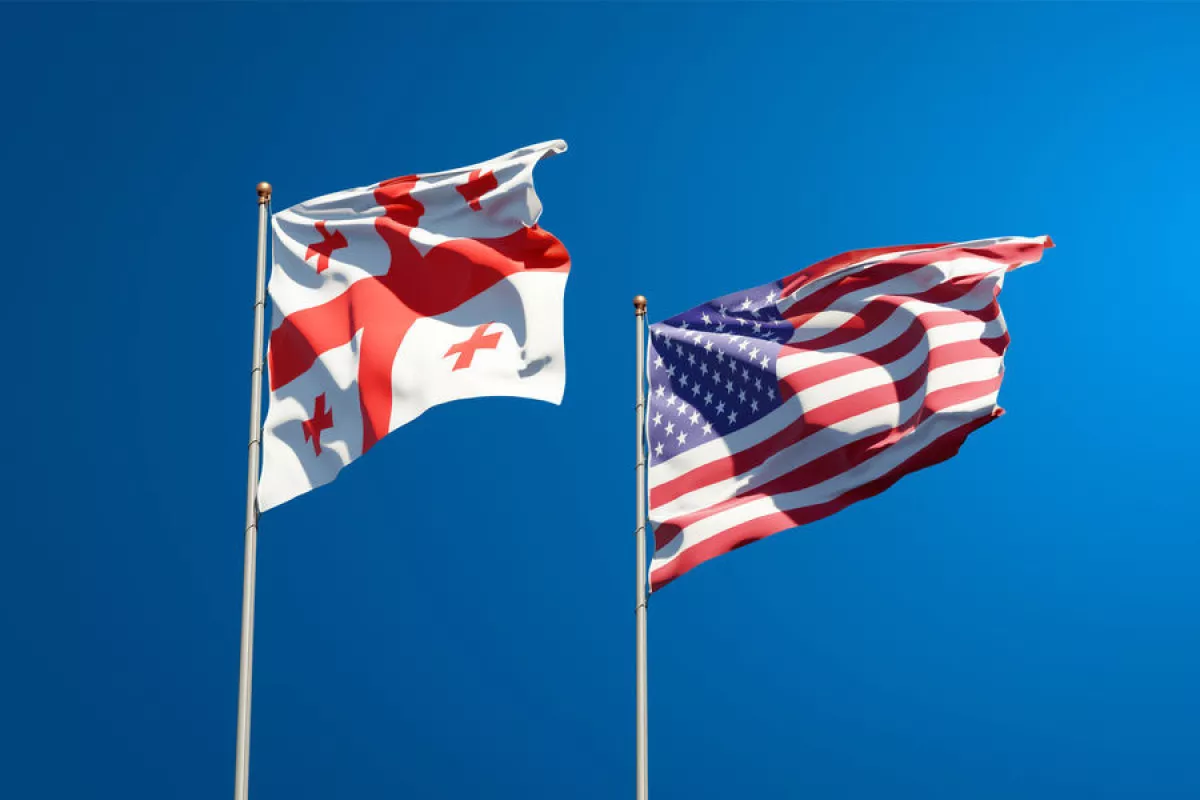
The restoration of a full strategic partnership between Washington and Tbilisi could happen very soon. This is quite natural, given Georgia’s “integration” into the so-called “Trump Route,” as already stated by US officials.
At the same time, Russia appears to be increasingly viewing Georgia as its “last chance” to maintain influence over strategically important communications in the South Caucasus. From Moscow, calls for restoring diplomatic relations are growing more frequent and insistent. On February 15, 2026, Russian Deputy Foreign Minister Mikhail Galuzin made a series of complimentary statements regarding Georgia, recalling their “spiritual unity.”
“Our ties are natural, not artificially imposed by Russia, as the West tries to portray. They are based on spiritual unity and centuries-old historical and cultural bonds… We see that the current Georgian authorities are striving to restore sovereignty to their country. They are dissatisfied with a situation in which Georgia’s domestic policy is difficult to distinguish from the EU’s foreign policy. We understand Tbilisi’s attempts to end external dictates, as well as its steps to protect Georgian identity,” said Mikhail Galuzin.
The Russian deputy foreign minister also addressed trade relations between Russia and Georgia, as well as the tourism sector.
“In 2025, trade turnover reached a record $2.7 billion. Two-thirds of Georgian wine exports, more than half of its spirits, 40% of mineral water, and 90% of fruit go to our market. Russia, in turn, is a leading supplier of wheat and oil to Georgia. The situation is similar in Georgia’s key tourism industry: almost one in four tourists comes from our country,” the Russian diplomat said.
Mikhail Galuzin described the absence of diplomatic relations between the two countries as inconsistent with the current trade dynamics and suggested that Tbilisi should “consider” what results could be achieved if diplomatic relations with Moscow were restored.
Just four days later, on 19 February 2026, Galuzin clarified what Russia actually wants from Georgia, stating that “the question of possible railway connections between Russia, Abkhazia, and Georgia needs to be discussed.”
“You know the specifics of relations between the ‘Republic of Abkhazia’ and Georgia, and the specifics of Georgia’s relations with Russia. Therefore, if there is mutual interest, a dialogue must be held,” Galuzin said, again referring to the puppet separatist entity on occupied Georgian territory as an “independent state.”
However, Tbilisi has already made it clear to Moscow that there can be no discussions about restoring diplomatic relations or railway transit without the restoration of Georgia’s territorial integrity. Moscow now faces urgent decisions on this matter.
The Russian Deputy Foreign Minister also addressed trade relations between Russia and Georgia, as well as the tourism sector.
“In 2025, trade turnover reached a record $2.7 billion. Two-thirds of Georgian wine exports, more than half of its spirits, 40% of mineral water, and 90% of fruit go to our market. Russia, in turn, is a leading supplier of wheat and oil to Georgia. The situation is similar in Georgia’s key tourism industry: almost one in four tourists comes from our country,” the Russian diplomat said.
Mikhail Galuzin described the absence of diplomatic relations between the two countries as inconsistent with the current trade dynamics and suggested that Tbilisi should “consider” what results could be achieved if diplomatic relations with Moscow were restored.
Just four days later, on February 19, 2026, Galuzin clarified what Russia actually wants from Georgia, stating that “the question of possible railway connections between Russia, Abkhazia, and Georgia needs to be discussed.”
“You know the specifics of relations between the ‘Republic of Abkhazia’ and Georgia, and the specifics of Georgia’s relations with Russia. Therefore, if there is mutual interest, a dialogue must be held,” Galuzin said, again referring to the puppet separatist entity on occupied Georgian territory as an “independent state.”
However, Tbilisi has already made it clear to Moscow that there can be no discussions about restoring diplomatic relations or railway transit without the restoration of Georgia’s territorial integrity. Moscow now faces urgent decisions on this matter.
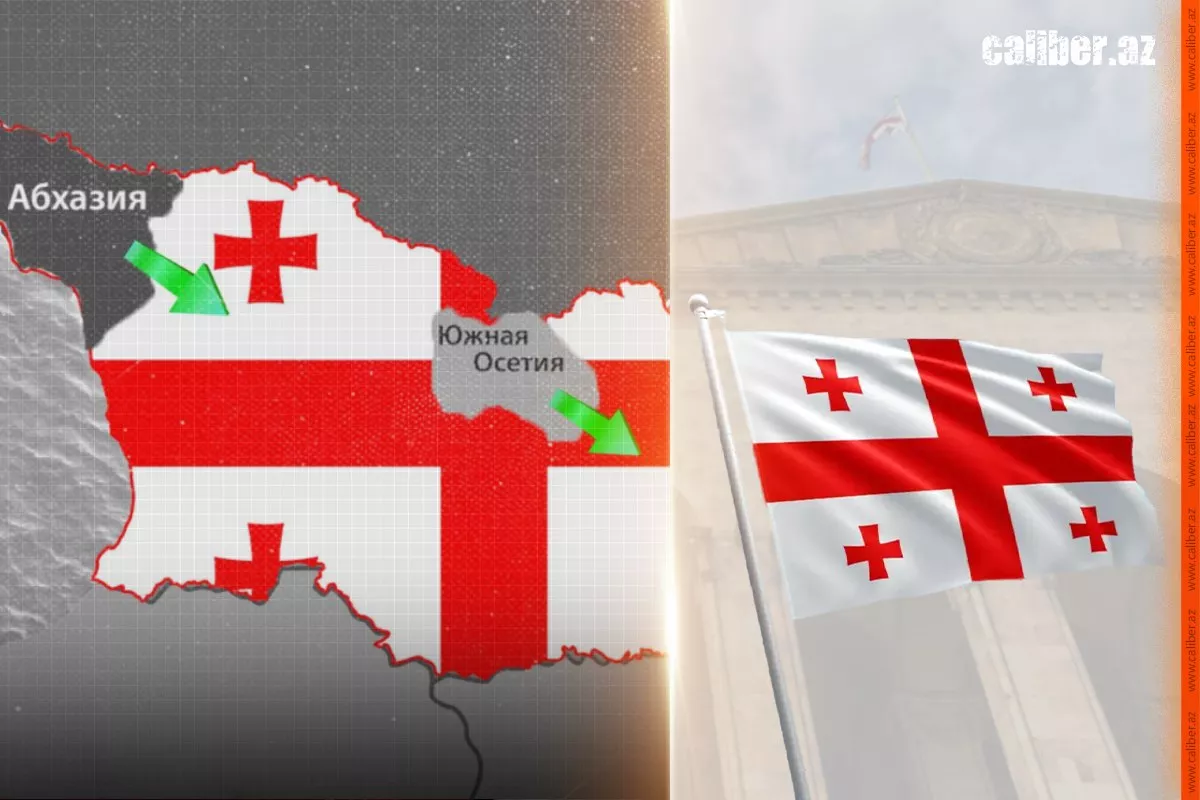
Moscow is being pressured by the prospect of its complete geopolitical displacement from the South Caucasus by Washington. In addition, Russia faces the threat of losing its investments in Armenia’s railway infrastructure in the very near future. Over nearly 20 years, Russian investment in the Armenian railway system has exceeded 30 billion rubles, as reminded by Russian Security Council Secretary Sergei Shoigu, who sharply criticised Armenian Prime Minister Nikol Pashinyan’s proposal to transfer the concession for managing the railways to another country.
“And now [Prime Minister of Armenia] Nikol Pashinyan says that having Armenia’s railways under concession to a Russian company scares off potential partners, hinders regional projects, and is considering transferring the management of Armenia’s railway network to a country friendly to both Russia and Armenia,” Shoigu noted.
Today, in order to “save” its positions in Armenia and maintain influence over transit through the South Caucasus, Russia continues to frantically spend funds and resources. On the Sukhumi–Ochamchira section in occupied Abkhazia, Russian railway workers are actively conducting repair work, restoring the railway. Moscow clearly hopes to “negotiate” with Tbilisi on railway connections through Abkhazia, but unless the issue of de-occupation of Abkhazia is fundamentally resolved, all these efforts will be in vain.
It would be naive to think that Washington will calmly watch Russia attempt to restore its influence in Georgia and the South Caucasus—especially without real de-occupation of Georgian territories, as Moscow desires. When attention was drawn to the visit of US Vice President J.D. Vance to Azerbaijan and Armenia, and the media speculated about why he did not visit Georgia, there was, in fact, an important communication taking place between Tbilisi and Washington. From February 7–10, 2026, at the invitation of the US side, the head of Georgia’s State Security Service, Mamuka Mdinaradze, visited the United States. This is another indication that, without unnecessary media noise, interaction between the White House and Georgian authorities is already underway.
By Vladimir Tskhvediani, Georgia, exclusively for Caliber.Az







 editor@caliber.az
 +994 55 444-88-98
 Азербайджан, Баку, ул. Низами, 203, Af Business House, 5-й этаж