










Frozen trust Switzerland as a hub of anti-Azerbaijani propaganda
Azerbaijan’s victory in the 2020 Patriotic War and the full restoration of its sovereignty in September 2023 became a kind of litmus test, revealing the true attitude of various countries and communities toward our state. Among those that have failed to digest the triumph of justice and Azerbaijan’s strength is Alpine Switzerland.
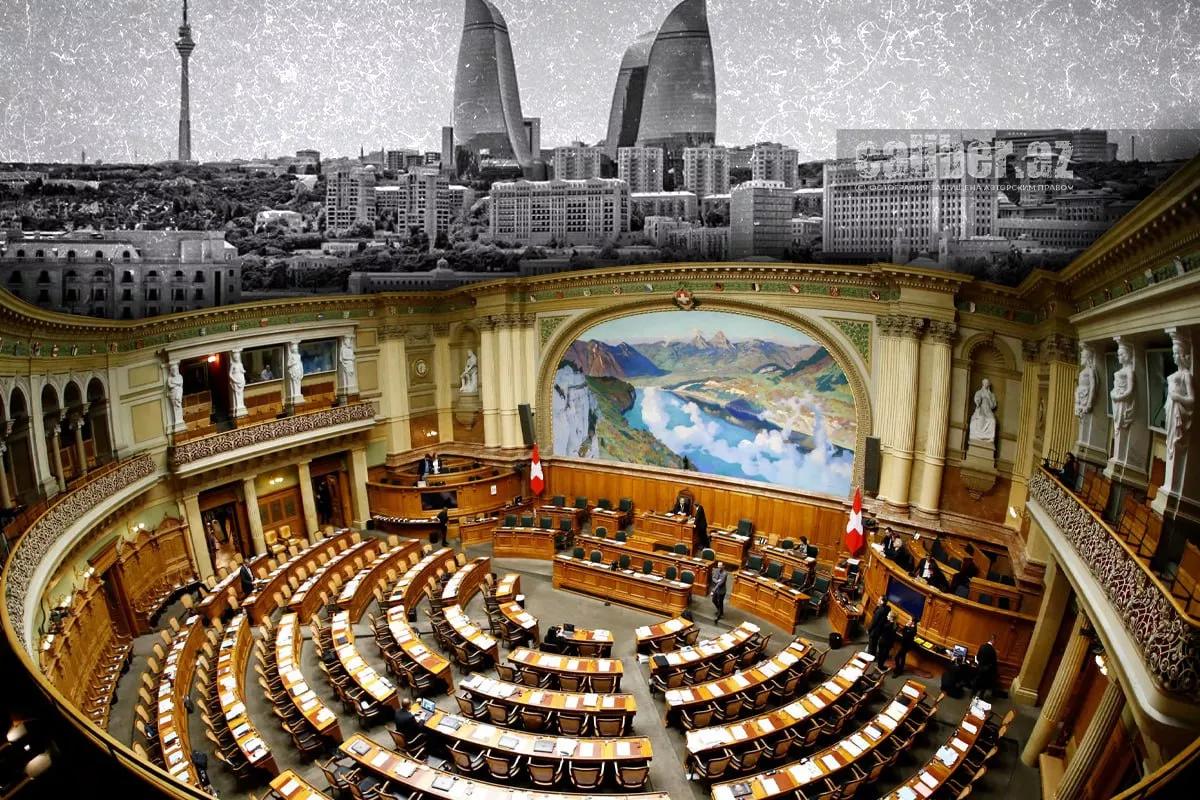
The nest of anti-Azerbaijani policy in this country has become its bicameral parliament. Among the hostile actions taken by this body, special mention should be made of the “Swiss Peace Initiative for Nagorno-Karabakh,” established in spring 2025 and approved by a majority in both chambers. The initiative calls on the Swiss authorities to “create a separate platform for dialogue between representatives of ‘Nagorno-Karabakh’ and Azerbaijan.” “The aim of this initiative is to ensure the safe, collective and dignified return of the forcibly displaced Armenian population to their historical homeland,” the document states.
On May 26, 2025, a cross-party commission composed of 19 members of parliament began its work to facilitate the implementation of this initiative.
As the official Baku has repeatedly stated, Armenians left the Karabakh region voluntarily. Despite Azerbaijan’s proposal of an integration programme, representatives of the Armenian population of Karabakh refused even to discuss it and subsequently persuaded the Armenians to leave the territory of Azerbaijan. Moreover, as has also been emphasised in Baku at various levels, the return of Armenians to Azerbaijan’s Karabakh region is possible only on the basis of the principle of reciprocity — that is, on condition that hundreds of thousands of Azerbaijani refugees and their descendants return to Armenia, from where they were forcibly deported in the late 1980s. Finally, the Armenian government itself, fully aware of all the above factors, has removed the issue of the return of Karabakh Armenians from its agenda.
Under these circumstances, the activities of Swiss parliamentarians amount to nothing more than an attempt to reinvigorate revanchist forces in Armenia. As one of the commission’s leaders, the well-known Turkophobe Stefan Müller-Altermatt, stated: “It’s probably best not to harbor too many illusions about Azerbaijan’s intentions. Ilham Aliyev is not interested in peace.” This was said about a country and a leader who were the first to put forward a peace initiative, offering the defeated occupier five principles for a peace settlement based on mutual recognition of sovereignty and territorial integrity — and notably without including demands for contributions or reparations, which would have been entirely appropriate in such circumstances.
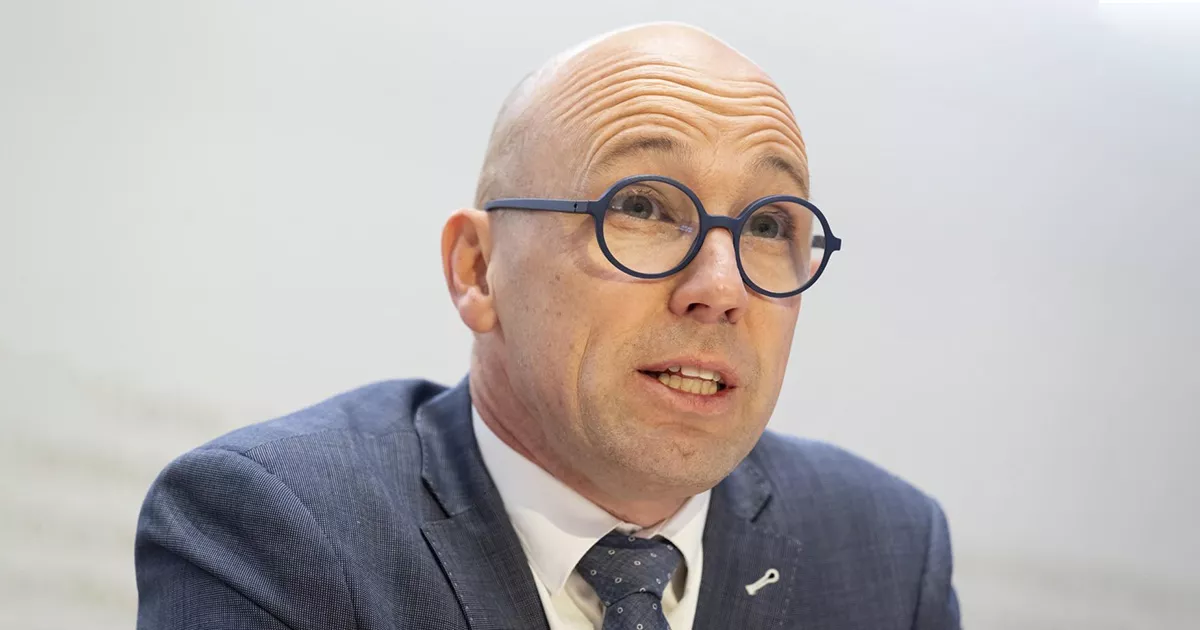
Quite recently, Altrematt, together with another parliamentarian, Erich Vontobel, and Christian human rights activist John Eibner, visited the office of the self-proclaimed regime in Yerevan, where they met with the “acting president” of the abolished pseudo-entity, Danielyan.
It is perfectly clear that these steps are aimed at denying the new realities established after the 44-day war and the 2023 counter-terrorist operation, as well as at creating obstacles to a peaceful settlement. A fair question arises – why does a significant part of the Swiss political establishment feel the need to obstruct the peace that the Armenian government itself seeks?
Among the reasons for the bias of Swiss politicians against Azerbaijan, several key factors can be highlighted. First, there is the traditional influence of the Armenian lobby (including financial aspects), which still operates in the context of hostility toward Türkiye and Azerbaijan and shows little willingness to take the realities on the ground into account.
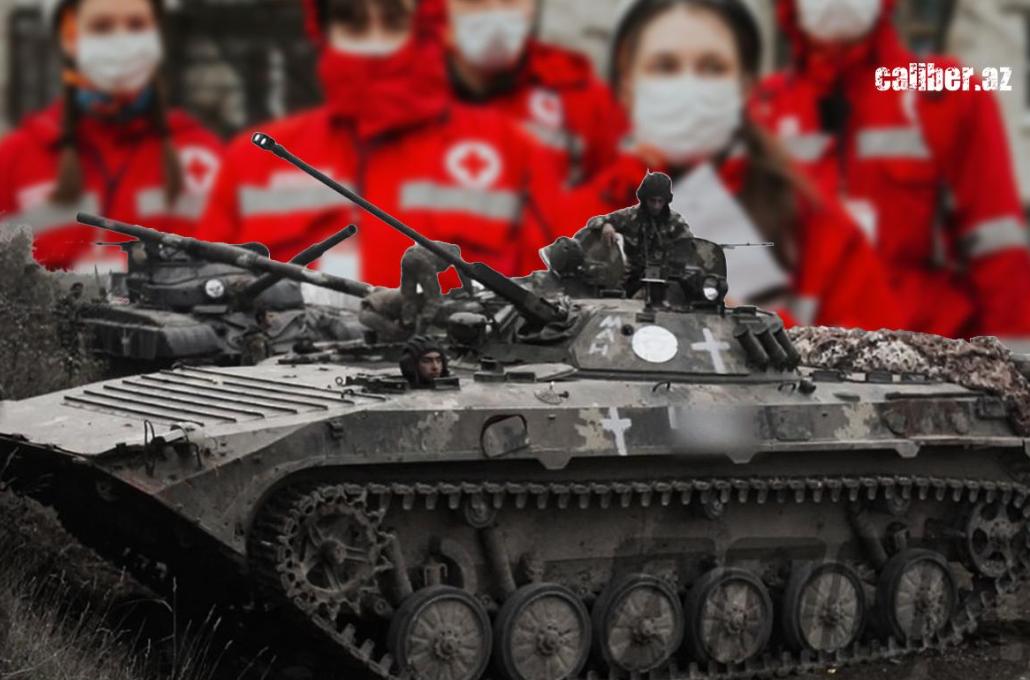
Second, there is the historical Islamophobia and Turkophobia prevalent among the elites in this part of Europe. It can also be suggested that Switzerland is, in a way, “taking revenge” for the expulsion from Azerbaijan of the International Committee of the Red Cross, which had discredited itself in the country by betraying the principles of neutrality — an institution that Switzerland considers part of its national brand.
Another interesting nuance emerges. It is particularly noteworthy that the positions voiced by the working group established in the Swiss parliament practically mirror the narratives of Russian propaganda. For example, Stefan Müller-Altermatt stated: “Ultimately, peace between Armenia and Azerbaijan can only be achieved through external pressure on Azerbaijan,” citing as factors such pressure along the Azerbaijan–Russia track, as well as the war between Israel and Iran. By comparison, one can easily recognise the theses of Russian propagandists regarding Azerbaijan’s supposed inevitable punishment by Russia and the claim that the Armenian-Azerbaijani conflict is far from over. It cannot be ruled out that, in this instance, the interests of Moscow and Bern have coincided.
However, all the above-mentioned elements of anti-Azerbaijani policy are merely feeble gestures compared with Baku’s confident stride on the global stage. Increasingly, more countries are choosing to establish equal, respectful, trusting, and even strategic relations with Azerbaijan. This is not simply a matter of pragmatism or so-called realpolitik. The restoration of Azerbaijan’s territorial integrity and sovereignty was carried out fully in accordance with international law — the very norms that European elites claim to uphold so fervently in times of turbulence.
A reassessment of previously destructive approaches toward Azerbaijan is an objective process. The Trump administration acknowledged the flaws in Biden’s biased course and signed a Strategic Partnership Charter with Baku. The government of Merz refrains from the “qualifications” that the Scholz team allowed. Even Paris, confronted with firm resistance from Baku, has somewhat slowed its course and now speaks of the need for a reset. It remains to be expected that, soon, the cantons themselves will begin to discuss a similar change in direction.







 editor@caliber.az
 +994 55 444-88-98
 Азербайджан, Баку, ул. Низами, 203, Af Business House, 5-й этаж