










Agony of the clerics and Baku’s resolve President Aliyev dots the “İ”
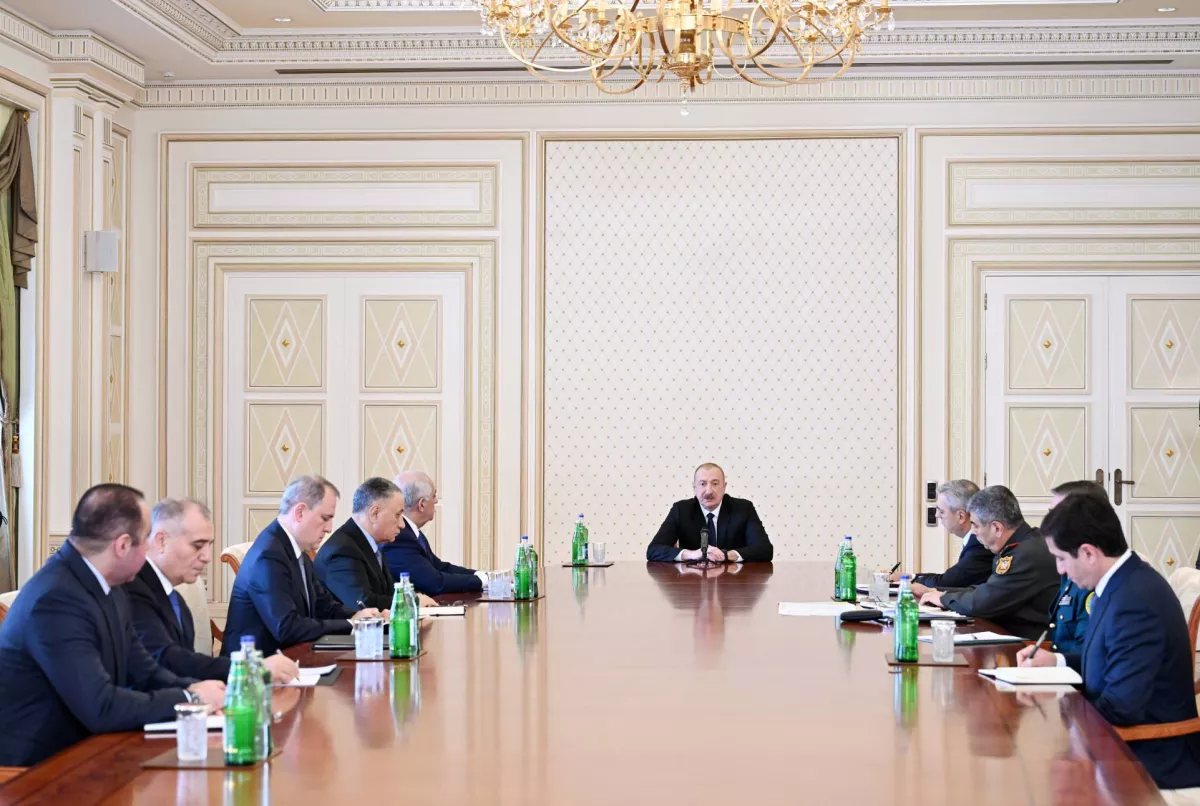
On March 5, Iranian attack drones struck the territory of the Nakhchivan Autonomous Republic of Azerbaijan, hitting the airport terminal and crashing near a school in the village of Shakarabad. Four civilians were injured. The strike targeted the civilian infrastructure of a sovereign state that has no involvement in the war between Iran and the US-Israel coalition. Baku’s response was swift and uncompromising — President Ilham Aliyev convened an emergency meeting of the Security Council.
First and foremost, the head of the Azerbaijani state unequivocally characterised the incident: “Today, a terrorist act was committed by Iran against the territory of Azerbaijan and the state of Azerbaijan. The territory of the Nakhchivan Autonomous Republic came under fire from unmanned aerial vehicles launched by the Iranian state.” Aliyev did not resort to diplomatic euphemisms, calling things by their proper name — emphasising that “the targets of the attack were civilian facilities, including the Nakhchivan International Airport and its terminal building, a school, and other civilian sites, all treacherously struck by Iran.” The word “treacherously” is deliberate here — the president did not merely state the fact of aggression but gave it a moral judgement. The targeting of civilian objects with kamikaze drones is an act of state terrorism, and Baku demands an immediate response: “The Iranian side must provide an official explanation to Azerbaijan, issue an apology, and ensure that the perpetrators are held criminally accountable.”
Tehran, as expected, tried to deny responsibility for the strike. However, these denials appeared unconvincing in light of video recordings capturing the distinctive engine sound of the Arash-2 drone over Nakhchivan and the explosion at the airport, as well as data from the Azerbaijani Ministry of Defence.
The key message of Aliyev’s statement was to establish a historical pattern of Iran’s hostile actions against Azerbaijan. “This is not the first time that the Iranian state has carried out acts of terror against Azerbaijan and Azerbaijanis,” the president said, recalling the attack on the embassy in Tehran in January 2023. Aliyev recounted the events with precise detail: the terrorist, “acting under the instructions of Iranian special services,” stormed the diplomatic mission, killing the head of security and seriously wounding another staff member. At the same time, “an unarmed representative of Azerbaijan’s special services neutralized the terrorist, who was armed with a Kalashnikov assault rifle, Molotov cocktails, and an axe” — a detail highlighting both the courage of the Azerbaijani personnel and the level of preparation of the attacker.
The president emphasised a point that had once shocked the diplomatic community: the embassy attack and the surrounding siege “lasted approximately 40 minutes,” during which “ not a single security or police officer approached the embassy.” Aliyev’s conclusion was unambiguous: “ It was clear that the attack had been ordered at the highest levels of Iran’s state institutions to intimidate Azerbaijan and pursue malicious intentions against our country.”
Tehran’s attempts to attribute the attack to the “personal motives” of the terrorist were rejected by Baku from the outset — and history confirmed Aliyev’s assessment. The Iranian side was ultimately forced to apologise, admit guilt, and the perpetrator, Yasin Hosseinzadeh, was executed in May 2025. Aliyev specifically highlighted that “the Iranian state initially showed little interest in enforcing the sentence and even sought to shield the criminal, it was ultimately forced to execute the terrorist in the presence of Azerbaijani representatives.” This statement is a concise expression of Azerbaijan’s determination: Baku knows how to get its way even with an obstinate partner.
He then drew a direct parallel to the current events: “This time, our response will be the same. We will not tolerate this unprovoked act of terror and aggression against Azerbaijan. Our Armed Forces have been instructed to prepare and implement appropriate retaliatory measures.”
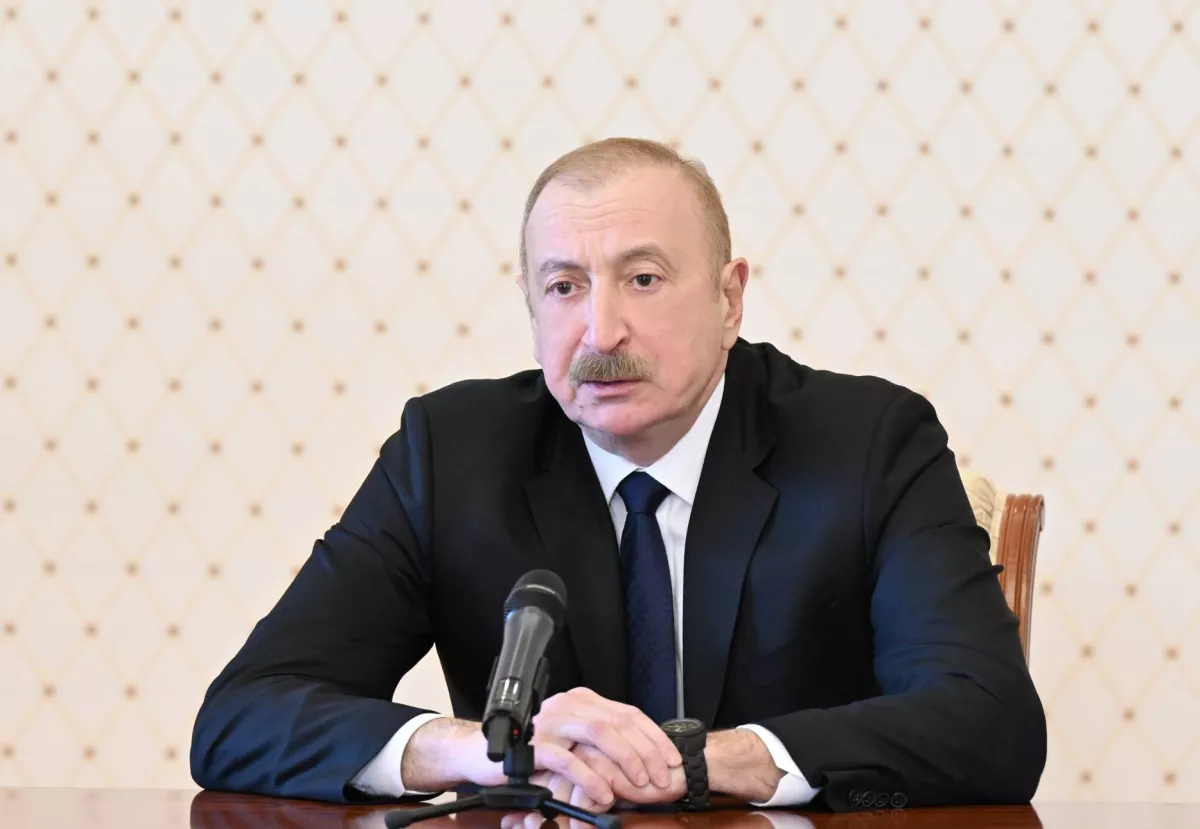
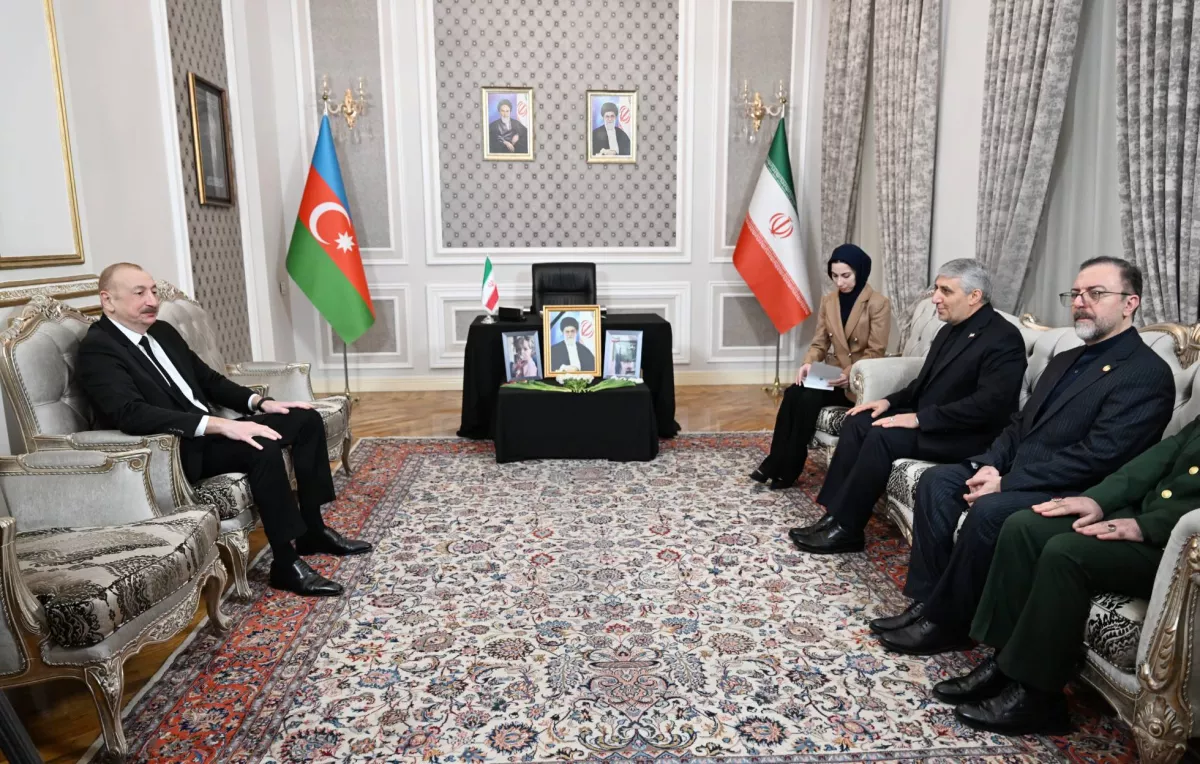
One of the most striking elements of Aliyev’s address was the theme of Tehran’s ingratitude — and here the president was unequivocal. He methodically recounted the actions Baku had taken on behalf of Iran in recent days, while US-Israel strikes were being carried out on Iranian territory. As soon as news broke of the death of Iran’s Supreme Leader, Ayatollah Khamenei, on February 28, Azerbaijan sent condolences. “Upon my instruction, the Minister of Foreign Affairs spoke with his Iranian counterpart. I demonstrated my position by personally visiting their embassy to offer condolences,” Aliyev said.
He immediately added a detail that turned this gesture of goodwill into a uniquely significant diplomatic act: “no other head of state has visited an Iranian embassy elsewhere for this purpose.” Not a single one. This meant that Ilham Aliyev was the only leader in the world to personally honour Khamenei’s memory with a visit to the Iranian diplomatic mission. And in response to this — drone strikes on Nakhchivan.
The president revealed yet another detail that gave his accusations of ingratitude a particularly sharp edge. On the morning of March 5 — the very day Iranian drones struck Nakhchivan — Iran’s deputy foreign minister contacted Baku, requesting assistance to evacuate staff from the Iranian embassy in Lebanon, as Tehran lacked the means to do so. “ I was briefed and immediately instructed that assistance be provided, with an aircraft dispatched,” Aliyev recounted.
Moreover: “ They even offered to cover the costs, which I declined - if we do not help in times of difficulty, when should we help?”
The head of state continued: “Yet they responded by striking Nakhchivan in such a vile and dishonorable manner. This stain will never be erased from their disgraceful and unsightly record.” The contrast between the helping hand in the morning and the strike in the back by noon became a powerful argument for Aliyev — stripping Tehran of any moral ground for justification.
The president then moved to clearly articulate Azerbaijan’s fundamental position. “On numerous occasions, particularly following last year’s clashes, we informed the Iranian side that Azerbaijan’s territory would not be used against any neighboring state. We will not allow this, and we have never allowed it,” Aliyev emphasised.
He followed with a categorical statement: “Azerbaijan neither participated nor will participate in any operations against Iran this time around. This is our principled position. We have no interest and no policy to conduct operations against neighboring countries.”
This message is particularly important in the context of accusations Tehran has levelled against Baku over the years — claims that Azerbaijani territory was allegedly used for Israeli special operations, or that American and Israeli intelligence infrastructure was deployed near the Azerbaijan-Iran border. Azerbaijan has repeatedly rejected these claims, and the current situation confirms its stance: Baku was attacked despite its consistently neutral position, proving that Tehran’s allegations were fabricated from the start, serving only as a pretext for anti-Azerbaijani policy.
Aliyev also recalled the informational dimension of Iran’s hostility:
“Media outlets controlled by Iranian state institutions conducted a dirty, defamatory campaign against Azerbaijan in an attempt to discredit our country and influence the opinions of our fellow Azerbaijanis in Iran. They know that the independent Azerbaijani state today is a source of hope for many Azerbaijanis in Iran. In other words, their objective was to defame us, slander us, and discredit us in the eyes of the Iranian public.”
This statement carries enormous significance. For decades, Tehran has suppressed the national identity of Iranian Azerbaijanis, who, by various estimates, make up up to a third of the country’s population. The existence of a successful, secular, modern Azerbaijani state just across the northern border — with a developed economy, ambitious foreign policy, and international standing — is a constant irritant for the Iranian regime.
That is why state-controlled Iranian media have conducted and continue to conduct a campaign to discredit Azerbaijan: the mullah regime fears that Baku’s example could act as a catalyst for national awakening among the population of South Azerbaijan. President Aliyev directly addressed this issue, leaving Iranian propaganda no room for rationalisation: “their objective was to defame us, slander us, and discredit us in the eyes of the Iranian public.”
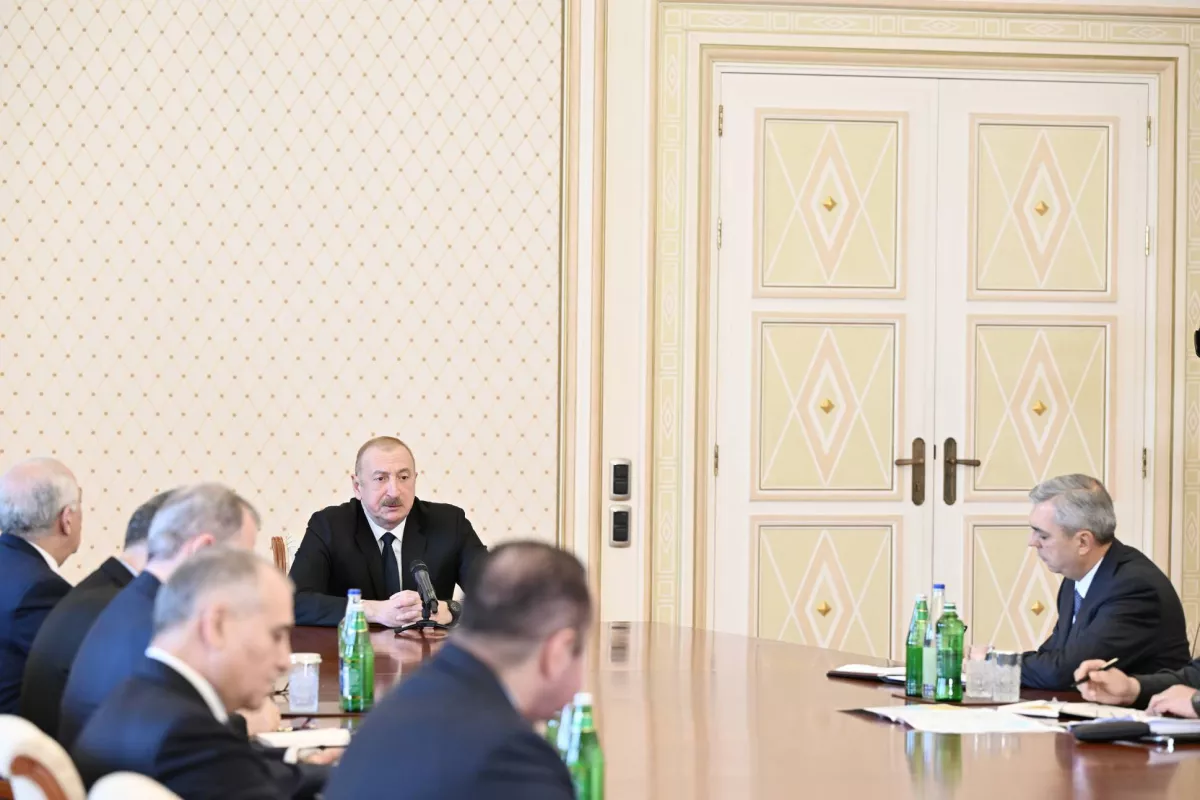
The military dimension of the president’s address was no less significant. He announced that all of the country’s security forces had been placed on the highest state of readiness: “Our Armed Forces - the Ministry of Defense, the State Border Service, and all Special Forces units - have been placed at the highest level of combat readiness and are prepared to carry out any required operations.”
Most importantly, the Armed Forces “have been instructed to prepare and implement appropriate retaliatory measures.” This was no longer a warning; it was the declaration of a process already set in motion. Aliyev reinforced this point with a historical precedent that Tehran would remember well: “Just as we ended the Armenian occupation, we are ready to demonstrate our strength against any hostile force - and they should not forget this in Iran.”
The reference to the victory in the 44-day war of 2020 carried an unmistakably concrete message. Azerbaijan is a state that has proven its ability to resolve security challenges by any means when diplomacy fails. The thirty-year Armenian occupation was brought to an end in just forty-four days. If Tehran believes it can attack Azerbaijani territory with impunity, it must reconsider its calculations.
The language Aliyev directed at the organisers of the attack was stripped of diplomatic polish — and this was deliberate. “Those dishonorable perpetrators who committed this terrorist act against us will regret it. They should not test our strength. Those who did so in the past had their skulls crushed with ‘Iron Fist,’ and today’s events will lead to the same outcome,” the president declared.
In these words lies a concentrated formula of Azerbaijani security policy, honed by the experience of victorious war: Baku does not threaten — Baku warns. And the difference between a threat and a warning is that a warning is always backed by a proven capability to act.
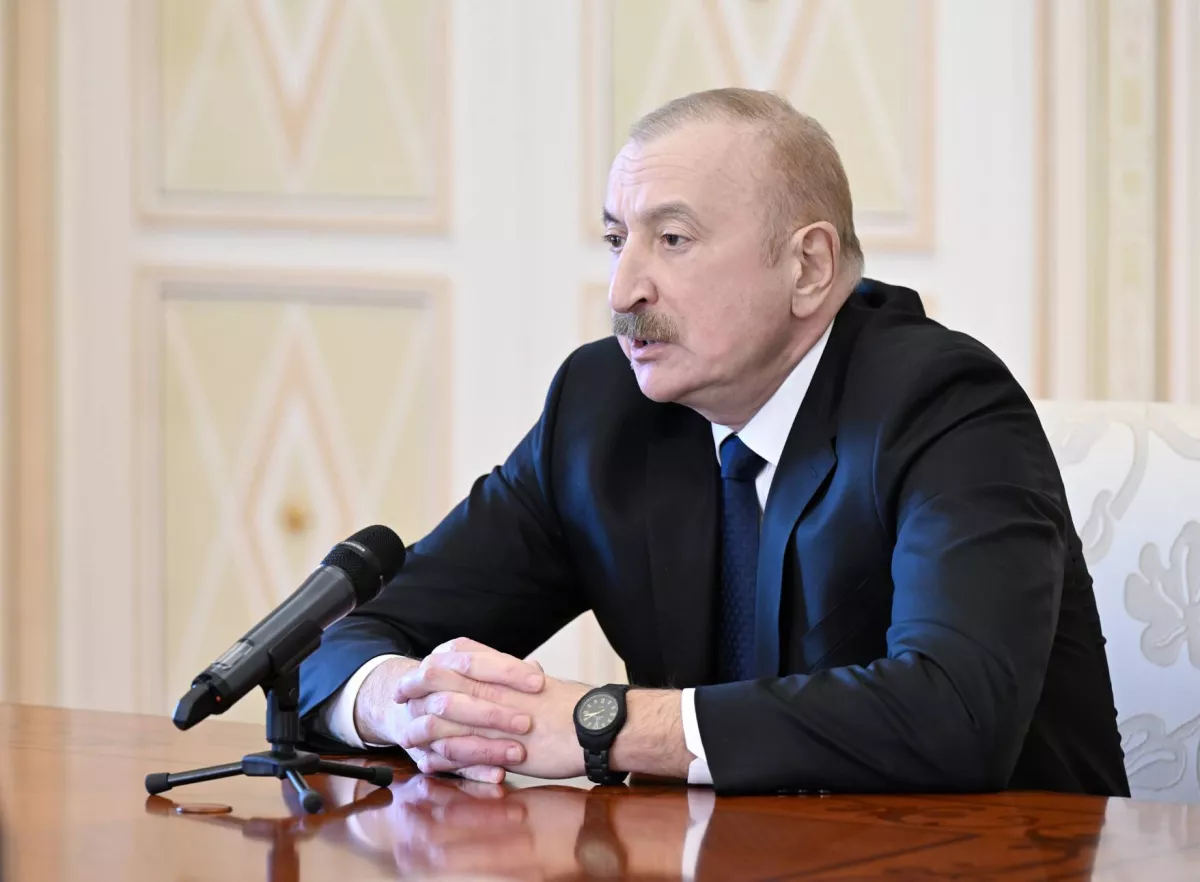
On the diplomatic front, Baku acted just as swiftly. The Iranian ambassador was immediately summoned to the Azerbaijani Ministry of Foreign Affairs. A formal note of protest was prepared. Instructions were issued to strengthen border security. In a separate statement, the Ministry of Defence warned: “These acts of aggression will not remain unanswered.” The Ministry of Foreign Affairs emphasised that “the Azerbaijani side reserves the right to take appropriate response measures.” Taken together — from diplomatic démarches to full military mobilisation — these steps demonstrate that Baku regards the situation as a top-tier national security threat and is prepared to respond across the full spectrum of measures.
It is important to understand the context in which this crisis is unfolding. Since February 28, Iran has been under extensive strikes by the US-Israel coalition. The operation, dubbed “Roaring Lion” by Israel and “Epic Fury” by the United States, has already resulted in the death of Supreme Leader Khamenei, the destruction of key military infrastructure, and the sinking of an Iranian frigate in the Indian Ocean. In response, Tehran is carrying out indiscriminate strikes wherever it can reach: military bases in Iraq, Qatar, the UAE, Saudi Arabia, sites in Cyprus, and targets in Israel. Within this logic of desperate “retaliation against all,” the strike on Nakhchivan appears as a manifestation of a regime in agony, having lost control over the situation. For Azerbaijan, however, Tehran’s motivation is irrelevant — an attack occurred, civilians were harmed, and accountability must follow.
The president concluded his address with words directed to his own people: “The Azerbaijani people can be assured that any hostile force will feel the full might of our ‘Iron Fist’.” This is a programmatic statement from a head of state who has proven he can back words with action.







 editor@caliber.az
 +994 55 444-88-98
 Азербайджан, Баку, ул. Низами, 203, Af Business House, 5-й этаж