










The tax system of the future Baku prepares the economy for a new era
The key objective of the economic reforms implemented in Azerbaijan in recent years has been the development of the non-oil sector and the expansion of non-commodity exports. The country’s new wave of industrialisation (4IR), along with the digitalisation of the economy and financial systems, the development of transit logistics, and the advancement of green energy, is all aimed at promoting this strategic direction.
A central instrument of these reforms has been the expansion of public-private partnerships, as well as the introduction of fiscal, financial, and export incentives for businesses. These measures are also designed to attract investors to emerging industrial clusters.
The prospects for these reforms and further improvements to the business environment were discussed recently at the forum organised by the Ministry of Economy titled “Future of the Tax System: A New Management Model and Data-Based Decisions.”
The long-term policy document “Azerbaijan 2030: National Priorities for Socio-Economic Development,” adopted in early 2021, as well as the “Socio-Economic Development Strategy of the Republic of Azerbaijan for 2027–2030,” currently being developed by the government, are aimed at ensuring healthy, balanced, and sustainable economic growth that is resilient to external risks.
In line with these objectives, since 2019, the country has been implementing large-scale tax and customs reforms, intensifying efforts to combat the shadow economy, promoting transparent taxation, improving the business climate, and creating a favourable environment for entrepreneurship.
According to Deputy Prime Minister Samir Sharifov, who spoke at the forum “Future of the Tax System: A New Management Model and Data-Based Decisions,” an important outcome of the reforms and state programs of recent years has been the achievement of macroeconomic stability and fiscal sustainability. Improvements in fiscal legislation and tax administration have significantly strengthened the country’s financial position and enhanced Azerbaijan’s investment attractiveness.
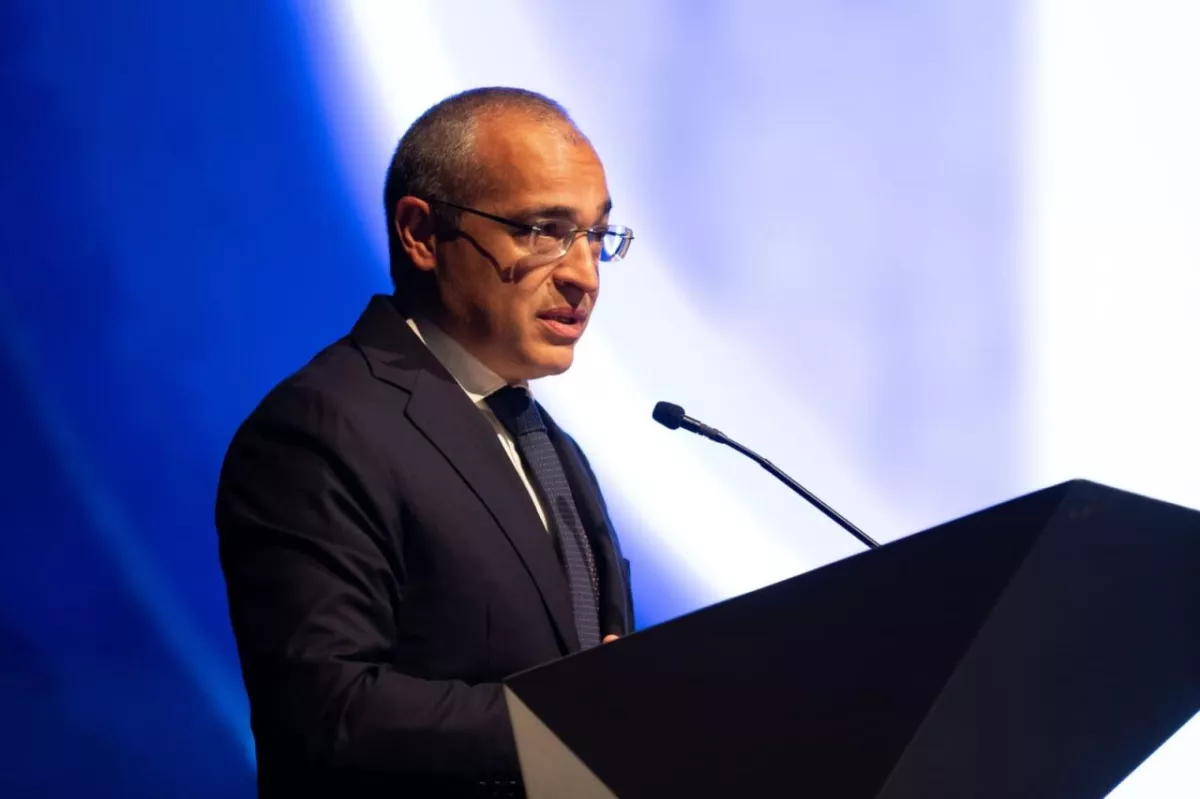
“Economic diversification forms the basis of our strategic goals. The non-oil-and-gas sector has already become the main driver of economic growth,” said Azerbaijan’s Minister of Economy Mikayil Jabbarov while speaking at the forum on March 5. “From 2021 to 2025, the average annual real growth of GDP in the non-oil-and-gas sector, at 5.9 percent, was the main source of economic expansion.”
At the same time, strategic cooperation with global economic partners is creating new opportunities for deeper integration into global value chains in the areas of investment, trade, and energy, and especially in the implementation of digital transformation, artificial intelligence, high technologies, and other advanced sectors. For this reason, the diversification of the national economy remains a cornerstone of the country’s strategic objectives, and these reforms are already enhancing the efficiency of the non-oil sector, which has become the main driver of GDP growth.
A number of objective indicators demonstrate the success of these efforts. Between 2019 and 2024, the volume of non-oil industrial production in the country increased by 1.9 times. At the same time, the non-oil sector has become the locomotive of the national labour market: from January 2019 to November 2025, an average of around 200 new jobs were created every day in the private non-oil sector.
Moreover, these positive trends strengthened significantly in 2025. “In 2025, investments in fixed capital directed to the non-oil-and-gas private sector increased by 11.1 percent, while investments in fixed capital from foreign sources rose by 24 percent,” noted Jabbarov. According to him, in the non-oil industry alone, investment growth reached 26 per cent. “Between 2021 and 2025, value added in this field grew by an average of 8 percent annually. As a result of these factors, the share of the non-oil-and-gas sector in GDP rose from 58.3 percent in 2018 to 71.5 percent in 2025.”
Efforts to develop the non-oil sector and the resulting resilience of the national economy are of great importance. However, given the negative trends observed worldwide in recent years, the transition from an energy-export-driven model to a more deeply diversified non-oil economy needs to be significantly accelerated.
Among the most notable risks is the high volatility of global energy prices, which affects the dynamics of the country’s foreign trade. Other challenges include global tariff wars, the depreciation of the US dollar, imported inflation, and related pressures on the global economy.
Domestic factors affecting the country’s export performance should also not be overlooked. For several years now, hydrocarbon production has been declining at the Azeri–Chirag–Gunashli (ACG) block of fields, as well as at a number of other offshore and onshore deposits in Azerbaijan. All these factors, directly or indirectly, contribute to a slowdown in overall GDP growth. For comparison, while Azerbaijan’s economy expanded by 4.1 per cent in 2024, growth slowed to 1.4 per cent by the end of 2025.
“The current pace of economic growth does not fully reflect the country’s real economic potential and does not satisfy us,” the minister of economy stated at the forum. At the same time, he emphasised that the country’s foreign exchange reserves, low level of public debt, and solid fiscal indicators demonstrate the strong economic and financial foundations of the national economy.
Moreover, Azerbaijan’s strategic geographic location, its transport and logistics capabilities, well-developed infrastructure in economic zones, tax and customs incentives, public–private partnership mechanisms, and joint investment funds with various countries provide investors with opportunities to participate in sustainable projects and attract technology, investment, and expertise.
In order to accelerate and optimise the transformation of the national economy, the government has outlined several key economic priorities for the coming years. Among them is increasing the share of production generated by small and medium-sized enterprises (SMEs) to 35 per cent of the country’s GDP, while employment in the non-oil SME sector is expected to reach 60 per cent
Another strategic objective is to increase total non-oil exports to $5.3 billion by 2027. To achieve this goal, Azerbaijan plans to boost non-oil exports by 1.8 times, expand non-oil GDP by 1.3 times, and raise the share of the private sector in the country’s GDP to 88 per cent.

During the forum, participants discussed priority measures aimed at ensuring the implementation of these objectives and accelerating the growth of high value-added non-oil production in the shortest possible time.
“In Azerbaijan, proposals for reforms aimed at improving the business environment are currently being developed, and a special working group on reforms has been established,” noted Deputy Prime Minister Samir Sharifov. “Within its subgroups, proposals are being prepared to remove obstacles to entrepreneurial activity in relevant areas and to improve conditions for doing business.”
As part of the preparatory process, the working groups have already begun collecting proposals from entrepreneurs in the field of taxation. At the same time, plans are underway to strengthen institutional coordination between the government’s fiscal, tax, social, and financial policies.
Based on these principles, the government plans in the future to more accurately define the priorities of budgetary and fiscal policy, increase the efficiency of public spending, and strengthen non-oil sources of revenue.
According to Samir Sharifov, tax policy should be viewed not only as an instrument for maximising budget revenues but also as a mechanism for shaping economic behaviour, influencing investment decisions, and ensuring social balance.
“Taxes and mandatory social payments should not restrain economic activity; on the contrary, they should stimulate it while simultaneously creating a reliable resource base for financing social obligations and maintaining public welfare,” Sharifov emphasised.
Another important priority is the development and strengthening of an export-oriented economy. A corresponding policy document has been prepared by the Ministry of Economy. In particular, it provides for expanding businesses’ access to credit resources and introducing other innovative mechanisms to increase non-oil exports to new markets while strengthening positions in existing ones, as well as broadening the application of preferential trade regimes.
In this regard, greater use is planned of the opportunities offered by the Alat Free Economic Zone (AFEZ). Another priority will be the wider utilisation of the export potential of industrial parks and industrial districts.







 editor@caliber.az
 +994 55 444-88-98
 Азербайджан, Баку, ул. Низами, 203, Af Business House, 5-й этаж