










Olympic ice with a political edge When hockey becomes more than a game
The debate over where sport ends and politics begins, flares up every time a major international competition goes beyond a purely athletic event. The final of the USA–Canada ice hockey tournament at the 2026 Olympics was precisely such a case. Tensions were heightened further by reports that U.S. President Donald Trump planned to attend the match if the national team reached the decisive stage.
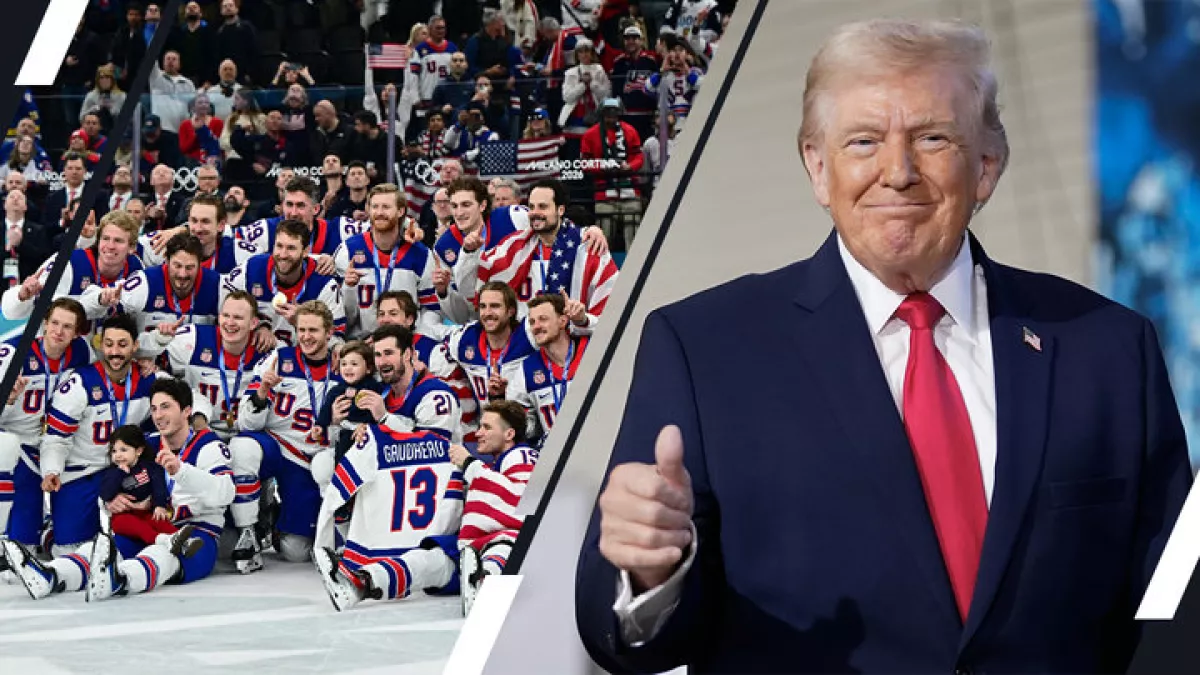
The buzz around the predicted final — Canada vs. the USA — which almost every sports analyst had forecast, captured the public’s attention. The athletic aspect, however, quickly took a backseat, especially as media outlets reminded audiences of Trump’s infamous suggestion to make Canada the 51st U.S. state. In this context, journalists also recalled that, even before his second presidential term, Donald Trump had jokingly told Canadian hockey legend Wayne Gretzky, “Wayne, why don’t you run for prime minister of Canada, soon to be known as the governor of Canada.”
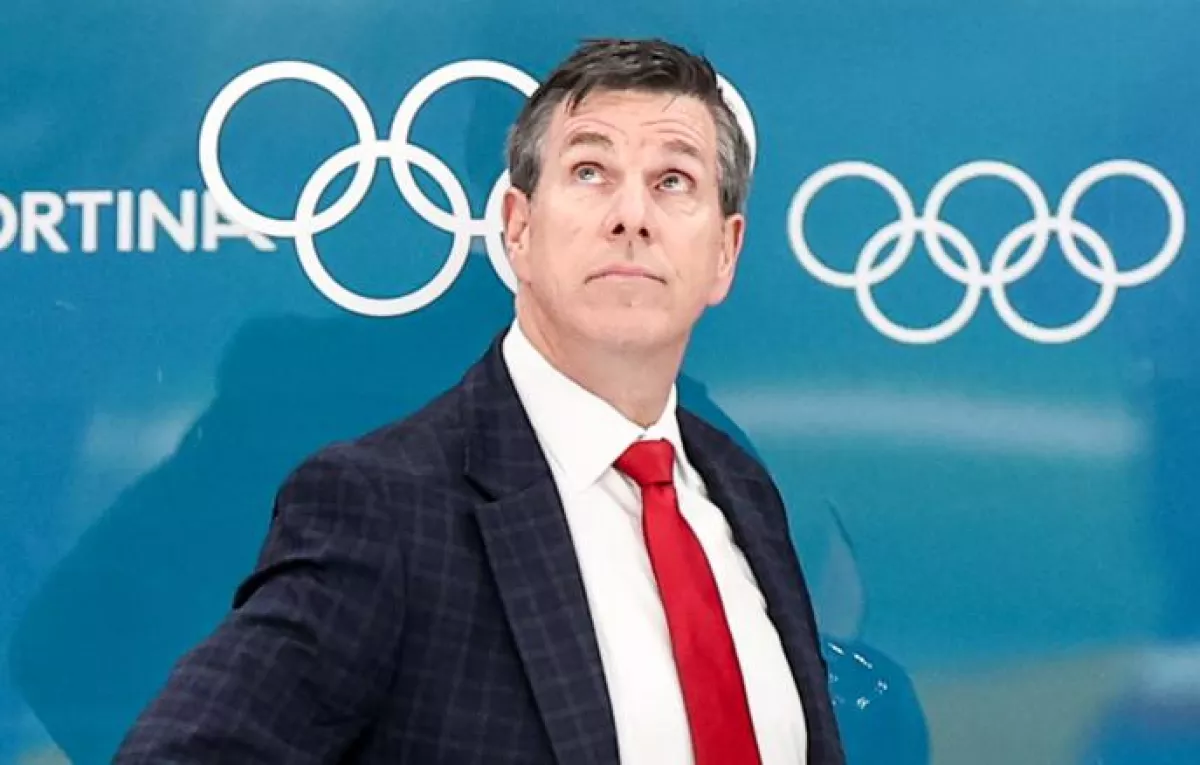
It is now widely known that the American hockey team defeated Canada in overtime. According to U.S. head coach Mike Sullivan, the 47th president personally called the locker room after the match and congratulated the players via video link. He then invited the athletes to deliver a ceremonial speech to the American public upon their return.
Later, on his social media, Trump shared an AI-generated video showing him, dressed in a business suit, playing a hockey match against the Canadian team — and scoring a goal.
As for the U.S. hockey players themselves, nearly all of them sang the national anthem at full voice during the medal ceremony. Admittedly, we haven’t seen such demonstrative engagement from an American team in a long time—if ever.
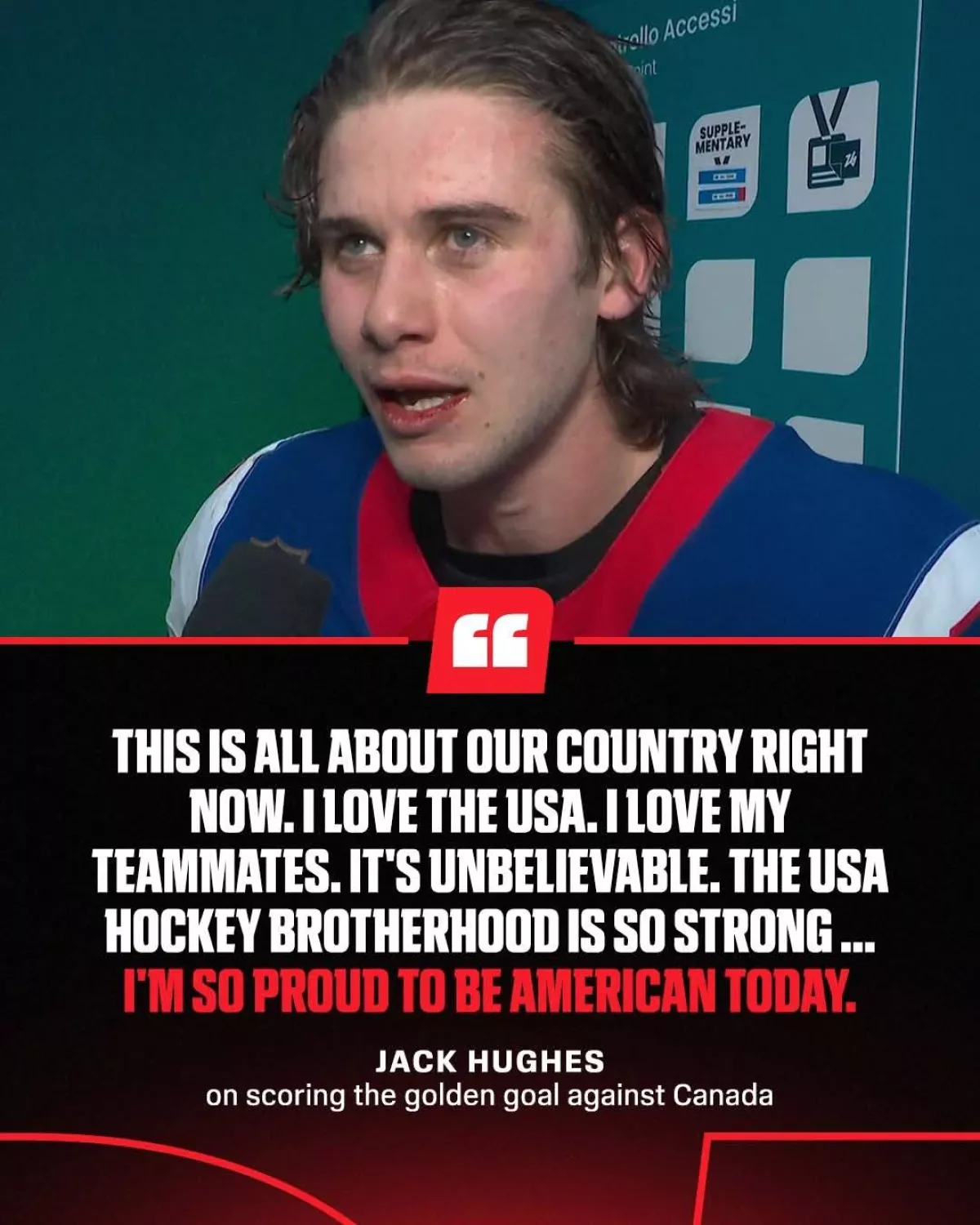
Moreover, the team’s leaders made highly resonant statements in the immediate aftermath. The scorer of the winning goal, Jack Hughes, declared: “This is all about our country right now. I love the USA. I’m so proud to be American today. I love my country. I love my teammates.”
Another team leader, Matthew Tkachuk, said that the U.S. — “the greatest country in the world deserves this,” and even went so far as to characterise hockey as "we've got the game of hockey right now.” The nuance here is that hockey is traditionally considered Canada’s national sport, and naturally, his remark did not go unnoticed by Canadians. Many journalists emphasised that, no matter what, hockey will always remain Canada’s game.
Such were the passions surrounding the final. And who today can confidently pass judgment on what dominated these sentiments — pure sporting spirit, or a political undertone? Could these events be seen as a reflection of the slogan “America First” and the rhetoric of “Make America Great Again”?
In this context, it is also worth noting another episode from the Milan–Cortina Olympics. In the early days of the Games, American freestyle skier Hunter Hess remarked that representing the U.S. currently brings “mixed emotions.” He emphasised that there is “a lot going on that I’m not the biggest fan of and I think a lot of people aren’t.” Therefore, the athlete concluded, “just because I’m wearing the flag doesn’t mean I represent everything that’s going on in the US.”
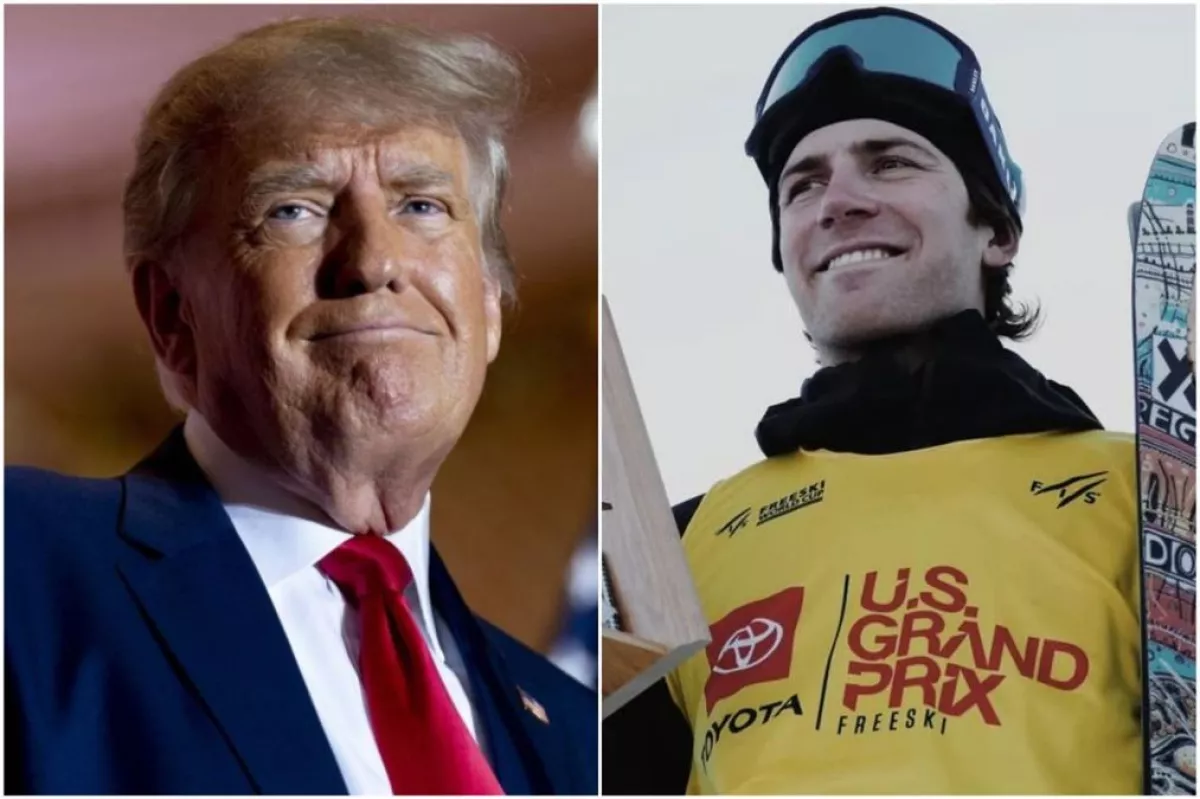
Hess was almost immediately met with harsh criticism from both politicians and prominent athletes. In particular, popular American boxer and social media personality Jake Paul reacted sharply to the freestyle skier’s comments, telling him, “Wow pls shut the fuck up.” He then spoke on behalf of “all true Americans,” declaring, “If you don’t want to represent this country go live somewhere else.”
Donald Trump also weighed in on Hess’s statement, calling the athlete “a real loser.” “If that’s the case, he shouldn’t have tried out for the team, and it’s too bad he’s on it. Very hard to root for someone like this.”
So, is sport really politics? Probably everyone will have their own opinion. Yet it is impossible to ignore the pride and reverence with which nearly all the Olympic gold medallists in Italy draped themselves in their national flags. Nor can one forget the genuine emotion of Kazakhstan’s figure skater Mikhail Shaidorov, who sensationally won his country’s first-ever Olympic gold in men’s singles, as he sang the national anthem on the podium.
In 2025, Shaidorov addressed the situation when several Russian media outlets referred to him as Russian. He stated: “I was born, have lived, and continue to live in Almaty, spending a lot of time in Kazakhstan, in my favourite city. I am very glad to have the opportunity to train under [Russian coach] Alexei Urmanov, who devotes a lot of time to me. But I started skating at the Ramstor shopping centre, which had one of the first ice rinks in Kazakhstan. I have spent a lot of time in Russia, trained at camps, and seen the version that I am considered a Russian athlete, but I consider that to be disrespectful to me.”
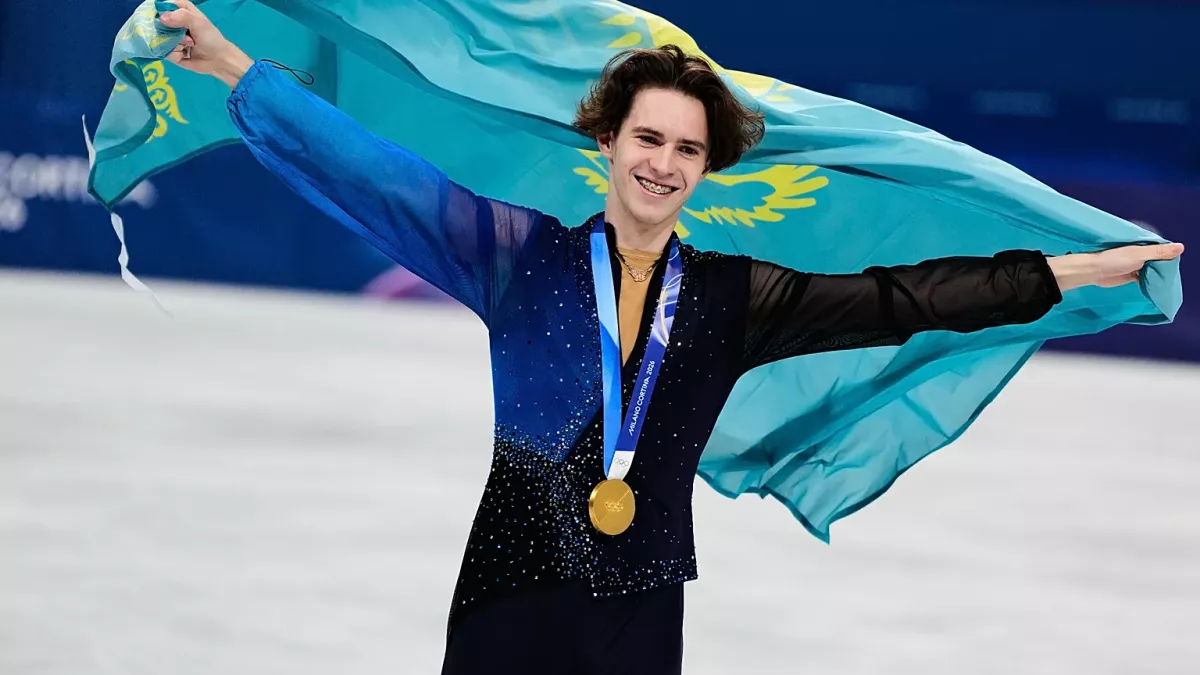
Immediately after his Olympic victory, Shaidorov recorded a touching video message to the people of Kazakhstan, in which he thanked the head of state for the support he had received and singled out all his fellow citizens who had cheered for him in the stands and in front of their televisions.
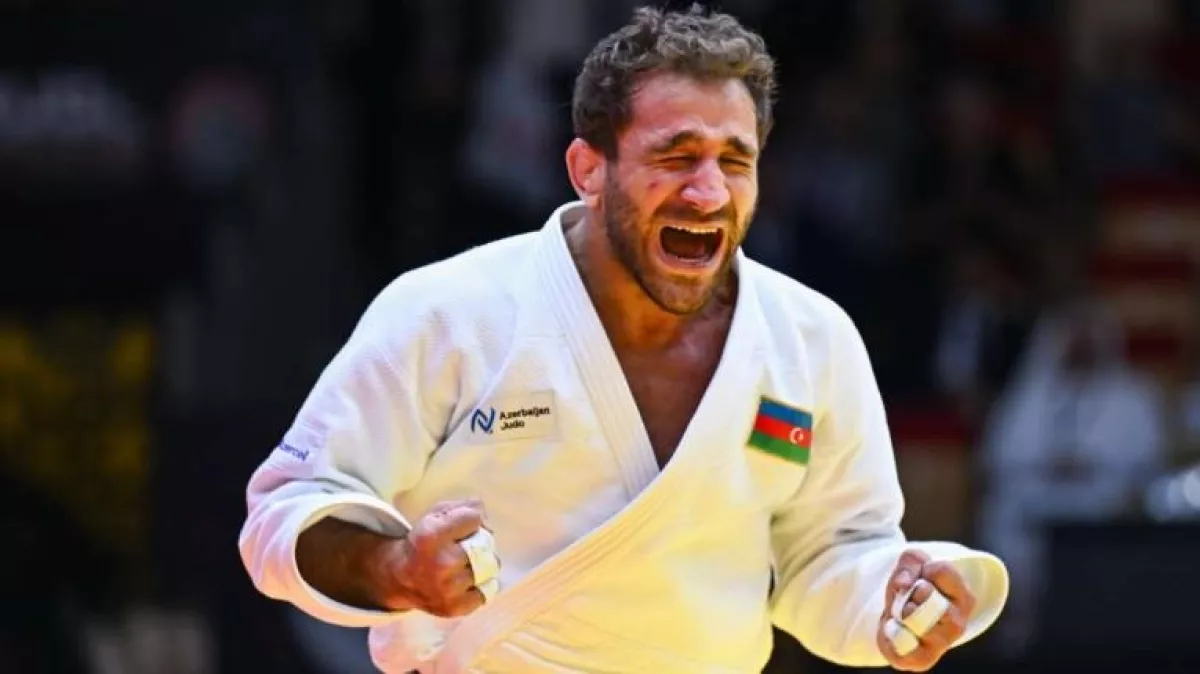
It is also worth recalling a brilliant victory—not in Italy, but in Paris at the 2024 Olympics—by our judoka Hidayat Heydarov. By defeating the Frenchman Joan-Benjamin Gaba in the final, he claimed the gold medal. And let’s be honest: wasn’t our excitement fueled not just by sporting pride, but also by a sense of political pride, given the context and circumstances?
Meanwhile, the American hockey players have once again made history. Forty-six years—almost half a century—after their legendary triumph over the USSR at the Lake Placid Olympics, famously known as the “Miracle on Ice,” the U.S. team once again stood atop the Olympic podium. Many sports commentators agreed: the achievement was just as sensational this time.
So, is sport really politics?







 editor@caliber.az
 +994 55 444-88-98
 Азербайджан, Баку, ул. Низами, 203, Af Business House, 5-й этаж