










Azerbaijan–Türkiye energy alliance: a shield against crises Overview by Khazar Akhundov
The global energy crisis triggered by the war in the Persian Gulf and the blockade of the Strait of Hormuz, along with ways to overcome it, is today one of the top priorities for most countries around the world. The 5th Antalya Diplomacy Forum held in Türkiye, in which the President of Azerbaijan, Ilham Aliyev, also took part, was no exception. As strategic trade and economic partners, Baku and Ankara have been closely cooperating for three decades in the field of oil and gas transit and logistics. Energy security issues became the leitmotif of the participants’ speeches at the Antalya meeting, including those of the Azerbaijani delegation representatives who took part in the discussions.
A policy aimed at the consistent strengthening of energy and transport connectivity between Azerbaijan and Türkiye has been forming the foundation of bilateral business relations for more than three decades. Export oil and gas pipelines have been laid across the territories of both countries to supply hydrocarbons produced in Azerbaijan and the countries of Central Asia to external markets. Rail and maritime transportation of oil products and fuel is also carried out, while infrastructure is being developed in the form of power transmission lines and substations to expand supplies of “green” electricity.
An important contribution to the energy connectivity between Azerbaijan and Türkiye was the commissioning in March last year of the Iğdır–Nakhchivan gas pipeline, which not only enables the delivery of natural gas to Nakhchivan but, thanks to its increased capacity (up to 2 million cubic metres of gas per day), could in the future also be used for reverse flow operations.
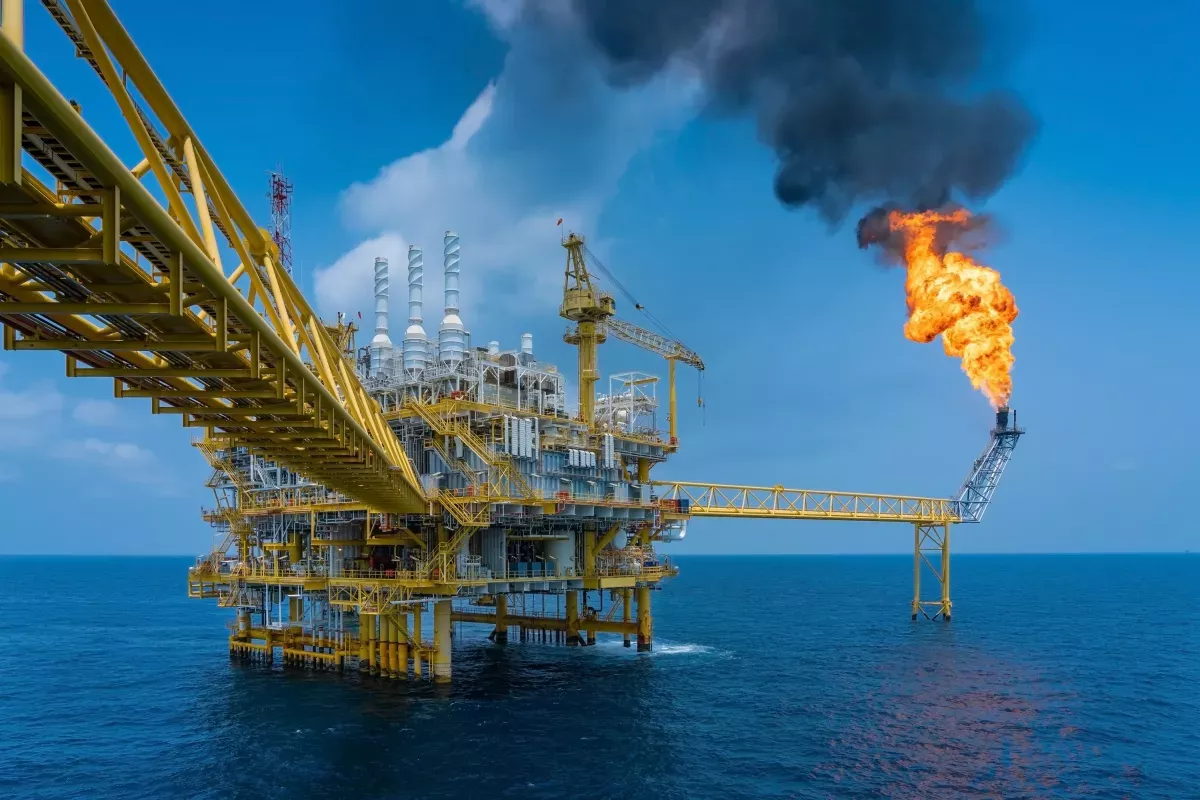
Notably, investment cooperation between Baku and Ankara is also significantly engaged in the energy and oil refining sectors. In particular, a major share of Azerbaijan’s investments in the Turkish economy has been made by the State Oil Company of the Republic of Azerbaijan (SOCAR): around $19 billion has been invested in the Petkim Petrokimya Holding complex in İzmir, as well as in the STAR refinery, a container terminal, and a power plant. The company has also invested in gas infrastructure, including Kayserigaz, Bursagaz, and others.
More recently, SOCAR signed a new agreement to acquire a 100% stake (for $225 million) in the Gama Enerji İç Anadolu power plant in Türkiye, with a capacity of 870 MW.
As for large Turkish portfolio investments, they also cover the extractive sector of Azerbaijan’s economy. Thus, the Turkish state oil company Türkiye Petrolleri Anonim Ortaklığı (TPAO) holds a 5.73% stake in Azerbaijan’s offshore Azeri–Chirag–Gunashli (ACG) field, and in June 2025 acquired a 30% stake in the Shafag–Asiman field.
Today, amid geopolitical tensions, a shifting balance of power, trade barriers, and growing pressure on global logistics, Azerbaijan–Türkiye business relations appear as an island of stability and coordinated cooperation, including in the fields of energy and transport.
“The process of normalising relations with neighbouring Armenia is being implemented step by step by Türkiye in close coordination with Azerbaijan. We are also actively supporting the development of the Middle Corridor as the most reliable trade route between Asia and Europe via the Caspian,” said the President of Türkiye, Recep Tayyip Erdoğan, speaking at the opening ceremony of the 5th Antalya Diplomacy Forum.
Referring to the Organisation of Turkic States (OTS), the Turkish leader noted that the platform continues to strengthen and expressed hope that, during Türkiye’s chairmanship, it will further enhance the organisation's international prestige and effectiveness.
It should be recalled that more than 500 high-ranking officials from over 150 countries took part in the Antalya Forum, including 22 heads of state and government. The key topic of discussions was the impact of conflicts in the Middle East on transport connectivity and global energy security.
“Energy projects implemented on the initiative of Azerbaijan, while serving global energy security, also ensure the interests of regional countries,” said the Assistant to the President of Azerbaijan and Head of the Department for Foreign Policy Affairs of the Presidential Administration, Hikmet Hajiyev, during a panel session within the framework of the 5th Antalya Diplomacy Forum.
He emphasised that Azerbaijan has been consistently developing regional connectivity and transport-energy corridors. According to him, this process began with cooperation in the Azerbaijan–Georgia–Türkiye format, including the Baku–Tbilisi–Kars (BTK) route, and is now expanding further. Together with Central Asian countries, trans-Caspian connectivity is being developed, while the next step could be the Zangezur Corridor model, which would further strengthen regional connectivity.
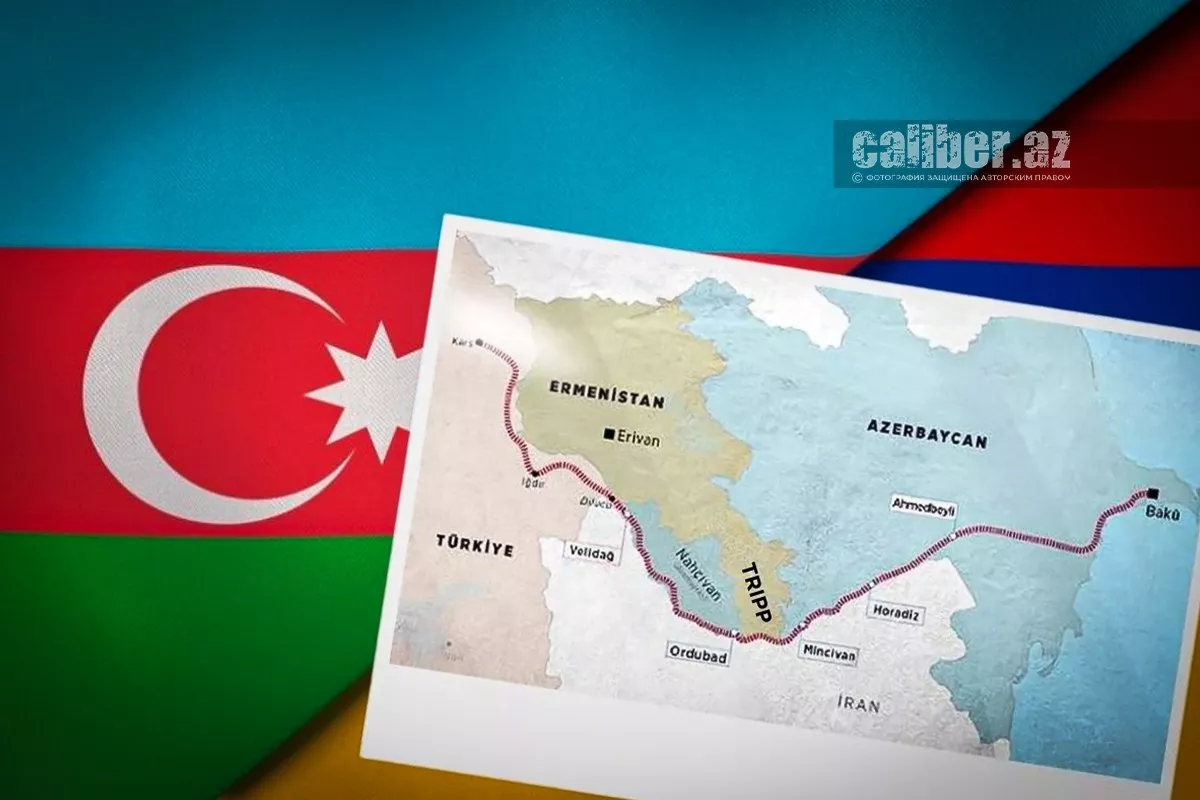
All of the above is based on close Azerbaijan–Türkiye cooperation in the fields of energy and transport. Today, amid the crisis in the Middle East, this factor has become decisive for maintaining the stability and security of energy supplies, and even for their expansion towards Europe.
These opportunities were confirmed by participants of the Antalya Forum. For instance, the Prime Minister of Georgia, Irakli Kobakhidze, noted that the South Caucasus is gaining particular importance in light of current conflicts, acting as a reliable transit hub for the efficient movement of goods and energy resources.
In turn, the Minister of the Environment, Climate and Energy of Slovenia, Bojan Kumer, emphasised that his country views Azerbaijan as an important direction for diversifying gas supplies.
A key factor in Europe’s energy security for many years has been the effective partnership between Azerbaijan and Türkiye in the field of interregional transit.
According to the Minister of Energy and Natural Resources of Türkiye Alparslan Bayraktar, Türkiye has developed major routes for the transportation of natural gas to global markets and possesses significant potential for additional oil supplies via the Iraq–Türkiye oil pipeline and the Baku–Tbilisi–Ceyhan (BTC) pipeline. He noted that joint projects with neighbouring countries, including Azerbaijan, have played an important role in this process.
“The Southern Gas Corridor should be fully utilised. With some minor investments, we need to make full use of the existing infrastructure. Today, a total of 16 billion cubic metres of gas is supplied to Europe and Türkiye, but there is also another 15–16 billion cubic metres of available capacity,” Bayraktar emphasised.
“During the ministerial panel held within the framework of the Antalya Diplomacy Forum, we shared our views on secure, affordable and sustainable energy supply in a geopolitical environment marked by supply chain disruptions and price volatility in energy markets, the management of uncertainties in the energy sector, as well as the importance of diversifying energy sources and routes,” wrote Azerbaijan’s Minister of Energy Parviz Shahbazov on his X (Twitter) account.
Speaking at the forum panel session, he emphasised that, in light of the situation in the Strait of Hormuz, the issue of energy security is coming to the forefront.
“Today, a serious crisis is being observed in many Middle Eastern countries. In total, around 12 million barrels per day are not entering the global energy system, and Europe remains highly vulnerable in terms of oil and gas trade and overall energy supply,” he noted.
In this regard, cooperation between Baku and Ankara has, over many years, contributed to ensuring the energy security of the European region. According to the Minister of Energy, this includes joint projects such as the Baku–Tbilisi–Ceyhan (BTC) oil pipeline, the Baku–Tbilisi–Erzurum gas pipeline, as well as the Southern Gas Corridor (SGC), stretching 3,500 km and connecting the Caspian Sea through seven countries to the Adriatic Sea in southern Italy.
Through the Southern Gas Corridor, more than 16 billion cubic metres of natural gas are supplied annually, and the pipeline has the potential to double these volumes. However, to a certain extent, the project remains underinvested by stakeholders — including due to the “green” policy of the European Union.
The Azerbaijani Minister of Energy believes that an accelerated energy transition without adequate preparation may create risks for global energy security. The world economy still depends on hydrocarbon resources by approximately 80%, and this structure has not significantly changed. Global energy demand is growing by around 3.5% annually, and the world requires increasing resources. At the same time, the development of renewable energy sources (RES) does not replace hydrocarbons but rather complements the overall energy balance. In this context, underinvestment in the traditional hydrocarbon sector would be a mistake.
As for Azerbaijan’s energy strategy, it is balanced and based on the need to diversify all types of energy resources, including the development of renewables. In the coming years, the country plans to develop up to 8 GW of “green” energy capacity, with 2 GW to be integrated into the domestic energy system by 2027.







 editor@caliber.az
 +994 55 444-88-98
 Азербайджан, Баку, ул. Низами, 203, Af Business House, 5-й этаж