










Azerbaijan in the Board of Peace Securing normalisation in the South Caucasus
On February 19, the first meeting of the Board of Peace, established at the initiative of the U.S. leadership, took place in Washington. Azerbaijan’s President Ilham Aliyev participated in the session. The creators of this new organisation do not hide their global ambitions, while for Azerbaijan, this platform is significant also in the context of the peace process in the South Caucasus.
Among the Yerevan establishment, there are plenty of actors eager, at the very least, to attempt to obstruct the dismantling of the remnants of past conquests (for example, the restoration of the shortest routes connecting different regions of Azerbaijan) by internationalising regional issues, particularly under the guise of so-called “European integration.” Cooperation between Azerbaijan and the U.S., in particular through the new Board of Peace, will help neutralise such intrigues.
By invitation only
Neither President Trump nor anyone else in his administration has so far set strict parameters for the activities of the new international organisation currently being established. After the charter of the Board of Peace was signed on January 22 by the leaders of 19 countries (including Azerbaijan), U.S. Secretary of State Marco Rubio clarified once again that it is not intended to replace the UN. Indeed, the initial invitation to join the alliance was sent to only about fifty countries. The liberal regimes of the EU declined Trump’s offer, although EU representatives were present in Washington for the first meeting of the Board of Peace, earning criticism from French President Macron. The current composition of participating countries is sufficient to make the organisation functional, as it generally consists of capable and solvent states that share a scepticism toward liberal ideology.
The organisation’s membership and the rhetoric coming from the White House reveal the broader design. First, the Palestinian issue, mentioned at the outset, is more of a pretext to test the concept of a new international framework. Given the centrality of the Palestinian question for the Middle East and its prominent place in global politics, this is a reasonable approach. Trump recently stated outright: “I think it is going to go far beyond Gaza.” Fragments of Board documents obtained by journalists indicate that its organisers intend to address conflicts worldwide, “in areas affected by conflict or on the brink of it.”
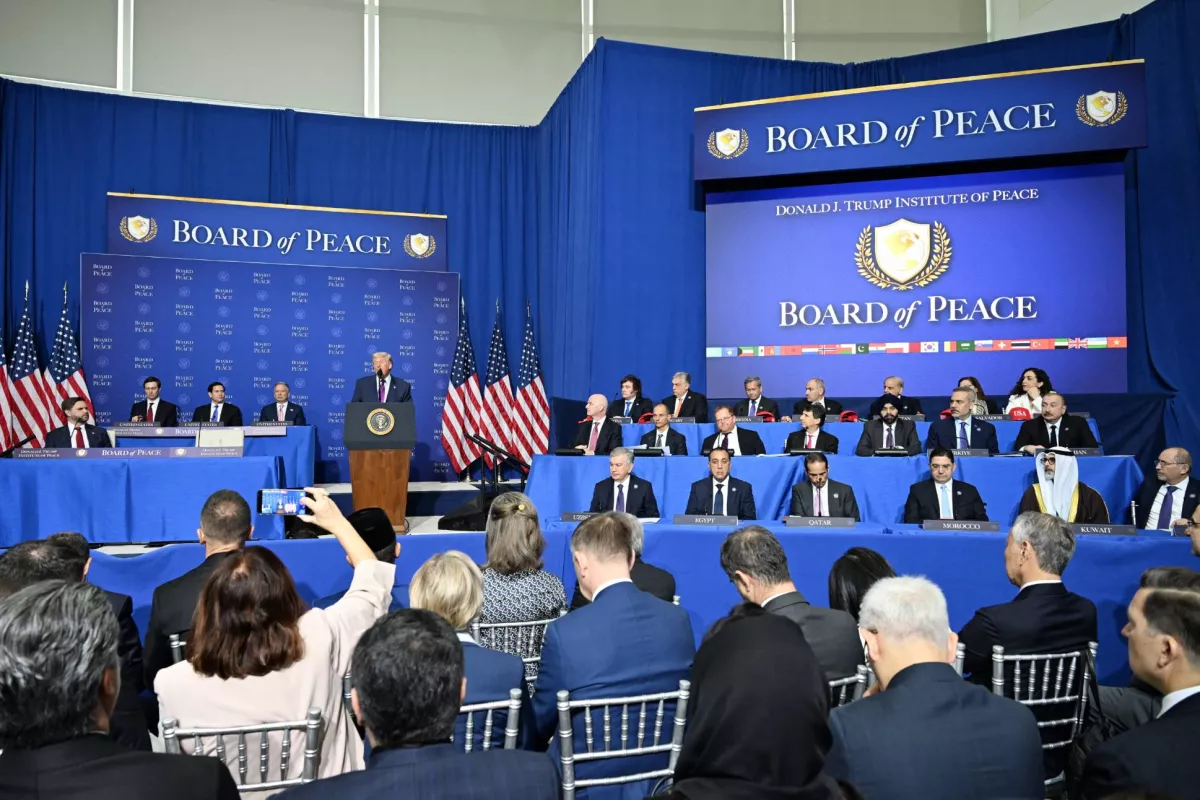
Second, the Board of Peace is not exactly a “council,” since the U.S. leadership consistently refers to it as a Board of Peace rather than a Peace Council. The distinction is significant: a “board,” so to speak, is the governing body of a commercial or non-political organisation. In such a body, decisions are usually made by the leadership through consultations among board members with the head, rather than through strict formal voting—although formal votes do occur in these structures as well.
Is the creation of such a “Board of Peace” an unprecedented step in global politics? Hardly—similar structures have existed under various guises. For many years, the Organisation of American States functioned in a similar manner, dominated by the U.S., as did nearly all organisations in the socialist bloc (notably the Council for Mutual Economic Assistance and the Warsaw Pact), where member states had to coordinate any decisions primarily with the USSR. As practice shows, when there was political will, members of such organisations could still defend their own interests within them.
That said, the political style of the current U.S. president does influence the dynamic. As Hungarian Foreign Minister Péter Szijjártó, who attended the Board of Peace meeting, noted: “Previously, international organisations, international law, and international standards determined events in international politics. Today, the basis of international politics is rather bilateral relations, cooperation between governments, and personal friendships.” There is little that can be done about this, and Azerbaijani diplomacy is adapting to this new reality, as we can see, far more swiftly than many Western countries.
A key aspect of membership in such a structure is the access it provides to an additional channel for contacts and interaction with the leading country of the alliance. The current Board of Peace is also important for its members as a platform and mechanism to understand Washington’s intentions and to raise their own issues with the U.S. leadership. After all, other similar structures—from the UN to NATO—have faced serious crises, and limiting oneself solely to bilateral relations, as was done before globalisation, is no longer sufficient.
Parallel wars and peaces
In other words, members of the Board of Peace have their own agendas, which they will pursue through this body—including issues of conflicts and peace processes that are important to them, beyond Gaza. Trump himself recognises this, having in his speech at the meeting gone beyond Palestine, noting that in his first year as president, he “ended eight wars,” and hinting that he does not intend to stop there. Similar ideas are already being floated within the Board—for example, the Hungarians have suggested expanding its remit to help end the Russia–Ukraine war.
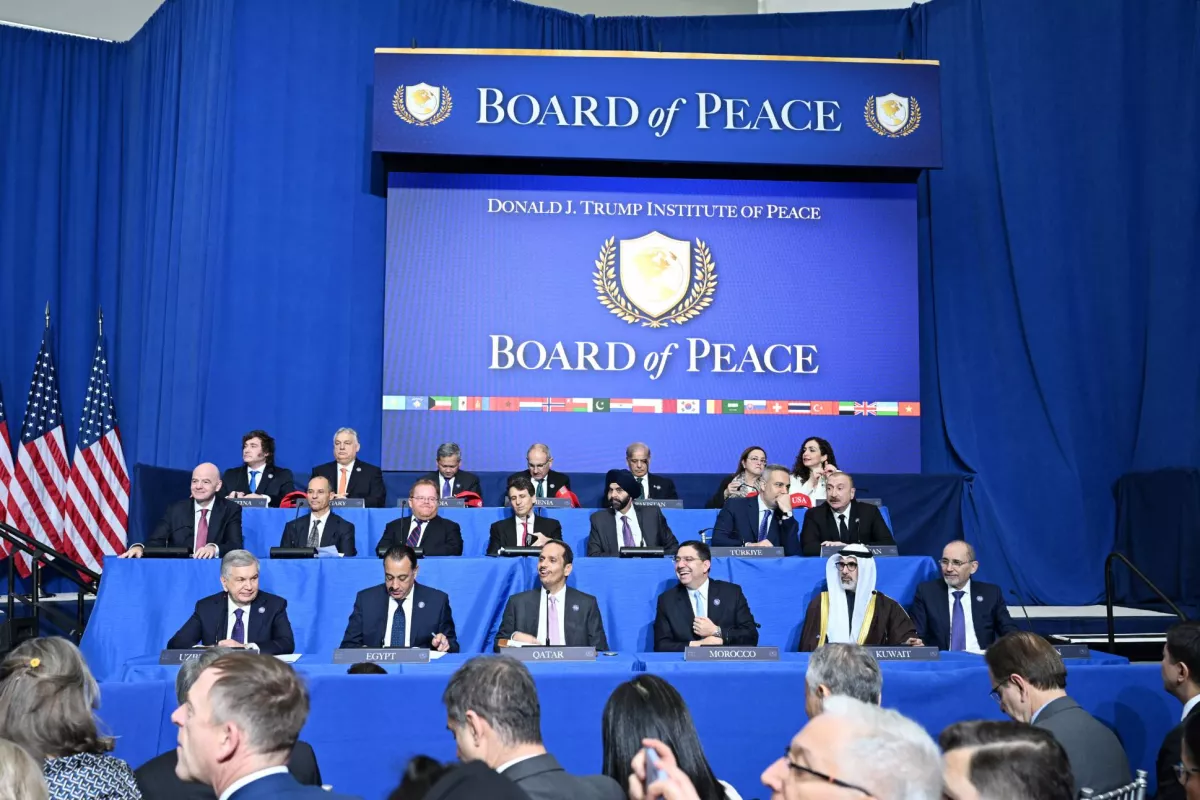
For Azerbaijan, even within the formally Middle East–focused framework of the Board of Peace, the most important issues remain the peace process in the South Caucasus, the restoration of the region’s historical unity—fragmented due to Armenian territorial expansion in the 1980s and 1990s—and the development of the region, particularly through leveraging its potential as a connecting link on the Eurasian continent.
It is clear even to the U.S. leadership that Azerbaijan and Armenia each have their own task of building “their own peace.” This is why Trump specifically highlighted the recent achievements of Aliyev and Pashinyan in progressing toward the end of the long war and overcoming its consequences. The Board of Peace provides a means to enhance the international legitimacy of these efforts by placing the normalisation process in the South Caucasus on the global agenda. As Trump stated at the organisation’s first meeting, the Board will monitor the UN and ensure that it functions properly. This could potentially neutralise attempts to undermine peace efforts through the many structures of the UN.
This is necessary not only because traditional revanchist forces still exist—especially among the large Armenian diaspora, though unable to reverse the course of history—but because they are capable of actions harmful to the peace process. As recently as last summer, revanchist circles within the Armenian diaspora were able to submit a petition to President Trump calling for the release of the leaders of the Karabakh separatists. They then lobbied the issue in Washington, despite Pashinyan’s refusal to support such efforts. They even persuaded U.S. Vice President Vance, during his recent visit to Baku and meetings with Azerbaijani leadership, to raise the matter of the fate of a Moscow-based oligarch who, after the start of Russia’s invasion of Ukraine, chose to shift allegiance and lead Armenian nationalist formations on Azerbaijani territory. More recently, with the involvement of a Member of the European Parliament from Luxembourg, the same revanchist circles attempted to bring up the issue of saving the Armenian separatist leaders before the EU leadership.
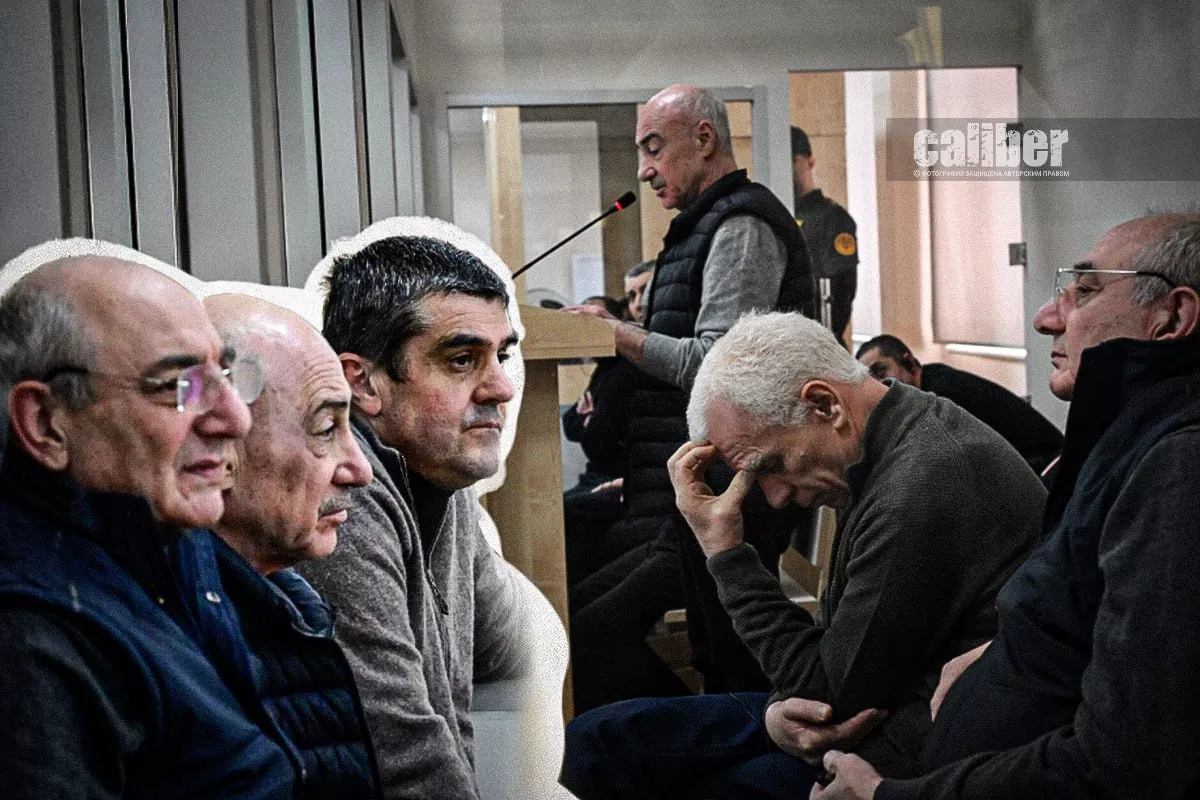
However, integrating the peace process into the international political agenda is necessary for another reason. While Pashinyan more or less supports the current peace process and has even refused to defend the separatist leaders, one should not be under any illusions about certain political manoeuvres. His position is not as idealistic as it may seem at first glance. At the time, Pashinyan simply failed to take control of the separatist project on Azerbaijani territory, and its mafia-like leaders have always been his political opponents in the struggle for power and resources. He despises them for corruption and inefficiency, while pursuing a new foreign policy approach that clearly reflects a desire to reverse at least some of the recent regional political, economic, and strategic transformations that did not favour Armenian nationalists.
Armenia’s “Eurointegration” path—only through Azerbaijan
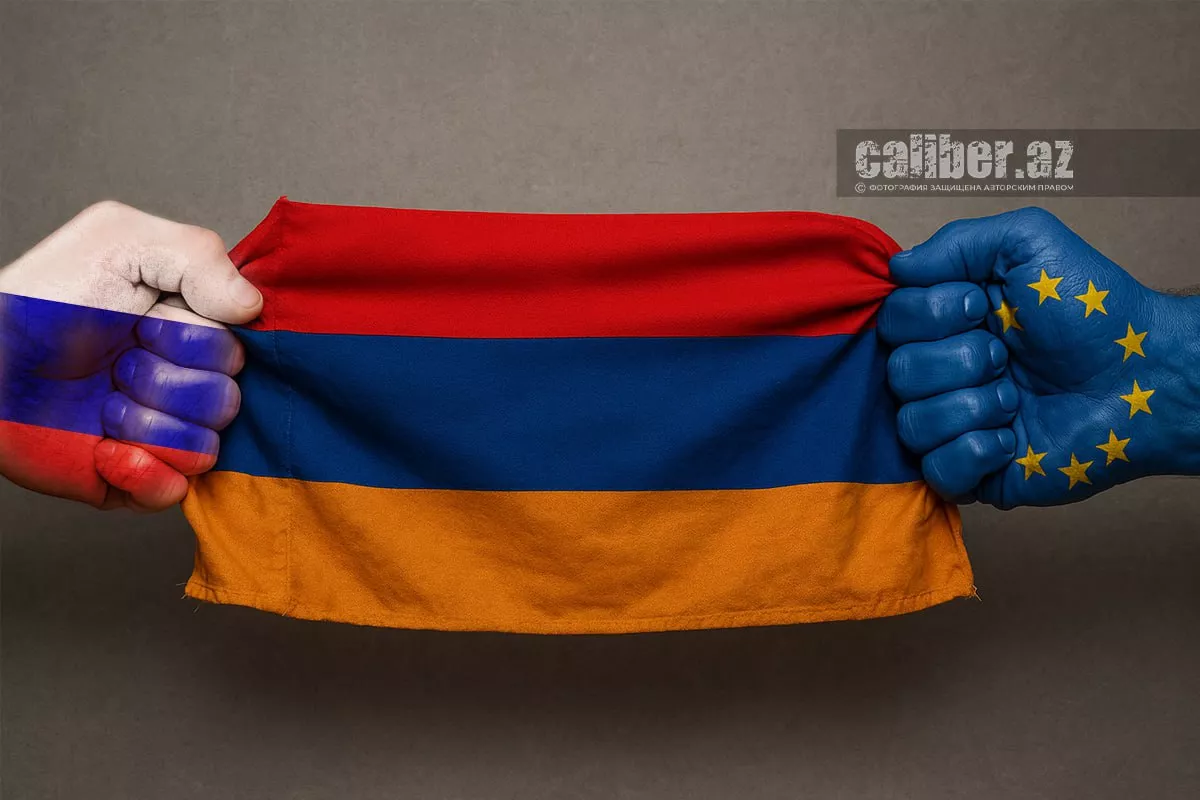
It is no secret that Armenia’s current leadership has decided to place its bet on the European Union and some of its member states, primarily France. Initially, this Euro-orientation was used to slow down and modify the peace process with Azerbaijan. After Azerbaijan’s leadership secured American support for its peace efforts, the same approach began to be used to balance against the U.S., for instance, regarding the Zangezur Corridor.
This has become especially noticeable in recent days, as Armenian authorities stepped up their engagement with the EU against the backdrop of Pashinyan’s participation in the Board of Peace meeting. In Yerevan this week, the Director-General of the Neighbourhood and Enlargement Negotiations of the European Commission, Gert Jan Koopman, was received with a ceremony, and a summit with the EU was announced for March. At the same time, the Armenian side officially opened a military cooperation office at its embassy in the United Kingdom, which has now drawn closer to Brussels, and also decided to sign a military-technical cooperation agreement with Poland. The latter has, as is well known, played a key role in the EU’s quasi-military mission on the Armenia–Azerbaijan border—a role that becomes even more questionable in light of the launch of the “Trump Route for International Peace and Prosperity” in exactly those areas where EU intelligence operatives have operated and plan to continue operating, possibly even more extensively.
On February 19, during a visit to Greece by Armenian President Vahagn Khachatryan, Armenian authorities floated yet another idea that could stall another component of regional normalisation—the process of restoring communications between the South Caucasus and neighbouring regions. They proposed linking Central Asia with Europe through Armenia and… Greece. Given unresolved issues between Yerevan and Athens with the other countries along this route, such separate agreements serve only to provoke further mistrust.
All of this represents, frankly, ambiguous steps from the perspective of peace and stability in the region. Pashinyan continues the long-standing policy of Armenian leadership to internationalise regional issues, doing so at a stage when overcoming the consequences of Armenian territorial expansion is only just beginning. Such internationalisation, de facto, contributes to the disruption of the normalisation process and, at the very least, to the freezing of certain consequences of aggression in Armenia’s favour. In this context, Azerbaijan’s active international efforts are not only appropriate but necessary.
Of course, from the perspective of the interests of both countries and the wider region, it would be better to resolve these issues without intermediaries, as Germany and France did after the Second World War. Baku has long urged its neighbours to do precisely that. Yet Yerevan has chosen a different strategy—engaging in intrigues with Euro-liberal regimes and creating strategic uncertainty, if not outright chaos (consider, for example, Armenia’s peculiar participation in the CSTO and EAEU or the continued Russian military presence on Armenian territory alongside Yerevan’s radical pro-Western rhetoric). Even here, however, cracks are beginning to appear.
These developments were entirely predictable. This is not only because Baku acted quickly to build relations with Trump’s team, understanding from the outset that the liberal establishment—on which Pashinyan’s team in the U.S. and EU relied—was on the verge of collapsing under Trump’s pressure abroad, and that the European Union was not as strong as Yerevan’s elites had hoped. It is also because, in Azerbaijan’s case, despite its active engagement in international affairs, we are dealing with a government that possesses political will and lacks the inferiority complexes typical of post-Soviet liberals. Pressuring Baku—even with Western support—is simply impossible.
A recent attempt to lobby for the release of the Karabakh separatist leader through the U.S. Vice President illustrates this point. In an interview with France 24, Aliyev stated: “These people committed serious crimes against humanity. Imagine after the Second World War, the Nuremberg trials, and all those Nazi leaders, who were sentenced to death, in two months some would come and say, please release them [...] among other issues, this issue was also raised by him [Vance], and I expressed Azerbaijan's position on this issue, and that was it.”
Azerbaijan’s current participation in the Board of Peace—justified, among other things, by the interests of the regional peace process—is grounded in the principles of a sovereign foreign policy. By engaging in ever new international formats, Baku maintains freedom of manoeuvre in other areas as well. Examples include progress in the development of the North–South transport corridor and relations with the EU. For instance, Azerbaijan’s leadership has already met twice this year with EU Enlargement Commissioner Marta Kos on the sidelines of international events. She is expected to visit Baku again later this year.
In other words, Armenia’s paths to European integration pass through Azerbaijan, and attempts by Armenian elites to involve the EU in resolving regional issues in order to push through their preferred outcomes are successfully countered by Azerbaijani diplomacy. This effectiveness comes precisely from Azerbaijan’s active participation in new initiatives such as the Board of Peace.
Just as Azerbaijan previously prepared and employed, in appropriate situations, a variety of measures—including military options—to restore its territorial integrity, it has also developed and continues to develop diverse political, economic, and diplomatic initiatives to consolidate these gains and address the consequences of Armenian nationalist territorial expansion in the region. Azerbaijani policy is based on such a comprehensive approach, and it is this strategy that has led Baku to participate in the Board of Peace.







 editor@caliber.az
 +994 55 444-88-98
 Азербайджан, Баку, ул. Низами, 203, Af Business House, 5-й этаж