










AZAL flight and denial as a doctrine Russia plays with words again
After the tragedy involving the Azerbaijani Embraer 190 flight J2-8243 from Baku to Grozny, Azerbaijan monitored almost every development from the Russian side—but, as they say, there is always room for improvement.
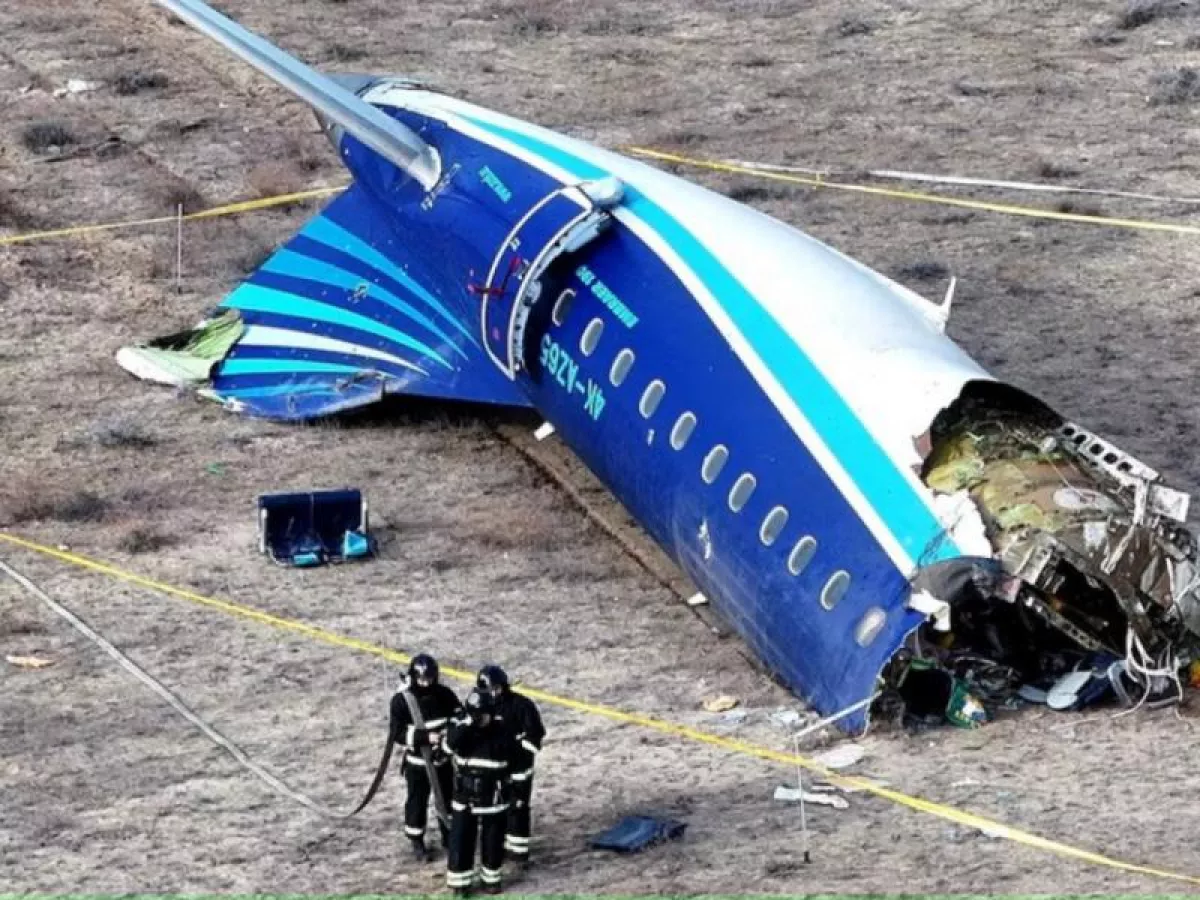
On December 25, 2024, a tragedy occurred in Russian airspace involving an Azerbaijan Airlines (AZAL) Embraer-190 passenger plane flying from Baku to Grozny. The aircraft crashed while attempting an emergency landing at Aktau Airport in Kazakhstan. Thirty-eight people were killed, and twenty-nine others sustained injuries of varying severity.
From the very first hours after the tragedy, it became clear that explanations citing technical failure or pilot error could not compete with the facts. Photographs of the wreckage, which appeared online almost immediately, showed distinctive perforations in the fuselage that spoke volumes to an experienced eye. These were neither metal fatigue cracks nor marks from bird strikes. The holes had a characteristic shape indicating shrapnel damage.
Survivor testimonies left no doubt. Passengers described a sudden impact that triggered panic in the cabin, and how the crew heroically struggled with the uncontrollable aircraft, trying to reach a suitable airfield. Oxygen masks fell from the ceiling, accompanied by screams, pleas, and a sense of inevitable disaster — all forming a picture far removed from standard aviation accident scenarios.
The Azerbaijani side almost immediately presented its own version of events. Baku insisted that the aircraft had been subjected to external interference while in Russian airspace. This position was stated not by anonymous sources within security agencies, but publicly by representatives of the country’s highest leadership. President Ilham Aliyev spoke directly and firmly in his addresses, demanding a full and honest investigation from Russia.
In an interview with Azerbaijani television, the president stated that the aircraft that crashed in Aktau had been damaged “as a result of fire from the ground”:
“Of course, our plane was hit by accident. Of course, there can be no talk of a deliberate act of terror here. Therefore, admitting guilt, apologizing in a timely manner to Azerbaijan, which is considered a friendly country, and informing the public about this – these were measures and steps that should have been taken. Unfortunately, for the first three days, we heard nothing from Russia except for some absurd theories.”
To be fair, immediately after the incident, Vladimir Putin, in a phone call with Ilham Aliyev, apologised that “the tragic incident with the Azerbaijan Airlines aircraft occurred in Russian airspace,” but did not admit Russian responsibility. In addition, for an extended period, the Russian media space circulated false theories claiming that the Azerbaijani plane had crashed supposedly due to a “collision with a flock of birds” or because of “an explosion of a gas cylinder on board.” Even more cynical — and at times bizarre — versions were also put forward.
Being fully aware of how the media environment in Russia is controlled, we can confidently assert that the above-mentioned assumptions were the result of directives issued to Russian propagandists by their high-ranking supervisors. Ultimately, the denial-of-obvious strategy adopted by Russia led to serious complications in relations between Baku and Moscow.
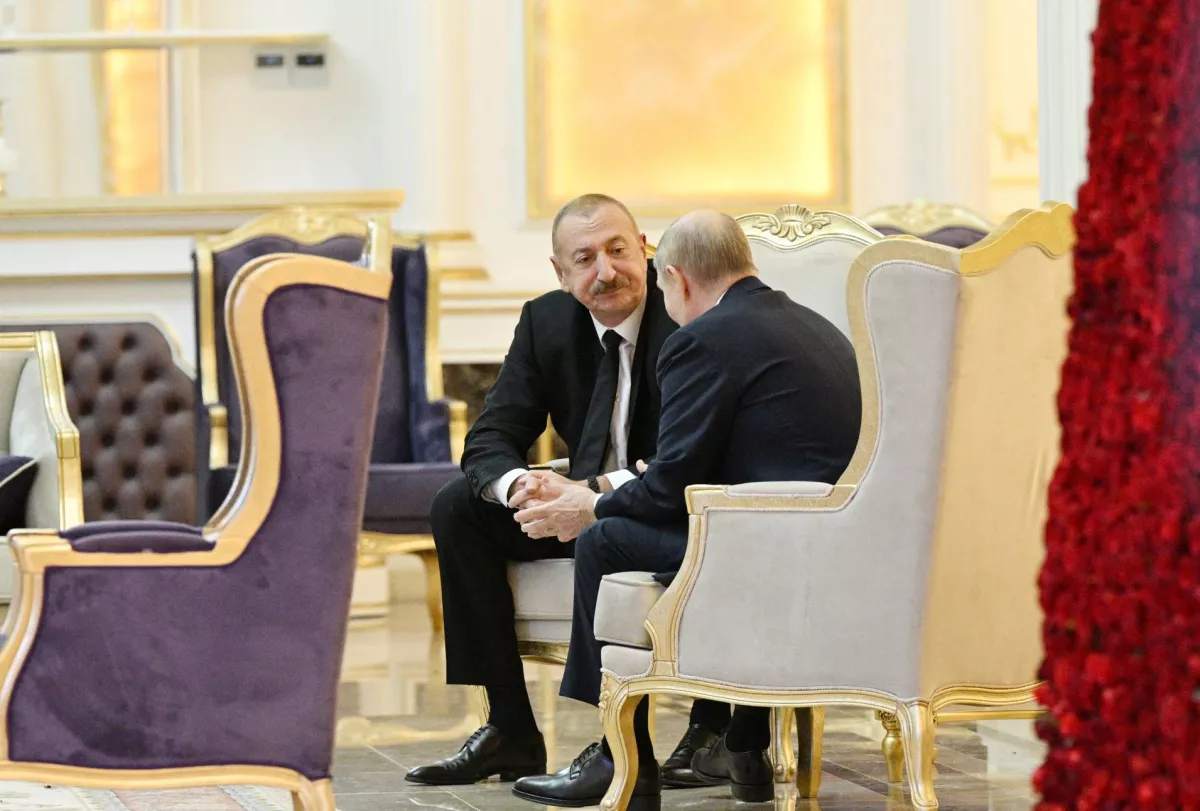
After the meeting between President Ilham Aliyev and Russian President Vladimir Putin in Dushanbe on October 9, 2025 — during which the Russian leader acknowledged that a Russian air defence system had been triggered and that the Azerbaijani aircraft had been hit, and promised that “the Russian side will do everything that is required in such tragic situations in terms of compensation. A legal assessment will also be given to the actions of all officials” — relations between the two countries began to return to a more normal course.
However, time passed, and no concrete steps were taken by the Russian side in this regard. Moreover, at the end of December last year, it became known that the Russian Investigative Committee had closed the criminal case into the plane crash. This news was met with bewilderment in Azerbaijan. How can a case be closed when the investigation is not yet complete, when questions about the responsible parties and the mechanisms of the incident remain unresolved?
On the eve of the 34th anniversary of the Khojaly genocide, during a visit to the “Mother’s Cry” memorial, Azerbaijani Foreign Minister Jeyhun Bayramov rightly stated that Russia must fulfil the promises made by Vladimir Putin during his meeting with the President of Azerbaijan in October 2025.
“The plane was shot down due to an error by the Russian Ministry of Defence. Our expectation is that the Russian side will take all necessary measures, provide a legal assessment of what happened, and pay compensation,” Bayramov said.
The reaction from Moscow to the statement by the Azerbaijani foreign minister was swift. Russian Foreign Ministry spokeswoman Maria Zakharova claimed that Russia “has been consistently implementing all agreements between Moscow and Baku regarding the AZAL plane crash. Detailed explanations were provided from the Russian side, and we are systematically working to fulfil all the agreements reached, regularly informing our Azerbaijani partners both through diplomatic channels and at the government level.”
This response can be aptly described with the concise but very precise expression “pouring from empty into void,” and it clearly demonstrates that within Russian structures, the right hand does not know what the left is doing. What sequence or fulfilment of agreements is Zakharova talking about when Russia categorically refuses to provide a legal assessment of the incident or pay compensation?
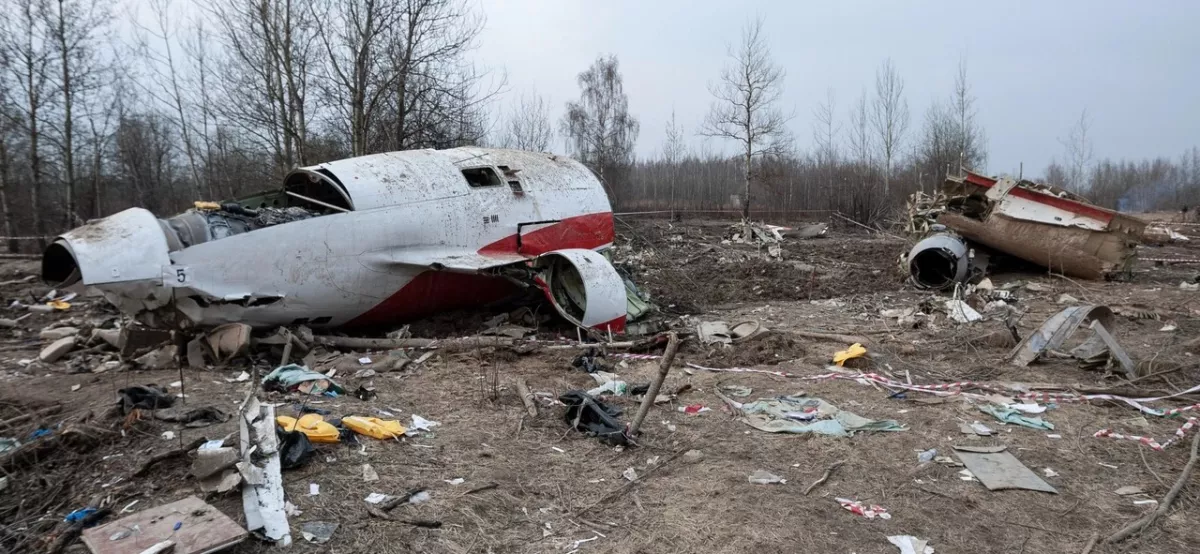
Such a strategy of denying the obvious is by no means new for Russia, and there are plenty of examples. On April 10, 2010, a Tu-154 aircraft carrying Polish President Lech Kaczyński and his wife crashed near Smolensk, killing 96 people. The Polish parliament officially blamed Russia for the incident, yet Russia refused to admit any responsibility.
Later, on July 17, 2014, a Malaysian Airlines Boeing 777−200ER was shot down over Donbas, killing 298 people. In May of last year, the Council of the International Civil Aviation Organization (ICAO) concluded definitively that the Russian Federation was responsible for the crash of flight MH17 and that it had violated the Convention on International Civil Aviation.
At the time, Dutch Foreign Minister Caspar Veldkamp emphasised the significance of this ICAO conclusion for the victims’ families:
“It cannot take away their grief and pain, but the decision is an important step towards establishing the truth and achieving justice and accountability for all victims of Flight MH17, and their families and loved ones.”
He also stressed that the ICAO’s findings send a clear signal to the international community that states cannot violate international law with impunity.
Nevertheless, Russia once again refused to admit responsibility, taking its familiar stance of denying the obvious. However, this comes as little surprise: the virtuosity with which Russia today flouts all existing norms of international law shocks nearly the entire world.







 editor@caliber.az
 +994 55 444-88-98
 Азербайджан, Баку, ул. Низами, 203, Af Business House, 5-й этаж