










Azerbaijan’s debt strategy pays off Investment-grade rating and minimal debt
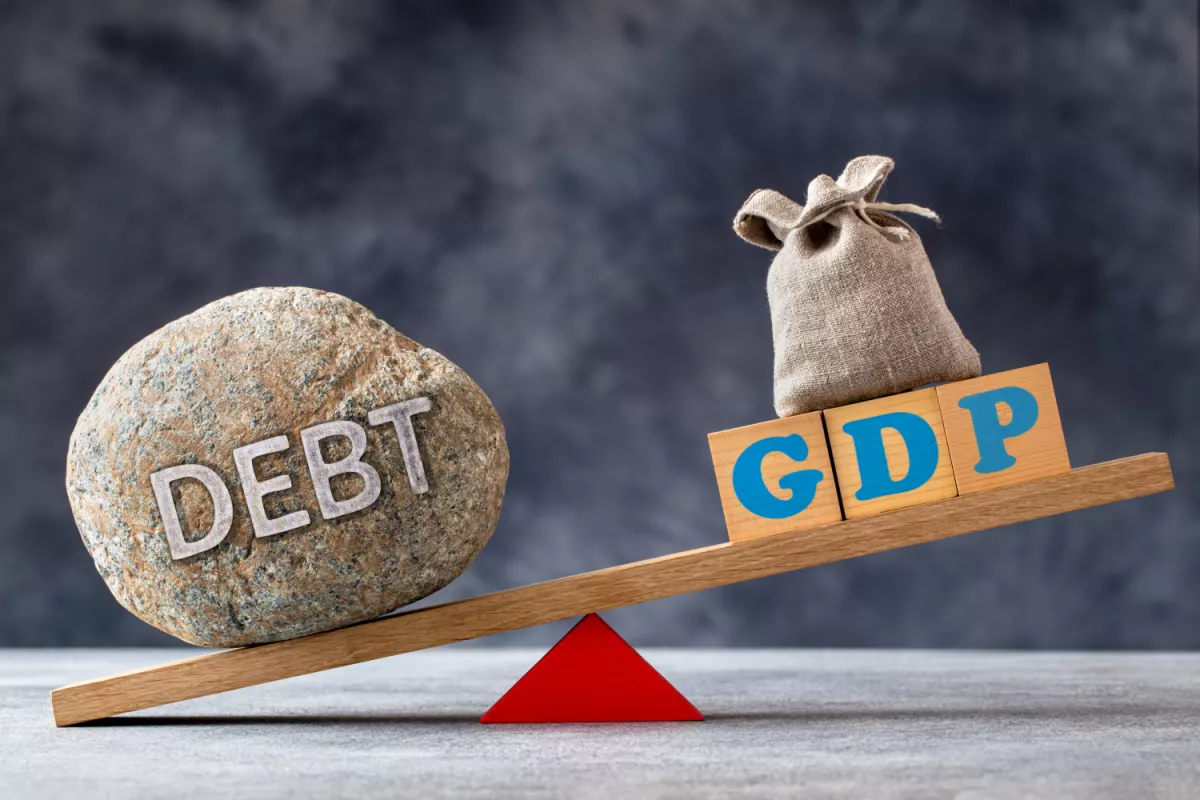
Attracting funds from international donors to implement various capital-intensive projects, the profitability of which requires a long period of time, is a common global practice. External borrowing is also important for Azerbaijan; however, in recent years, the government has followed a conservative approach in this matter. As a result, the country today ranks among the most financially stable in the world in terms of the ratio of external debt to GDP—a position confirmed by forecasts from several international rating agencies.
This positive financial situation was recently discussed at a meeting of the Collegium of the Ministry of Finance of the Republic of Azerbaijan, where the performance of the Public Debt and Financial Liabilities Management Agency in 2025 was reviewed.
According to estimates by the International Monetary Fund (IMF), in 2025, the size of global government debt reached $110–111 trillion, rising to around 94% of the world’s GDP. This trend is driven by the slowdown in global economic growth, trade and tariff disputes, and high market volatility, which compel states to increase borrowing. The largest debtors in the world are the United States, China, Japan, the United Kingdom, and France, whose combined debt accounts for nearly $75 trillion of the total global debt burden.
Global issuance centres have traditionally operated in debt, effectively shifting this burden to the rest of the world through mechanisms such as “printing presses,” securities, and government obligations. However, the situation has deteriorated significantly in the post-pandemic period. According to experts, the “budgetary room for manoeuvre” for most developed countries has narrowed in recent years, while the need for additional expenditures—such as funding the energy transition, supporting stagnating industries, and financing costly social programmes—has increased. At the same time, economic growth prospects in Europe and the United States remain modest.
In developing markets that are heavily dependent on commodity exports, weaknesses in monetary and fiscal policy are also evident. Under these circumstances, governments are attempting to cover budget deficits by increasing external debt. In this context, the IMF warns that, under the most pessimistic scenarios, total global debt could exceed 117% of world GDP by 2027.

Armenia provides a clear example of a developing country pursuing such a risky policy. As of early 2026, the total government debt of the neighbouring state had reached $14.5 billion, marking a 13.1% increase year on year. Of this, external debt exceeded $8 billion, rising by 80% since 2018. By the end of 2025, Armenia’s government debt-to-GDP ratio was estimated at 51.5%, and under current budgetary policies, public debt is expected to reach 55% of GDP this year.
Recent assessments indicate that the high proportion of government debt denominated in foreign currency, combined with the financial sector’s generally high dollarisation, hampers Armenia’s ability to achieve stable and consistent development. The country is clearly living beyond its means. These factors push its sovereign credit indicators into a risk zone, depress banking system ratings, and place a significant burden on future generations.
How does Azerbaijan fare in this regard? Notably, in terms of the total external debt-to-GDP ratio, the country has consistently ranked among the leaders not only in the post-Soviet space over the past decade but also as one of the most financially stable economies in the Central and Eastern Europe region.
As of January 1, 2026, Azerbaijan’s external government debt stood at just over $4.813 billion, equivalent to 6.3% of actual GDP for 2025. This favourable debt-to-GDP ratio keeps the domestic financial system well outside the risk zone and allows the country to spend considerably less on servicing external debt in the years ahead.

Positive developments in this area were once again highlighted at the meeting of the Collegium of the Ministry of Finance of the Republic of Azerbaijan held on 18 February, chaired by Finance Minister Sahil Babayev.
“Socio-economic growth and macroeconomic stability in our country positively impact the execution of the state budget, creating conditions not only for the full achievement of revenue and expenditure forecasts but also for maintaining fiscal discipline and further strengthening our financial position,” the minister noted.
According to Minister Babayev, the strategic objectives outlined in the updated Debt Strategy for 2022–2025 have been fully achieved. Key priorities—such as keeping the total government debt-to-GDP ratio below 30% and maintaining external government debt under the critical threshold of $10 billion—have been successfully met.
At the same time, to keep interest rate risk at an acceptable level, the share of floating-rate debt in the overall portfolio did not exceed 50% by the end of 2025. Measures were also taken to expand domestic borrowing while gradually reducing external debt, as well as to incrementally increase the average maturity of government securities.
During the collegium, the report of the Public Debt and Financial Liabilities Management Agency for the past year was presented. As of January 1, Azerbaijan’s total government debt (both domestic and external) slightly exceeded 25.987 billion manats (≈ $15.29 billion), equivalent to 20.1% of GDP. Compared with the beginning of the year, the total debt decreased by 5.1%, or 1,392.7 million manats (≈ $819.2 million).
It is particularly noteworthy that only about 31.5% of the government debt consists of gradually declining external debt, while the remainder is domestic debt.
Equally important is the country’s strong financial safety cushion. According to data from the Central Bank of Azerbaijan (CBA), the country’s strategic foreign exchange and gold reserves reached $85.1 billion by the end of last year. This substantial buffer ensures financial stability and effectively reduces risks related to the republic’s debt obligations.
A comparatively low external debt and substantial foreign exchange and gold reserves are decisive factors in improving the country’s ratings with international donors and rating agencies.
“Two major rating agencies upgraded our credit rating. There were Moody's and Fitch – upgraded to investment level, with a prognosis also upgraded from stable to positive,” President of Azerbaijan Ilham Aliyev noted in an interview with local television channels in January of this year. “It's not only a matter of prestige, though it is, it also allows us to borrow at a better rate.”
The head of state also noted that, given the high stability of the country’s external debt, a decision was made to undertake additional borrowing of comparatively small amounts—$3–4 billion—to finance transport projects, initiatives to improve water supply and sewage systems, as well as connectivity infrastructure.
In particular, a large-scale water supply and sewage programme is planned very soon to meet high demand in Baku, Sumgayit, Khirdalan, and across the Absheron Peninsula. This includes water resource management, such as commissioning Azerbaijan’s first industrial-scale desalination plant, which will cover a significant portion of the demand for drinking water, and constructing new canals to supply more water for agriculture.
Foreign loans may also be needed to address the capital’s transport challenges—for example, to support a programme for building ten additional metro stations in Baku, constructing new bridges and tunnels, and financing other infrastructure projects.







 editor@caliber.az
 +994 55 444-88-98
 Азербайджан, Баку, ул. Низами, 203, Af Business House, 5-й этаж