










Berlin, Warsaw, Paris: Europe’s emerging nuclear triangle? The battle for strategic autonomy
Recently, Warsaw and Berlin have been increasingly vocal about the importance of a nuclear umbrella. How realistic are these plans?
Rattling the “nuclear sabre”
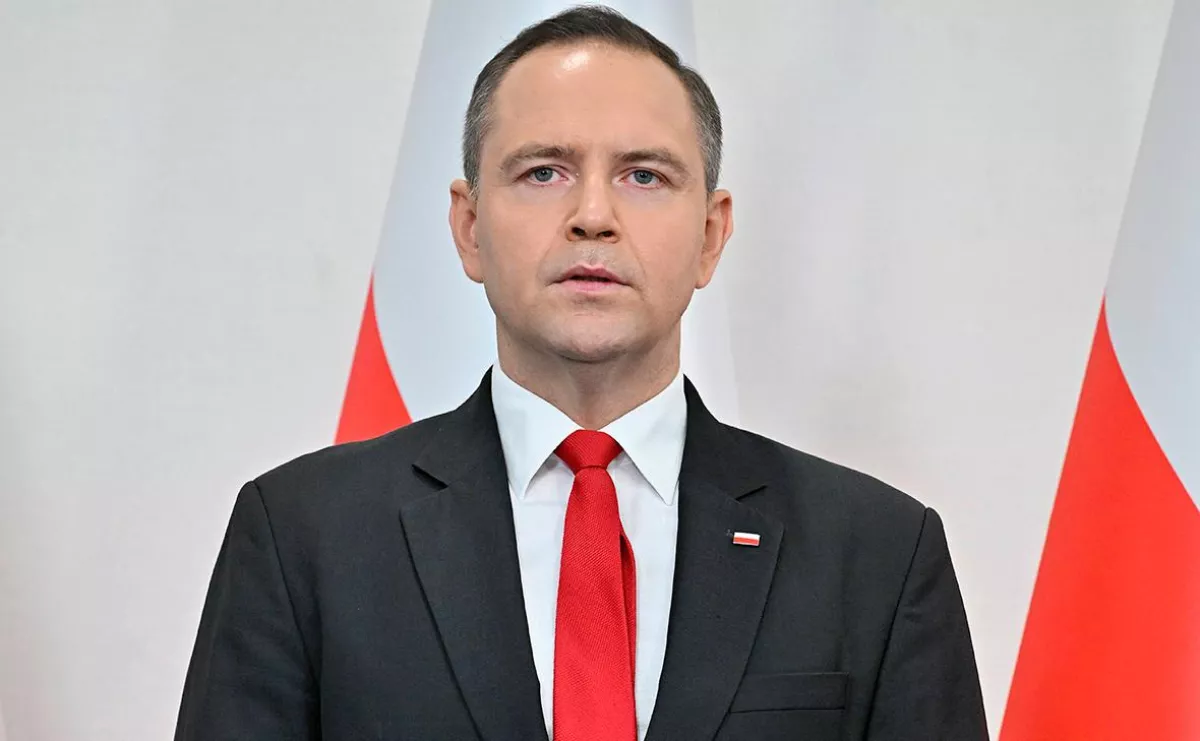
At the Munich Security Conference, German Chancellor Friedrich Merz stated that he is negotiating with France on an independent “European nuclear defence.” On February 15, commenting on this statement on Polsat News, Polish President Karol Nawrocki noted that he is “a great advocate for Poland to join the nuclear project.”
Berlin and Warsaw justify their desire to possess nuclear weapons with “the war in Ukraine and the Russian threat.” However, there is another reason for the current focus on the topic — the transformation of transatlantic relations and the policies of Trump’s administration. Previously, the security of most NATO countries was ensured primarily by the American “nuclear umbrella.” Apart from the US, only the United Kingdom and France possess their own nuclear weapons within the alliance.
Now, for a number of reasons, Washington is somewhat distancing itself from the European agenda. While Nawrocki does not explicitly voice this motivation, the German chancellor openly calls for a reorganisation of transatlantic relations in light of changes associated with Donald Trump’s policies. The idea of an independent European nuclear component is seen as a key element of the EU’s defence “sovereignty”—a sort of instrument of strategic autonomy.
It was at the Munich Security Conference that the question of European nuclear capability was publicly raised at such a high level for the first time. In addition to Merz, French President Emmanuel Macron also touched on the topic. According to several reports, the initiative is also being discussed by the Baltic countries, Sweden, and Belgium.
The spread of the non-peaceful atom
The deployment of nuclear weapons in Europe did not stop even after the end of the “Cold War.”
This concerns NATO’s Nuclear Sharing program, which allows nuclear-armed member states to station their weapons on the territory of non-nuclear allies.
According to available data, as of 2009, American nuclear weapons were located in Belgium, the United Kingdom, Germany, Italy, the Netherlands, and Türkiye. In the same year, Germany’s Social Democratic Foreign Minister Walter Steinmeier called for the withdrawal of American nuclear bombs from Germany, stating that they were “obsolete.” However, Chancellor Angela Merkel did not support this initiative.
After the deterioration of relations between the US and Türkiye, some nuclear warheads were removed from Turkish territory.
As of 2021, Europe still had around 100 B61 tactical nuclear bombs. Formally classified as tactical nuclear weapons, the yield of the latest modifications can reach up to 170 kilotons, comparable to that of strategic warheads. These munitions can be deployed on the delivery systems of host countries, but their use is possible only by decision and order of the United States.
Poland has repeatedly attempted to join the Nuclear Sharing program. In 2022, then-President Andrzej Duda made a corresponding proposal to former US President Joe Biden, but was refused. In 2023, Prime Minister Mateusz Morawiecki also raised the issue—again without success.
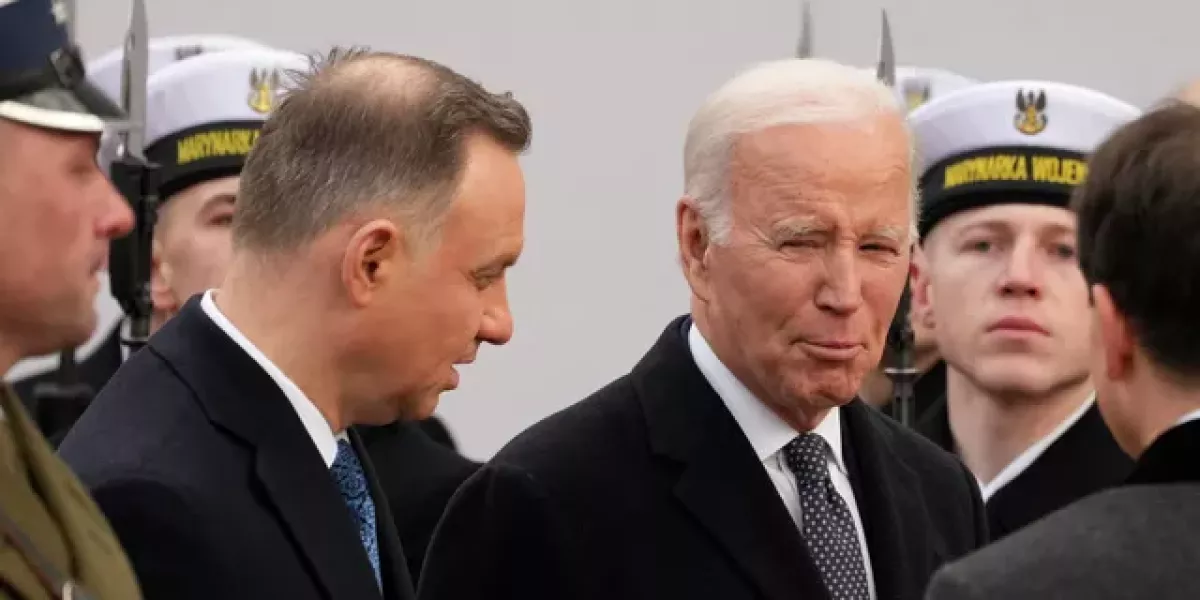
In March 2025, near the end of his presidential term, Duda once again addressed the topic of expanding nuclear presence in Europe in an interview with the Financial Times. His successor as president, Karol Nawrocki, continued this line. In September 2025, in an interview with the publication Fakt, he stated: “Nuclear weapons would be a good solution for Poland’s security.”
At the same time, Nawrocki referred to historical arguments: “Our experience as a national community shows that Poland would never use its weapons to attack other countries—whether neighbours or other independent states… Our wars, which we have fought over the centuries, especially in the 20th century, have always been ‘Augustinian’ wars—that is, defensive wars, in defence of independence and the values important to us.”
This statement appears to be debatable. Poland has indeed repeatedly fallen victim to the expansionist policies of neighbouring powers—the German, Austrian, and Russian empires. However, its own history also includes episodes of forceful expansion of influence. Among them are the annexation of territories in Western Belarus and Western Ukraine, as well as the Vilnius region in 1920, and the occupation of the Teschen (Cieszyn) area of Czechoslovakia in 1938.
The atomic “Euro-bomb”
In what format does the EU intend to possess its own nuclear weapons? So far, there is less clarity here than in declarations about the need to acquire “nukes.” In the aforementioned interview with Fakt, Nawrocki noted that Poland is ready to participate in a nuclear-sharing program. Initially, this would involve the possible deployment of French nuclear weapons on Polish territory.
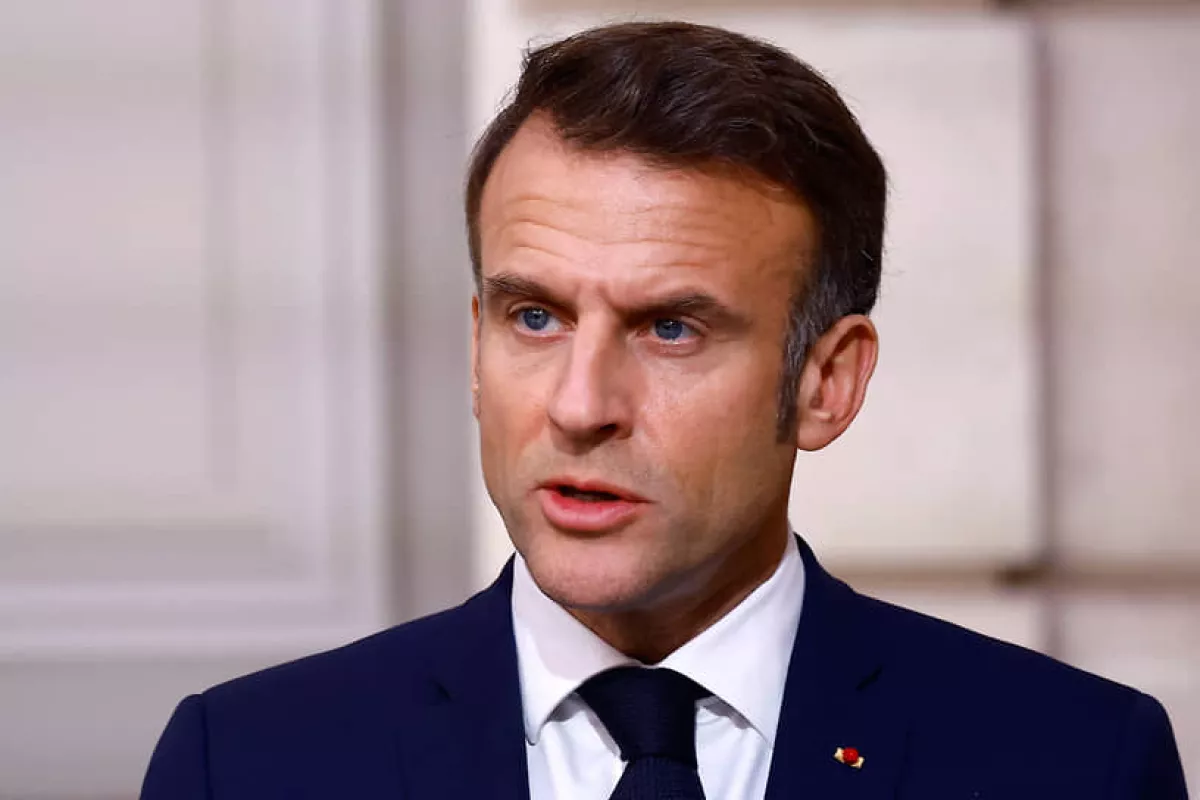
In May 2025, Emmanuel Macron, in an interview with TF1, did not rule out negotiations with Warsaw on this issue. According to him, it could be analogous to NATO’s Nuclear Sharing program: only, instead of the US, nuclear warheads would be deployed by France in willing countries.
“We are ready to begin negotiations with Warsaw on placing nuclear weapons in Poland under French control, as the Americans do in some European countries,” Macron stated.
In September, President Nawrocki also stated in an interview with the French channel LCI that he expects cooperation between Poland and Paris in the field of nuclear deterrence. In a recent interview with Polsat News, Nawrocki went further, saying that Poland should consider developing its own nuclear potential. The Polish word rozwój can indeed be translated not only as “development” but also as “research and development.”
However, in practice, Warsaw lacks both the infrastructure and the political commitments necessary to speak of creating its own atomic bomb. The discussion is more about the possible deployment of allied weapons rather than a national program. At the same time, legal constraints remain. Poland is a signatory to the Treaty on the Non-Proliferation of Nuclear Weapons (NPT). When journalists asked whether the US would allow Poland to obtain nuclear weapons in violation of international obligations, Nawrocki replied: “I don’t know, but we must move in a direction that will allow us to start working.”
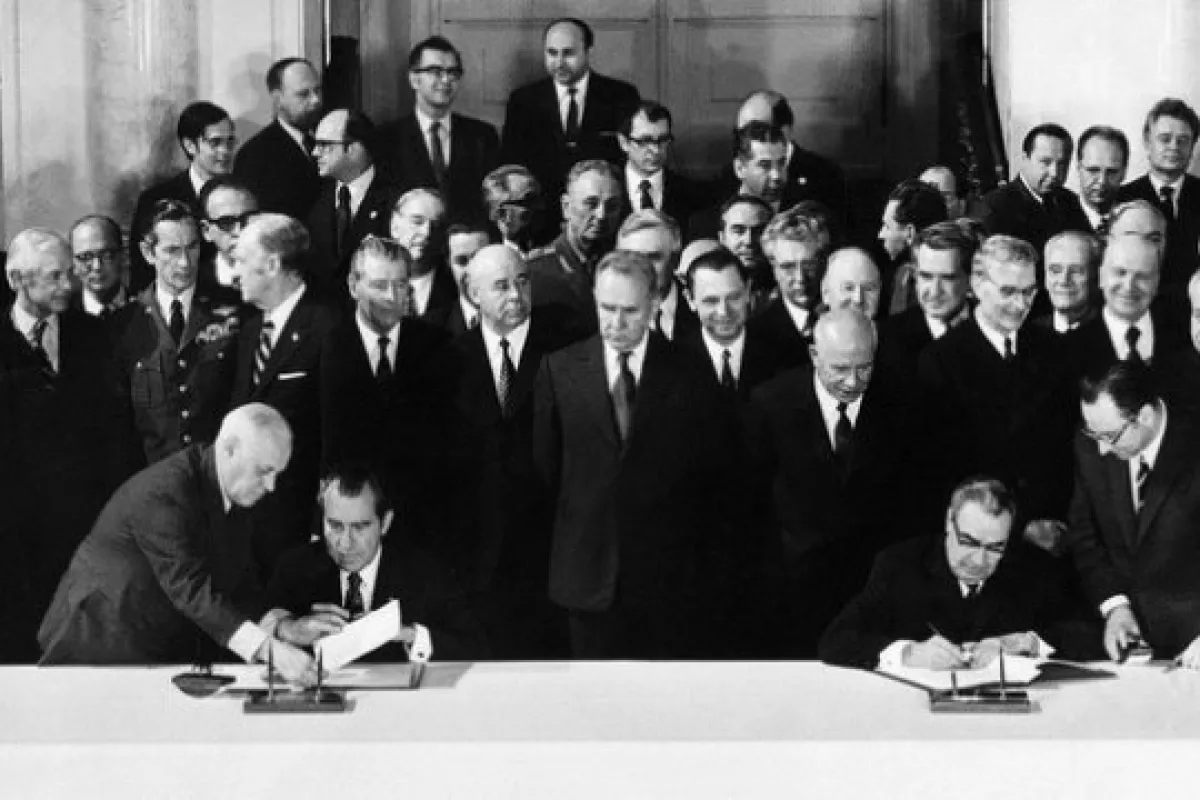
Even stricter obligations bind Germany: in addition to the 1970 NPT, there are the provisions of the 1990 Final Settlement on Germany, which include a renunciation of nuclear weapons. Under the Nuclear Sharing program, US nuclear warheads are stationed on German territory, but they remain under American control, and NATO maintains that this does not violate the NPT.
Nevertheless, Berlin is also discussing the possibility of hosting French nuclear assets on its soil. However, German Vice-Chancellor Lars Klingbeil publicly denies any intentions to create a national nuclear arsenal. The specific model of a potential “European nuclear format” remains a subject of debate.
Among the options being discussed are extended joint German control over the French nuclear arsenal or the creation of European nuclear forces involving France, Germany, the United Kingdom, and possibly Poland.
Chancellor Merz is a proponent of deepening cooperation with Paris in this area. In practice, this could mean the formation of a new architecture for European military cooperation. However, a fundamental question arises: who would exercise political and military control over such forces?
Given the current configuration, France—as the only EU country possessing its own nuclear arsenal—is most likely to play the leading role.
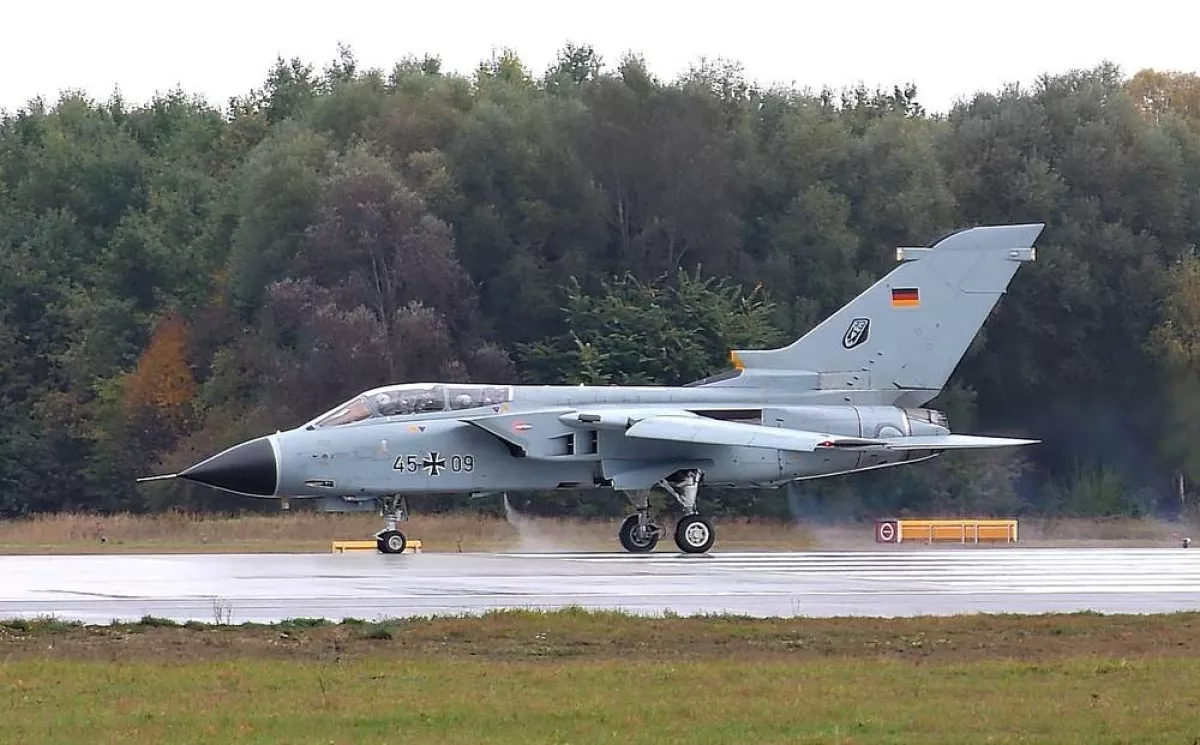
Poland and Germany already have delivery systems capable of deploying American B61 bombs: Poland’s F-16 Vipers and Germany’s Panavia Tornados. France, in turn, uses multirole Dassault Rafale fighters capable of carrying medium-range air-to-surface missiles, the ASMP and ASMP-A, equipped with nuclear warheads.
The ASMP-A cruise missile is equipped with a thermonuclear warhead with a yield of up to 300 kilotons and can strike targets at a range of approximately 500–600 km. France also possesses sea-based strategic ballistic missiles (the M51 family). However, if we are talking about a European analogue of NATO’s Nuclear Sharing missions, it is more likely that the focus would be on tactical or “pre-strategic” weapons.
In September 2025, three Rafale B fighters from the nuclear squadron EC 2/4 La Fayette arrived in Poland from the 113 Saint-Dizier-Robinson Air Base, along with an A400M Atlas military transport aircraft, also used for logistical support. According to French military doctrine, ASMP-A missiles are considered a tool for “preemptive” strikes within the framework of deterrence.
The question arises: are these initiatives driven solely by heightened tensions on the eastern front? After all, under the Nuclear Sharing program, American bombs are already stationed in Europe, including in Germany. Theoretically, a similar format could be extended to Poland.
However, the drive to create independent European strategic forces may also be linked to the EU’s desire to increase its level of strategic autonomy—not only in relation to Russia or China but also in the context of evolving relations with the United States. In Mario Draghi’s report on Europe’s competitiveness, the United States is explicitly mentioned as one of the EU’s key economic competitors. The situation surrounding Greenland and trade disputes in recent years has intensified the discussion on the need for greater European independence. Macron has repeatedly emphasised that Europe must become more self-reliant in defence matters.
The incumbent Polish president frames his position as concern for the “safety of the Polish people.” Merz and Macron express themselves in a similar vein. However, it is clear that any expansion of the nuclear factor in Europe objectively increases strategic risks. In the event of escalation, potential targets would include not only military facilities but also the territories of the countries hosting such systems.
Ultimately, the question is whether the new deterrence architecture will genuinely enhance citizens’ security or simply lead to another cycle of tension. So far, the rhetoric across the European continent emphasises strengthening defence capabilities rather than reducing nuclear risks.







 editor@caliber.az
 +994 55 444-88-98
 Азербайджан, Баку, ул. Низами, 203, Af Business House, 5-й этаж