










Games of Ukrainian oligarchs New projects — Oleksandr Usyk and Vladyslav Heraskevych
Remarks by reigning world boxing champion Oleksandr Usyk that, following the end of his professional career, he would consider running in Ukraine’s presidential election have triggered a wave of reactions across the media and social networks.
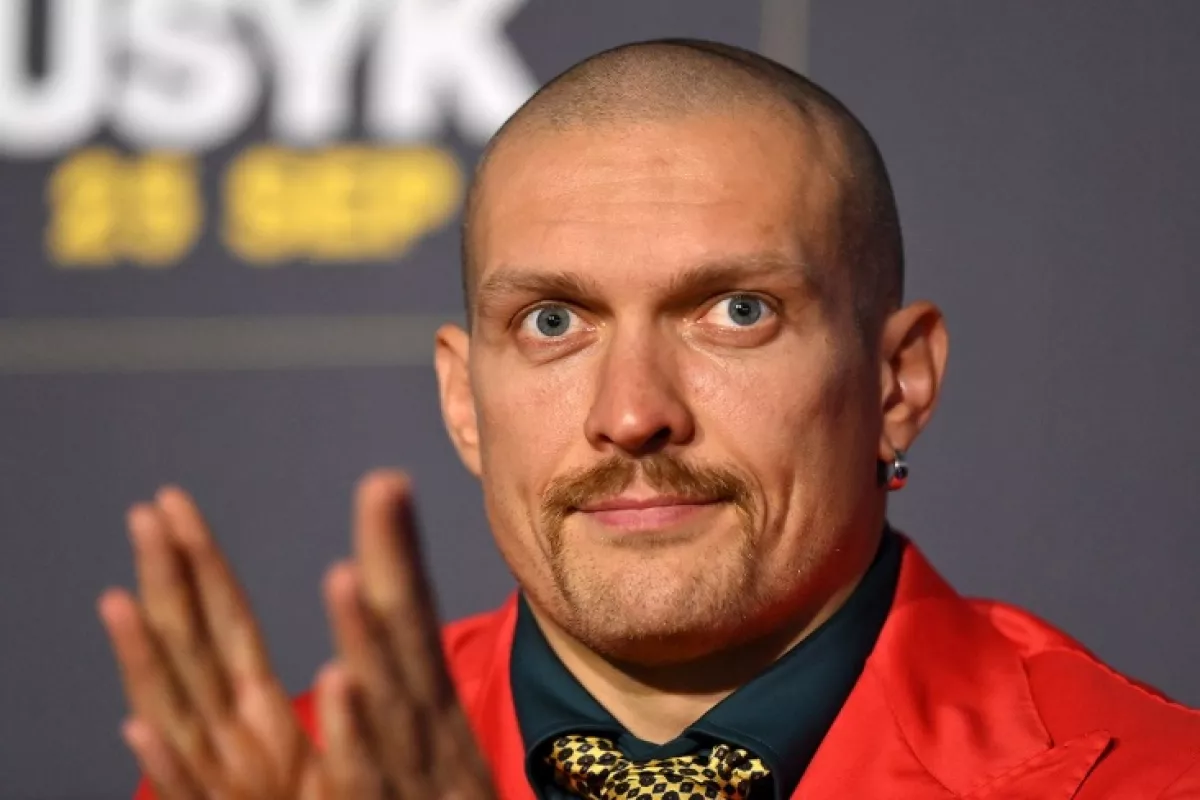
In an interview with Andriy Bednyakov, the athlete said he plans to spend a couple more years in the ring and then “work for the state.” When the host jokingly asked whether he intended to become mayor of Konotop, Usyk replied: “I am not going to take any position lower than president.”
Of course, one could assume there was an element of humor in these remarks, as Usyk is known for his ironic communication style and has made similar comments before. Nevertheless, the very idea of a celebrated athlete transitioning into big-time politics does not genuinely surprise anyone in the Ukrainian context. On the contrary, it fits quite neatly into the traditions of Ukraine’s political system over the past decades.
It is enough to recall that the current mayor of Kyiv is former world boxing champion Vitali Klitschko. After the victory of the Revolution of Dignity in 2014, he had clearly articulated presidential ambitions, and at the time many considered him one of the leading contenders for the country’s highest office. However, at the last moment, the situation changed.
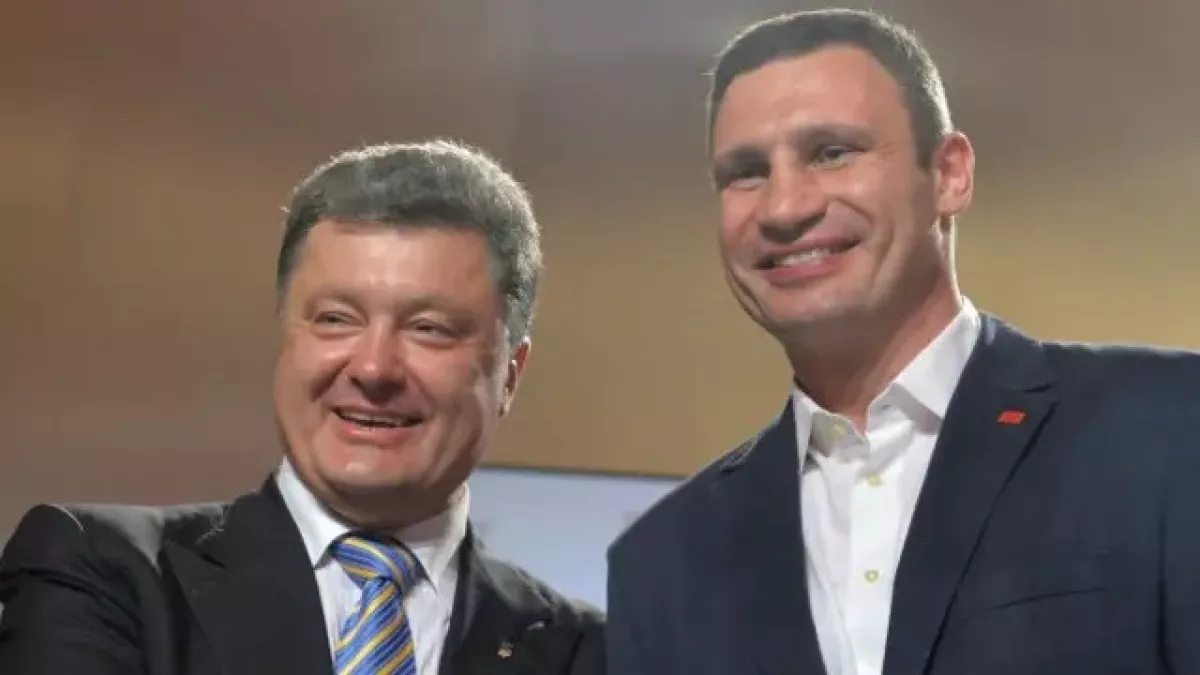
During informal negotiations involving Ukrainian oligarch Dmytro Firtash (arrested in Vienna in March 2014 and later placed under sanctions), Petro Poroshenko, and Klitschko himself, a decision was made to throw support behind Poroshenko. The former world boxing champion endorsed his candidacy and instead focused on running for mayor of the capital.
This episode vividly illustrates how key domestic political processes in Ukraine have, for decades, been shaped by the influence of big capital. Oligarchs have continued to act as informal arbiters of Ukrainian politics, determining which political projects receive funding, media backing, and administrative resources.
The system in which big business and politics became tightly intertwined began taking shape during the presidency of Leonid Kuchma. It was during that period that a model was firmly established whereby powerful financial-industrial groups gained the ability to participate directly in governing the country through parties, media outlets, and parliamentary factions under their control.
Kuchma himself weathered numerous political crises and accusations, including alleged involvement in the murder of journalist Georgiy Gongadze and large-scale corruption. During the Maidan protests in the early 2000s, the slogan “Kuchma — get out!” rang out across the square. Nevertheless, the former president now lives quietly abroad, spending his time at a villa in France. Yet the influence of the system he created endures, and, according to observers, many processes in Ukrainian politics still unfold with the participation of representatives of the oligarchic clans that took shape during that era.
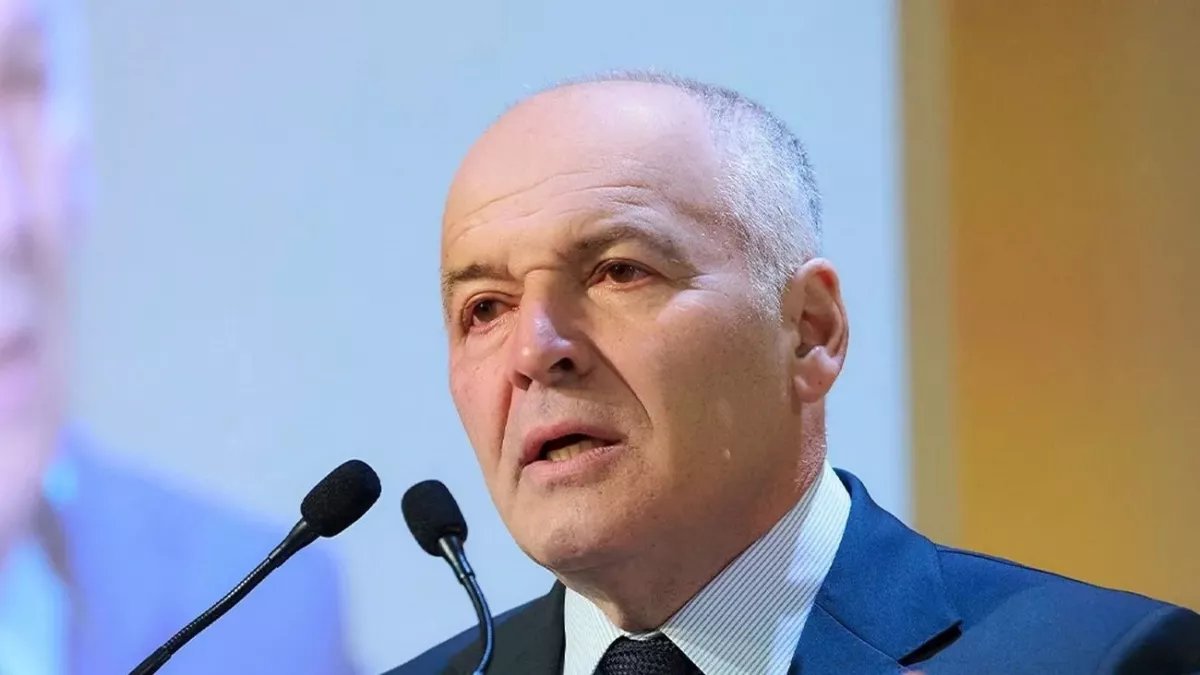
This comes as little surprise, given that one of the most influential figures in this milieu is Viktor Pinchuk — Leonid Kuchma’s son-in-law and one of Ukraine’s wealthiest businessmen, known for his close ties to Western political and business circles. For example, he maintains strong relations with the Clinton family in the United States and annually hosts the so-called “Ukrainian Breakfasts” in Davos — a venue where international political and economic issues, as well as the future of the world in general and Ukraine in particular, are discussed.
These events traditionally bring together influential politicians, diplomats, and representatives of international organizations. For instance, at this year’s “Ukrainian Breakfast,” participants included NATO Secretary General Mark Rutte, as well as the leaders of Latvia, Croatia, Belgium, Netherlands, and Finland. Such a range of participants clearly demonstrates the scale of the Ukrainian oligarch’s international connections. At the same time, Pinchuk also commands considerable political resources within Ukraine — from members of the Verkhovna Rada to representatives of regional elites.
Another powerful businessman who has retained strong positions is Rinat Akhmetov. In the past, he was often described as the principal financial backer of the now-ousted president Viktor Yanukovych. After the Revolution of Dignity, many expected him to face serious political, financial, and legal troubles, but that did not happen.
Despite losing a significant share of his economic assets in Donbas, where he had long wielded enormous influence, Akhmetov has managed to retain important positions in Ukrainian politics and media. Substantial informational resources remain under his control, along with ties to both current and former high-level politicians. It is precisely through such mechanisms that new public figures periodically emerge in Ukrainian politics — often from the worlds of sports or show business.
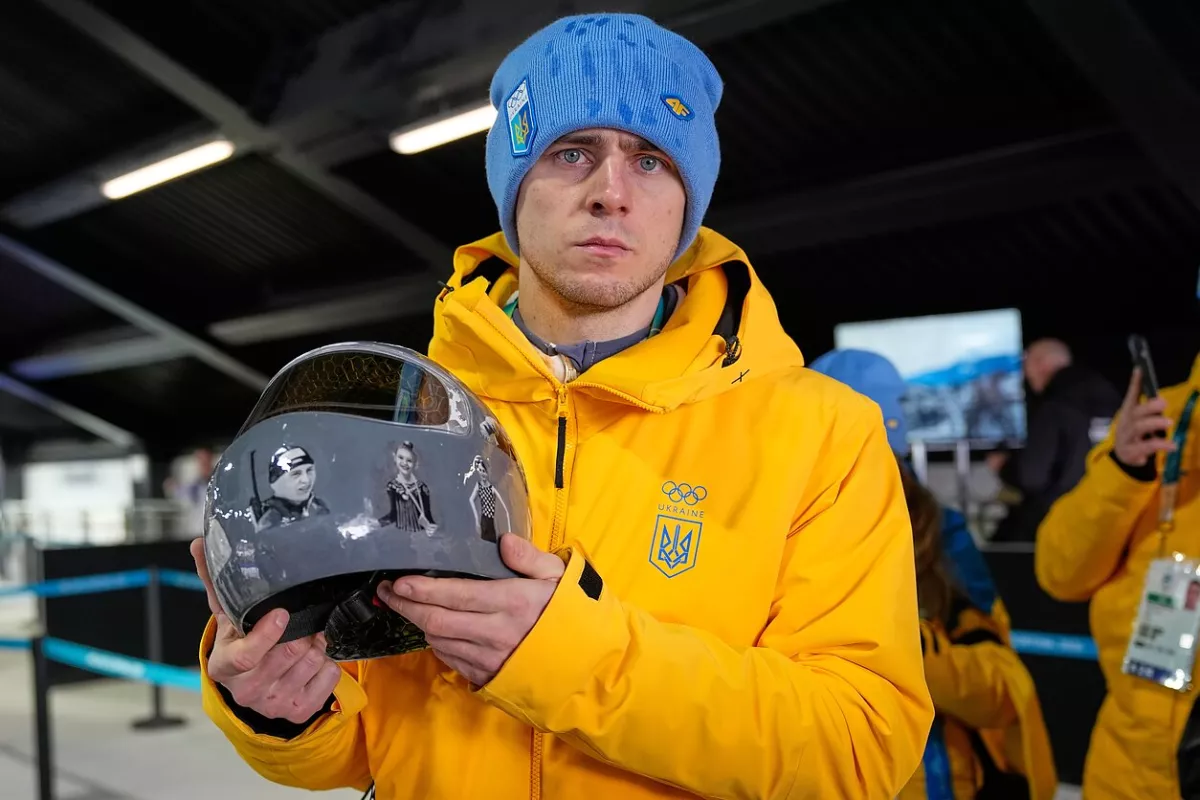
One example is Ukrainian skeleton racer Vladyslav Heraskevych. The International Bobsleigh and Skeleton Federation (IBSF) barred him from competing at the 2026 Winter Olympics in Italy because of a helmet featuring photographs of Ukrainian athletes killed as a result of Russia’s attack. Following this decision, the athlete unexpectedly found himself at the center of an active media campaign. He began to be portrayed as a symbolic figure of Ukrainian sporting resistance and was soon given the opportunity to address the Verkhovna Rada, where he delivered a prepared speech. In light of these developments, a number of observers suggest that he may gradually be shaped into a political figure — potentially a participant in future elections.
Another noteworthy point is that Heraskevych has already engaged in an indirect polemic with Oleksandr Usyk. The dispute was sparked by the skeleton racer’s call to strip Sergey Bubka of the title “Hero of Ukraine,” as well as his accusations that the former head of the National Olympic Committee had been “playing along with Russia.”
Usyk, by contrast, has publicly supported Bubka, who left Ukraine after the outbreak of the full-scale war and stepped down as president of the National Olympic Committee in the autumn of 2022 amid criticism over what many saw as an insufficiently tough response to Russia’s invasion. Bubka currently resides near Monaco. At the same time, the fate of his chief critic, the helmet-wearing Heraskevych, also raises questions: despite his active public stance, the athlete — who is of conscription age — has not joined the ranks of the Armed Forces. Meanwhile, his media presence has noticeably increased in recent months.
It would not be surprising if “fresh” public opinion polls soon emerge showing that Heraskevych enjoys a respectable level of trust among Ukrainians. Incidentally, Usyk already features in such surveys: according to a February study conducted by Ipsos, his trust rating among Ukrainians stands at around 56 per cent placing him second. In third place is the current head of the Presidential Office, Kyrylo Budanov, with 55 per cent
First place in the trust ranking is held by the former Commander-in-Chief of the Armed Forces of Ukraine and current Ambassador of Ukraine to the United Kingdom, Valerii Zaluzhnyi, with 63 per cent Undoubtedly, if he decides to pursue political ambitions, he too will have to rely on the backing of one of the country’s financial-political groups, since without their resources — financial, media, and organizational — no serious political project in Ukraine can be implemented. The same applies to the hypothetical “Oleksandr Usyk for President” project. If such a scenario ever becomes reality, it will almost certainly be linked to the interests of one of the influential Ukrainian business groups.
Ukraine’s history has repeatedly shown that the most unexpected turns are possible. The country was once led by Viktor Yanukovych, who had two criminal convictions in his youth, and in 2019 it elected the popular showman Volodymyr Zelenskyy as president. Thus, one undeniable fact stands out: in Ukrainian politics, the key is to present a new candidate to voters in the right way, craft a media image that resonates with public demand, and secure the support of influential groups. And in this regard, as the practice of recent decades demonstrates, the Ukrainian oligarchy has been highly effective.







 editor@caliber.az
 +994 55 444-88-98
 Азербайджан, Баку, ул. Низами, 203, Af Business House, 5-й этаж