










Macron and the red button Does Europe want French nuclear umbrella?
Recently, speaking against the backdrop of a nuclear submarine at the Île-Longue base, French President Emmanuel Macron announced a new nuclear doctrine, which includes increasing the number of warheads, stopping the publication of data on the composition of the arsenal (currently around 290 units, fourth largest in the world), and the possibility of deploying French nuclear forces in European countries — Poland, Sweden, the United Kingdom, and others.
Macron also announced that by 2036, France will launch a new nuclear submarine, Invincible, and implement an “advanced deterrence” system, which has already been joined by eight countries — Belgium, the United Kingdom, Germany, Greece, Denmark, the Netherlands, Poland, and Sweden. This system involves allied participation in exercises, the development of joint missile and defence projects, as well as the dispersal of French strategic forces across Europe.
Later, Macron and German Chancellor Friedrich Merz announced the creation of a Franco-German nuclear working group and the deepening of defence cooperation, while maintaining commitment to NATO structures.
The recent “breakthrough” in European nuclear policy can be explained by the international context. In recent years, the world has become far less predictable. Russia is waging war against Ukraine, exposing Europe’s helplessness in the face of a military threat; China is expanding its military arsenal; and the United States is increasingly losing interest in defending the Old Continent. Against this backdrop, Paris seeks to position itself as a new “America” for all of Europe, offering the continent its “nuclear embrace.” The other European countries, grudgingly, are forced to agree — the times demand a clear and decisive gesture from them.
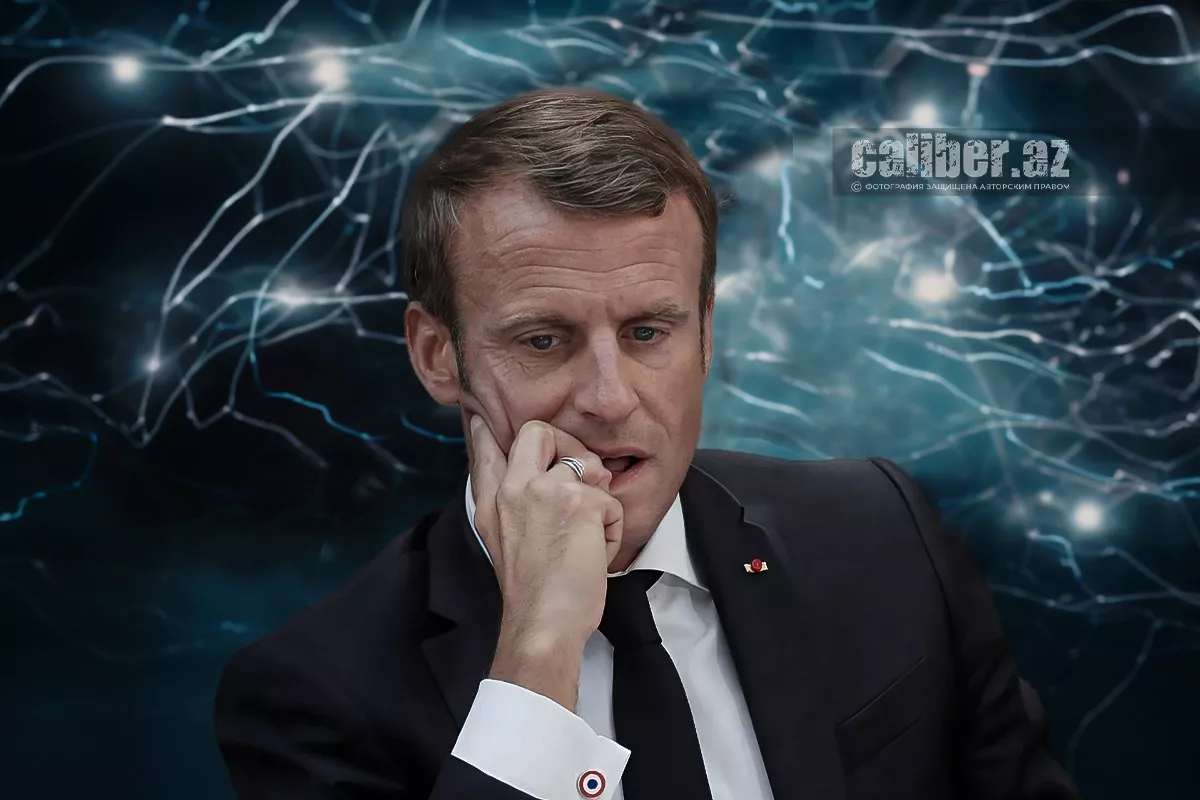
The essence of Macron’s initiative is simple: France remains the only nuclear power in the European Union and is willing to partially “share” its deterrent capability. At the same time, Macron emphasises that control remains entirely with Paris, and the decision to use the weapons, as before, can only be made by the President of France.
Within France itself, the idea has sparked debate. Some see it as a necessary response to threats, while others view it as a dangerous step toward a new arms race. Macron seeks to distinguish these notions: “This is not participation in an arsenal competition, but a guarantee that no one will have illusions about the consequences of an attack.”
However, it remains unclear how far the “advanced deterrence” program will progress during the remainder of Macron’s presidential term (just over a year) and whether his successor will support the initiative.
It is still not entirely clear why the United Kingdom, a nuclear power in its own right, has joined this initiative. The explanation likely lies less in military considerations and more in political strategy. London appears intent on signalling to Washington that it is ready, as the phrase goes, to “diversify” its approach to foreign security and that, by reengaging with continental Europe, the UK will not be an easy partner for the United States.
The UK’s decision, in turn, is central to Macron’s overall framework. European countries have chosen to present a unified stance, demonstrating a consolidated gesture of independence from the US. While no European capital is particularly enthusiastic about Macron’s ambitions, they see an opportunity to use them to signal opposition to Trump.
In short, there remain serious doubts about whether a nuclear deterrence system, with the French president “holding the button,” would be militarily effective.







 editor@caliber.az
 +994 55 444-88-98
 Азербайджан, Баку, ул. Низами, 203, Af Business House, 5-й этаж