










Between radar and the blind spot Iranian drones over Nakhchivan and the limits of air defence
On March 5, 2026, the Nakhchivan Autonomous Republic came under attack by Iranian unmanned aerial vehicles. According to the Ministry of Defence of Azerbaijan, technical monitoring systems confirmed that four drones were launched from the territory of the Islamic Republic of Iran toward Azerbaijan’s Nakhchivan Autonomous Republic.
One of the drones was neutralised by units of the Azerbaijani Armed Forces, while the remaining UAVs targeted civilian infrastructure, including the terminal building of Nakhchivan International Airport and a secondary school during class hours. The drone aimed at the school fortunately failed to reach its target and exploded after crashing near the building. Four civilians were injured as a result of the attack.
Ilham Aliyev convened an emergency meeting of the Security Council of Azerbaijan and described the incident as a terrorist act. The Azerbaijani army has been placed on full combat alert.

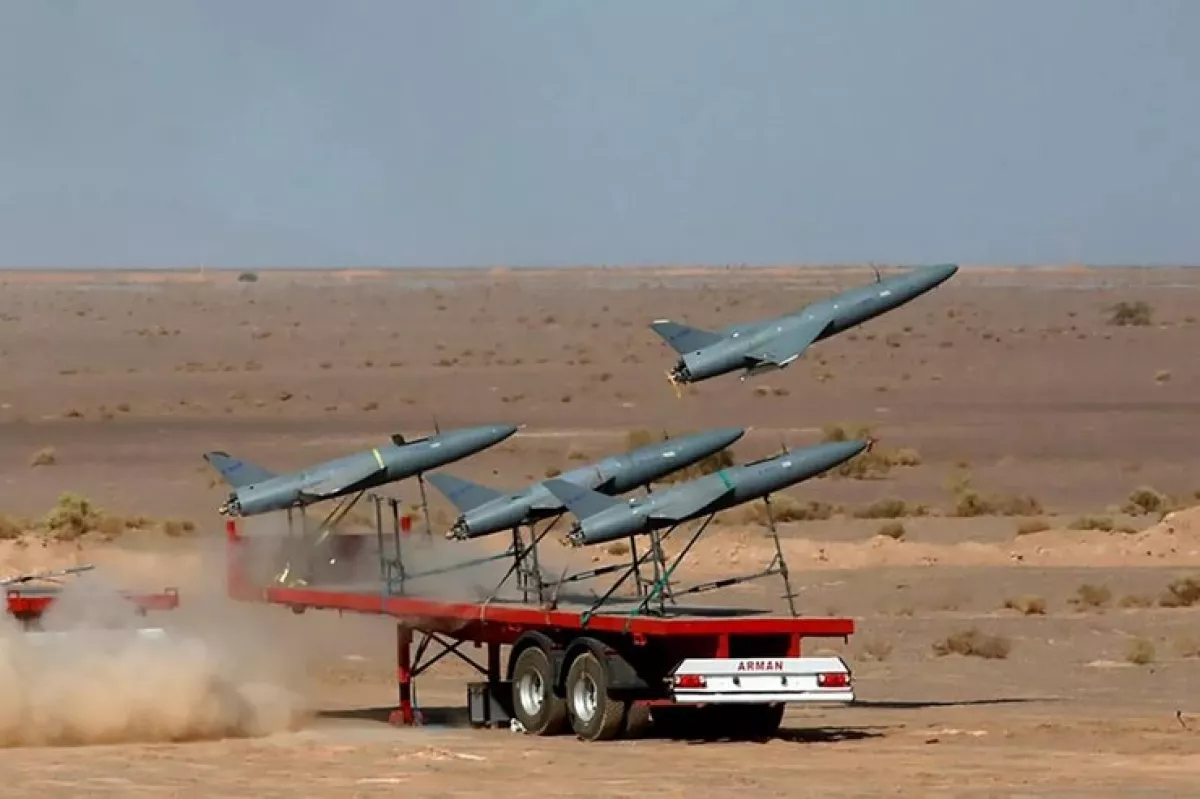
Tehran, for its part, denies any involvement in the incident — a position that, to say the least, raises questions. The airport is located no more than ten kilometres from the Iranian border, and the distinctive engine sound and recovered debris have allowed analysts to tentatively identify the drones as Arash-2 loitering munitions of Iranian manufacture.
The incident has sparked widespread discussion, and among the comments that inevitably emerge in such situations, a familiar question arose: why did the air defence system fail to intercept all the drones? While this is a reasonable question, answering it requires an understanding of the physics and tactics of modern aerial warfare, rather than simplistic assumptions about how air defence systems operate.
Let’s start with what the Arash-2 actually is. It is a loitering munition — essentially a kamikaze drone designed for one-time use. The device measures approximately 4.5 metres in length, with a wingspan of 4 metres. It is powered by an MD550 piston engine producing 50 horsepower, allowing it to reach speeds of around 185 kilometres per hour. Its warhead weighs 150 kilograms.
The declared range of the Arash-2 is up to 2,000 kilometres, giving it the capability of strategic reach. However, the key tactical feature of the Arash-2 and similar systems is the way they are employed: they fly at extremely low altitudes, literally just tens of metres above the ground, using the terrain as natural cover to evade radar detection.
Here we come to a fundamental concept that is essential for understanding why no air defence system in the world can guarantee a 100% interception of such targets — the concept of the radar horizon.
A radar station, no matter how advanced, is governed by the same physical laws as the human eye: it cannot “see” beyond the horizon. Electromagnetic waves travel in straight lines, while the Earth’s surface is curved. In practical terms, this means that a radar installed at a height of 20 metres can detect a target flying at 30 metres only at a distance of about 25–30 kilometres. If hills, ridges, or mountain folds lie between the radar and the target — which is typical for Nakhchivan and surrounding areas — the detection range is reduced even further.
A drone flying at ultra-low altitude, emerging from behind terrain, gives air defence crews just a few minutes — and sometimes only tens of seconds — to detect, classify, and make a decision to engage the target.
Another challenge comes from the very small radar cross-section of these drones. The Arash-2 is built with a composite body, contains no large metal components, and has a profile that on a radar screen is almost indistinguishable from background noise. Detecting such a target is far more difficult than spotting an aircraft or a cruise missile, and many existing radar systems are simply not optimised to track objects of this class. This is a global challenge, not a specific weakness of any particular military.
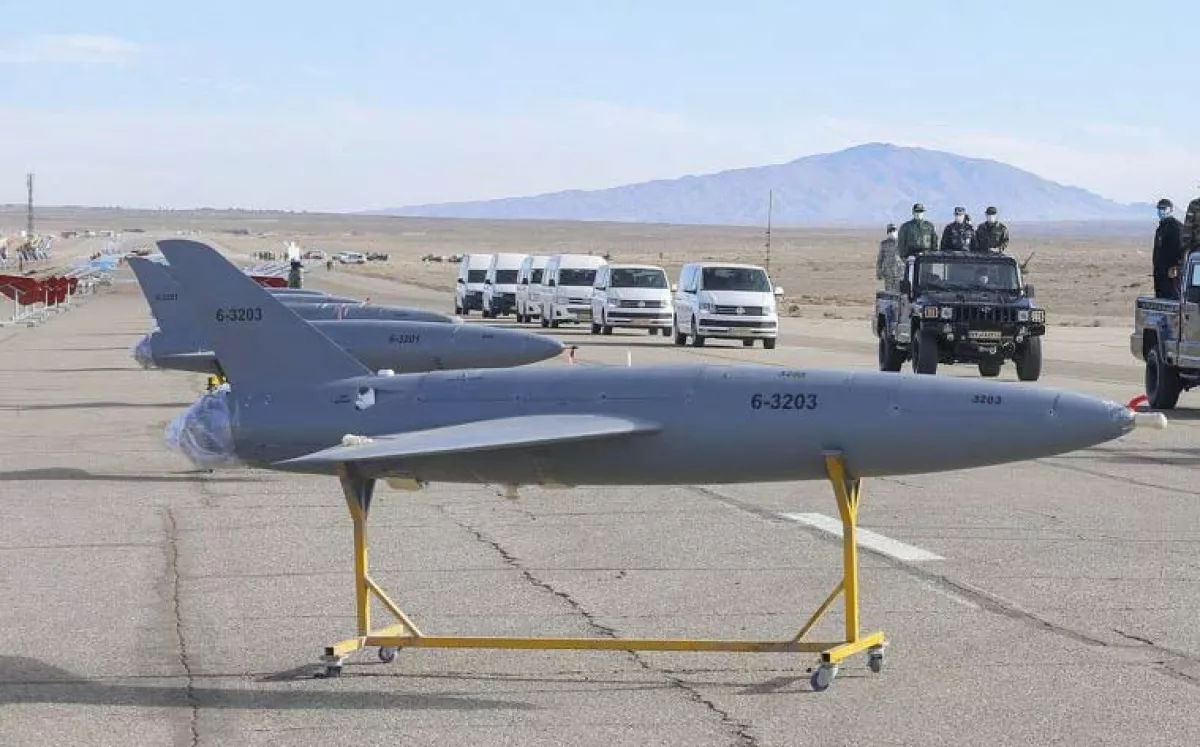
To grasp the scale of this challenge, it is enough to look at the experience of countries that spend tens or even hundreds of billions of dollars annually on defence. On September 14, 2019, a combined attack by drones and cruise missiles struck the Saudi Aramco oil processing facility in Abqaiq and the Khurais oil field in Saudi Arabia. The outcome was catastrophic: oil production in the kingdom was halved — by 5.7 million barrels per day — marking the largest single disruption in global oil production in modern history.
The Abqaiq facility was protected by Patriot PAC-2 surface-to-air missile systems, Skyguard anti-aircraft artillery systems, and French Shahine systems. None of these defences were able to intercept the attacking drones and missiles. Experts estimated that the low-flying drones were operating below the engagement envelope of the Patriot systems, which are designed to counter ballistic missiles and aircraft.
Each attacking drone cost, by various estimates, around $15,000 — yet they successfully struck a facility worth tens of billions. One analyst at the Royal United Services Institute in London rightly noted that the cost curve heavily favours the attacker, and no defensive budget, no matter how large, can fully shield the skies from such threats.
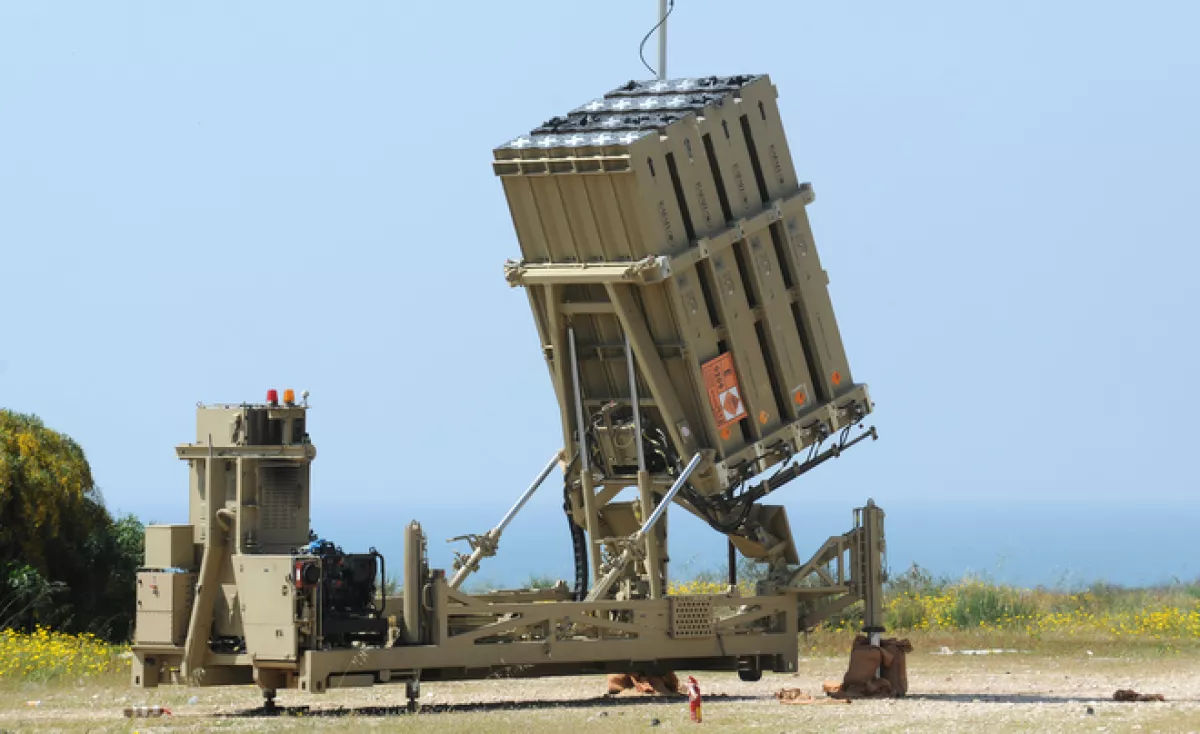
Israel — a country with one of the most layered and technologically advanced air defence systems in the world, including the Iron Dome — regularly experiences breaches of its defences by drones. Over the past several years, drones have been detected entering Israeli airspace from Lebanon, the Gaza Strip, and from Iran.
During large-scale Iranian strikes, even with impressive ballistic missile interception rates, the drone component of the attacks proved to be the most difficult element to neutralise. A small, low-flying drone simply does not give the air defence system the reaction distance required for guaranteed interception.
Israeli military experts openly acknowledge that countering small UAVs presents a fundamentally different challenge compared with intercepting ballistic missiles or manned aircraft, and there is currently no universal solution to this problem.
The Russian-Ukrainian conflict has effectively become a large-scale laboratory for drone warfare, likely providing more practical data on the capabilities and limitations of air defence systems than all previous conflicts combined. Ukraine, equipped by Western allies with modern surface-to-air missile systems — from NASAMS and IRIS-T to Patriot and HAWK — faces daily waves of Iranian Shahed drones, which Russia deploys in dozens and even hundreds at a time.
Interception rates are impressive: Ukrainian forces regularly report shooting down 70, 80, and sometimes over 90 percent of incoming drones. Yet even with such results, absolute interception is never achieved. There is always a percentage of drones that break through — exploiting gaps in radar coverage, complex terrain, or massed launches that overwhelm air defence capabilities. This is in a country that has been engaged in large-scale war for more than four years and has refined its counter-drone systems to levels unmatched in global practice.
When it comes to the Nakhchivan incident, the same factors previously mentioned remain critical: a minimal distance of just ten kilometres from the border, mountainous terrain, ultra-low flight altitudes, and the low radar visibility of loitering munitions.

Thus, drones like the Arash-2 belong to a category of targets that pose the greatest challenge for any air defence system: small, low-flying, with minimal radar signatures and very short approach times. Saudi Arabia, despite its full complement of Patriot and Skyguard systems, was powerless against a similar attack. Israel, which spends billions on a multilayered, echeloned defence, recognises the drone threat as one of its key challenges. Ukraine, having accumulated unprecedented combat experience, continues to suffer losses from Shahed strikes despite impressive interception statistics.
Today’s incident undoubtedly represents a serious security challenge for Azerbaijan, and Baku’s response — from the immediate convening of the Security Council to placing the military on full alert and delivering a firm diplomatic protest — demonstrates that the state is treating the situation with the gravity it deserves.
However, judging the effectiveness of an air defence system based on whether “a single drone got through or not” reflects a misunderstanding of the nature of modern aerial threats. The world has entered an era in which cheap loitering munitions can penetrate air defences that cost orders of magnitude more. This is a reality that all armed forces worldwide face without exception.
Rustam Shafiyev, Major (Reserve), former senior officer in the Azerbaijani Ministry of Defence Air Force and Air Defence Intelligence Department, for Caliber.Az







 editor@caliber.az
 +994 55 444-88-98
 Азербайджан, Баку, ул. Низами, 203, Af Business House, 5-й этаж