










Mullah regime declares war on Azerbaijani schools and airports Ungrateful Tehran
On March 5, 2026, drone strikes were launched from the territory of the Islamic Republic of Iran against the Nakhchivan Autonomous Republic. One drone hit the terminal building of Nakhchivan Airport — a civilian infrastructure facility used daily by peaceful citizens. Another fell near a school in the village of Shakarabad. Four civilians were injured.
Azerbaijan’s Foreign Ministry strongly condemned the attack, describing it as an act that contradicts the norms of international law and contributes to rising tensions in the region. Iran’s ambassador, Mojtaba Demirchilou, was summoned to the ministry and handed a note of protest. The Azerbaijani side demanded immediate explanations from Tehran and reserved the right to take retaliatory measures.
But behind the language of diplomacy lies something more.
What happened is an act of ingratitude and hypocrisy on the part of the mullah regime, striking not merely at an airport but at the very fabric of neighbourly relations. To fully grasp the scale of this hypocrisy, it is necessary to reconstruct the chronology of recent weeks. On February 28, 2026, the United States and Israel launched a joint military operation against Iran, codenamed “Epic Fury” and “Roaring Lion.”
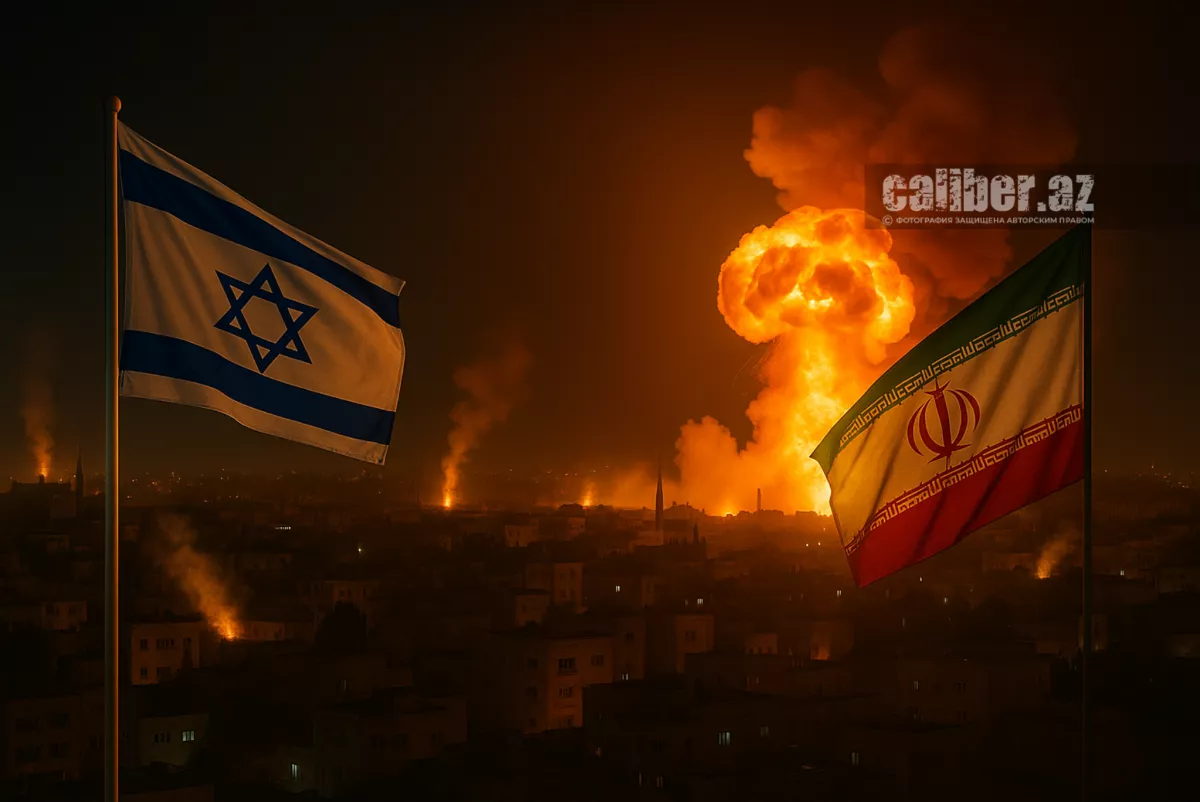
Within the very first hours, strikes on a residence in Tehran killed Supreme Leader Ayatollah Ali Khamenei, while dozens of military facilities, IRGC command centres, and nuclear and missile sites across the country were destroyed.
Tehran responded with the massive use of ballistic missiles and strike drones against Israel, and then — in what became a turning point — against the territories of Persian Gulf states hosting American military bases: the UAE, Bahrain, Kuwait, Qatar, Saudi Arabia, Oman, Jordan, and even the British base of Akrotiri in Cyprus. In doing so, Iran effectively dragged dozens of states into its war.
Azerbaijan has always remained committed to the principle of good neighbourliness. The country’s territory has never posed — and does not pose — a threat to Iran, just as it does not threaten any other state. This is a consistent policy, confirmed by actions at every stage of the current crisis.
As early as January 29, 2026, when the US–Iran confrontation was only beginning to escalate, Azerbaijan’s Foreign Minister Jeyhun Bayramov, in a telephone conversation with his Iranian counterpart Abbas Araghchi, stated unequivocally that Azerbaijan would never allow any state to use its airspace or territory for military operations against neighbouring Iran.
On February 6, while receiving the now-late Iranian Minister of Defence, Brigadier General Aziz Nasirzadeh, in Baku, President Ilham Aliyev stated that Azerbaijan was concerned about the situation developing in the region and stood ready to support efforts to ease the tensions.
Earlier, on January 31, during a telephone conversation with the President of the Islamic Republic of Iran, Masoud Pezeshkian, Aliyev expressed concern about the situation in the region, reaffirmed Azerbaijan’s readiness to contribute to the reduction of tensions, and stressed that the country supports resolving such issues through negotiations and mutual understanding.
When the storm broke on February 28, Baku confirmed its position through concrete actions. President Ilham Aliyev promptly — already on March 1 — sent a letter of condolences to Masoud Pezeshkian over the death of Khamenei, describing him as a figure who held a special place in Iran’s political and religious life.
Foreign Minister Jeyhun Bayramov, in a conversation with Abbas Araghchi, again expressed serious concern over the escalation and reiterated a principled position: Azerbaijan’s territory cannot and will not be used by any country against neighbouring and friendly Iran.
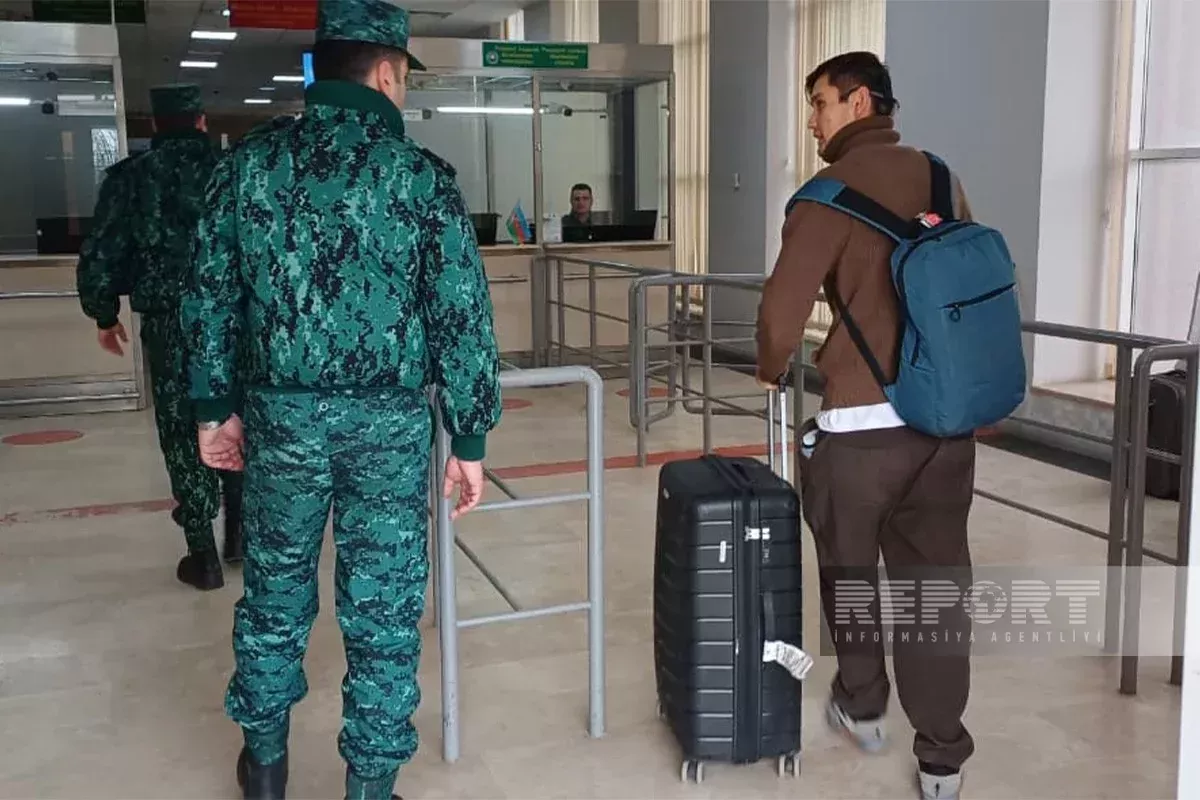
At the same time, Baku launched a large-scale humanitarian operation. By March 5, a total of 1,317 foreign citizens from more than 40 countries had been evacuated from the conflict zone through the Azerbaijan–Iran border. Azerbaijan effectively became a rescue corridor for those caught in the midst of war.
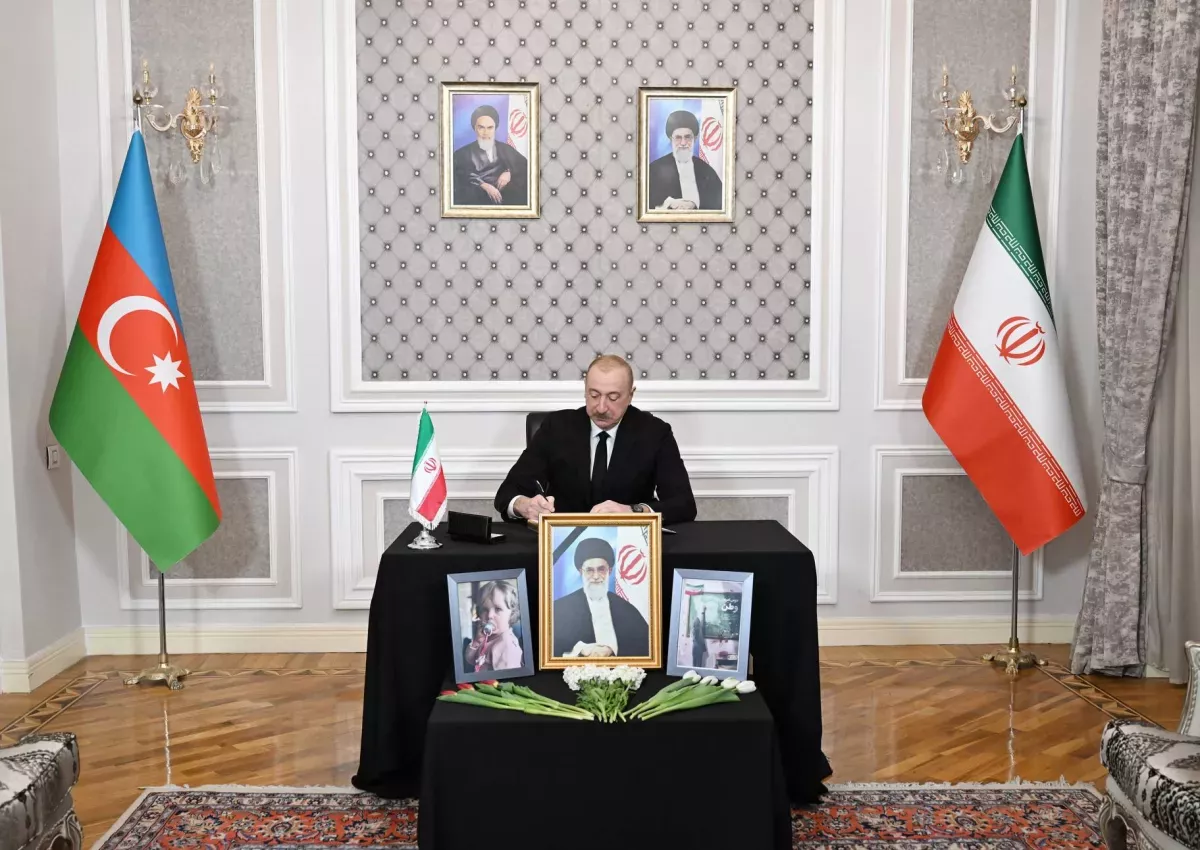
Finally, on March 4 — just one day before the attack on Nakhchivan — President Ilham Aliyev visited the Embassy of the Islamic Republic of Iran in Baku. He met with Ambassador Mojtaba Demirchilou, left a message in the book of condolences, and noted that he would always remember his meetings with Khamenei with the warmest feelings.
The Iranian ambassador expressed gratitude for the solidarity and support shown during these difficult days for the Iranian people. It was a gesture difficult to overestimate: the head of a state that Tehran had for years accused of cooperating with Israel personally came to the Iranian embassy to honour the memory of the slain leader.
Unlike the mullah regime, Azerbaijan has never pursued a hypocritical policy. In difficult times, Baku has always supported its neighbours — sincerely, without hidden motives or calculation.
And yet, judging by recent events, this is how Tehran has chosen to “repay” Azerbaijan. The strike on Nakhchivan, which injured civilians, should be regarded for what it is: an act of terror against the civilian population and civilian infrastructure of a sovereign state.
It is both a manifestation of the ingratitude of the mullah regime and a demonstration that, for the ruling elite in Tehran, there are neither borders nor obligations, nor even basic human decency.
From the very first day of the war, Iran has demonstrated a strategy analysts call “internationalising chaos.” Tehran deliberately strikes the territories of third countries — targeting civilian airports and ports in the UAE, oil facilities in Saudi Arabia, LNG terminals in Qatar, and residential areas in Bahrain and Kuwait.
The logic is simple and cynical: the more countries drawn into the conflict, the faster international pressure will force Washington and Tel Aviv to halt their operations. Iranian drones — the infamous “Shaheds” — now buzz over Dubai skyscrapers and oil terminals across the Arabian Peninsula.
According to the UAE Ministry of Defence, more than 500 Iranian drones were launched at Emirati territory in the first days of the conflict. They struck Dubai Airport, the US consulate, Amazon data centres, and the Ras Tanura oil refinery. Yet the UAE, Bahrain, and Kuwait were attacked simply for hosting American military bases; Saudi Arabia for its strategic partnership with Washington; Cyprus for the British air base there.
What did Azerbaijan do? It expressed condolences. It evacuated civilians. It guaranteed the security of Iranian interests. And in return, it received drone strikes on its airport and a school.

Organising a drone attack on Azerbaijan’s civilian infrastructure is not a show of strength, but a sign of weakness and cowardice. Why did Iran strike Nakhchivan Airport in particular? The Iranian regime understands that the main territory of Azerbaijan and the Nakhchivan Autonomous Republic are effectively connected only by air. By disabling the airport, they aim to completely sever the link between mainland Azerbaijan and Nakhchivan. Incidentally, Armenia employed a similar tactic in the 1990s — in essence, Iran is following the same approach.
Those who made the decision to attack Nakhchivan — or allowed it through inaction and negligence — should remember one simple truth: those who have attacked Azerbaijan have always regretted it. This lesson has been learned by all who tried to test the sovereignty and territorial integrity of the Azerbaijani state. The 44-day war in 2020, the full restoration of jurisdiction over Karabakh in 2023 — every attempt to exploit perceived weakness in Baku has failed.
There is no doubt that Iran will also come to regret this cowardly act. Not because Azerbaijan seeks war — on the contrary, all of Baku’s actions in recent weeks have been aimed at preserving peace and stability. But because a country capable of constructing a diplomatic position of such maturity amidst a blazing regional crisis is also capable of responding — in forms and at a scale that Baku deems necessary.
Moreover, the Ministry of Defence of Azerbaijan has already announced that it is preparing retaliatory measures to protect the country’s territorial integrity and sovereignty, ensure the safety of civilians and civilian infrastructure, and that acts of aggression by Iran will not go unanswered.







 editor@caliber.az
 +994 55 444-88-98
 Азербайджан, Баку, ул. Низами, 203, Af Business House, 5-й этаж